 Ferndale Exterior
 Roof Repair for Everson Homes: Why Local Conditions Matter
Everson sits inland along the Nooksack River in Whatcom County, a few miles east of Ferndale and Lynden. It's a different setting than the open coastline, but the roof problems we see out there are just as consistent — driven by the same wet, gray, tree-heavy climate that defines this whole corner of Washington. Roofs in Everson deal with long stretches of driving rain, heavy tree canopy that shades roofs and slows drying, and a moss and algae season that can run eight months or more out of the year.
Whatcom County as a whole gets a steady dose of moisture-laden marine air off the Strait, and while Everson's inland, river-valley location means it isn't dealing with direct salt spray the way a shoreline property would, the humidity and shade from surrounding trees create their own version of the same problem: roofs that stay damp longer than they should. That's the core issue behind most repair calls we get in this area — not one dramatic failure, but slow, moisture-driven wear that shows up first as a small leak or a soft spot and gets worse every winter it's ignored.
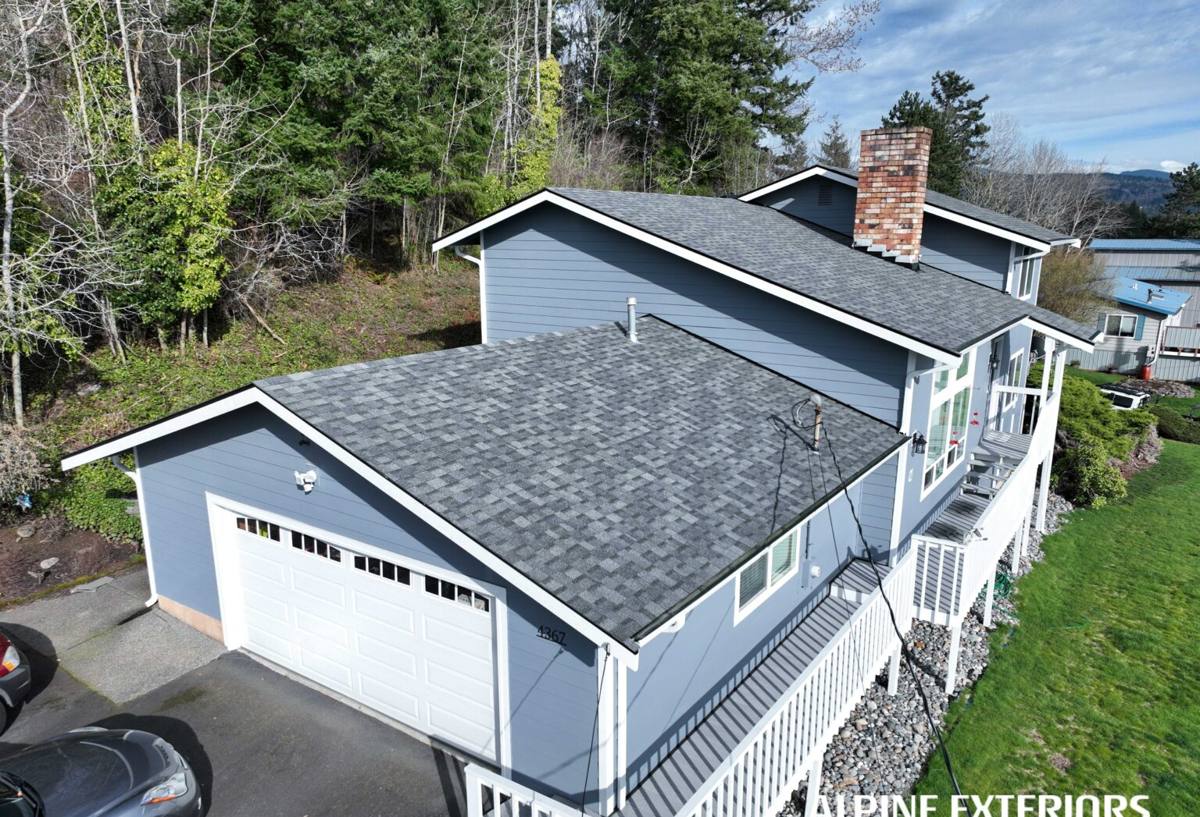
Common Roof Problems We See on Everson Properties
Moss and Algae Buildup
Shaded, north-facing slopes and roofs tucked under fir and cedar trees hold moisture the longest. Moss doesn't just look bad — it works its way under shingle tabs, lifts them, and holds water against the roof deck. Left alone through a few wet seasons, that's how a cosmetic issue turns into a rot problem underneath.
Valley and Flashing Leaks
Roof valleys collect needles, leaves, and moss debris faster than flat sections of roof, especially on tree-lined lots. When valleys clog, water backs up under the shingles instead of running off. Flashing around chimneys, skylights, and roof-to-wall transitions is the other common failure point — it's usually not the shingles themselves that leak, it's the metal and sealant details around penetrations.
Gutter and Fascia Damage
Overflowing gutters from clogged downspouts push water back up under the roof edge and drip channel, which rots fascia boards and can work its way into the roof deck over a season or two. This is one of the most common "small problem that became a big one" calls we get.
Wind and Storm Lift
Driving rain paired with gusty fall and winter storms can lift shingle tabs or work fasteners loose over time, especially on roofs that are already a bit older or were installed with fewer nails than current codes call for. Once a tab lifts, wind-driven rain gets underneath it on the next storm.
What an Actual, Correct Roof Repair Involves
A roof repair that holds up in this climate isn't just slapping a patch of roofing cement over a leak spot. That approach might buy a season, but it almost never solves the underlying cause, and it can make the eventual real repair messier and more expensive. A repair done right involves a few non-negotiable steps:
- Tracing the leak to its actual source — which is often several feet away from where the water stain shows up inside
- Checking the roof deck underneath for soft spots, rot, or delamination before any new material goes down
- Matching shingle type, color, and exposure as closely as possible so the repair doesn't stick out or create a mismatched seam
- Replacing flashing rather than just re-sealing it, when the metal itself is corroded or improperly lapped
- Clearing and, where needed, re-lining valleys so debris doesn't immediately re-clog the fix
- Checking attic ventilation, since poor airflow accelerates moss growth and can cause condensation that mimics a roof leak
Skipping any of these steps is how a homeowner ends up paying for the same leak twice. It's also worth knowing that a repair limited to the visible symptom — say, just replacing a few shingles — won't hold if the deck underneath is already compromised. Part of an honest repair is telling a homeowner when a small area needs deck replacement, not just shingles, even if that adds cost to the job.
Our Repair Process
1. Inspection and Diagnosis
We start by getting on the roof, not just looking at it from the ground. That means checking the suspect area plus anything uphill from it — water travels sideways and downhill under shingles before it shows up as a stain, so the visible damage point is rarely the actual entry point.
2. A Straight-Up Explanation and Quote
We explain what's actually wrong, what caused it, and what it'll take to fix — including if we think a repair is the wrong call and a section (or the whole roof) is closer to end of life. You get a written estimate before any work starts, with no pressure to upsell a repair into a full replacement unless that's genuinely the right move.
3. The Repair Itself
We match materials as closely as possible, address the root cause (not just the symptom), and reset flashing and valleys properly rather than just caulking over old metal. Work areas get cleared of debris and old material — we don't leave torn-off shingles or nails in your yard or gutters.
4. Cleanup and Walkthrough
Before we call a job done, we walk the repair with you, explain what was done and why, and flag anything else on the roof worth keeping an eye on — even if it's not something we're recommending action on yet.
Repair or Replace? How We Help You Decide
Not every roof problem needs a full replacement, and not every roof problem can be permanently fixed with a repair. Age, extent of damage, and how many previous repairs a roof has already had all factor in.
| Situation | Repair usually makes sense | Replacement usually makes sense |
|---|---|---|
| Roof age | Under 15-18 years, single problem area | Approaching or past typical shingle lifespan |
| Leak pattern | One clear source, localized damage | Multiple leaks in unrelated areas |
| Deck condition | Solid, no rot found on inspection | Soft spots or rot in more than one section |
| Moss/algae extent | Isolated to shaded sections | Widespread across most of the roof |
| Prior repair history | First or second repair on this roof | Roof has been patched repeatedly already |
If a roof is genuinely a repair candidate, we'll say so and won't push a bigger job. If it's not, we'd rather tell you upfront than have you pay for a patch that fails again in a year.
Roofing Materials: What We Recommend and Why
Most homes in and around Everson are roofed in asphalt composition shingles, with some cedar shake and a growing number of metal roofs on newer builds and remodels. Each has different repair considerations.
Asphalt Composition Shingles
The most common and most repair-friendly option — individual shingles can usually be replaced without redoing a whole section, as long as reasonably close matching material is available. Architectural (dimensional) shingles hold up better to wind lift than older 3-tab styles and are what we recommend for most repair-and-partial-replace situations.
Cedar Shake
Cedar can look great and holds a certain character, but in a shaded, damp climate like this it takes more upkeep — moss and moisture retention are a bigger ongoing concern than with asphalt, and matching weathered cedar for a repair is harder than matching shingles. We're upfront with cedar roof owners that the maintenance schedule needs to be tighter to get a full service life out of it.
Metal Roofing
Metal sheds moss and debris well and handles driving rain about as well as any material out there, but repairs are more specialized — fastener and seam issues need to be addressed with the right technique and matching profile, not general-purpose sealant. We do metal roof repair, but it's a different skill set than shingle work and we treat it that way.
Why It Matters That We Already Work in Everson
A crew that regularly works this side of Whatcom County knows which neighborhoods have heavier tree cover, which roof styles and ages are common on homes out this way, and what typically fails first on a river-valley property versus a coastal one. That's not a small thing — it means less time spent diagnosing and more time spent fixing the actual problem, and a more accurate estimate the first time around instead of surprises once work starts.
It also means we're realistic about scheduling around this area's weather windows. Roof repair work needs a dry roof surface and a reasonable stretch of dry weather to cure properly, and we plan around that rather than rushing a repair in marginal conditions just to get it done.
Simple Maintenance That Extends the Life of a Repair
A repair lasts longer when the roof around it is kept up. A few habits go a long way in this climate:
- Clear gutters and downspouts at least twice a year, more often if you're under heavy tree cover
- Keep overhanging branches trimmed back to cut down shade and debris buildup
- Have moss treated before it spreads, rather than after tabs are already lifting
- Check attic ventilation periodically — poor airflow speeds up moss growth and can cause condensation issues that look like roof leaks
- Get a roof looked at after any major windstorm, even if nothing looks obviously wrong from the ground
If you're dealing with a leak, moss buildup, or storm damage on an Everson-area roof, we're happy to take a look and give you a straight answer on what it actually needs. Use the form below to request a free, no-pressure estimate.