 Ferndale Exterior
 Roof Replacement for Everson Homes, Built Around Whatcom County Weather
Everson sits inland from Ferndale along the Nooksack River, but it shares the same weather pattern that shapes every roof in Whatcom County: long wet winters, wind-driven rain that comes in sideways off the Sound, and a moss season that can stretch from October well into spring. A roof that was built or repaired without that pattern in mind tends to fail early — not because the shingles were bad, but because the details underneath them weren't matched to the climate. When we replace a roof in Everson, we're not just swapping old material for new. We're correcting whatever let moisture, moss, or wind get a foothold in the first place.
This page covers what Everson homeowners specifically should know before replacing a roof: what the local climate actually does to roofing over time, what a correct replacement includes, how our process works, and why local experience matters more on this job than almost any other exterior project.
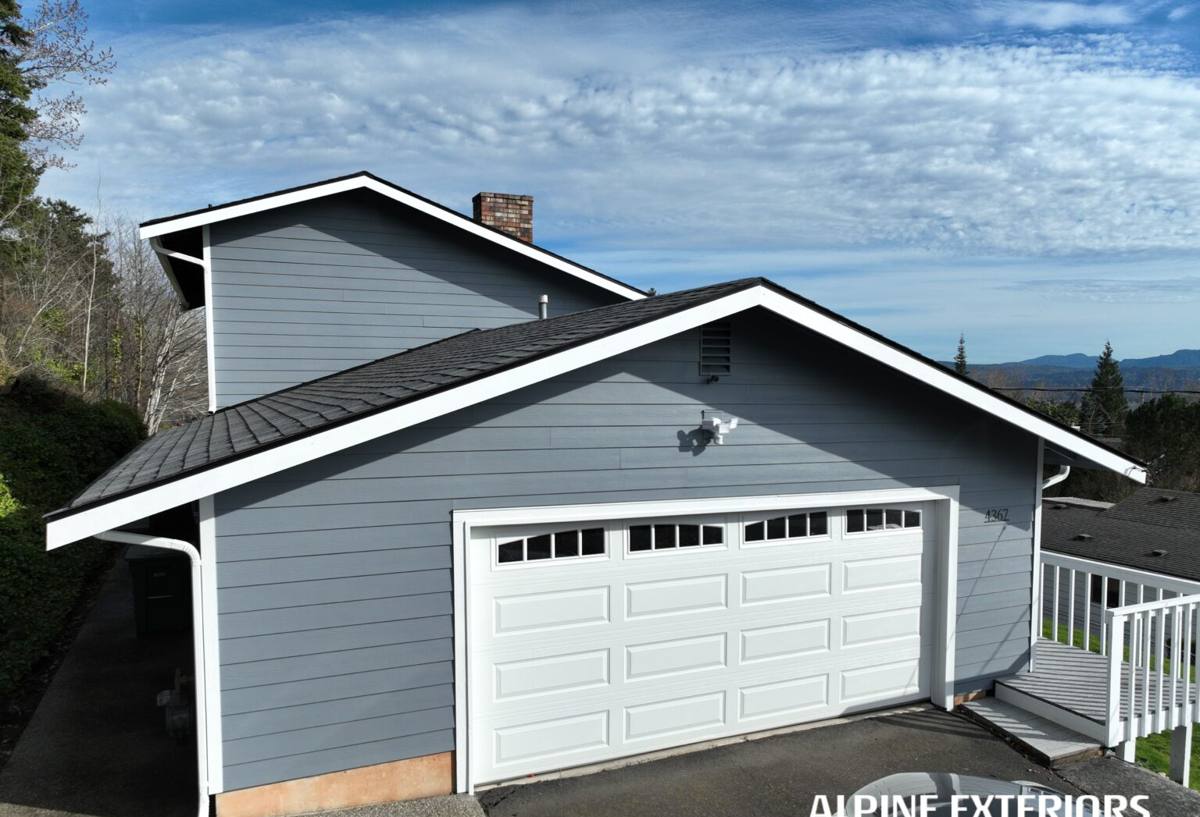
What Whatcom County's Climate Does to a Roof Over Time
A roof doesn't fail all at once. It fails in the same few places, for the same few reasons, and in this part of Washington those reasons are consistent:
- Moss and organic growth — shaded, north-facing slopes and roofs under overhanging trees stay damp for days after a storm, giving moss and moisture time to work under shingle edges and lift granules.
- Driving rain — wind off the Sound doesn't just fall on a roof, it pushes rain sideways and up under laps, flashing, and vents that would be fine in a calmer climate.
- Long saturation periods — it's less about any single downpour and more about roofing decking staying wet for weeks at a time during the fall and winter, which is what actually rots wood and degrades underlayment.
- Marine air and salt-laden moisture — even inland communities like Everson get moisture-heavy air moving through the county, which is harder on exposed metal fasteners, flashing, and vent hoods than a dry climate would be.
None of this means Everson roofs are doomed — it means the materials and details have to be chosen for this specific pattern, not for a generic national average.
Signs an Everson Roof Has Reached the End of Its Life
Homeowners often ask for a repair when what they actually need is a replacement, or vice versa. These are the signs worth a real inspection, not just a patch:
- Granules collecting in gutters or at downspout outlets, especially after wind events
- Moss established across whole sections, not just isolated spots — a sign it's been there long enough to lift shingle edges
- Shingles that are curling, cupping, or cracking, particularly on south- and west-facing slopes
- Soft spots or visible sagging when walking the roof or viewing the deck from the attic
- Daylight visible through the roof deck from inside the attic
- Repeated leaks around the same penetration (chimney, vent, skylight) despite prior patching
- A roof that's simply at or past the manufacturer's expected service life for its material and exposure
If a roof shows two or more of these, a patch is usually a delay, not a fix. We'll tell you honestly if a repair will genuinely hold or if it's just postponing a bigger job.
What a Correct Roof Replacement Actually Involves
A roof replacement is only as good as what's underneath the visible material. In a climate like ours, the layers below the shingles matter as much as the shingles themselves.
Tear-Off and Deck Inspection
We remove the old roofing down to the deck rather than layering over it. That's the only way to actually see the condition of the sheathing — soft, delaminated, or rotted deck sections get replaced before anything new goes down. Skipping this step is the single most common shortcut that causes a "new" roof to leak within a couple of years.
Underlayment and Water Protection
Given how long our winters stay wet, we treat underlayment as a real second line of defense, not a formality. Ice-and-water membrane goes at eaves, valleys, and around penetrations — the exact spots where driving rain and ponding water find their way in.
Ventilation
Poor attic ventilation traps warm, moist air against the underside of the deck, which accelerates rot and can encourage moss growth from below as well as above. Balanced intake and exhaust ventilation is part of a correct replacement, not an upsell.
Flashing and Penetrations
Chimneys, skylights, vent pipes, and roof-to-wall transitions are where most leaks actually start. New flashing, properly stepped and lapped, matters more to long-term watertightness than the shingle brand.
Choosing a Roofing Material for Everson's Climate
There's no single "best" roofing material — there's a right fit for your home's exposure, budget, and how much maintenance you want to take on. Here's how the common options compare for a moss-and-rain climate like ours:
| Material | Moss Resistance | Typical Lifespan | Maintenance Needs |
|---|---|---|---|
| Standard 3-tab asphalt | Lower — flatter profile holds moisture longer | Shorter end of the asphalt range | Regular moss treatment recommended |
| Architectural (dimensional) asphalt | Moderate — better shedding, thicker mat | Mid-to-long range | Periodic moss/debris removal |
| Metal roofing | High — smooth surface sheds water and discourages growth | Long — often decades | Low, but fastener and seam checks matter |
| Synthetic/composite shingles | Moderate to high depending on product | Long | Low to moderate |
Cost follows a similar pattern: material, roof pitch and complexity, how much deck repair is needed, and the amount of tear-off all move the price more than the brand name on the shingle wrapper. As a broad guide, a full tear-off and replacement on an average home can range from the lower five figures to well into the higher five figures depending on those factors — which is exactly why we walk the roof and give you real numbers rather than a phone estimate.
Our Roof Replacement Process
- On-site inspection — we walk the roof and attic, not just look from the ground, and photograph problem areas so you can see what we see.
- Written estimate — material options, scope of deck repair if needed, and a clear price, explained in plain terms.
- Scheduling around weather — we watch the forecast closely and plan tear-off days to minimize how long your deck is exposed.
- Tear-off and deck repair — full removal of old material, replacement of any compromised sheathing.
- Underlayment, flashing, and ventilation work — the layers that determine whether the roof actually performs through a wet winter.
- New roofing installation — installed to manufacturer specification, not just "close enough."
- Cleanup and walkthrough — magnetic sweep for nails and debris, final walkthrough so you know what was done and why.
Why Hiring a Crew That Already Works in Everson Matters
A roofing crew that mostly works in drier climates, or that treats every job the same regardless of region, will often build a roof to a generic standard rather than to what Whatcom County actually throws at it. Working Everson and the surrounding Ferndale area regularly means we already know which slopes tend to hold moss, which roof lines take the worst of the wind-driven rain, and how the local permitting process runs. That familiarity shows up in fewer surprises during the job and a roof that's built for the conditions it will actually face, not a textbook average.
It also matters for something less obvious: being reachable. A roof issue that shows up mid-winter needs a contractor who's still local, still answering the phone, and not three counties away on someone else's job.
Maintaining a New Roof Through Whatcom County's Wet Season
A correctly installed roof still benefits from basic upkeep, especially with the moss pressure and rainfall we get here:
- Keep gutters clear so water doesn't back up under the roof edge during heavy rain
- Trim back overhanging branches to reduce shade and debris on moss-prone slopes
- Have moss treated before it establishes heavily, rather than after it's already lifting shingles
- Check attic ventilation isn't blocked by insulation or storage
- Schedule a periodic visual inspection, especially after major wind events
None of this is complicated, but it's the difference between a roof that reaches its full expected lifespan and one that needs early intervention.
If your Everson roof is showing its age, or you'd just like an honest read on how many years it has left, we're happy to walk it with you. Use the form below to request a free, no-pressure estimate — we'll give you a straight answer, not a sales pitch.