 Ferndale Exterior
 Board & Batten Built for a Neighborhood That Sits Close to the Water
Board and batten has become one of the most requested siding styles for homes near the Bellingham Bay waterfront, and it's easy to see why. The vertical lines read as coastal and modern-farmhouse at the same time, they hide seams cleanly on gable ends and dormers, and they hold up visually on the kind of exposed, weather-facing walls common in this part of Whatcom County. But board and batten is also one of the least forgiving siding styles when it's installed wrong. Every vertical seam is a potential path for water, and in a neighborhood that deals with salt-laden wind off the bay, sideways rain, and months of shaded, damp conditions, those seams get tested constantly.
This page is about doing board and batten correctly for homes in the Fairhaven area specifically — not board and batten in general. The climate here isn't the same as a dry inland install, and the siding shouldn't be treated like it is.
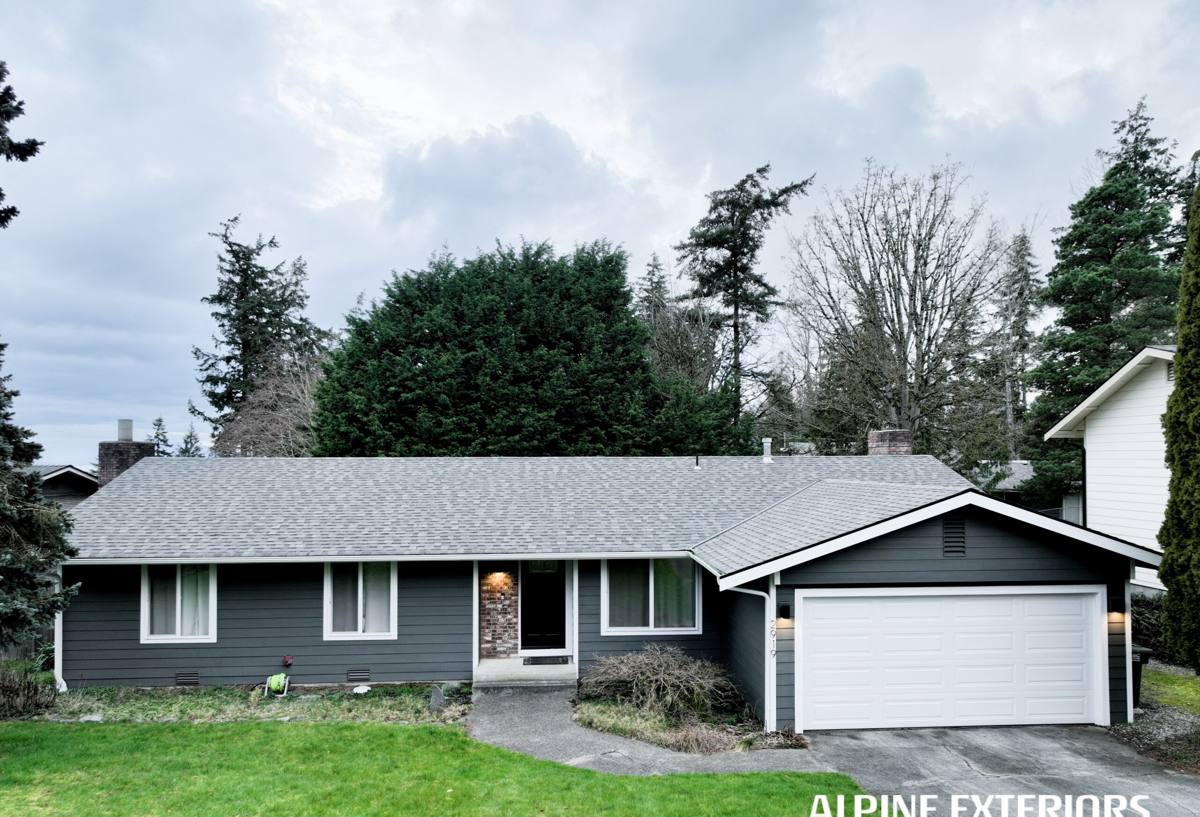
What Salt Air, Driving Rain, and Moss Season Actually Do to Vertical Siding
Three things define siding performance near this stretch of coastline, and board and batten interacts with all three differently than horizontal lap siding does.
Salt air accelerates corrosion on anything metal — fasteners, flashing, trim screws. On a batten system, every batten is typically face-nailed or blind-nailed at a regular interval, which means dozens more fastener penetrations per wall than a comparable lap job. If those fasteners aren't rated for a marine or near-marine environment, you get rust streaking bleeding through the paint film years before the siding itself is due for attention.
Driving rain off the bay doesn't fall straight down — it hits walls at an angle, which pushes water into any gap, lap, or seam that isn't properly lapped, flashed, or gapped. Vertical battens create dozens of linear seams running the full height of a wall. Each one needs to shed water outward, not wick it inward.
Moss season here runs long — shaded north and west-facing walls, roof-to-wall transitions, and anywhere air doesn't move stay damp for weeks at a stretch. Moss and algae don't just look bad; they hold moisture against the siding surface and, on porous or improperly primed materials, they accelerate paint failure and substrate breakdown underneath.
None of this means board and batten is a bad choice for a Fairhaven-area home. It means the installation details that a lot of crews treat as optional — drainage gaps, fastener spec, flashing sequence — are not optional here.
What a Correct Board & Batten Installation Actually Requires
A Real Drainage Plane and Rainscreen Gap
Any wall assembly, no matter the siding, eventually lets some moisture behind the cladding — through a nail hole, a wind-driven seam, condensation. What separates a wall that dries out from one that rots is whether there's a path for that moisture to drain and evaporate. On board and batten specifically, we install a weather-resistant barrier over the sheathing and use vertical furring strips to create a rainscreen gap behind the panel. That gap lets bulk water drain down and out at the base of the wall instead of sitting trapped against the sheathing, which is exactly the setup that keeps a wall dry through a wet Whatcom County winter.
Fastening and Flashing That Match the Environment
We fasten with corrosion-resistant fasteners sized and spaced to manufacturer spec, not shortcuts. Every horizontal transition — window heads, roof-to-wall intersections, the base of the wall — gets proper flashing and kick-out details so water is directed away from the framing, not into it. Batten seams are spaced and fastened so the assembly can move slightly with temperature and moisture changes without opening a gap or cracking the caulk line.
The James Hardie System We Install for Board & Batten
We install James Hardie fiber cement exclusively — no LP SmartSide, no vinyl, no primed spruce or cedar board and batten. That's a deliberate standard, not a default. Wood-based board and batten looks good on day one, but in this climate it needs frequent recaulking and repainting to keep water out of exposed end grain and seams, and it's a slower path to rot once maintenance slips. Vinyl board and batten profiles exist, but vinyl is a thin extrusion that flexes, fades, and doesn't hold paint if you ever want to change the color — not a fit for a coastal wall that takes real wind load.
HardiePanel Vertical Siding
The panel component is HardiePanel, a fiber cement sheet engineered specifically for vertical board and batten and similar applications. It's non-combustible, dimensionally stable in wet climates, and manufactured to the HZ10 formulation Hardie builds for Pacific Northwest moisture exposure — meaning it's specifically engineered to resist the freeze-thaw and moisture cycling this region sees, rather than being a general-purpose product used everywhere.
HardieTrim Battens and the ColorPlus Finish
The vertical battens are HardieTrim, matched to the same fiber cement formulation so the whole wall assembly expands and contracts together instead of fighting itself. Where the budget allows, we specify ColorPlus factory finish — a baked-on finish applied under controlled conditions before the material ever reaches the jobsite, which holds color and resists fading and chipping far better than a field-applied paint job on a rainy coastal schedule. It also comes with its own finish warranty separate from the substrate warranty, so a homeowner isn't relying on one crew's paint-day weather luck for long-term color performance.
How Board & Batten Materials Actually Hold Up in This Climate
| Material | Salt Air / Fastener Behavior | Driving Rain Performance | Moss / Algae Resistance | Maintenance Burden |
|---|---|---|---|---|
| James Hardie fiber cement | Compatible with corrosion-resistant fastener systems; substrate itself doesn't corrode | Engineered HZ10 formulation for PNW moisture; performs well with proper rainscreen detailing | Dense, factory-finished surface resists buildup better than porous wood | Occasional wash-down; ColorPlus finish extends repaint interval significantly |
| Primed wood (spruce/cedar) | Same fastener exposure, plus wood movement can work fasteners loose over time | Absorbs moisture at end grain and seams if caulk fails | Porous surface holds moisture, more prone to moss/algae staining | Regular recaulking and repainting required to stay watertight |
| Vinyl board and batten profile | Fasteners hidden but panel itself can warp/loosen in wind | Seams rely on lap fit, not true flashing; can be blown or driven-rain vulnerable | Non-porous but seams and J-channels trap debris and moisture | Low, but color is baked-in and cannot be refreshed once faded |
Our Process, Start to Finish
We treat every board and batten job on a coastal-facing home the same methodical way, whether it's a single accent wall or a full exterior.
- On-site assessment — we look at existing siding condition, wall orientation relative to prevailing weather, current flashing, and any moisture or rot already present before quoting anything.
- Tear-off and sheathing inspection — old siding comes off and we inspect the sheathing underneath for hidden water damage before covering it back up.
- Weather-resistant barrier and rainscreen installation — a continuous drainage plane goes on first, followed by vertical furring to create the airgap behind the panels.
- Flashing at every transition — windows, doors, roof lines, and the wall base get flashed and sequenced correctly, shingle-fashion, so water always moves outward and down.
- HardiePanel and HardieTrim installation — panels and battens go up per manufacturer fastening spec, using corrosion-resistant fasteners throughout.
- Sealant and finish work — seams that require sealant get a product rated for the exposure, and any field-finish work is completed and inspected before we call the job done.
- Final walkthrough and cleanup — we walk the finished wall with the homeowner and clear the site completely.
Signs Your Current Siding Needs Attention
Homes in this area often show these issues before the siding looks obviously "bad" from the curb — they're worth checking for on any home near the water, board and batten or otherwise.
- Rust streaking running down from fastener heads or batten seams
- Persistent green or black staining on shaded or north-facing walls, especially at the base
- Soft or spongy spots when you press on the siding near the bottom of the wall or below windows
- Paint that's peeling or bubbling in vertical strips along batten edges rather than evenly across the wall
- Visible gaps or cracked caulk at seams, window trim, or the roof-to-wall intersection
- A musty smell or interior wall staining on the room behind an exterior wall that takes heavy weather
Why Hiring a Crew That Already Works This Area Matters
A siding crew that mostly works dry, inland jobs doesn't automatically know to spec marine-grade fasteners, or to size a rainscreen gap for a wall that stays damp for weeks at a time, or to plan a flashing sequence around wind-driven rain instead of straight-down rain. Those aren't exotic details — they're standard practice for anyone who works this stretch of Whatcom County coastline regularly. Getting them right the first time is a lot cheaper than fixing a rotted wall assembly five years in because a gap or a fastener spec got treated as optional.
We're based in Ferndale and do this work throughout the surrounding Whatcom County area, including waterfront and near-waterfront neighborhoods like Fairhaven where salt exposure and moisture are part of daily conditions rather than an occasional storm event. That's the environment our install details are built around.
What Drives Cost on a Board & Batten Project
Every home is different, but a few factors consistently move the price on a board and batten job in this area, and it's worth understanding them before you get a quote.
| Factor | Why It Matters |
|---|---|
| Existing wall condition | Hidden rot or moisture damage found during tear-off adds sheathing or framing repair before new siding can go on |
| Wall exposure and height | Walls facing prevailing wind and rain, or requiring staging/lifts, take more time to detail and protect correctly |
| Trim and batten spacing complexity | Tighter batten spacing and detailed trim around windows and corners means more linear feet of fastening and flashing |
| Finish choice | Factory ColorPlus finish costs more upfront than field-applied primer coat but reduces repainting frequency |
| Scope | A single accent wall is a very different project from a full exterior re-side, both in cost and in how much of the drainage plane needs replacing |
If you're weighing board and batten for a home in the Fairhaven area, we're happy to walk the property, look at what's there now, and give you a straight assessment of what correct installation would involve for your specific walls — no pressure, no obligation. Reach out and we'll set up a free estimate.