 Ferndale Exterior
 Fairhaven's Climate Is Harder on Siding Than Most Homeowners Realize
Fairhaven sits close to the water, and that proximity shapes almost everything about how exterior materials hold up here. Salt-laden air drifts in off the water and settles on every exposed surface, including siding, trim, and fasteners. Add in driving, wind-blown rain that hits walls at an angle instead of falling straight down, and you have two of the toughest conditions a building material can face in Whatcom County. Then there's the moss season — the long stretch of cool, damp months when north-facing walls, shaded elevations, and anything tucked under overhangs stay wet far longer than they would in a drier climate.
None of this is unique to one house or one street. It's a regional reality for anyone living near Ferndale's coastline, and it's the reason siding choices that work fine in a dry inland climate can underperform here. Wood-based products absorb moisture and swell. Vinyl can warp or fade faster under UV and salt exposure. Paint on porous substrates has to be reapplied more often just to keep water out. Fairhaven homes need a siding system that's dimensionally stable, resists moisture intrusion at the material level, and doesn't rely on a perfect paint job to stay protected.
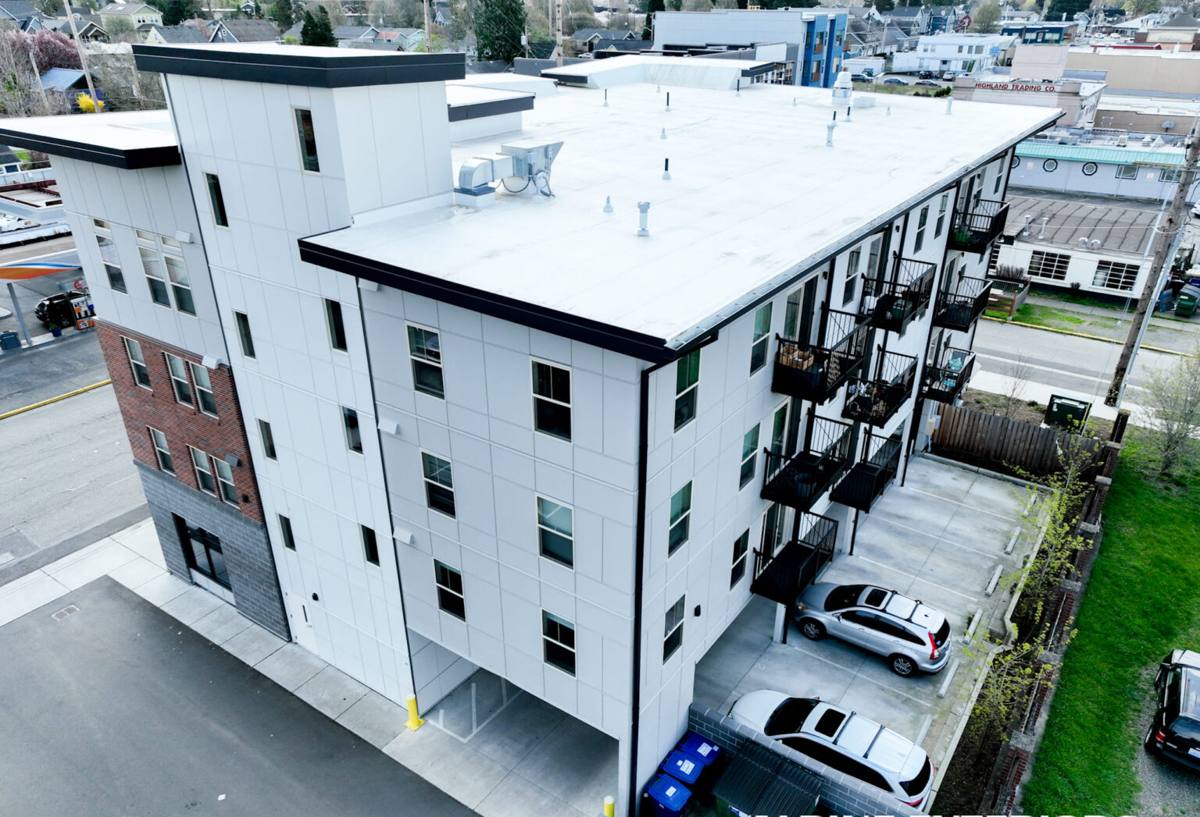
Why We Install James Hardie Fiber Cement — and Nothing Else
We made a deliberate decision to install only James Hardie fiber cement siding. Not vinyl, not LP SmartSide, not cedar, not primed spruce. That's not a marketing gimmick — it's a standard we hold because of what we've seen happen to lesser materials in exactly this kind of coastal, wet, moss-prone environment.
Fiber cement is non-combustible, which matters given Washington's wildfire risk in dry summer months even in coastal counties. It doesn't swell, rot, or attract wood-boring insects the way untreated or primed wood products can. It holds paint and factory finish far longer than wood substrates because it's dimensionally stable — it doesn't expand and contract with humidity swings the way wood does, so caulk joints and finishes last longer. And James Hardie's ColorPlus factory-applied finish is baked on under controlled conditions, which gives it more consistent, longer-lasting color and adhesion than field-applied paint ever achieves, especially in a climate where crews often can't get a full dry-cure window between rain systems.
We're not going to tell you every other siding product is worthless — that's not fair or accurate. LP SmartSide, vinyl, and cedar all have legitimate uses and can perform reasonably well in the right setting. But for homes exposed to salt air, sideways rain, and months of damp shade, we don't think the trade-offs are worth it, and we don't put our name on installations we don't believe in.
What a Correct Fairhaven Installation Actually Requires
James Hardie manufactures siding in different formulations for different climate zones, and installing the wrong one — or installing the right one incorrectly — is how homeowners end up with problems that get blamed on the product instead of the installer. For a coastal Whatcom County home, the details below aren't optional extras. They're the difference between siding that performs for decades and siding that fails early.
Climate-Engineered HZ Product Selection
James Hardie's HZ5 formulation is engineered specifically for climates with significant moisture exposure and freeze-thaw cycling, which describes the Pacific Northwest coastline well. Using the correct HZ designation for this region isn't a cosmetic choice — it affects how the board handles moisture cycling over its lifespan.
A Drainage Plane and Rainscreen Gap
Given how much wind-driven rain Fairhaven walls absorb, a correctly built wall assembly needs a weather-resistive barrier and, ideally, a rainscreen gap behind the siding so any moisture that does get past the cladding can drain and dry rather than sitting against the sheathing.
Flashing at Every Penetration
Windows, doors, hose bibs, light fixtures, and any other wall penetration need proper flashing integrated with the water-resistive barrier — not just caulk. Caulk is a second line of defense, never the only one, especially in a climate where UV and salt exposure break down sealants faster.
Fastening and Clearances
James Hardie publishes exact fastener spacing, minimum clearances from grade, roof lines, and decks, and gapping requirements at butt joints. Skipping these to save time is one of the most common causes of premature failure we see on re-inspections of other contractors' work — and it's exactly the kind of shortcut that shows up first in a wet, coastal climate like this one.
Matching the Right Hardie Product Line to a Fairhaven Home
James Hardie offers several product lines and textures, and the right pick depends on the home's architecture, exposure, and how much upkeep the owner wants to take on. Below is a general comparison to frame the conversation — the right fit for your home depends on its specific exposure and design.
| Product Line | Typical Use | Why It Fits a Coastal Climate |
|---|---|---|
| HardiePlank Lap Siding | Most common wall cladding, several textures | Widest range of ColorPlus finishes; proven long-term performance in wet climates |
| HardiePanel Vertical Siding | Modern facades, accent walls, gables | Fewer horizontal ledges for water and moss to collect on |
| HardieShingle Siding | Craftsman and cottage-style homes | Traditional look without the moisture absorption of real wood shingle |
| HardieTrim Boards | Corners, fascia, window and door trim | Resists the swelling and rot that affects wood trim in damp shade |
For homes in Fairhaven with north-facing walls or heavy tree cover, we often steer the conversation toward smoother, less deeply-grooved textures and vertical panel details, since fewer horizontal ledges mean less surface area for moss and organic debris to build up on.
The Moss Season Factor
Whatcom County's long moss season deserves its own discussion because it changes how siding actually behaves over time, not just how it looks. Moss and algae need sustained moisture and shade to establish, and shaded, north-facing walls near mature trees or tight side yards are the areas that stay damp longest. On a wood or wood-composite product, that sustained dampness eventually works its way into the substrate. On correctly installed James Hardie siding, the fiber cement itself isn't feeding on that moisture — but surface growth can still develop, especially where dirt, pollen, and organic debris are allowed to sit.
The fix isn't a different product — it's smart design and periodic cleaning. Proper flashing and drainage keep water from lingering against the wall. Trimming back vegetation that shades a wall for months at a time helps it dry between rain events. And an occasional gentle wash (never a high-pressure blast that can force water behind the boards or damage the finish) keeps organic growth from taking hold in the first place.
What a Siding Project Costs, and What Drives the Price
We don't publish fixed prices because every home is different, but the factors below are the ones that actually move the number on a Fairhaven job. This gives you a realistic way to think about your own project before we walk the house together.
| Cost Factor | Why It Matters Here |
|---|---|
| Existing siding removal | Old wood or vinyl siding often reveals hidden moisture damage from years of coastal exposure |
| Sheathing and framing repair | Salt air and rain increase the odds of finding rot at corners, sills, and penetrations once old siding is off |
| Product line and texture | Panel, plank, and shingle profiles carry different material and labor costs |
| Trim and detail work | Homes with more windows, dormers, or architectural detail require more precise flashing and cutting |
| House size and stories | Access, scaffolding, and total square footage scale labor time directly |
| Color and finish | Factory ColorPlus finishes vary by line but eliminate a full-house paint job at installation |
The only way to get an accurate number is a walkthrough of your specific home, but this table should help you understand why two houses of similar size can land at different price points.
Our Process, Start to Finish
We keep the process straightforward because homeowners deserve to know what's happening at each stage of a project on their own house.
- Walkthrough and assessment — we inspect the existing siding, look for signs of moisture damage, and evaluate wall exposure and shading.
- Written estimate — a clear scope covering product line, color, trim details, and any substrate repair we anticipate.
- Substrate prep — old siding removal, sheathing repair where needed, and installation of the weather-resistive barrier and drainage plane.
- Installation to manufacturer spec — correct fastener spacing, clearances, and flashing at every penetration, no shortcuts.
- Final walkthrough — we go over the finished work with you before calling the job complete.
Why a Crew That Already Works Fairhaven Matters
Siding installation is detail work, and the details that matter most change with the environment. A crew that mostly works dry, inland climates may not think twice about clearance heights, rainscreen gaps, or flashing sequencing — because in their climate, those shortcuts often don't get punished right away. In a coastal Whatcom County environment with salt air, driving rain, and a long moss season, those same shortcuts show up as problems within a few wet seasons, not decades.
Working repeatedly in this specific climate means we've seen which details actually matter here: where moisture tends to collect on local homes, which elevations need extra attention to drainage, and how James Hardie's HZ5 product performs under real Whatcom County weather rather than a manufacturer's generic climate assumptions. That local pattern recognition is something a one-time or out-of-area crew simply doesn't have yet.
A Simple Maintenance Checklist for Fairhaven Homeowners
Correctly installed James Hardie siding is low-maintenance, not zero-maintenance. A few simple habits go a long way in this climate.
- Rinse siding gently once or twice a year, focusing on shaded and north-facing walls where moss and algae build up fastest.
- Trim back vegetation that keeps a wall section shaded and damp for extended periods.
- Check caulking annually at trim joints, window and door penetrations, and fixture cutouts; recaulk before gaps let water in.
- Inspect for gutter overflow or downspout misdirection that sprays water directly onto siding.
- Look at ground clearance each year, especially around planting beds, mulch, or raised landscaping that can creep up toward the siding's bottom edge.
- Address any soft spots, staining, or bubbling paint promptly rather than waiting — early moisture intrusion is far easier to fix than deferred damage.
Ready to Talk About Your Fairhaven Home?
If you're weighing siding options for a home in the Fairhaven area, we're happy to walk the property with you, point out anything the coastal exposure has already done to your current siding, and talk through what a correctly installed James Hardie system would look like on your specific house. There's no pressure and no obligation — just a straightforward conversation from a crew that installs one product because we believe in it. Use the form below to request a free estimate.