 Ferndale Exterior
 Building New in Fairhaven? The Windows Have to Be Installed Right the First Time
When you're framing a new home near Fairhaven, the windows aren't an afterthought you can fix later without tearing into the wall — they're part of the building envelope from day one. Get the flashing sequence wrong, skip a sill pan, or use hardware that can't handle salt-laden air off the water, and the problem doesn't show up on move-in day. It shows up two or three winters later as staining, soft framing, or a window that won't seal against driving rain anymore. New-construction window installation is a different job from replacing an old window in an existing wall, and it needs to be treated that way from the first stud layout.
This page covers what we look at specifically for new-construction window installs in the Fairhaven area — a coastal-influenced community close to Ferndale in Whatcom County — and how our process is built around the realities of building here rather than a generic install checklist.
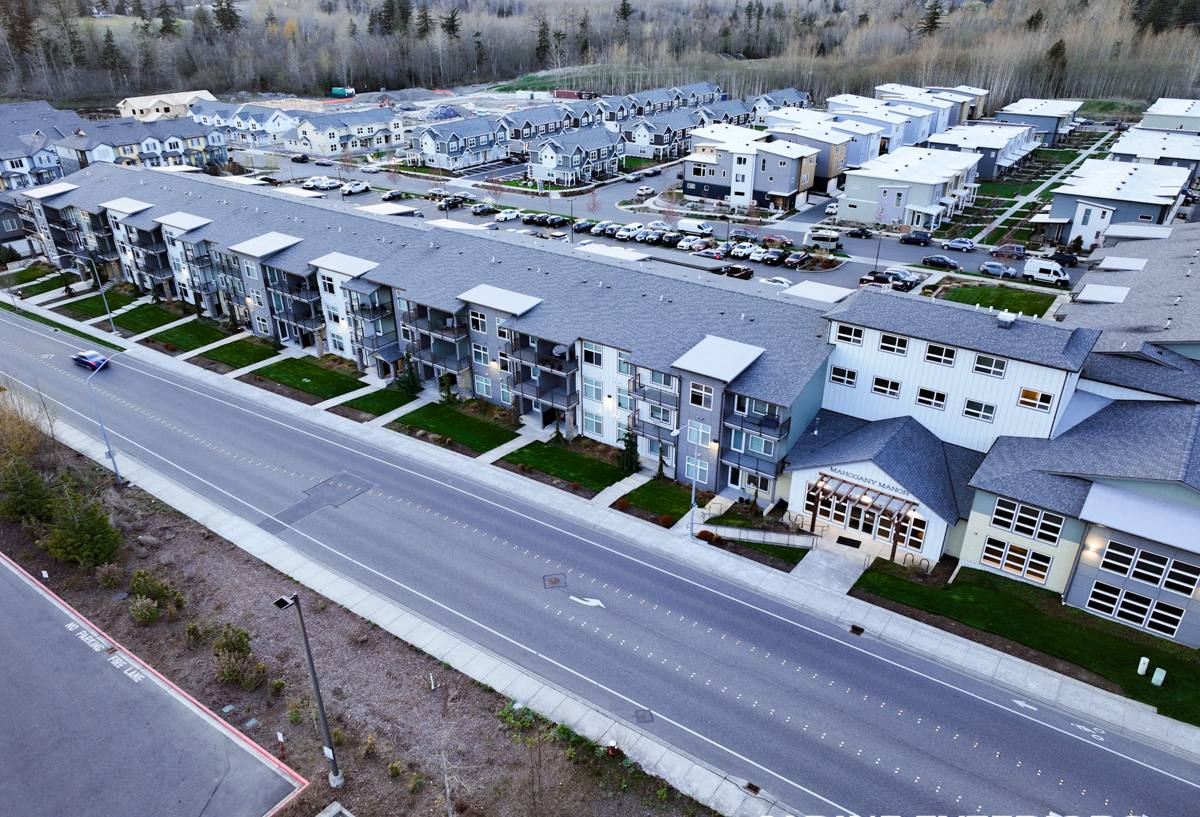
What Fairhaven's Climate Actually Demands From a New Window Install
Whatcom County's marine climate is mild compared to a lot of the country, but "mild" doesn't mean "easy on a building." For homes near Fairhaven, three conditions matter more than almost anywhere else in the region: salt air, wind-driven rain, and a moss season that stretches for months at a time.
Salt Air and Hardware Corrosion
Proximity to saltwater means airborne salt settles on everything — including window hardware, fasteners, and any exposed metal flashing. Cheap fasteners and low-grade hinge or lock hardware corrode faster in this environment than they would ten or twenty miles inland. On a new build, this is the moment to spec corrosion-resistant fasteners and hardware once, rather than dealing with pitted hinges and stuck locks a few years in.
Wind-Driven Rain and Flashing
Rain here rarely just falls straight down — coastal wind pushes it sideways into wall assemblies, which is exactly the condition window flashing is designed to defend against. A flashing detail that would be "fine" in a calmer inland location can fail here because the water is being driven up and under laps that were never meant to hold back pressure from the side. New-construction framing is the only point where flashing can be built in layers, correctly lapped, before siding covers it up.
Moss Season and Moisture Cycling
Whatcom County's moss season isn't just a roofing and siding issue — it reflects months of the building envelope staying damp rather than drying out between rain events. Window openings that trap moisture instead of shedding it stay wet longer, and wood framing that stays wet longer is what eventually leads to soft sills and rot. A correct install manages where water goes and how the assembly dries, not just whether the window itself is watertight.
What a Correct New-Construction Window Install Actually Involves
New-construction windows are installed into open framing before the exterior finish goes on, which is an advantage — but only if every layer is built in the right order and properly integrated with the water-resistive barrier (WRB) and siding that come after.
- Rough opening prep — squared, correctly sized, and free of debris before anything else happens.
- Sill pan flashing — a sloped, sealed pan at the bottom of the opening so any water that gets past the window has somewhere to go besides the framing.
- WRB integration — the housewrap or building paper is cut, lapped, and taped so water sheds over each layer below it, never into a layer above.
- Window attachment — nail-fin or block-frame installation, shimmed level and plumb, fastened per the manufacturer's schedule (skipping fasteners or over-driving them both cause problems).
- Head flashing — installed last at the top of the opening, lapping over the WRB so water is directed out and down, never trapped behind the flange.
- Air sealing and insulation — the gap between the window frame and rough opening is sealed against air leaks without over-packing it, which can bow the frame.
Every one of those steps is inspectable while the wall is still open. Once siding goes on, the only sign of a mistake is the eventual damage it causes — which is why we treat the flashing and integration sequence as non-negotiable, not a step to speed through.
Choosing a Frame Material for a Coastal-Influenced Site
Frame material matters more here than in a drier, inland build because it has to hold up to sustained moisture cycling and salt air over decades, not just look good on day one. There's no single "best" material for every project — it depends on your budget, maintenance appetite, and the look you're building toward. Here's how the common options stack up for this specific environment:
| Frame Material | Coastal/Moisture Performance | Maintenance | Typical Trade-Off |
|---|---|---|---|
| Vinyl | Good — won't rot or corrode, handles moisture well | Low | Fewer color/custom options, can expand/contract with temperature swings |
| Fiberglass | Very good — dimensionally stable, resists moisture and salt exposure well | Low | Higher upfront cost than vinyl |
| Wood-clad | Depends heavily on cladding and install quality — cladding protects the wood, but any breach exposes it to rot risk | Higher — finish and seals need periodic attention | Best interior appearance for some homeowners; more long-term upkeep in a wet climate |
| Aluminum | Conducts cold and can corrode faster in salt air without a quality finish | Moderate | Slim sightlines, but not our first recommendation for this specific site condition |
We'll talk through these trade-offs against your actual plans and budget rather than pushing one material for every project — the right call depends on the home's design, your maintenance preferences, and how close the building sits to open water and prevailing wind.
Energy Code and Performance in a Marine Climate
New construction in Washington has to meet current state energy code requirements, and window performance is a real part of that calculation — not just a box to check. Two numbers matter most:
- U-factor — how well the window resists heat loss. Lower is better for our climate, where you're heating more months than cooling.
- Condensation resistance — how well the window handles indoor humidity against outdoor temperature swings without fogging or sweating on the glass and frame.
Low-E coatings and gas-filled (typically argon) sealed glazing units are standard on most new-construction windows now, and they earn their keep here — better performance means less condensation buildup on the glass during the wetter months, which in turn means less moisture sitting against your window frames and sills.
What Drives the Cost of a New-Construction Window Package
Every new build is different, but the same handful of factors move the price up or down on a window package. Knowing them up front makes it easier to plan your budget before framing starts.
| Factor | Why It Matters |
|---|---|
| Number and size of openings | More glass and larger units mean more material and labor |
| Frame material | Vinyl, fiberglass, and wood-clad carry different price points, as shown above |
| Glazing package | Upgraded Low-E coatings or triple-pane glass add cost but improve performance |
| Opening complexity | Odd shapes, large sliders, or corner windows take more time to flash and integrate correctly |
| Site access and scheduling | Coordinating install timing with the framing crew affects labor efficiency |
How Our Process Works With Your Builder or GC
On a new build, window installation has to be sequenced with the framing and WRB work — not treated as an isolated task. We coordinate directly with your general contractor or framing crew so the rough openings are correct before windows arrive, and so our flashing and integration work lines up with whatever WRB and siding system is going over it. That means being on-site at the right moment in the build, not just showing up with windows and hoping the opening is ready.
We also walk the openings before install and photograph flashing details as they're completed — while the wall is still open — so there's a record of what was done before siding covers it. If an inspector or your builder wants to verify the work, it's documented, not just taken on faith.
A Quick Checklist Before You Sign Off on Any New-Construction Window Install
- Sill pan flashing installed and sloped to drain outward, before the window goes in
- WRB laps shingled correctly — each layer sheds water onto the layer below it
- Head flashing installed last, over the WRB, not tucked behind it
- Corrosion-resistant fasteners and hardware specified for coastal exposure
- Window shimmed level and plumb, fastened per manufacturer schedule — not just "close enough"
- U-factor and condensation resistance numbers documented for code compliance
- Photos or documentation of flashing before siding covers the opening
If a contractor can't speak to these points on a new build, it's worth asking more questions before the walls close up.
Why a Crew That Already Works Fairhaven Matters
General window installation know-how gets you most of the way there, but the last piece — knowing how hard the wind-driven rain hits a given site, how much salt exposure a particular stretch near Fairhaven really sees, and how long moss season keeps a wall assembly damp — comes from working this specific area over and over. We build every new-construction window install around those conditions rather than a one-size-fits-all approach, because a detail that holds up fine forty miles inland isn't always enough here.
If you're framing a new home near Fairhaven and want windows installed correctly the first time — flashed, sealed, and matched to what this coastal stretch of Whatcom County actually throws at a building — we're happy to walk your plans and give you a straightforward, no-pressure estimate using the form below.