 Ferndale Exterior
 Custer's Siding Problem Isn't Like Bellingham's
Custer sits close to the water — near enough to the Strait of Georgia and Cherry Point that salt-laden air is a daily fact of life, not an occasional weather event. That changes what "good siding" means out here. A product that performs fine in inland Whatcom County can start showing problems in Custer years earlier, simply because the air itself is more corrosive and the rain comes in sideways off the water more often than it falls straight down.
Homeowners in this area are usually dealing with three things at once: salt air that accelerates corrosion of fasteners and finish degradation on lesser materials, driving rain that gets pushed into laps and seams by wind off the water, and a moss season that runs long — often eight or nine months of the year — thanks to shade, moisture, and mild temperatures that never really dry things out. Siding here needs to shed water aggressively, resist the biological growth that thrives in constant dampness, and hold its finish without chalking or fading from salt exposure.
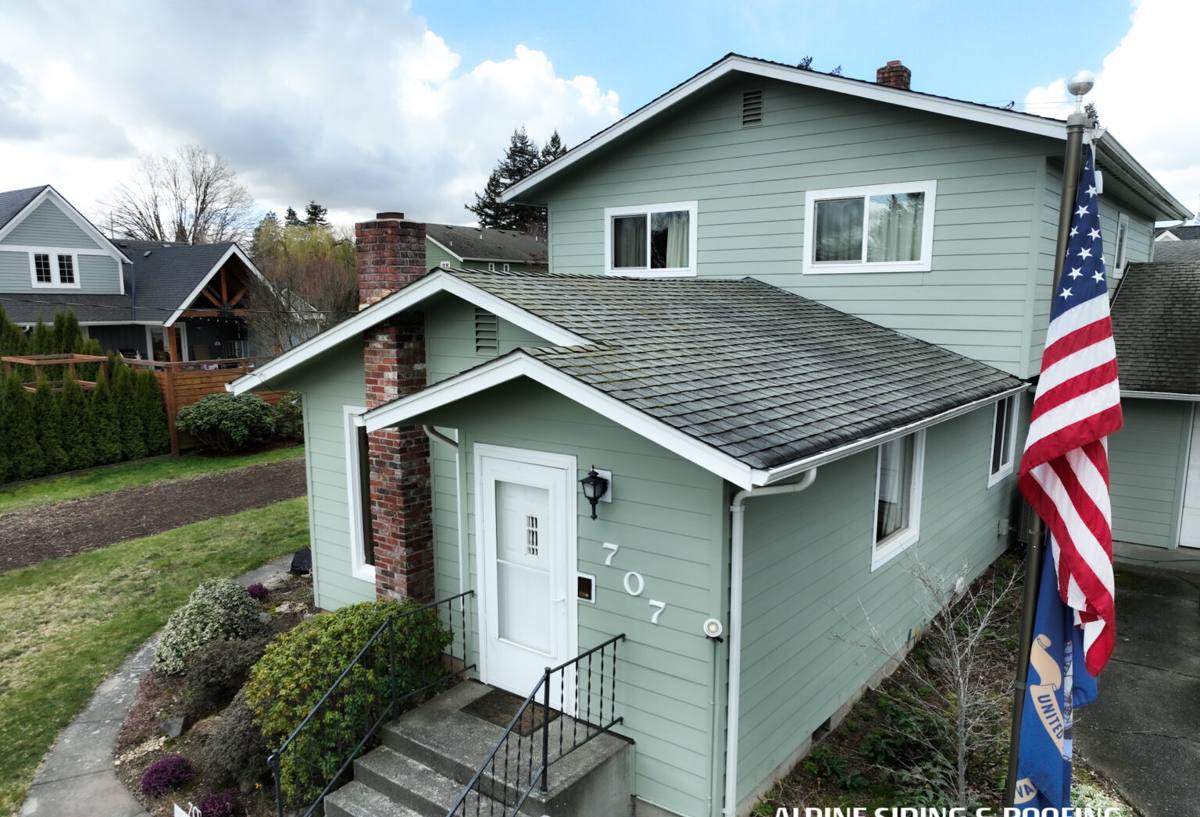
Why We Only Install James Hardie Fiber Cement
We don't install vinyl, LP SmartSide, or unfinished wood siding, and Custer's climate is a big part of why. Vinyl expands and contracts more than fiber cement and can warp under prolonged UV and temperature swings; its seams are also a common entry point for wind-driven rain when installed on a home exposed to open water gusts. Engineered wood products like LP SmartSide rely on a wood-strand core and a factory treatment to resist moisture — that works, but it depends entirely on an unbroken seal, and any cut edge, fastener hole, or caulk failure gives moisture a path into the substrate. Cedar and primed spruce look great on day one but need a maintenance schedule most homeowners don't keep up with, and in a moss-heavy environment like Custer, untreated wood siding invites growth that traps moisture against the wall.
James Hardie fiber cement is cement, sand, and cellulose fiber — it doesn't rot, it isn't a food source for moss or algae the way wood is, and it doesn't warp with humidity swings the way vinyl can. The ColorPlus factory finish is baked on and formulated to resist fading from UV and salt exposure far longer than field-applied paint. That combination is why it's the only product we put on homes in this area.
What ColorPlus Actually Buys You Here
In a salt-air environment, field-applied paint is the first thing to fail — it chalks, fades unevenly, and needs recoating on a shorter cycle than most owners expect. ColorPlus is applied and cured in a controlled factory setting in multiple coats, which gives it better adhesion and UV resistance than paint applied on-site after installation. It's not a cosmetic upgrade; it's a durability decision specific to climates like Custer's.
What Correct Installation Looks Like on a Custer Home
Fiber cement siding is only as good as the installation behind it. The material itself resists moisture and rot, but a poorly installed job can still let water behind the siding and into the wall assembly — and once that happens, the sheathing and framing pay the price, not the siding itself. On a coastal-exposure home, a few details matter more than usual:
Moisture Management
Every horizontal lap needs correct overlap, every panel needs the manufacturer-specified clearance from grade, decks, and roof lines, and every penetration — vents, light fixtures, hose bibs — needs to be flashed and sealed before the siding goes on, not after. On homes facing open wind off the water, we pay particular attention to butt joints and corner details, since that's where wind-driven rain finds its way in on a poorly built wall.
Fastening for Salt Air
Fastener corrosion is accelerated by salt air, so fastener selection isn't a place to cut corners in Custer. Hardie's installation specifications call for corrosion-resistant fasteners driven to a specific depth and spacing — over-driven or under-driven fasteners can crack the board or leave it loose enough to move and eventually let water track behind it. We follow Hardie's published fastening schedule for the specific product line and exposure, not a generic "close enough" pattern.
Rainscreen and Drainage Plane
Behind the siding, a proper water-resistive barrier and drainage gap give any moisture that does get past the cladding a way out instead of a place to sit. On a home this exposed to driving rain, that drainage plane is doing real work every winter, and it's not visible once the job is finished — which is exactly why it needs to be done right the first time.
Product Lines That Make Sense for This Area
James Hardie makes several siding profiles, and the right one for a Custer home depends on the style of the house and how exposed it is to wind and rain off the water.
| Product | Best For | Why It Fits Custer |
|---|---|---|
| HardiePlank Lap Siding | Traditional and craftsman-style homes | Overlapping profile sheds driving rain effectively when installed with correct exposure and overlap |
| HardiePanel Vertical Siding | Modern homes, accent walls, gable ends | Fewer horizontal seams reduces water-entry points on wind-exposed elevations |
| HardieShingle | Cottage and Cape Cod styles | Deep shadow lines hold up visually even with regular moss/mildew cleaning |
| HardieTrim | Fascia, corners, window trim | Resists the moisture and rot that plague wood trim in constant damp conditions |
All of these are available in Hardie's HZ5 formulation, engineered for the freeze-thaw and moisture cycling typical of the Pacific Northwest — a meaningful difference from the HZ10 formulation built for hot, dry climates.
Our Process for a Custer Siding Job
- On-site inspection of existing siding, sheathing, and any moisture damage already present — common on older homes near the water
- Assessment of wind and rain exposure by elevation, since the water-facing side of a Custer home often needs more attention than the sheltered side
- Removal of old siding and inspection of the sheathing underneath for rot, especially around window and door openings
- Installation of water-resistive barrier, flashing, and drainage plane before any Hardie product goes up
- Installation of Hardie siding, trim, and accessories to manufacturer specification, with attention to fastener corrosion resistance
- Final walkthrough covering caulking, touch-up, and what to expect from the finish over the first few seasons
What This Actually Costs
Every home is different, and the final number depends on square footage, the condition of the existing wall assembly, and how much trim and detail work is involved. In general terms, the factors that move the price are:
| Factor | Why It Matters |
|---|---|
| Sheathing condition | Rot or moisture damage found during tear-off adds repair scope before new siding can go on |
| Home elevation exposure | Water-facing walls may need additional flashing detail versus sheltered walls |
| Siding profile mix | Combining lap, panel, and shingle styles adds labor versus a single uniform profile |
| Trim scope | Full HardieTrim replacement costs more than reusing sound existing trim |
| Color and finish | Factory ColorPlus finishes carry a different cost structure than field-painted options |
We give every Custer homeowner a written estimate after an in-person inspection — not a phone-quote guess — because the sheathing condition alone can change the scope significantly on a coastal-exposure home.
Living With Fiber Cement in a Moss-Heavy Climate
Fiber cement doesn't feed moss and algae the way wood does, but nothing painted or finished is immune to growth taking hold on a shaded, damp wall in this climate. The good news is that maintenance is straightforward and infrequent compared to wood or engineered wood siding.
- Rinse siding with a garden hose once or twice a year, more often on shaded north- and west-facing walls
- Trim back vegetation and tree cover that keeps siding from drying out between rain events
- Use a soft-bristle brush and mild detergent for visible moss or algae — avoid pressure washing directly at seams and joints
- Inspect caulking at trim and penetrations every couple of years and recaulk where it's cracked or pulled away
- Watch for any staining at the bottom edge of boards, which can signal a clearance or flashing issue worth having checked
Why Hiring a Crew That Already Works in Custer Matters
General contractors who don't work this stretch of Whatcom County regularly often underestimate how much wind-driven rain and salt exposure change the installation details. Correct clearances, flashing, and fastening aren't optional add-ons — they're the difference between siding that lasts its full service life and siding that starts showing moisture problems in year five. A crew that installs Hardie products across Ferndale and the surrounding Whatcom County coastline knows which elevations need extra flashing attention and which fastening details matter most in salt air, because they've seen what happens when those details get skipped.
If you're weighing your siding options for a home in Custer, we're happy to take a look and give you a straightforward, no-pressure estimate — no scare tactics, just an honest assessment of what your home needs and what it would take to do the job right.