 Ferndale Exterior
 Point Roberts Puts Exterior Walls Through More Than Most Whatcom County Homes
Point Roberts sits out on its own — a small peninsula bordered by water on nearly every side, tucked south of the Canadian border and connected to the rest of Whatcom County only by a drive through Canada. That geography is part of what makes it a beautiful place to own a home, and it's also exactly why siding here takes more abuse than siding a few miles inland in Ferndale or Bellingham.
Homes on the peninsula sit close to open water, which means near-constant exposure to salt-laden air. Salt doesn't just sit on a wall — it works into fasteners, flashing, and any gap in a finish, accelerating corrosion and breaking down coatings faster than a dry-climate house would ever experience. Add in driving rain that comes in sideways off the water during winter storms, and siding has to do more than shed water falling straight down — it has to resist wind-driven moisture forced sideways and upward into laps, seams, and trim joints.
Then there's moss season, which in this part of Washington isn't really a season so much as most of the year. Shaded walls, persistent damp, and mild temperatures give moss and algae everything they need to take hold on any siding surface that can't shed moisture quickly. Put those three things together — salt air, driving rain, and a long moss season — and you get an environment that finds every weak point in a siding system within a few years, not a few decades.
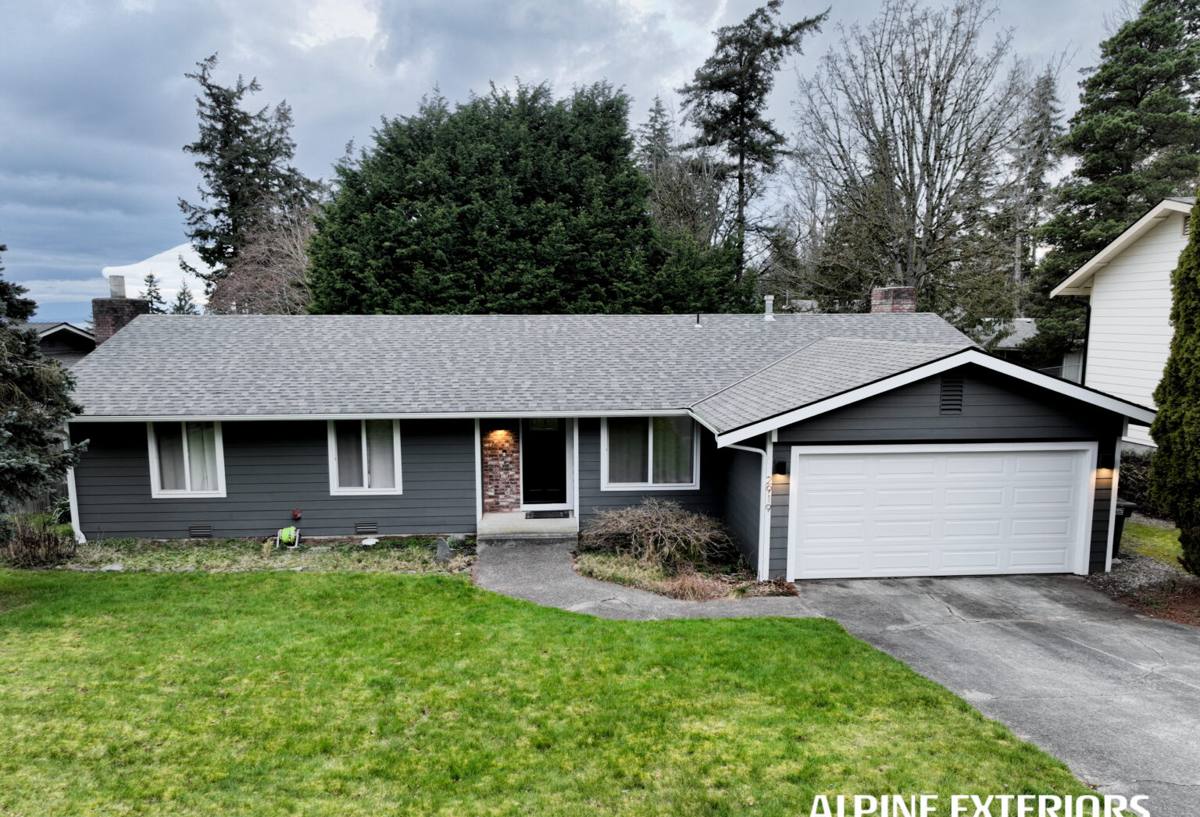
What Siding on the Peninsula Actually Needs to Do
Given that environment, we think about siding performance in very specific terms, not just color and style. A siding system on a Point Roberts home needs to:
- Keep water out at laps, corners, and every penetration — not just resist rain hitting it head-on
- Resist moisture absorption so it doesn't stay wet long enough to feed moss and algae growth
- Hold a factory finish under UV exposure and salt air without chalking, fading, or peeling
- Handle the swelling and shrinking that comes with constant humidity swings near open water
- Add a non-combustible layer to the exterior, which matters anywhere wildfire smoke and dry summer stretches are a growing concern in the Pacific Northwest
Plenty of siding products can check one or two of these boxes. Very few check all of them consistently, year after year, in a marine environment — which is a big part of why we standardized on one product system rather than offering several.
Why We Install Only James Hardie Fiber Cement
We don't install vinyl, LP SmartSide, Cemplank, Allura, or unfinished wood siding like primed spruce or cedar. That's not a marketing position — it's a standard we hold because of what we've seen happen to lesser-suited products in exactly this kind of coastal, wet climate. Fiber cement, specifically James Hardie's engineered product line, is the one system that consistently holds up to salt air, driving rain, and prolonged dampness without the maintenance headaches or moisture failures we'd otherwise be called back to fix.
Built for This Exact Climate
James Hardie engineers its siding in climate-specific formulations, and the HZ5 line is built for exactly the wet, temperate conditions found throughout western Washington. It's formulated to resist moisture absorption and to hold its shape and finish through repeated wet-dry cycles — which matters enormously on a peninsula where "dry" is a relative term.
A Factory Finish That Holds Up
ColorPlus, Hardie's factory-applied finish, is baked on under controlled conditions rather than brushed or sprayed on site. That matters near salt water: field-applied paint is far more prone to early failure when it's fighting salt exposure and constant moisture from day one. ColorPlus is backed by its own finish warranty separate from the substrate warranty, so homeowners aren't left guessing about coverage if the color fades or peels prematurely.
What a Correct Fiber Cement Installation Actually Involves
Fiber cement siding is only as good as the installation behind it. A huge share of the moisture problems we get called to inspect on other contractors' work trace back to shortcuts taken during install, not a flaw in the material itself. On a Point Roberts home, we treat these details as non-negotiable:
- A drainable water-resistive barrier and rain-screen gap behind the siding, so any moisture that gets past the surface has somewhere to go
- Corrosion-resistant fasteners driven to the manufacturer's exact spacing and depth — a real concern given how fast salt air attacks the wrong hardware
- Proper head flashing over every window and door, not just caulk standing in for flashing
- Kickout flashing at every roof-to-wall intersection, directing runoff away from the wall instead of behind the siding
- Correct clearance between the bottom siding course and grade, decks, and roof lines, so splash-back and standing moisture can't wick into the plank
- Caulk used only where it belongs — sealing penetrations and trim joints — never relied on as a substitute for proper flashing
The Moisture Details Most Crews Skip
The rain-screen gap is the detail we see skipped most often, because it takes more time and doesn't show once the siding is up. Without it, any moisture that finds its way behind the cladding has no path to drain or dry out — which, in a climate with this much sustained dampness, is exactly how rot starts behind a wall that looks fine from the outside. Getting this right is slower and less visible, but it's the difference between siding that performs for decades and siding that hides a problem until it's expensive.
Our Process for Point Roberts Projects
Point Roberts' geography means every project here takes a bit more planning than a job across town. Because the peninsula is physically separated from the rest of Whatcom County, we plan material delivery and crew scheduling as a single coordinated trip rather than assuming we can run back for a forgotten part. That means:
- An on-site assessment where we check the existing wall assembly, look for any hidden moisture or rot, and measure for an accurate material order — because a second trip for missing material costs everyone time
- A full material list confirmed and staged before the crew arrives, including trim, flashing, fasteners, and the specific Hardie plank profile and ColorPlus color selected
- Installation following the sequence above — barrier, rain-screen gap, flashing, then siding — with attention to the details that matter most near open water
- A final walkthrough with the homeowner covering what was done, what to expect from the finish over time, and how to reach us if anything needs attention
Working the peninsula regularly means we already know how to plan around its logistics instead of learning that on your project.
Fiber Cement Compared to Other Siding Options
Homeowners on the peninsula often ask how fiber cement really stacks up against the alternatives, especially given the moisture and salt exposure. Here's how the major options compare in this specific climate:
| Product | Moisture behavior near salt water | Maintenance burden | Fire performance | Typical warranty |
|---|---|---|---|---|
| James Hardie fiber cement | Engineered HZ5 formulation resists absorption; factory finish sheds moisture well | Low — occasional rinse, no repainting under normal warranty life | Non-combustible | Long substrate warranty, separate ColorPlus finish warranty |
| Vinyl siding | Sheds surface water but seams and J-channels can trap moisture; can warp in temperature swings | Low, but color fades and can't be refinished | Combustible, can soften/melt near heat sources | Typically prorated, weaker over time |
| LP SmartSide | Engineered wood strand product; performs well when maintained but is more moisture-sensitive at cut edges and joints than fiber cement | Moderate — edge sealing and joint maintenance matter | Combustible | Manufacturer-backed, typically shorter than Hardie's |
| Cedar or primed spruce | Natural wood; absorbs moisture readily, especially in shaded, damp conditions | High — regular refinishing, sealing, and monitoring for rot | Combustible | Little to no manufacturer warranty on the material itself |
This isn't about any of these products being bad in every setting — it's about which one holds up with the least maintenance and the fewest moisture surprises specifically in a salt-air, high-rainfall environment like Point Roberts. That's why fiber cement is the only system we put our name behind here.
Cost Factors for a Point Roberts Fiber Cement Project
Every home is different, so we don't quote broad numbers without seeing the wall assembly, but the main cost drivers on the peninsula tend to be the same across projects:
| Cost factor | Why it matters here |
|---|---|
| Tear-off and disposal of existing siding | Older siding may be hiding moisture damage that needs repair before new siding goes on |
| Wall sheathing and framing repair | Sustained dampness can cause hidden rot; repairs are priced once the wall is opened up |
| Trim, corner, and flashing detail work | Coastal exposure makes these details more labor-intensive to get right, and skipping them costs more later |
| Material delivery and crew logistics | Point Roberts' separation from the mainland means material staging is planned as one coordinated trip |
| Plank profile and ColorPlus color selection | Wider planks, specialty profiles, and certain colors carry different material costs |
Maintaining Fiber Cement Siding in a Marine Climate
One of the real advantages of James Hardie siding here is how little ongoing work it asks for compared to wood or repainted alternatives — but "low maintenance" doesn't mean "no maintenance." A short annual routine keeps it performing at its best:
- Rinse the exterior periodically to clear salt film buildup, especially on walls facing open water
- Check caulk joints at trim, windows, and penetrations once a year and re-caulk any that have cracked or pulled away
- Watch shaded, north-facing walls for early moss or algae growth and clean it before it spreads
- Keep shrubs and trees trimmed back from siding to improve airflow and drying time
- Have flashing and kickout details inspected after major storms, since wind-driven rain is what stresses them most
Why Hiring a Crew That Already Works Point Roberts Matters
Fiber cement siding is a forgiving, long-lasting product — when it's installed correctly by people who understand the conditions it's fighting. On the peninsula, that means a crew that already accounts for the logistics of working out here, already knows how aggressively salt air and driving rain attack the wrong details, and already builds every job around a rain-screen gap and proper flashing instead of treating those as optional. That experience is the difference between siding that quietly does its job for decades and siding that looks fine for a season or two before problems start showing up behind the wall.
If you're weighing a siding project for a Point Roberts home, we're happy to take a look and talk through what your walls actually need. Reach out for a free, no-pressure estimate using the form below.