 Ferndale Exterior
 Siding That Has to Work in Whatcom County, Not Just Look Good
Lynden sits inland from the water, but Whatcom County's weather doesn't respect that distance. Moisture-laden air moves off the Salish Sea and settles across the county for months at a stretch, and Lynden's farmland setting adds its own version of the same problem: long stretches of damp, low-light weather with little wind to dry a wall assembly out. Add driving rain that comes in sideways during winter storms, and a moss season that can run from October into May, and you have a climate that is genuinely hard on exterior materials — even ones that look fine from the curb.
We install James Hardie fiber cement siding exclusively, and this page is about what that means specifically for a home in Lynden. Not a national overview of the product, but what this climate demands from siding, what a correct installation looks like here, and why the contractor doing the work matters as much as the material itself.
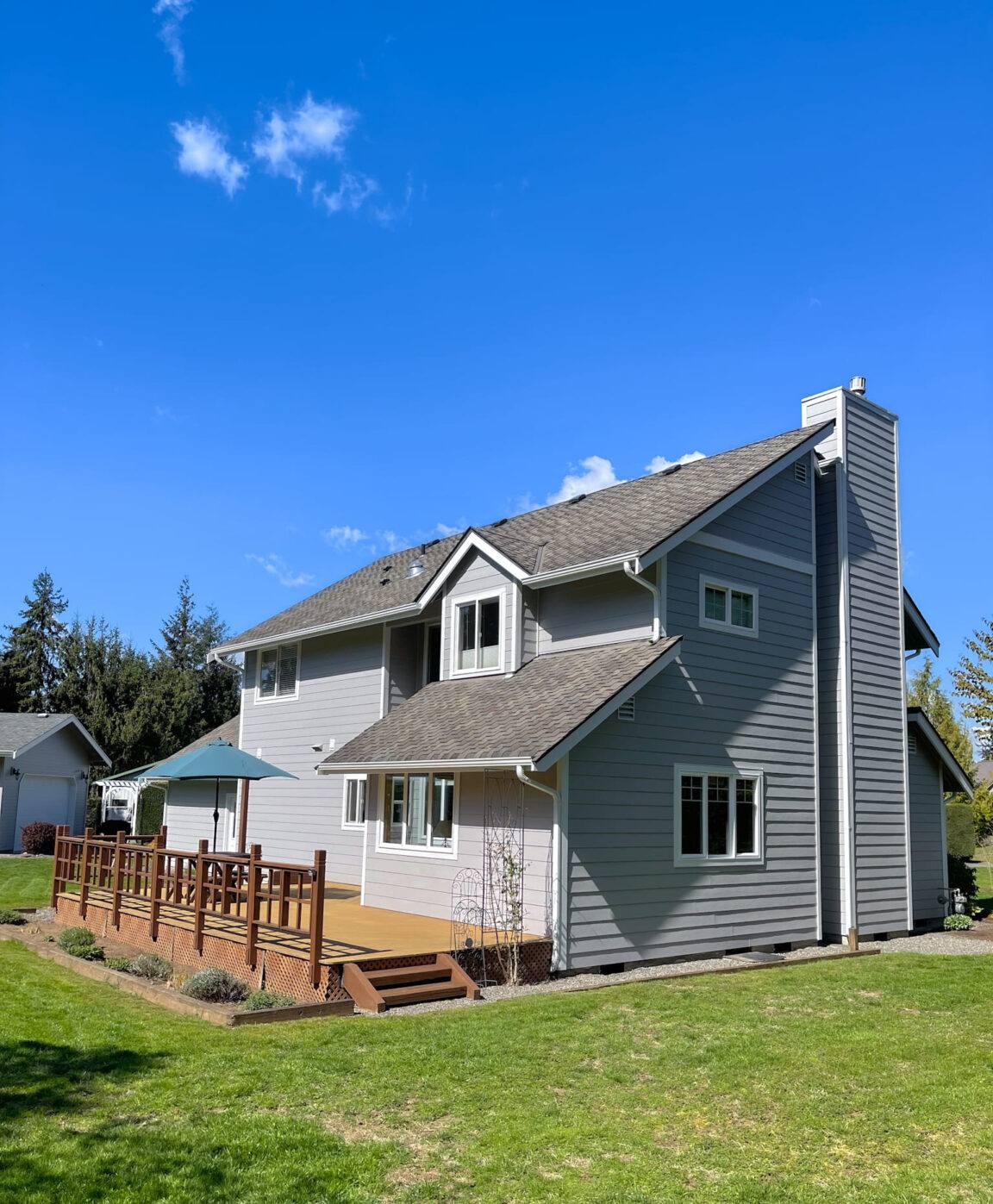
What This Climate Actually Does to a Wall
Driving rain and wind-driven moisture
Lynden doesn't get hurricane-force wind, but it gets sustained, direction-driven rain events during fall and winter storm systems. That kind of rain doesn't just fall on siding — it gets pushed into laps, seams, and butt joints if those details weren't built correctly. Over years, a wall that takes on moisture at its joints instead of shedding it will show the damage in the substrate long before it shows on the surface.
Salt-influenced marine air
Prevailing westerlies carry salt-tinged air off the Salish Sea further inland than most homeowners assume. It's a lower dose than a home right on the water gets, but it's a steady one, and it accelerates corrosion on fasteners, flashing, and any hardware that isn't rated for it. Siding systems that rely on unprotected steel components age faster here than the manufacturer's marketing materials from a drier climate would suggest.
A long moss and algae season
Cool temperatures, shade from mature trees, and consistent moisture are exactly what moss and algae need to establish themselves, and Lynden has all three for a good part of the year. Moss doesn't just sit on a surface — its root structures hold water against whatever it's growing on. On a material that swells, softens, or feeds mold when it stays wet, that's a slow, ongoing problem. On a properly sealed and finished fiber cement surface, it's a cosmetic issue that a wash handles.
Why We Standardized on James Hardie
We don't install LP SmartSide, vinyl, Cemplank, Allura, primed spruce, or cedar. That's not a marketing position — it's a decision based on what holds up under exactly the conditions described above.
- Fiber cement is non-combustible. It doesn't contribute fuel to a fire, which matters given Washington's wildfire seasons and general fire-code trends.
- It's engineered for wet regions specifically. James Hardie makes climate-specific product lines, and the HZ5 formulation used across the Pacific Northwest is designed around exactly the freeze-thaw and moisture cycling this region sees.
- The factory finish is the point. ColorPlus finish is baked on in a controlled facility, not field-applied. That matters directly for moss and mildew resistance, since factory-cured finishes resist the kind of micro-porosity that lets organic growth get a foothold.
- The warranty is transferable and substantial when installation follows spec. That's not true of every siding product on the market, and it's not true of Hardie products installed incorrectly either — which is why installation technique matters as much as the material choice.
Wood-based and vinyl products aren't disqualified because they're bad materials in every context. Cedar looks good and vinyl is inexpensive. But in a climate that stays damp for months and grows moss readily, wood-based siding demands a maintenance commitment most homeowners don't keep up with, and vinyl's expansion, fading, and impact vulnerability show up faster here than in drier climates. We'd rather install one product correctly than install several products and hope maintenance habits fill the gap.
What a Correct James Hardie Installation Involves
The product performs the way it's rated to perform only when it goes on correctly. Most siding failures we get called out to inspect on older homes aren't material failures — they're installation shortcuts that took years to show up.
Water management behind the siding
A weather-resistant barrier and properly integrated flashing at every window, door, and penetration matter more than the siding itself for keeping a wall dry. Siding sheds most of the water; the drainage plane behind it handles what gets through.
Clearances and gaps
James Hardie specifies minimum clearances from grade, roofing, decks, and other abutting surfaces, along with gaps at butt joints and trim for expansion. Installers who caulk everything solid to make it look tight are working against the product, not with it — trapped moisture with nowhere to escape is worse than a visible gap.
Fastening
Corrosion-resistant fasteners, placed and set to Hardie's specification, keep panels secured without over-driving or under-driving — both of which cause long-term problems. Given the marine air Lynden sees, fastener corrosion resistance isn't optional.
Factory-cut and factory-primed edges
Any field-cut edge needs to be sealed per manufacturer spec before it's covered. Skipping this step is one of the most common shortcuts we see, and it's invisible until moisture finds it.
Our Process for a Lynden Project
- On-site assessment. We look at your home's current siding, water management details, trim condition, and any moisture or moss patterns already showing.
- Product and line selection. HardiePlank lap siding, HardiePanel, and HardieShingle each suit different home styles — we walk through what fits your house and your budget.
- Written estimate. Scope, materials, and timeline in plain terms, with no pressure to sign on the spot.
- Prep and removal. Old siding comes off, the substrate gets inspected for hidden rot or moisture damage, and any repairs happen before new material goes on.
- Installation to Hardie spec. Weather barrier, flashing, fastening, and clearances done correctly the first time — the difference between siding that lasts and siding that just looks new for a season.
- Final walkthrough. We go over the finished work with you before calling the job done.
How James Hardie Compares to Other Siding Options
| Factor | James Hardie Fiber Cement | Vinyl | LP SmartSide | Cedar |
|---|---|---|---|---|
| Fire resistance | Non-combustible | Combustible, can melt/warp | Combustible | Combustible |
| Moisture behavior in wet climates | Engineered HZ5 line for the Northwest | Doesn't rot but can trap moisture behind it | Engineered wood core, vulnerable if seams fail | Absorbs moisture, needs consistent upkeep |
| Moss/algae resistance | Factory ColorPlus finish resists growth | Growth can occur in shaded, damp areas | Susceptible without diligent maintenance | Highly susceptible, especially in shade |
| Maintenance | Occasional wash | Low, but cracks/fades over time | Regular inspection and sealing needed | Frequent staining/sealing required |
| Typical lifespan when installed to spec | Multiple decades | 15-25 years | 15-25 years | Highly variable with upkeep |
Signs Your Current Siding Is Falling Behind
Homeowners often live with early warning signs for a year or two before calling anyone, mostly because the signs are subtle at first. Watch for:
- Soft or spongy spots when you press on siding, especially near the bottom courses
- Persistent moss or dark streaking that comes back quickly after cleaning
- Visible gaps, warping, or separation at butt joints and corners
- Paint that's failing faster than it used to, or bubbling near seams
- Interior signs like musty smells or peeling paint on walls that back onto exterior siding
- Rust streaks below fasteners or trim hardware
Any of these is worth a look before winter's rain arrives, not after.
Why It Matters That We Already Work in Lynden
A crew that's installed siding across Whatcom County knows which details in the Hardie spec aren't optional here — the flashing at roof-to-wall transitions, the clearances near grade on properties with heavier winter moisture, the fastening that holds up against marine air moving inland. That's not something you get from a crew installing siding for the first time in a climate they don't usually work in. It's also easier to stand behind a warranty and a workmanship guarantee when the crew has seen how their own past installations have actually held up through several Whatcom County winters.
Ready to Talk About Your Siding?
If your Lynden home's siding is showing wear, or you're planning ahead before the next wet season sets in, we're happy to take a look and walk you through honest options — no pressure, no hard sell. Reach out below for a free estimate.