 Ferndale Exterior
 Sudden Valley's Siding Problem Isn't Like Everywhere Else
If you own a home in the Sudden Valley area, you already know your siding works harder than siding fifty miles inland. Whatcom County's western communities deal with a combination that's tough on exterior materials: salt-laden air moving in off the water, driving rain that hits siding sideways instead of straight down, and a moss and algae season that can stretch for most of the year in shaded, damp spots. Any one of those factors is manageable. All three together, applied to the wrong siding product or a mediocre installation, is how homes end up with soft trim, peeling paint, and repeat maintenance bills within a decade of a "new" siding job.
This page is specifically about James Hardie fiber cement siding as it applies to Sudden Valley homes — what the climate actually does to siding here, what a correct installation looks like, and why we only install this one product system rather than offering a menu of options.
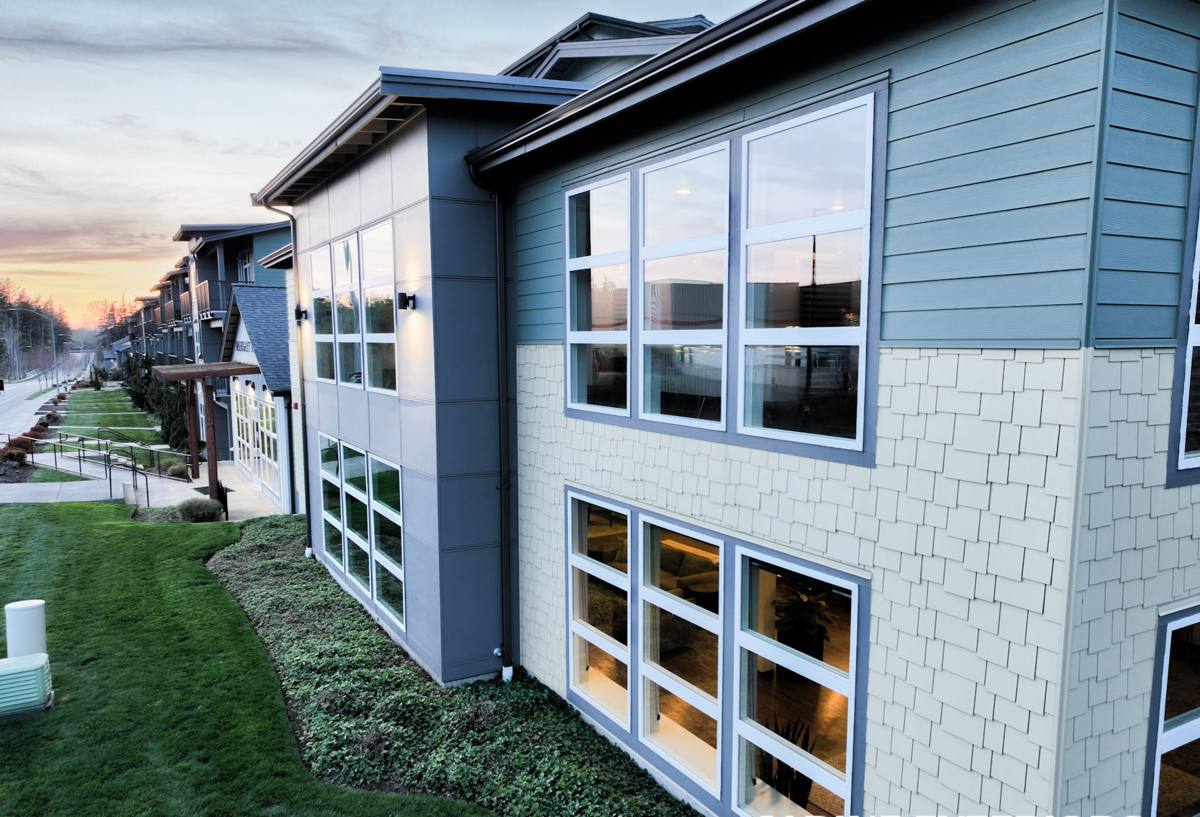
What Salt Air, Rain, and Moss Actually Do to Siding
Salt Air
Airborne salt is corrosive to exposed metal fasteners, flashing, and trim. On lower-quality siding systems, corroding fasteners work loose over time, which opens gaps for water intrusion. Salt exposure also accelerates the breakdown of cheaper paint films, leading to chalking and fading well ahead of the manufacturer's stated service life.
Driving Rain
Wind-driven rain doesn't just fall on a wall — it's pushed into laps, seams, and butt joints. Siding that isn't installed with correct overlaps, gapping, and flashing details will let water behind the cladding. Once moisture gets behind the siding, the sheathing and framing underneath are what actually rot, not the siding face itself.
Moss and Algae
Shaded, north-facing, and tree-lined lots around Sudden Valley stay damp longer after storms, which is exactly what moss and algae need to establish. Porous or absorbent siding materials hold that moisture and feed the growth. Non-absorbent materials with a durable factory finish resist it far better and are much easier to keep clean.
Why We Standardized on James Hardie for This Area
We install James Hardie fiber cement siding exclusively. We don't offer vinyl, LP SmartSide, Cemplank, Allura, primed wood, or cedar as alternatives, and that's a deliberate professional standard, not a lack of options. Fiber cement is non-combustible, dimensionally stable in wet-dry cycling, and — when it's Hardie specifically — backed by ColorPlus factory-applied finish technology and HZ5 climate-engineered formulation built for the wetter side of the country, which includes our region.
The HZ5 designation matters here specifically because it's engineered for moisture resistance in high-humidity, high-rainfall climates like Whatcom County's. That's a real product distinction, not marketing language — Hardie makes different formulations for different U.S. climate zones, and this is the one intended for the Pacific Northwest.
What This Means in Practice
- The core material doesn't swell, rot, or delaminate the way wood-based products can when they take on repeated moisture.
- ColorPlus finish is baked on at the factory in a controlled environment, giving more consistent, longer-lasting color adhesion than field-applied paint over primed board.
- Fiber cement doesn't feed mold or moss growth the way organic wood fiber products can.
- It carries a long, transferable manufacturer warranty when installed to Hardie's specifications — which is the operative phrase, since even the best material fails early if it goes on wrong.
Where Older Siding Jobs in This Area Typically Fail
When we look at siding tear-offs in this part of the county, the failure points are consistent. It's rarely the open field of the siding that fails first — it's the details.
| Failure Point | What Goes Wrong | Why It Happens Here |
|---|---|---|
| Butt joints and seams | Water tracks in behind unsealed or poorly flashed joints | Driving rain pushes water sideways into any gap |
| Fastener corrosion | Nails or staples rust, loosen, or streak the finish | Salt air accelerates corrosion of exposed or undersized fasteners |
| North-facing and shaded walls | Persistent moss, algae, and green staining | Slower drying time keeps the surface damp longer |
| Bottom courses near grade or decks | Rot in the substrate behind the siding | Splash-back and poor clearance trap moisture at the base |
| Caulked trim joints | Cracking and gapping within a few seasons | UV and moisture cycling break down sealant faster near the water |
Almost every one of these is an installation or detailing issue, not purely a material limitation. That's why the crew doing the work matters as much as the product going on the wall.
What a Correct James Hardie Installation Involves
Prep and Substrate
We check and address the sheathing and weather-resistive barrier before any siding goes up. Installing new siding over a compromised substrate just hides a problem — it doesn't fix it.
Clearances and Flashing
Hardie's installation instructions specify minimum clearances from grade, roof lines, and decks, along with flashing at every horizontal transition, window, and door. In a driving-rain climate, these details are what actually keep water out — not the siding material alone.
Fasteners
We use corrosion-resistant fasteners appropriate for coastal exposure, placed at the manufacturer's specified locations and depth. Over-driven or under-driven fasteners are a common source of early failure and are one of the easiest things for an installer to get wrong if they're rushing.
Joint Treatment
Where field-applied caulking is required, we use products and application methods suited to this climate's UV and moisture cycling, and we minimize the number of caulked joints in favor of factory-finished, engineered overlaps wherever the design allows.
Finish Integrity
Where possible, we favor ColorPlus pre-finished product over field-painted siding, since the factory finish process produces a more consistent and durable bond than painting on-site, especially in a damp climate where paint needs ideal drying conditions to cure properly.
Our Process for a Sudden Valley Project
1. On-Site Assessment
We walk the home in person, looking specifically at drainage patterns, shaded and moss-prone elevations, existing rot or moisture damage, and any prior repair patches that hint at where water has already gotten in.
2. Scope and Material Plan
We put together a plan that specifies which Hardie product line goes where, trim and flashing details for problem areas identified in the assessment, and a realistic sequence for the work.
3. Tear-Off and Substrate Check
Old siding comes off, and we inspect what's underneath before covering it back up. Any sheathing or framing repairs happen at this stage, not after the new siding is already installed.
4. Installation to Manufacturer Spec
Siding, trim, and flashing go on following Hardie's published installation requirements — clearances, fastening schedule, and joint treatment — so the transferable warranty actually applies if it's ever needed.
5. Final Walkthrough
We review the finished work with the homeowner, including care and cleaning guidance specific to this area's moss and algae exposure.
Choosing the Right Hardie Product Line for This Property
Hardie makes several product lines, and the right choice depends on the home's style and its specific exposure to rain, shade, and wind.
| Product Line | Best Fit | Relevant Advantage Here |
|---|---|---|
| HardiePlank lap siding | Most traditional home styles | Widely proven overlap detailing sheds driving rain effectively |
| HardiePanel vertical siding | Modern or mixed-material facades | Fewer horizontal laps can mean fewer water-entry points on certain wall designs |
| HardieShingle siding | Accent gables, dormers, or shingle-style homes | Rigid, non-absorbent shingle profile resists moss better than wood shingle |
| HardieTrim boards | Corners, fascia, window and door surrounds | Non-combustible, stable trim reduces the caulked-joint failures common in this climate |
ColorPlus finish is available across these lines in a range of factory colors engineered to hold up under UV and coastal moisture exposure, which matters more here than in drier parts of the state.
Cost Factors Homeowners Should Understand
We won't quote a number without seeing the home, but the real cost drivers on a Sudden Valley project are usually the same handful of factors:
| Factor | Why It Affects Price |
|---|---|
| Substrate condition | Hidden rot found during tear-off adds repair scope before new siding goes on |
| Home shape and trim detail | More corners, gables, and trim transitions mean more labor and material |
| Product line selection | Panel, plank, shingle, and trim combinations price differently |
| Access and site conditions | Slopes, tree cover, and staging space affect labor time |
| Existing siding removal | Full tear-off versus a simpler recover changes scope significantly |
Maintaining Hardie Siding in This Climate
Fiber cement is low-maintenance compared to wood-based alternatives, but "low-maintenance" isn't "no-maintenance," especially with this area's moss season.
- Rinse shaded or north-facing walls periodically to keep moss and algae from establishing.
- Keep gutters clear so overflow doesn't run down the siding face repeatedly.
- Trim back vegetation that keeps siding in constant shade and dampness.
- Inspect caulked joints at trim and penetrations annually and re-caulk if you see cracking or gaps.
- Watch the bottom courses near grade, decks, and patios for splash-back staining, and correct drainage if you see it.
- Address any paint or finish damage promptly rather than letting exposed edges take on moisture.
Why It Matters That We Already Work This Area
A crew that installs siding across a lot of different climates tends to fall back on generic techniques. A crew that regularly works Whatcom County's western communities already knows which walls on a typical Sudden Valley home hold moisture longest, where driving rain hits hardest, and which trim details tend to fail first in salt air. That local pattern recognition shows up in the small decisions — where to add extra flashing, which elevations need closer attention to moss resistance — that a spec sheet alone won't tell you.
It also means we're not learning the area on your project. We've seen how homes here age, and we build the installation around that, not around a generic national installation guide alone.
Ready to Talk About Your Home
If you're weighing a siding replacement in Sudden Valley, we're happy to take a look, walk the exterior with you, and talk through what James Hardie siding would involve for your specific home. There's no cost and no pressure to move forward — just a straightforward assessment from a crew that works this area regularly. Use the form below to request your free estimate.