 Ferndale Exterior
 Decking That Actually Holds Up on Kendall Properties
Kendall sits in one of the wetter, greener corners of Whatcom County, and the decks out here take a different kind of beating than decks closer to town. Larger wooded lots mean more shade, more standing leaf litter, and more moisture that just doesn't dry out between storms. Add in the driving rain that rolls through much of the year and the long stretch of months where moss and algae get a real foothold, and you've got a climate that will find every weak point in a deck within a few seasons. Composite decking, installed correctly for these conditions, is one of the more reliable answers we install for homeowners in this area.
This page is specifically about composite decking for Kendall and the surrounding Whatcom County properties we serve out of Ferndale — not a general decking overview. The goal is to explain what this climate actually demands from a composite deck, what a correct installation looks like, and why the details matter more here than they would in a drier part of the state.
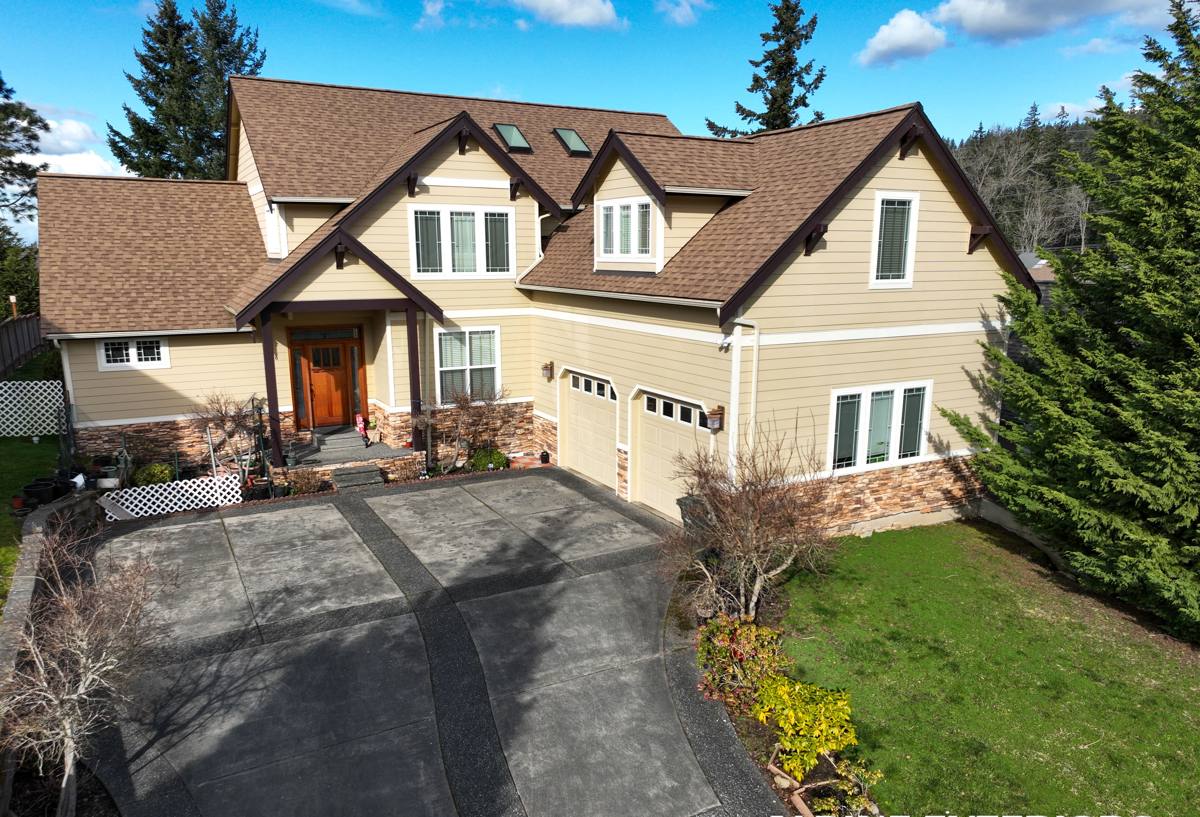
What This Climate Does to a Deck Over Time
Moisture That Doesn't Leave
On shaded or tree-covered lots common around Kendall, decks can stay damp for days after a storm passes. That prolonged dampness is what drives moss growth, softens untreated wood, and corrodes fasteners that weren't rated for the exposure. A deck built without that reality in mind will show problems faster than the manufacturer's warranty timeline suggests it should.
Driving Rain and Wind-Driven Water
Rain in this part of Whatcom County rarely falls straight down. Wind-driven rain gets pushed under railings, into ledger connections, and along the house band board — areas that are fine in a light shower but get tested hard during a real system. Flashing and water management at these transition points matter as much as the decking material itself.
Moss, Algae, and Surface Buildup
The long wet season here supports moss and algae growth on almost any horizontal surface that stays shaded and damp. On a deck, that buildup isn't just cosmetic — it holds moisture against the board surface and can make a deck genuinely slick underfoot. Some composite surfaces resist this better than others, which is part of why product selection matters for a Kendall property specifically.
What a Correct Composite Deck Install Involves Here
Composite decking is only as good as what's underneath it and how it's fastened, flashed, and ventilated. On Kendall properties, we pay particular attention to a few things that get skipped on rushed jobs:
- Ledger board flashing that fully sheds water away from the house rim joist, not just a bead of sealant
- Joist tape or a comparable moisture barrier on every joist top, since composite boards trap moisture against wood framing more than solid lumber does
- Proper joist spacing for the specific composite product — many boards require tighter spacing than standard lumber decking
- Stainless or coated fasteners rated for ground contact and coastal-influenced moisture exposure
- Under-deck airflow so the framing can actually dry out between wet stretches instead of staying damp all season
- Correct gapping between boards for the expected seasonal movement in this climate
Skipping any one of these doesn't usually show up on install day. It shows up two or three winters later, as soft framing, staining, or fasteners that have started to fail — problems that are expensive to fix once the surface decking is already down.
Composite, Wood, and PVC: What Actually Fits a Kendall Property
We get asked fairly often why we lean toward composite for shaded, wet lots rather than pressure-treated wood or full PVC decking. Here's the honest comparison, not a sales pitch for one product:
| Material | Performance in shaded, wet conditions | Maintenance burden | Typical lifespan here |
|---|---|---|---|
| Pressure-treated wood | Absorbs moisture, prone to moss and splintering in shade | Annual cleaning, periodic sealing/staining | 10–15 years before major repair or replacement |
| Composite (capped) | Resists moisture absorption; surface sheds algae better than wood | Periodic cleaning, no sealing or staining | 25–30+ years, manufacturer-dependent |
| Full PVC | Excellent moisture resistance; can look less natural and is less forgiving of installation error | Low, similar to composite | 25–30+ years |
We install composite most often on these lots because it strikes a practical balance: strong moisture resistance, a wood-like appearance that fits the neighborhood, and a lower long-term maintenance load than a homeowner cleaning and re-sealing wood every year in a climate that doesn't give a deck much time to dry out. Full PVC is a fair option too, but it's less forgiving during installation and some homeowners find the appearance too uniform for a wooded property. We'll walk through both honestly during an estimate rather than defaulting to whatever we happened to have on the truck.
Our Process for a Kendall Composite Decking Project
1. On-Site Assessment
We look at sun exposure, tree cover, drainage around the existing footprint, and the condition of the ledger connection to the house. On established Kendall properties, we also check for existing moisture damage at the rim joist before quoting anything, since that changes the scope.
2. Framing and Structure
If the existing substructure is sound, we build on it after upgrading flashing and fasteners to current standards. If it's not — which is common on older decks in shaded, damp locations — we replace framing rather than deck over a problem.
3. Moisture Management First
Joist tape, ledger flashing, and drainage details go in before a single composite board is fastened. This is the step that determines whether the deck is still solid in fifteen years.
4. Decking Installation
Boards are fastened per the manufacturer's spacing and clip requirements for this climate, with attention to expansion gaps and picture-framed edges where applicable.
5. Railings, Stairs, and Finish Work
Railing posts are through-bolted and flashed, not just screwed to the rim joist — a detail that matters more here given how much water railings intercept during wind-driven rain.
6. Final Walkthrough
We review the completed deck with the homeowner, including realistic care expectations for this specific site and how much shade or moss exposure to expect based on the lot's tree cover.
The Substructure Is Where Most Deck Failures Actually Start
Homeowners naturally focus on the decking surface — the color, the board style, the finish. But on wet, shaded lots like a lot of what we see around Kendall, the substructure is where a deck actually fails. Composite boards can look flawless while the joists underneath are rotting from trapped moisture, because the cap layer hides what's happening below. That's why our estimates always include a real look at the framing, not just a quote for surface boards, and why we won't install premium decking over framing we haven't inspected or repaired.
Caring for a Composite Deck in This Climate
Composite decking cuts maintenance significantly compared to wood, but "low-maintenance" doesn't mean "no-maintenance," especially with the moss season this area gets. A simple seasonal routine keeps a deck performing the way it should:
- Sweep leaves and debris off regularly during fall, especially on shaded sections — trapped organic matter feeds moss growth
- Rinse the deck with a hose and soft-bristle brush a few times a year rather than letting buildup set in
- Avoid pressure washing at close range or high PSI, which can damage the cap layer on most composite boards
- Keep gutters and downspouts near the deck clear so runoff isn't dumping extra water onto the surface
- Check railing post bases and stair connections once a year for any movement or early signs of moisture intrusion
Why Hiring a Crew That Already Works in Kendall Matters
Composite decking installed to spec in a dry climate and composite decking installed correctly for a shaded, high-moisture Whatcom County lot aren't the same job, even though the materials look identical on a spec sheet. A crew that regularly works properties around Kendall already knows to check for the moisture patterns particular to wooded lots here, to spec fastener and flashing details for the wetter framing environment, and to set expectations about moss and algae honestly instead of glossing over them. That local familiarity shows up in fewer callbacks and a deck that's still solid well past the point where a poorly built one would be showing rot.
If you're weighing composite decking for a Kendall property, we're glad to come take a look, walk the site, and give you a straight assessment — including whether your existing substructure is worth building on or should be replaced. Reach out for a free, no-pressure estimate using the form below.