 Ferndale Exterior
 Siding Installation Built for Kendall's Climate
Kendall sits in a part of Whatcom County that puts real, sustained pressure on a home's exterior. Salt-tinged air moving in off the water works steadily on exposed fasteners and trim. Wind-driven rain doesn't fall politely straight down here — it gets pushed sideways into laps, seams, and corner details that a lazier installation never planned for. And a long, damp moss season settles onto shaded and north-facing walls and stays for months at a time. A siding installation in Kendall isn't a generic product going on a generic house. It has to be planned, from material selection through the last fastener, around exactly those conditions.
This page covers what that looks like in practice: what Kendall homes actually need from their siding given the local climate, what a correct installation involves layer by layer, how our process runs from first look to final walkthrough, and why it matters to hire a crew that already works in this specific area rather than one learning the local weather on your job.
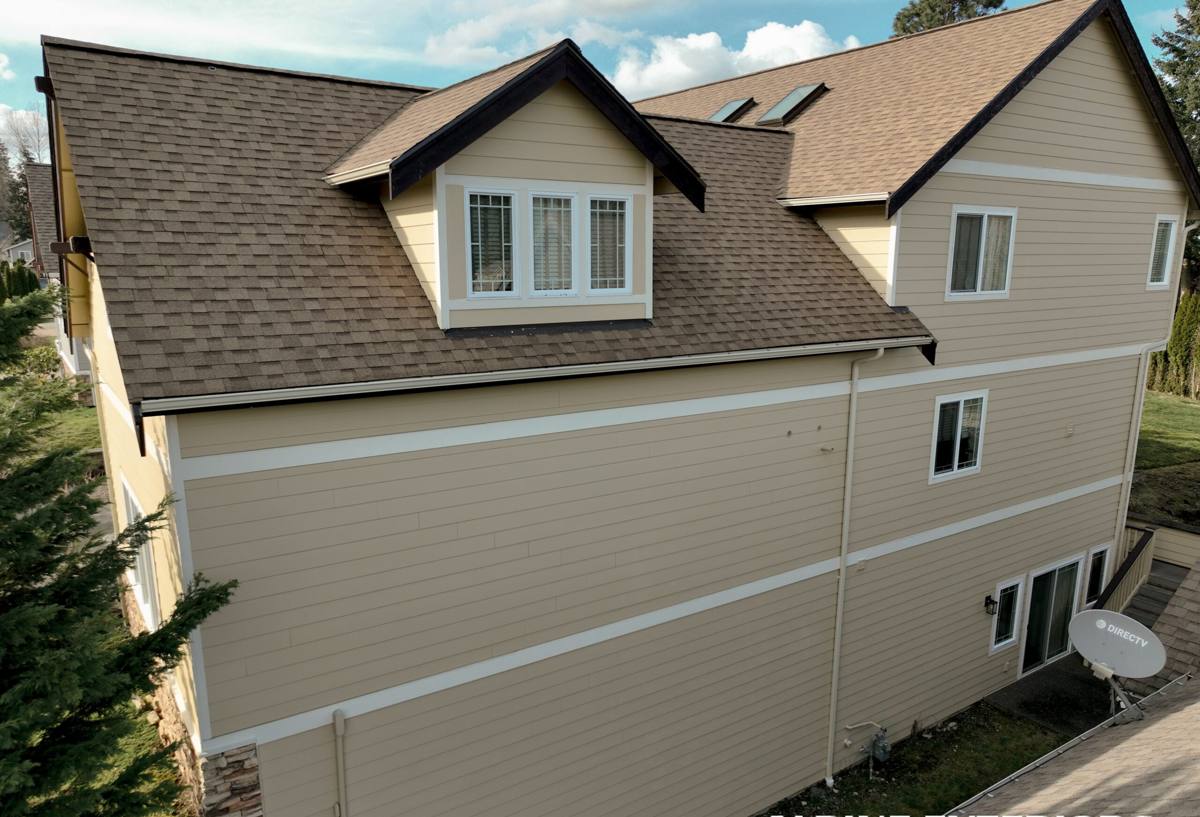
What Kendall's Weather Demands From a Siding Installation
Every siding installation decision in this area — material, fastener type, flashing detail, even where the crew schedules the job — traces back to three recurring stresses.
Salt Air and Fastener Corrosion
Salt-laden air accelerates corrosion in unprotected metal. Fasteners, flashing, and trim that would hold up for decades in a drier inland climate can start losing strength years earlier here if they're the wrong grade. A corroding fastener doesn't just look bad — it loosens its grip on the siding and can open a small gap that becomes a moisture entry point.
Wind-Driven Rain and Flashing
Straight-down rain is easy for any siding to shed. Wind-driven rain, which is a regular feature of storms moving through this part of Whatcom County, hits walls at an angle and gets forced into laps, trim lines, and penetrations that were only designed to handle water moving downward. Flashing at windows, doors, and any wall penetration is where a wind-driven-rain climate tests an installation hardest.
A Long Moss Season and Airflow
Mild temperatures and near-constant moisture keep moss and mildew active across most of the year on shaded walls. Beyond the appearance issue, organic growth holds moisture against the siding surface longer than it would otherwise sit there, extending every wet cycle the material and its fasteners go through. Proper drainage detailing behind the siding matters as much here as the siding itself.
Why We Install Only James Hardie Fiber Cement in Kendall
We don't install vinyl, LP SmartSide, primed spruce, cedar, or other fiber cement brands. We install James Hardie, and only James Hardie, because it's the product that holds up best to the specific combination of stresses described above. Fiber cement made from cement, sand, and cellulose fiber is dimensionally stable — it doesn't swell, wick, and dry unevenly the way wood-based products do, which is a real advantage in a climate that puts siding through constant wet-dry cycling. James Hardie is also non-combustible, which matters as wildfire risk becomes a bigger consideration across the Pacific Northwest, and it carries a strong transferable warranty that isn't common across the category.
James Hardie also builds its formulations for specific climate zones rather than selling one blend everywhere. Its HZ5 product line is engineered for regions that see sustained moisture and freeze-thaw cycling — which is a reasonable description of a Kendall winter — and it's the formulation we specify for installations in this area. The factory-applied ColorPlus finish is another piece of that engineering: it's baked on and warrantied against fading and peeling in a way field-applied paint isn't, which matters on a material that's going to spend the next several decades facing salt air and driving rain.
Choosing the Right James Hardie Product for a Kendall Home
James Hardie makes several distinct siding profiles, and the right one for a given home depends on its architecture, exposure, and the look the homeowner wants — not a one-size-fits-all default.
| Product | Look | Best Fit |
|---|---|---|
| HardiePlank Lap Siding | Traditional horizontal lap, several width and texture options | The most common choice; works on nearly any home style in Kendall |
| HardiePanel Vertical Siding | Clean vertical panels, often paired with battens | Modern or farmhouse-style homes, or as an accent on gables and entries |
| HardieShingle Siding | Staggered or straight-edge shingle profile | Homes wanting a cottage or coastal look without real wood's maintenance burden |
| HardieTrim Boards | Corner boards, fascia, and window/door trim | Paired with any of the above for a finished, consistent system |
Whichever profile fits the home, we specify HZ5-formulated Hardie product for Kendall installations and match ColorPlus color to the home's design rather than defaulting to field-painted product wherever a factory finish is available.
What a Correct Siding Installation Involves
The material is only part of the equation. A premium siding product installed with shortcuts can fail faster than a modest product installed correctly, because siding is one layer in a system, not a standalone shell.
Tear-Off and Sheathing Inspection
Removing the old siding down to the sheathing is the only way to find hidden moisture damage or rot that's been developing underneath, often invisible until the old siding comes off. Any soft or damaged sheathing gets addressed before anything new goes up — covering it over just buries the problem.
Water-Resistive Barrier and Drainage
A continuous, properly lapped water-resistive barrier behind the siding catches whatever moisture gets past the surface and directs it back out. In a high-moisture climate like this one, a drainage gap behind the siding gives incidental water somewhere to go rather than trapping it against the sheathing — a detail worth specifying explicitly rather than assuming.
Flashing at Every Penetration
Windows, doors, and any wall penetration need flashing installed to shed water outward and downward, integrated with the water-resistive barrier in the correct sequence. This is where most real-world leaks originate, not in the open field of the wall, and it's the detail most likely to get rushed on an underbid job.
Fastening and Cut-Edge Treatment
James Hardie publishes specific fastener type, spacing, and placement requirements, and following them — rather than a generic "close enough" pattern — is what keeps siding performing as engineered and keeps the manufacturer's warranty intact. Field-cut edges get sealed and touched up with Hardie-approved product so the cut end doesn't become the one unprotected spot on an otherwise factory-finished wall.
Clearance and Grade Details
Proper clearance between the bottom of the siding and grade, decks, or roof lines keeps standing water and splash-back away from the material's most vulnerable edge — a small detail that's easy to overlook and expensive to ignore.
How Our Process Works
- In-person inspection: We walk the exterior with you in person, not from photos, and note the specific exposures your home faces — wind direction, shade patterns, and existing moisture signs.
- Written estimate: You get an itemized bid covering tear-off, water-resistive barrier, flashing, fastening, product selection, and cleanup — not a single vague number.
- Product and color selection: We walk through HardiePlank, panel, and shingle options along with ColorPlus color choices suited to the home's style and exposure.
- Scheduling around weather: We build reasonable flexibility into the timeline, since wet-season delays are a normal part of working in this region.
- Tear-off and sheathing repair: Old siding comes off completely, and any sheathing damage found underneath is repaired before installation begins.
- Installation to manufacturer specification: Water-resistive barrier, flashing, and siding go on in the correct sequence, with extra attention at every penetration and wall transition.
- Final walkthrough: We review the completed exterior with you before calling the job done.
Cost Factors for a Kendall Siding Installation
Bids for what looks like the same job on paper can vary significantly, and the gap almost always comes down to real differences in scope.
| Factor | What It Affects |
|---|---|
| Tear-off vs. installing over existing siding | Whether hidden sheathing damage gets found and repaired before new siding goes on |
| Water-resistive barrier and drainage gap | How well the wall assembly manages moisture behind the siding long-term |
| Flashing scope | How thoroughly windows, doors, and penetrations are protected against wind-driven rain |
| Product profile and trim package | Overall material cost and the finished look of the home |
| Home size, stories, and access | Labor time, staging, and equipment needs |
| Existing damage or rot found during tear-off | Repair scope that isn't known until the old siding comes off |
A detailed written estimate that itemizes these components tells you far more than a single lump-sum figure, and it's worth asking any contractor to walk through exactly what's included before comparing prices.
Why Hiring a Crew That Already Works in Kendall Matters
A crew that regularly installs siding around Kendall has already seen how salt air corrodes underspecified fasteners, how wind-driven rain finds its way through poorly sequenced flashing, and which wall exposures hold moss longest through the wet season. That knowledge shows up in small decisions made throughout a job — decisions a crew unfamiliar with this specific stretch of Whatcom County might not think to make at all.
It also matters after the job is finished. A workmanship warranty is only as good as the company standing behind it, and a contractor with an established, ongoing presence in the area is the one you can actually reach a few years later if a question comes up.
A Practical Checklist Before You Choose a Siding Installer
- Do they perform a full tear-off with sheathing inspection, not just an install over existing siding?
- Does the estimate specify water-resistive barrier and drainage detail, not just "new siding"?
- Is flashing work at windows, doors, and penetrations explicitly included in the bid?
- Do they install to the manufacturer's published fastening and clearance specifications?
- Do they carry current WA contractor licensing, liability insurance, and workers' compensation?
- Can they point to recent, real local work in or near Kendall?
- Does the bid separate the manufacturer's product warranty from their own workmanship warranty?
If you're planning a re-side, replacing storm-damaged siding, or just want a straight answer about what your Kendall home actually needs, we're glad to take a look and walk you through it. Use the form below to request a free, no-pressure estimate.