 Ferndale Exterior
 Roofing on Lummi Island Isn't the Same Job as Roofing Inland
Lummi Island sits out in the water, which means every roof on it deals with conditions that a house a few miles inland in Ferndale simply doesn't see as often. Salt-laden air moves off Hale Passage and Rosario Strait and settles on everything — including roofing fasteners, flashing, and metal drip edge. Add in driving rain that comes in sideways during winter storms, and a moss season that runs long because the island stays shaded and damp for much of the year, and you've got a roof environment that punishes shortcuts faster than most places in Whatcom County.
None of this means Lummi Island homes need exotic materials. Asphalt shingle roofing still makes sense for the vast majority of island homes — it's proven, it's repairable, and it's priced sensibly. What matters is that the installation account for the specific stresses of this location, rather than following a generic checklist built for a drier, more sheltered site.
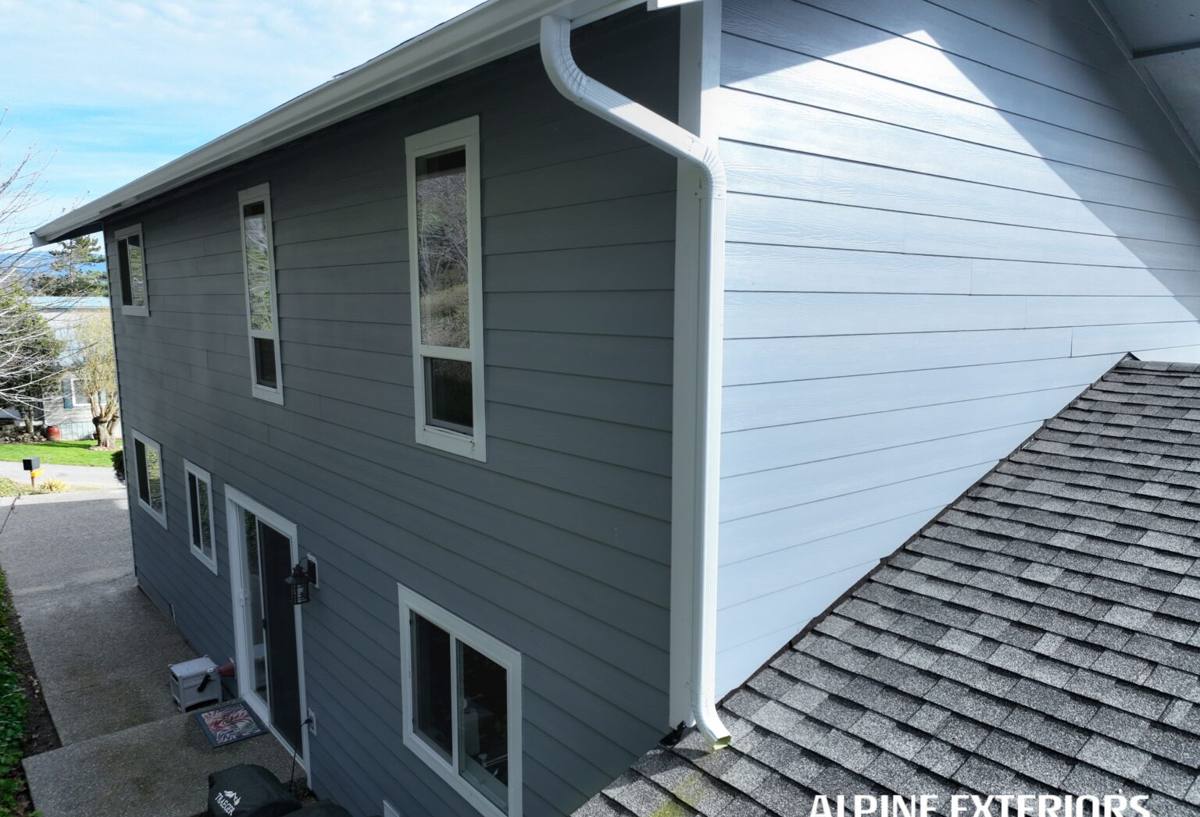
What Salt Air, Rain, and Moss Actually Do to a Shingle Roof
Salt air
Airborne salt accelerates corrosion on anything metal — nails, staples, flashing, vent boots with metal collars, and gutter hardware. A roof that would hold up for decades a few miles inland can start showing rust streaks, loosened fasteners, or pitted flashing years earlier if the wrong materials were used or if metal components weren't properly coated or selected for coastal exposure.
Driving rain
Wind-driven rain doesn't just fall straight down — it gets pushed sideways and upward under shingle tabs, around chimney flashing, and into any gap in the underlayment. A roof that's watertight in a calm, straight-down rain can still leak during an island storm if the underlayment, flashing laps, and fastening pattern weren't installed with that wind-driven behavior in mind.
Moss and shade
Moss needs moisture and shade to establish, and a lot of Lummi Island's tree cover and marine humidity gives it plenty of both, for more months out of the year than an open, sun-exposed roof would see. Moss holds water against the shingle surface, works its way under tabs and granules, and can lift shingles enough to let water in — even before the roof looks obviously damaged.
What a Correctly Installed Shingle Roof Needs Here
A roof built for this environment isn't fundamentally different in design from any well-built asphalt shingle roof — it just can't skip the details that matter most in a marine, high-moisture setting.
- Corrosion-resistant fasteners and flashing. Hot-dip galvanized or stainless fasteners and flashing hold up far longer against salt air than standard mill-finish metal.
- Full underlayment coverage, not just the minimum. A synthetic underlayment with properly lapped, sealed seams gives the roof a real second line of defense when wind pushes rain past the shingle surface.
- Ice-and-water shield at vulnerable points. Valleys, eaves, and roof-to-wall transitions get self-adhering membrane, not just felt, because these are the spots where wind-driven rain and moss-related water backup cause the most damage.
- Correct nailing pattern and shingle sealing. Under-driven, over-driven, or misplaced nails are a leading cause of shingle blow-off in wind, and this is a wind-exposed island.
- Balanced attic ventilation. Trapped moisture under the deck accelerates rot and shortens shingle life from underneath — a problem that's easy to miss because it doesn't show on the surface.
- Flashing details at every penetration. Chimneys, skylights, plumbing vents, and roof-to-wall joints are where the majority of real-world leaks start, especially under sideways rain.
Choosing a Shingle That Makes Sense for This Location
Not every asphalt shingle product is built the same way, and the differences matter more here than in a drier, more sheltered part of Whatcom County. The table below covers the general categories homeowners choose between, without recommending a specific brand — the right pick depends on your roof's exposure, budget, and how long you plan to stay in the home.
| Shingle Type | Typical Lifespan | Best Fit For | Trade-Off to Know |
|---|---|---|---|
| 3-tab (economy) | 15–20 years | Budget-driven projects, rental or secondary structures | Lower wind rating and thinner profile — more vulnerable on an exposed, windy roof |
| Architectural / laminate | 25–30+ years | Most primary homes on the island | Higher upfront cost, but better wind performance and a heavier, more durable mat |
| Algae-resistant (AR) granules | Same as base shingle, with added protection | Shaded, damp roof sections prone to moss and algae staining | Slightly higher cost; reduces staining and biological growth but doesn't eliminate the need for periodic cleaning |
| Impact-rated (Class 3/4) | Same as base shingle, often with insurance incentives | Homeowners wanting extra durability and possible premium credit | Higher material cost; benefit is more about durability and insurance than moss or salt resistance |
For most Lummi Island homes, an architectural shingle with algae-resistant granules is the practical middle ground — it holds up to wind better than 3-tab and resists the moss and dark staining that shaded, damp roofs are prone to. We'll walk through your roof's actual exposure — how much shade, how much wind, which direction the weather typically hits — before recommending a specific product line.
Our Process for Lummi Island Roofing Projects
Because getting crews and materials to the island means factoring in ferry timing and load limits, we plan Lummi Island jobs a little differently than a mainland Ferndale project — mainly around scheduling and material staging, not around the quality of the work itself.
- On-site inspection and estimate. We walk the roof (or use a lift/drone where a walk isn't safe), check the deck condition, flashing, ventilation, and note any moss, staining, or soft spots.
- Written scope and honest pricing. You get a clear breakdown of materials, labor, and any deck repair that's likely needed — no vague allowances that turn into surprise change orders.
- Material staging around ferry schedules. We plan delivery and crew logistics so the job isn't held up mid-project by a missed sailing.
- Tear-off and deck inspection. Old roofing comes off down to the deck so we can actually see what's underneath — this is where hidden rot or past water damage shows up.
- Underlayment, flashing, and ice-and-water shield installation. This is the layer that matters most once the visible shingles are gone, and it's not a step we compress to save time.
- Shingle installation to manufacturer wind and nailing specs. Correct exposure, correct nail placement, correct sealing — this is what keeps shingles on the roof during a real island storm.
- Cleanup and final walkthrough. Magnetic sweep for stray fasteners, debris haul-off, and a walkthrough so you know exactly what was done.
Problems We Commonly Find on Lummi Island Roofs
Most of the repair calls we get on the island trace back to a handful of recurring issues, and they're almost always tied to the same three factors: salt exposure, wind-driven rain, and moss.
- Moss-lifted shingle tabs along shaded slopes, especially north-facing sections under tree cover.
- Rusted or failing flashing around chimneys and skylights, where corrosion works faster in salt air than most homeowners expect.
- Nail pops and loosened fasteners from a combination of corrosion and seasonal wind loading.
- Granule loss and staining from years of moisture sitting under moss or debris buildup in valleys.
- Soft or rotted decking discovered only after a leak has been active for a while, usually near a penetration or valley.
What Homeowners Can Do Between Service Visits
A well-installed roof still benefits from basic upkeep, especially in a moss-prone, salt-exposed setting. This isn't a substitute for professional inspection, but it catches problems early and stretches the life of the roof.
- Keep gutters and valleys clear of needles, leaves, and moss debris so water has a clear path off the roof.
- Trim back overhanging branches where reasonable to reduce shade and debris buildup that feeds moss growth.
- Look for granules collecting in gutters or downspouts — a sign the shingle surface is wearing.
- Have flashing and roof penetrations checked after any major windstorm, since that's when flashing seals are most likely to shift.
- Avoid pressure-washing the roof directly — it strips granules and shortens shingle life; gentle, low-pressure moss treatment is the safer approach.
- Schedule a roof check every year or two, even without an obvious problem, since moss and flashing issues often develop before they show up as an interior leak.
What Affects the Cost of a Lummi Island Shingle Roof
Pricing on any roofing project depends on the specifics of the house, but a few factors show up more consistently on island jobs than on typical mainland projects.
| Cost Factor | Why It Matters Here |
|---|---|
| Roof size and pitch | Larger and steeper roofs take more material and labor time, same as anywhere |
| Deck condition | Hidden rot from long-term moisture or moss is more common here and adds repair cost once the old roof is off |
| Shingle grade selected | Algae-resistant and higher-wind-rated products cost more upfront but reduce maintenance and premature failure |
| Flashing complexity | Chimneys, skylights, and multiple roof planes all add labor, and getting these right matters more in wind-driven rain |
| Ferry and logistics | Material delivery and crew scheduling around ferry timing is a factor unique to island jobs, though it doesn't typically drive the price up dramatically |
We don't quote a job without seeing the roof — anything else is a guess. What we can tell you is that skipping corrosion-resistant fasteners, proper underlayment, or algae-resistant shingles to save money upfront tends to cost more in repairs within a few years, especially in this environment.
Why It Matters to Hire a Crew That Already Works This Island
A roofing crew that hasn't worked on Lummi Island before is learning the island's quirks on your dime — ferry scheduling, wind exposure patterns, which flashing details tend to fail first in this kind of salt-and-rain environment. A crew that already knows the terrain plans the job better from day one: material orders account for ferry timing, the scope accounts for the moss and corrosion issues that are common here, and the work itself is built around how weather actually behaves on the island rather than a generic mainland assumption.
We're based in Ferndale and work throughout Whatcom County, including Lummi Island on a regular basis, so this isn't unfamiliar ground for us. That familiarity shows up in fewer surprises during the job and a roof that's built for the conditions it will actually face.
If you're dealing with moss buildup, a suspected leak, or you're just due for a roof assessment, we're happy to take a look and give you a straightforward, no-pressure estimate. Fill out the form below and we'll get in touch to schedule a time that works around the ferry and your schedule.