 Ferndale Exterior
 Siding Installation Built for Lummi Island
Lummi Island sits out in the water off Ferndale, reachable only by a short ferry crossing, and that one fact shapes almost everything about how an exterior project on the island actually runs. It's not just a coastal location — it's a piece of land fully surrounded by water, with wind and salt exposure on multiple sides instead of just one. Homes here take a heavier, more constant version of the marine weather that the rest of Whatcom County deals with only part of the year: salt-laden air moving off the surrounding water, driving rain that comes in sideways as often as it falls straight down, and a moss season that can stay active for most of the year on shaded, north-facing walls. We're based in Ferndale, and Lummi Island is part of our regular service area, which means the ferry schedule, the material planning, and the climate all factor into how we plan a job here from the start.
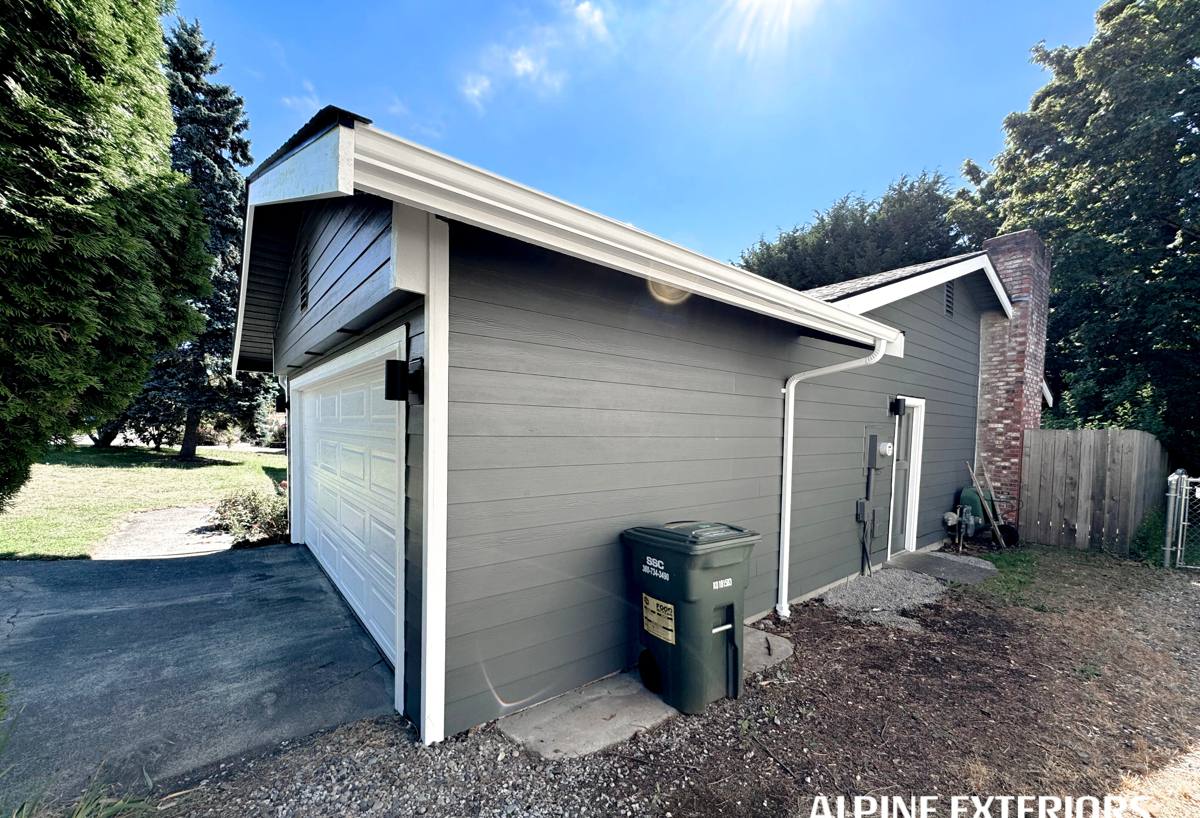
We install James Hardie fiber cement siding exclusively, on the island and everywhere else we work. For a property with this level of sustained water exposure, it's the material we'd choose for our own home, not just the one we're willing to sell.
What Island Exposure Does to Siding
Salt Air From Every Direction
A home on the mainland usually faces salt exposure from one direction — off a bay, a strait, a harbor. A home on Lummi Island can pick up salt-laden air from multiple directions depending on wind patterns, since there's open water on more than one side of the island. That accelerates corrosion in fasteners, flashing, and trim hardware, and it wears down lower-grade paints and finishes faster than a homeowner moving from an inland property would expect.
Driving Rain With No Windbreak
Wind moving across open water doesn't slow down the way it does crossing forested mainland terrain, and that means rain reaches island homes with more force and less warning. Wind-driven rain gets pushed sideways into lap joints, trim seams, and any gap in flashing that a calmer climate would never expose. A siding system that performs fine on a sheltered inland lot can still fail on an island wall specifically because the water is attacking it from the side, not just from above.
A Long, Persistent Moss Season
Mild temperatures and near-constant moisture give moss and mildew a long growing season across Whatcom County, and the island's damp, breezy microclimate keeps organic growth active on shaded and north-facing walls for much of the year. Any siding surface with even slight porosity becomes a growth surface over time, and that growth holds moisture against the wall longer than it should.
Wind Loading and Storm Exposure
Island homes with open water frontage see stronger, more sustained wind during winter storm systems than similar homes tucked into sheltered mainland lots. That matters for fastening patterns on siding, for how trim and corner details get secured, and for anything mounted to an exterior wall that could work loose under repeated wind loading over a few seasons.
Why the Ferry Changes How a Siding Job Gets Planned
Getting a crew and a full load of materials onto Lummi Island isn't the same as pulling a truck up to a mainland driveway. Every trip depends on ferry capacity and sailing times, so a contractor who doesn't plan around that ends up making extra crossings, running short on materials mid-job, or leaving a crew stranded waiting for the next sailing. We build island jobs around that reality from the estimate stage on:
- Material staging: Ordering and staging siding, trim, fasteners, and flashing in full before the first ferry crossing, rather than discovering a shortage halfway through the job.
- Crew scheduling: Planning work days around ferry sailing times so the crew isn't losing productive hours waiting on a crossing.
- Weather windows: Watching the forecast for the island specifically, since wind and rain timing on open water can differ from what's happening a few miles inland in Ferndale.
- Waste reduction: Measuring and ordering carefully, since a missing piece of trim on the mainland is a quick supply house run — on the island, it can cost a full day.
None of this is complicated, but it's easy for a contractor without regular island experience to underestimate. A crew that treats a Lummi Island job exactly like a mainland job usually finds out the hard way, on the client's timeline.
Why James Hardie Is What We Install Here
We used to install a broader range of siding products before narrowing to one system. The decision came from what we kept seeing on tear-offs and service calls in the wettest, windiest parts of our service area, and an island property with water on multiple sides is about as demanding a test as that exposure gets locally.
- Non-combustible core: Fiber cement doesn't feed a fire the way wood-based siding products can, which matters for both household safety and insurance considerations on an island where fire response can take longer than on the mainland.
- Factory-applied ColorPlus finish: The color is baked on under controlled factory conditions instead of brushed on in the field, so it holds up against salt exposure and UV far longer than a site-applied paint job would.
- Climate-engineered HZ5 formulation: Hardie's HZ5 product line is built for regions with sustained moisture and freeze-thaw cycling, which is a close match for a property surrounded by open water.
- Dimensional stability: Fiber cement doesn't swell, cup, or warp the way engineered wood siding can after repeated wet-season cycles, which matters more here given how long that wet season runs.
- Strong transferable warranty: Hardie backs its products with a solid warranty structure, provided the installation follows spec, which gives an island homeowner real protection rather than a marketing claim that's hard to act on later.
We won't install LP SmartSide, vinyl siding, Cemplank, Allura, primed spruce, or cedar. Each has a place in the broader market, and plenty of homeowners elsewhere are satisfied with them. But on a site this exposed, with logistics that make return trips for repairs genuinely inconvenient, we'd rather install one system we fully trust than something cheaper that quietly shifts maintenance risk back onto the homeowner a few years down the line.
What Correct Installation Involves
Material choice only solves half the problem. The rest comes down to installation detail, and on an island wall taking wind and rain from multiple directions, none of the following is optional:
- Rain screen gap: A drainage cavity behind the siding lets any moisture that gets past the exterior surface drain and evaporate instead of sitting against the wall sheathing.
- Correct fastener type and spacing: Hardie's fastener spec exists for a reason, and corrosion-resistant fasteners matter more here than almost anywhere else in the county given the salt exposure from multiple directions.
- Properly lapped house wrap and flashing: Every seam and penetration has to shed water downward and outward, especially on elevations that catch wind-driven rain with no windbreak to slow it down.
- Sealed butt joints and trim transitions: Gaps at joints are exactly where salt-laden moisture finds its way behind the siding first, and they're the detail most likely to get rushed on a job with limited on-island working hours.
None of this is exotic. It's the manufacturer's own installation spec, followed consistently, even on the parts of the wall that are harder to inspect once the siding is up and the crew has caught the last ferry off the island.
Roofing, Windows, and Decks on an Island Property
Siding problems on an exposed island home rarely start with the siding itself. A roof valley that's lost its seal, a window that isn't flashed correctly, or a deck ledger board trapping moisture against the wall can all show up first as siding damage well before anyone traces the water back to its real source. Because we handle roofing, windows, and decks in addition to siding, we look at a Lummi Island home as one connected exterior system facing the same wind and water, rather than as separate jobs that happen to share a wall.
Roofing
Roofs on an island lot take more direct wind and sustained rain than a roof tucked into a sheltered mainland site. Fastening patterns, underlayment quality, and flashing detail around every penetration matter more here, since a marginal roof on a calmer site can fail outright during a strong storm system moving across open water.
Windows
Wind-driven rain finds gaps around window flashing faster than it finds gaps almost anywhere else on a house, and that's especially true on walls with no windbreak. Correctly flashed, properly sealed window installation is one of the details most worth getting right the first time, since a callback to an island property costs more time than the same trip would on the mainland.
Decks
Decks facing open water take on sun, salt, and moisture cycling that inland decks rarely see at the same intensity. Ledger board attachment and flashing where the deck meets the house deserve particular attention, since a poorly flashed ledger is a direct path for water into the wall behind it.
Cost Factors for Lummi Island Exterior Work
| Factor | What It Affects | Why It Matters on the Island |
|---|---|---|
| Ferry logistics | Scheduling and material staging | Crossings depend on ferry capacity and sailing times, so poor planning costs real labor hours |
| Exposure and orientation | Salt and wind loading on the home | Water on multiple sides means fastening and flashing specs often need to be tighter than a comparable mainland job |
| Tear-off vs. overlay | Labor scope and substrate access | Tear-off reveals hidden moisture damage that's common under older siding on exposed lots |
| Substrate condition | Repair costs before new siding goes on | Trapped moisture can rot sheathing and framing behind older, non-Hardie siding |
| Site access | Equipment and staging needs | Island lots can have limited staging area and steeper, less standardized driveway access |
These are general drivers, not a quote. Every property on the island sits at a different distance from open water and under different tree cover, so we walk the home in person and factor the ferry into the project timeline before putting a real number on the work.
Signs a Lummi Island Home Needs Siding Attention
- Moss or dark staining that returns quickly after cleaning, especially on shaded or north-facing walls
- Soft or spongy siding low on the wall or around window and door trim
- Rusting fasteners, corroding flashing, or chalky, faded finishes
- Cracked, chipped, lifted, or missing siding sections after a winter storm
- Visible gaps at seams, corners, or trim joints
- Staining on the wall directly above a deck ledger board
- Rising energy bills that may point to a wall assembly that's no longer sealing properly
Why a Crew That Already Works Lummi Island Matters
A contractor who only occasionally makes it out to the island tends to treat every trip as a special case, which shows up in longer timelines, rushed material planning, and a crew that's less familiar with how wind and water actually behave on an exposed island wall over a full year. A crew that works Lummi Island regularly builds ferry scheduling and material staging into the estimate from day one, understands which elevations take the worst of the weather, and applies fastening and flashing details suited to a property surrounded by open water instead of a generic approach built for a calmer inland site. That local, hands-on experience is the difference between a project that runs on schedule and one that stalls out waiting on a missing box of trim.
What to Expect When You Call Us
- A walk-through of the home to look at siding, trim, and any related roofing, window, or deck concerns together
- An honest assessment of whether the job is a repair, a partial replacement, or a full re-side
- A clear explanation of why we recommend James Hardie for a property with this level of exposure
- A project timeline that accounts for ferry scheduling, not one that ignores it until the crew is standing at the dock
If your Lummi Island home needs new siding, a second opinion on an aging wall, or an honest look at what a proper install involves out here, we're glad to take a look. Reach out using the form below to schedule a free, no-pressure estimate.