 Ferndale Exterior
 Roofing Around Lummi Nation: A Different Set of Conditions
Homes in and around Lummi Nation sit close to the water, and that changes what a roof has to deal with year after year. Salt-laden air off the Salish Sea works differently on roofing materials than inland weather does — it accelerates corrosion on exposed metal, breaks down cheap sealants faster, and combines with near-constant moisture to create ideal conditions for moss and algae growth. Add Whatcom County's long wet season and the driving, wind-blown rain that comes with storms off the water, and you have a climate that is genuinely harder on a roof than what you'd find twenty miles inland.
None of this means asphalt shingle roofing is a bad fit here — it's still one of the most practical, cost-effective roofing systems for this region when it's installed and detailed correctly. But "correctly" matters more here than in a mild climate. A roof that would perform fine in a dry inland town can fail early near the coast if it's missing the right underlayment, ventilation, or flashing details. This page covers what that actually looks like for a Lummi Nation home, not generic roofing advice that ignores where you live.
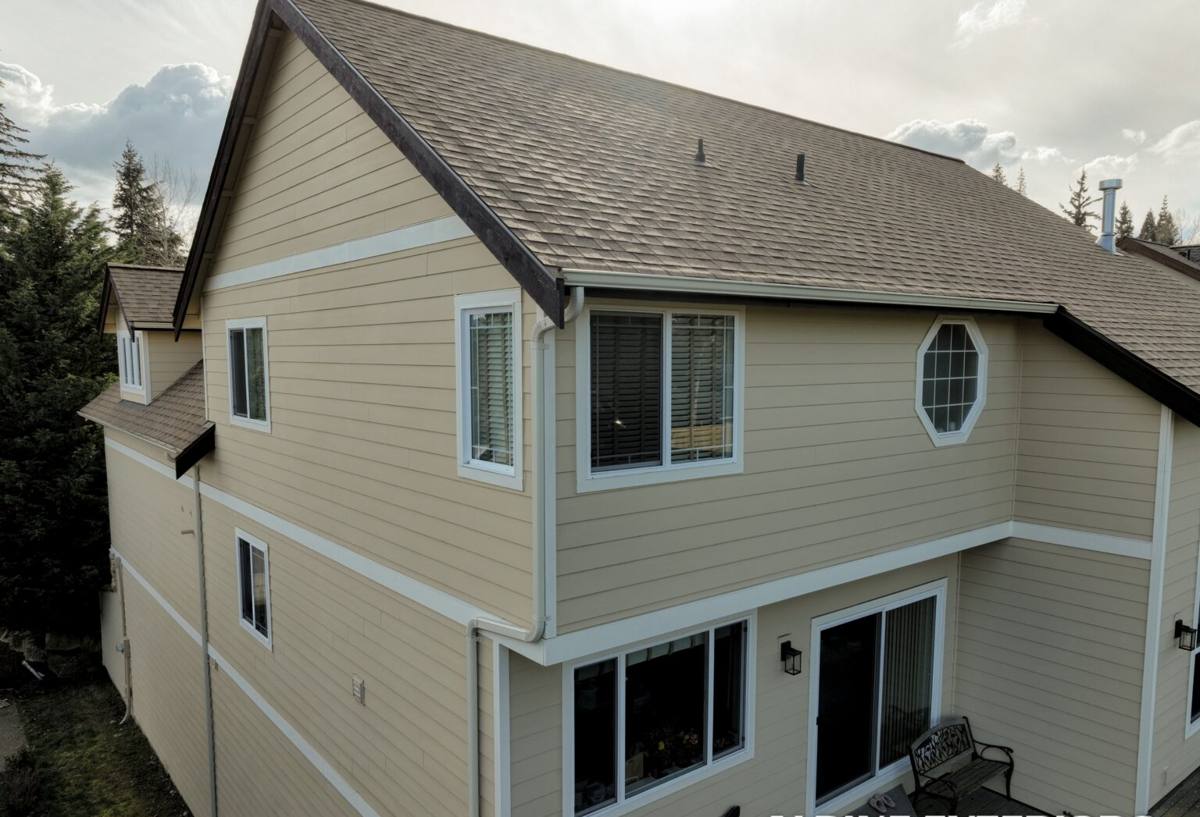
What Correct Asphalt Shingle Roofing Involves Here
A shingle roof is a system, not a single product. The shingles themselves get the attention, but in a marine climate like this one, the layers underneath and around them do most of the work of keeping water out over the long run.
Underlayment and Water Barrier
Standard felt underlayment is the minimum baseline, but for a home exposed to driving rain off the water, a synthetic underlayment with better tear resistance and water-holdout is worth the modest upcharge. In vulnerable areas — eaves, valleys, and anywhere wind-driven rain is likely to push water sideways under the shingle tabs — a self-adhering ice-and-water membrane gives you a second line of defense that ordinary felt doesn't.
Ventilation
Trapped moisture is the enemy of any roof, and it's a bigger problem in a humid coastal climate than people expect. A roof deck that can't breathe holds moisture, which shortens shingle life from underneath and invites rot in the sheathing itself. Balanced intake at the eaves and exhaust at the ridge keeps air moving through the attic space, which matters as much for the wood underneath as it does for the shingles on top.
Flashing Details
Most roof leaks near the coast don't start in the open field of shingles — they start at transitions: chimneys, skylights, sidewalls, and roof-to-wall junctions. Salt air is hard on exposed metal fasteners and cheap flashing, so the quality and installation of flashing at these points matters as much as the shingle brand you choose. This is also where corner-cutting shows up years later as a hidden leak instead of an obvious one.
Choosing Shingles for Salt Air and Moss
Not every asphalt shingle product is built the same, and in this climate the differences matter more than they would somewhere drier. The table below breaks down the practical trade-offs homeowners near Lummi Nation should actually weigh.
| Shingle Type | Moss/Algae Resistance | Wind Rating | Typical Lifespan Here |
|---|---|---|---|
| Standard 3-tab | Lower unless algae-resistant granules specified | Moderate | 15-20 years |
| Architectural (dimensional) | Often available with algae-resistant (AR) granules | Higher, better in driving wind/rain | 20-30 years |
| Premium/designer laminate | Algae-resistant standard on most lines | Highest of the asphalt options | 25-30+ years |
For a coastal Whatcom County home, we generally steer homeowners toward architectural shingles with algae-resistant (AR) granules as the practical baseline, not the upgrade. The AR treatment uses copper or zinc-infused granules that resist the moss and algae staining that's nearly unavoidable here on untreated shingles within a few years. It's a matter of matching the product to the actual conditions rather than choosing the cheapest option and fighting moss growth for the life of the roof.
Our Installation Process
A shingle roof done right follows the same sequence every time — skipping steps is usually where problems start.
- Tear-off and deck inspection: old roofing removed down to the deck, with every sheet of plywood or OSB checked for soft spots, rot, or delamination before anything new goes down.
- Deck repair: any damaged sheathing replaced before underlayment goes on — covering a bad deck just hides the problem.
- Ice-and-water membrane at eaves, valleys, and other vulnerable transitions.
- Synthetic underlayment across the remaining field of the roof.
- New flashing at all penetrations, chimneys, and wall transitions — reused flashing is a common source of early leaks and not something we do.
- Balanced intake and exhaust ventilation installed or corrected as needed.
- Shingle installation to manufacturer specifications, including nailing pattern and exposure — both of which affect wind performance and warranty validity.
- Final walk-through, cleanup, and magnetic sweep for stray nails.
We explain each step as we go, and we don't treat any of these as optional add-ons to upsell — they're what a correctly installed roof requires in this climate.
Cost Factors for a Lummi Nation Re-Roof
Every roof is priced individually after an on-site look, but the factors that move the number are consistent. Knowing them ahead of time makes it easier to understand your estimate and compare quotes fairly.
| Factor | Why It Affects Cost |
|---|---|
| Roof size and complexity | More valleys, dormers, and roof planes mean more labor and flashing work |
| Deck condition | Rotted or soft sheathing found during tear-off adds material and labor to replace |
| Shingle grade chosen | Standard 3-tab, architectural, and premium laminate lines carry different material costs |
| Access and pitch | Steep roofs or difficult site access require more safety setup and time |
| Ventilation upgrades | Adding or correcting intake/exhaust venting is worth doing during a re-roof, not after |
| Layers to remove | Tearing off multiple existing layers takes longer than a single-layer tear-off |
Broadly, homeowners in this area should expect a range that reflects a mid-market to upper-mid-market roofing job rather than a bargain-bin one — the underlayment, flashing, and ventilation work described above adds real cost but also real years to the roof's life. We give a written, itemized estimate so you can see exactly what you're paying for rather than a single lump-sum number.
Maintenance Checklist for Coastal Asphalt Shingle Roofs
A well-installed roof still needs periodic attention in this climate. Moss and debris that would be a minor issue inland can shorten shingle life significantly if ignored near the water.
- Clear moss and organic debris from the roof surface before it builds up, especially on north-facing slopes that stay shaded and damp longer
- Keep gutters and downspouts clear so water isn't backing up under the shingle edge during heavy rain
- Trim back overhanging branches to reduce shade, debris, and the moisture that moss needs to establish
- Check flashing around chimneys, skylights, and sidewalls periodically for corrosion or lifted edges
- Address small leaks or missing shingles promptly — driving rain finds gaps quickly in this climate
- Avoid pressure washing shingles, which strips granules and shortens their life; use gentle, low-pressure treatments instead
Signs Your Roof Needs Attention Now
Some warning signs are easy to miss from the ground, especially on a roof that still looks fine at a glance. Watch for granules collecting in gutters, which signal shingle wear; shingles that are curling, cupping, or cracking; dark streaking that's more than surface moss; soft spots on the roof deck felt from inside the attic; and daylight visible through the roof boards in the attic space. Any of these, especially combined with a roof that's already 15-20 years old, is worth a professional look before a minor issue becomes a deck-level repair.
Why Local Experience in Lummi Nation Matters
A crew that already works homes in and around Lummi Nation understands the practical realities of the area — the moss growth patterns on shaded, water-facing slopes, the way salt air chews through unprotected fasteners faster than it would inland, and the driving-rain wind patterns that make flashing detail non-negotiable. That's different from general roofing knowledge applied to a coastal job for the first time.
Property location and land status can also affect permitting requirements depending on exactly where a home sits relative to Lummi Nation trust land versus county jurisdiction, and that's worth sorting out early rather than after materials are ordered. We handle that conversation directly with homeowners as part of scoping the job, rather than leaving it as a surprise mid-project. Being upfront about what a job requires — permitting, timeline, and the real cost of doing the underlayment and flashing work correctly — is part of what separates a crew that plans to be working in this area for years from one that's just passing through on a single job.
Getting Started
If you're weighing a repair versus a full re-roof, or just want an honest read on how much life is left in your current shingles, we're glad to take a look. There's no pressure and no sales script — just a straightforward assessment of what your roof actually needs given its age, condition, and exposure. Use the form below to request a free estimate for your Lummi Nation home.