 Ferndale Exterior
 Siding Built for Life Near the Water
Homes in and around Lummi Nation sit about as close to the elements as a house in Whatcom County gets. The water is right there, the wind comes off it steadily, and the tree cover that shades so many lots here keeps things damp long after the rain stops. That combination — salt air, driving rain, and a moss season that can run half the year — is harder on exterior siding than most homeowners realize until they're dealing with soft trim boards or peeling paint a few years into owning the house.
Siding installation done right in this area isn't just a matter of picking a color and nailing up planks. It's a matter of choosing a product that can actually take the exposure, and installing it with the kind of moisture-management detail that a marine climate demands. That's the whole focus of this page: what a Lummi Nation-area home needs from its siding, what a correct job looks like, and why the crew you hire matters as much as the material.
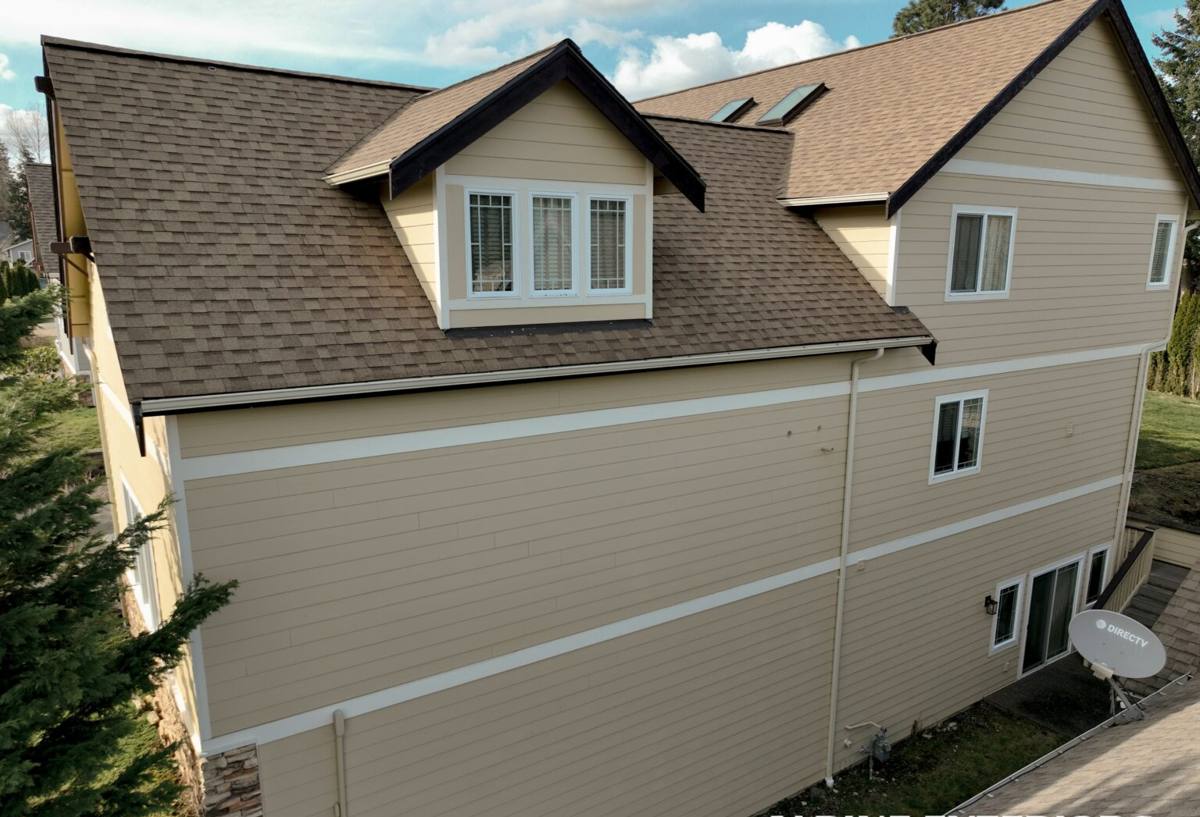
What Salt Air, Rain, and Moss Actually Do to a House
Salt-laden air doesn't just sit on the surface — it works into fasteners, flashing, and any exposed metal, speeding up corrosion in ways that dry-climate siding installers rarely have to think about. It also breaks down paint films and caulk faster than inland exposure does, which matters a lot if a product depends on that surface coating to stay watertight.
Wind-driven rain off the water behaves differently than a straight-down rain shower. It gets pushed sideways and even upward under laps, trim, and butt joints that would stay dry in a calmer setting. If the water-resistive barrier and flashing details underneath the siding aren't done correctly, that wind-driven moisture finds its way behind the cladding — and once it's behind the siding, the damage is happening where nobody can see it until it's advanced.
Then there's moss. Shaded, damp lots near Lummi Nation hold moisture on exterior surfaces far longer than an open, sunny lot would. Moss and algae take hold on anything that stays wet for extended stretches, and a siding product that can't dry out between rain events becomes a long-term food source for exactly that kind of growth.
Why Some Common Siding Products Struggle Here
We get asked fairly often why we don't install vinyl or wood-based products like LP SmartSide, primed spruce, or cedar. It isn't that these products don't have a place — it's that our professional standard is to only put on a home what we're confident will hold up to this specific exposure without an outsized maintenance burden on the homeowner. Vinyl expands and contracts significantly with temperature swings and can become brittle and crack in a hard freeze, and it doesn't stop moisture that finds a way behind it — it just moves the problem out of sight. Wood-based siding depends heavily on an intact paint film to keep water out of the substrate; in a climate where that film is under constant assault from salt air, rain, and shade-driven dampness, the repainting and caulk-maintenance cycle gets short fast, and any gap in that maintenance invites rot.
Why We Install Only James Hardie Fiber Cement
James Hardie fiber cement is a cement-and-cellulose product, not wood and not vinyl, and that changes how it behaves in this climate. It's non-combustible, it doesn't swell, rot, or delaminate the way wood-based sidings can when they take on moisture, and its ColorPlus factory finish is baked on under controlled conditions rather than field-applied — which means it holds color and resists fading and peeling far longer than a job-site paint job exposed to salt air from day one.
Hardie also engineers specific product lines by climate zone. The HZ5 line is built for regions like ours that see sustained moisture and cooler, wetter conditions for much of the year, with a formulation and engineering profile suited to that reality rather than a one-size-fits-all product. Add in a strong, transferable manufacturer warranty on both the substrate and the factory finish, and it's the product we're willing to stand behind on a coastal Whatcom County home — which is why it's the only siding we install, full stop.
What a Correct Installation Involves Out Here
The material is only half the equation. A James Hardie installation that's actually built for this exposure includes a number of details that are easy to rush and expensive to fix later:
- Full tear-off of the old siding so the sheathing underneath can be inspected for hidden rot or moisture damage before anything new goes on
- A continuous, correctly lapped water-resistive barrier installed before a single piece of siding is hung
- Proper flashing at every window, door, and horizontal joint, with materials compatible with fiber cement so nothing corrodes or reacts over time
- Fastening per Hardie's published specification — correct nail type, spacing, and depth, since overdriven or wrong fasteners are one of the most common causes of premature siding failure
- Correct clearances from grade, roof lines, and decks so the bottom edge of the siding isn't sitting in a permanent splash zone or trapping moisture against untreated wood
- Manufacturer-approved caulking only at the joints Hardie specifies — not as a substitute for proper flashing, but as a supplement to it
Skip any one of these steps and the siding can still look right on installation day while quietly failing behind the surface within a few years — which is exactly the kind of failure that's hardest to catch in a coastal, shaded, high-moisture setting like this one.
Permitting and Site Considerations Near Lummi Nation
Depending on exactly where a property sits, the permitting process for exterior work can run through Whatcom County or through a different jurisdiction if the home is on tribal trust land. We sort out which process applies before scheduling any work, so there are no surprises mid-project. Waterfront and near-waterfront lots in this area can also mean tighter site access, more wind exposure during staging, and scheduling around weather windows more carefully than an inland job would require — all things we account for when we put together a project timeline.
Our Process, Start to Finish
The process starts with an on-site assessment of the home's current siding, trim, and — where accessible — the condition of the sheathing underneath. From there we talk through Hardie's plank profiles and the ColorPlus color palette, and put together a firm scope of work rather than a vague estimate. Once materials are ordered, we schedule the tear-off and installation around a realistic weather window, since fiber cement installation goes best in dry conditions even though the finished product is built to handle everything this climate throws at it. The job wraps with a full site cleanup and a final walkthrough, so the homeowner knows exactly what was done and what to expect from the siding going forward.
Cost Factors for a Lummi Nation-Area Siding Project
Every home is different, but the line items that most often move the price on a project in this area are the same handful of factors:
| Factor | Why It Matters Here |
|---|---|
| Extent of hidden sheathing damage | Homes exposed to years of moss and driving rain more often need sheathing repair discovered during tear-off |
| Home size and number of stories | More surface area and higher elevations mean more material, staging, and labor time |
| Trim and architectural detail | Waterfront-style homes with more corners, gables, and trim require more flashing and cut work |
| Site access | Tighter or waterfront lots can slow material staging and require more careful scaffolding |
| Plank profile and color selection | Different Hardie lines and ColorPlus finishes carry different material costs |
| Disposal of old siding | Tear-off volume and material type affect haul-away costs |
Any of these can shift a bid up or down, which is why we walk the property in person before giving a number rather than quoting off a phone call.
What to Look for When Hiring a Siding Crew for This Area
Not every siding crew has experience with coastal, moss-heavy conditions, and it shows up in callbacks a few years down the road. Before hiring anyone for a project near Lummi Nation, it's worth asking:
- Do they install fiber cement regularly, or is it an occasional product for them alongside vinyl and wood-based sidings?
- Will they inspect and repair sheathing before installing new siding, not just cover over what's there?
- Can they explain their flashing and water-resistive barrier approach in plain terms, without hand-waving?
- Are they familiar with permitting requirements for this specific area, including any tribal land considerations?
- Do they follow the manufacturer's published fastening and clearance specifications, or their own shortcuts?
- What does their warranty actually cover, and is it backed by the manufacturer as well as the installer?
A crew that already works this stretch of Whatcom County will have straightforward answers to all of these without much prompting.
Caring for Hardie Siding After Installation
Correctly installed James Hardie siding is low-maintenance, not zero-maintenance. In this climate, an occasional rinse with a garden hose or soft wash knocks off salt residue and moss spores before they get a foothold, especially on shaded, north-facing walls. It's also worth a yearly look at the caulking around windows and trim, and keeping shrubs and low branches trimmed back from the siding so air can actually move and dry the surface between rain events. None of this is heavy lifting — it's the kind of light upkeep that keeps a correctly installed system looking and performing the way it should for decades.
If you own a home in or around Lummi Nation and want a straight answer on what your siding actually needs, we're happy to come take a look. There's no pressure and no cost to get an honest assessment and a firm estimate — the form below will get you started.