 Ferndale Exterior
 Lynden Homes Face a Specific Set of Siding Problems
Lynden sits inland from the Ferndale exteriors company's home base, but "inland" in Whatcom County doesn't mean dry. Pacific storms still push moisture and salt-laden air across the county, and Lynden gets its own version of the same problem every other community here deals with: siding that stays damp longer than it should, and surfaces that turn green faster than homeowners expect. Add driving rain that hits siding at an angle instead of falling straight down, and you have a climate that punishes any exterior product with weak points at the seams, fasteners, or bottom edge.
This page is about one service, done right, in one area: fiber cement siding installation for Lynden homes. Not a general overview of siding materials, not a sales pitch — just what this climate actually demands, what a correct installation looks like, and why the crew doing the work matters as much as the product itself.
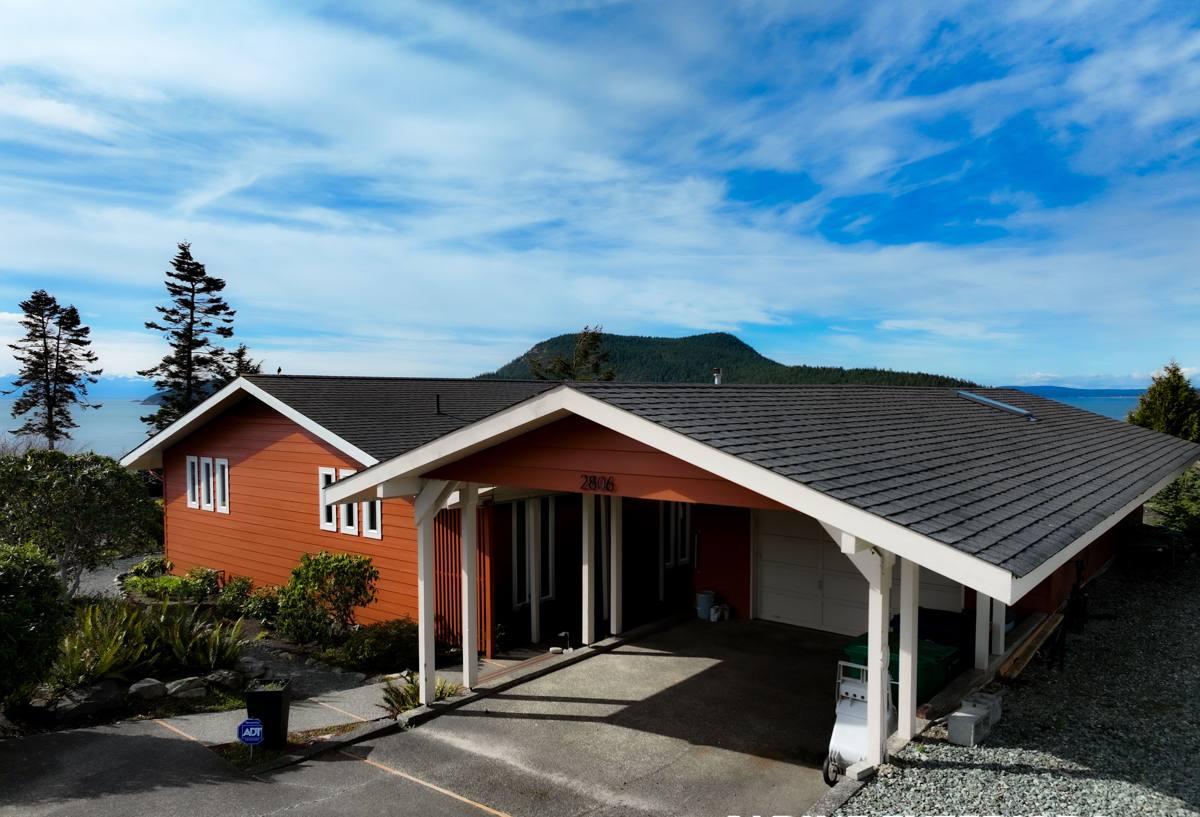
What This Climate Actually Does to Siding
Driving rain finds every gap
Wind-driven rain doesn't behave like a garden hose aimed straight at a wall. It gets pushed sideways and upward, working its way behind loose panels, through unsealed joints, and into any gap where flashing was skipped or installed backwards. Over years, that moisture doesn't just sit on the surface — it gets behind the siding, where it can soak sheathing, rot trim, and create the kind of hidden damage that's expensive to find and worse to fix.
A long moss season means constant shade and dampness
Whatcom County's moss season isn't a few weeks in spring — it's most of the year on the north and shaded sides of a house. Moss and algae need moisture and low light to establish, and Lynden's tree cover and long wet stretches give both in abundance. Siding that holds moisture at the surface, or that has a rough, porous texture, gives moss something to grip onto. Once it's established, it holds even more water against the wall, which accelerates whatever underlying problem already exists.
Salt air is a slower, quieter enemy
Even away from the immediate coastline, salt-bearing air moves inland with weather systems and settles on exterior surfaces. It's not as aggressive here as it is right on the water, but it still contributes to the slow breakdown of paint films, caulking, and unprotected wood trim over time. Materials and finishes matter more here than they would in a dry inland climate.
Why Fiber Cement Is the Right Category of Product for This Job
Fiber cement is a cement-based composite, not wood and not plastic. That distinction matters in Lynden's climate for a few concrete reasons:
- It doesn't rot the way wood-based siding products can when moisture gets behind them or sits at the bottom edge.
- It holds paint and factory finishes far longer than wood, because it doesn't expand and contract with moisture the same way.
- It's dense and stable enough to resist the kind of surface breakdown that gives moss and algae an easy foothold.
- It's non-combustible, which matters during the dry stretches of late summer when wildfire smoke and regional fire risk are a real concern even west of the Cascades.
That's the category. Within that category, there are real differences between manufacturers and product lines — which is why we've standardized on one.
Why We Install Only James Hardie Fiber Cement
We don't install LP SmartSide, vinyl siding, Cemplank, Allura, primed spruce, or cedar. That's a deliberate standard, not a lack of options. James Hardie is the fiber cement manufacturer we trust to hold up in this specific climate, for a few reasons that matter more here than they would in a milder, drier region:
- Climate-engineered product lines. Hardie's HZ product system is engineered differently for different climate zones, including the wetter, cooler conditions common across the Pacific Northwest.
- ColorPlus factory finish. A baked-on, factory-applied finish holds up longer against sun, rain, and salt air than field-applied paint, and it means fewer repaint cycles over the life of the siding.
- Non-combustible composition. No wood-based siding product can match cement composite's fire performance.
- A strong, transferable warranty backed by a manufacturer with a long track record, not a smaller or newer competitor.
We'll talk honestly with any homeowner about other products if asked — every material has real strengths. But when it's our crew doing the install and our name on the work, Hardie is what goes on the wall.
What a Correct Installation Actually Involves
Fiber cement siding is only as good as the installation behind it. A rushed or careless install can undercut even the best product on the market. The details that matter most in a climate like Lynden's:
Water-resistive barrier and flashing first
Before a single piece of siding goes up, the wall needs a properly lapped water-resistive barrier and correctly installed flashing around every window, door, and penetration. This is the layer that actually keeps water out if it gets past the siding — and it's also the layer that's invisible once the job is done, which is exactly why it's the step most likely to get shortcut by crews in a hurry.
Clearance and gaps
Fiber cement siding needs proper clearance from grade, roofing, decks, and other horizontal surfaces, and it needs the manufacturer-specified gaps at butt joints and trim to allow for expansion without trapping water. Siding installed tight to the ground or hard against a deck surface will wick moisture no matter how good the product is.
Fastening to spec
Fasteners need to hit framing at the correct spacing and depth — not too shallow, not overdriven. Overdriven fasteners crack the board's outer layer and create a weak point that moisture will eventually find.
Caulking and sealant at the right joints, not everywhere
Manufacturer installation instructions specify exactly which joints get sealant and which are designed to stay open for drainage. Over-caulking a joint that's supposed to drain can trap water behind the siding instead of letting it escape.
Our Installation Process
- On-site evaluation. We look at the existing siding, trim, and any signs of moisture damage before quoting anything, so the estimate reflects what your home actually needs.
- Tear-off and inspection. Old siding comes off and we inspect the sheathing underneath for rot or damage before anything new goes up — problems found now are far cheaper to fix than problems found in five years.
- Weather barrier and flashing. A new water-resistive barrier and correctly lapped flashing go in around every opening.
- Installation to Hardie specification. Panels or planks go up with the correct fastening, clearances, and joint treatment called for by the manufacturer.
- Trim, caulking, and touch-up. Trim details are finished, joints are sealed where they're supposed to be, and any factory finish touch-up is completed.
- Final walkthrough. We walk the finished job with the homeowner before calling it done.
Fiber Cement vs. Other Siding Options
| Factor | James Hardie Fiber Cement | Vinyl | LP SmartSide | Cedar |
|---|---|---|---|---|
| Moisture resistance | Strong; cement-based, doesn't rot | Won't rot but can trap moisture behind it | Wood-based; vulnerable at cut edges and gaps | Wood; needs consistent maintenance to resist rot |
| Moss/algae resistance | Dense surface resists buildup | Can hold moss in seams and panel laps | Porous surface can hold moisture and growth | Textured surface holds moisture, prone to moss |
| Finish longevity | Factory ColorPlus finish, long cycle | Color molded in but can fade/chalk | Field or factory paint, shorter cycle | Needs regular staining or sealing |
| Fire performance | Non-combustible | Combustible plastic | Combustible wood-based | Combustible wood |
| Upfront cost | Higher than vinyl | Lowest | Moderate | Moderate to high |
| Long-term maintenance | Low | Low, but repairs are visible | Moderate; edge sealing matters | High; ongoing finish upkeep |
None of these products are without merit — vinyl is inexpensive and low-maintenance in the short term, cedar has real aesthetic appeal, and LP SmartSide has a following. But for a climate that combines driving rain, long damp stretches, and a real moss season, fiber cement's combination of moisture resistance and finish durability is why it's what we recommend and the only siding we install.
Living With Fiber Cement Siding Through Lynden's Moss Season
Correctly installed Hardie siding needs far less attention than wood siding, but "low maintenance" doesn't mean "no maintenance." A few habits go a long way in this climate:
- Keep gutters clear so water isn't sheeting down the wall face during heavy rain.
- Trim back vegetation and tree limbs that keep siding in constant shade — shade is what lets moss establish in the first place.
- Rinse siding periodically with a garden hose or low-pressure wash to keep organic buildup from getting a foothold, especially on north-facing walls.
- Have caulking and trim joints checked every few years, since sealant is the one component that wears out faster than the siding itself.
Choosing a Contractor Who Actually Knows Lynden
A siding crew that mostly works drier climates can install fiber cement perfectly well on paper and still get the details wrong for a place like this — because the details that matter here (flashing sequence, clearance at grade, joint treatment) are exactly the ones that don't show up as problems until a few wet winters have passed. Before hiring anyone for a fiber cement siding job in Lynden, it's worth asking:
- Are you manufacturer-trained or certified to install James Hardie products specifically?
- How do you handle flashing around windows and doors, and can you explain your process, not just say "we do it right"?
- What's your approach to clearance at grade, decks, and roof lines?
- Do you inspect and address existing moisture damage before installing new siding, or just cover it up?
- Can you walk me through what your warranty actually covers, both on labor and on the manufacturer's side?
A contractor who answers these clearly and specifically, without hesitation, is one who's actually done this work in this climate before.
Why Local Experience Matters
Fiber cement siding installed the same way in Lynden as it would be in a dry, mild climate is missing the adjustments that actually protect a home here — the flashing details, the attention to moss-prone shaded walls, the clearance choices that account for driving rain. A crew that works Whatcom County regularly has already seen what happens when those details get skipped, and builds the correction into every job as standard practice, not an upsell.
If you're considering fiber cement siding for a Lynden home, we're glad to take a look and talk through what your specific home needs — no pressure, no obligation. Use the form below to request a free estimate.