 Ferndale Exterior
 Why Siding Repair Works Differently Here Than in a Dry Climate
If you own a home in the Lynden area of Ferndale, you already know the siding on your house is dealing with a lot more than sunshine. Whatcom County sits close enough to the water and the coast range that homes take on salt-laden air, long stretches of driving rain, and a moss season that can run from fall through spring. None of that is exotic — it's just the normal weather load for this part of Washington. But it changes what "siding repair" actually means here compared to a drier climate.
In a dry region, siding damage is often cosmetic — sun-fading, the occasional crack. Here, moisture is the real enemy. Wind-driven rain finds every gap, seam, and fastener hole and pushes water sideways, not just down. Salt air accelerates corrosion on fasteners and trim metal. And moss, once it gets a foothold on a north-facing wall or a shaded run of siding, holds water against the surface for weeks at a time. A repair that only addresses what's visible on the surface, without accounting for what's happening underneath, tends to fail again within a year or two.
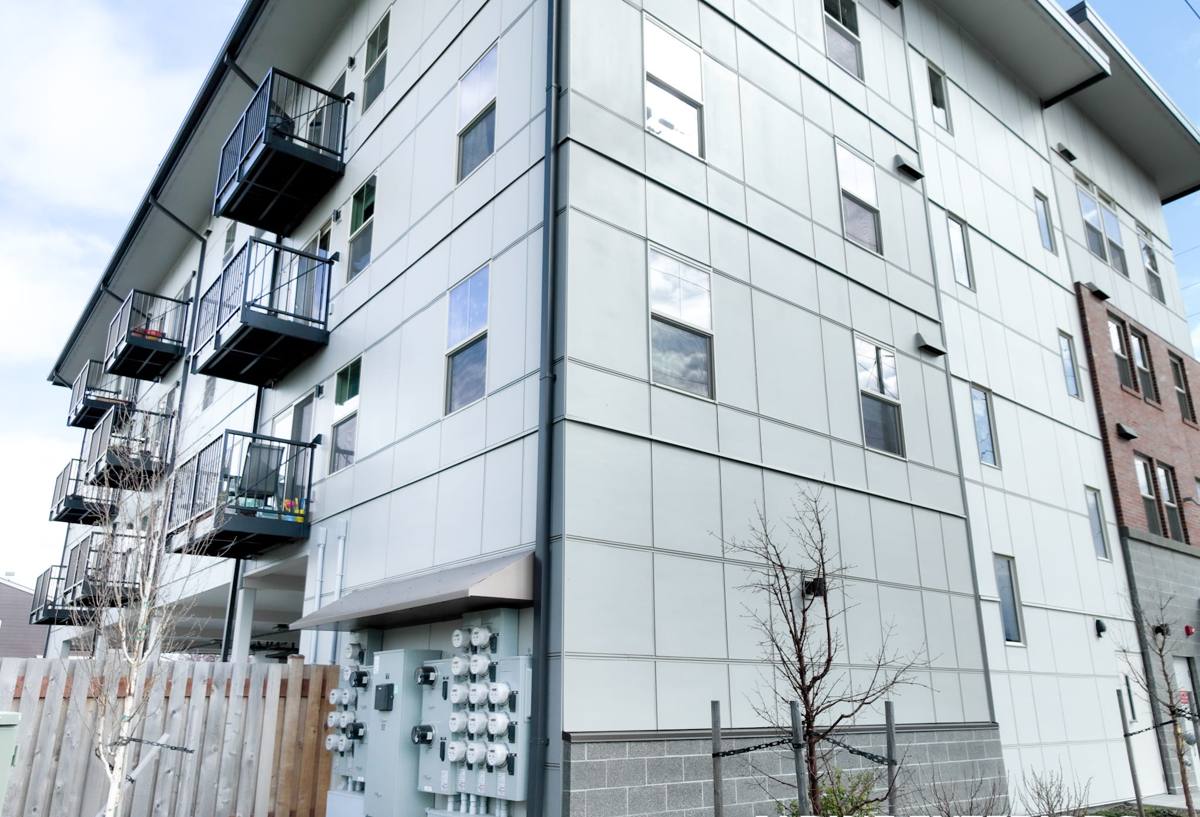
Signs Your Siding Needs Repair — Not a Full Replacement
Most homes we look at in this area don't need to be re-sided. They need targeted repair to a handful of problem spots — usually the same spots where wind, rain, and shade concentrate. Here's what we look for before recommending repair over replacement:
- Soft or spongy spots when you press on the siding, especially near the bottom courses or under windows
- Persistent moss or algae growth on one section of wall while the rest stays clean
- Visible cracking, chipping, or bubbling paint concentrated around seams and butt joints
- Staining or dark streaking below nail heads or trim pieces, which usually points to moisture getting behind the surface
- Gaps opening up at corner boards, window trim, or where siding meets the foundation
- Warping or cupping in individual boards or panels while neighboring sections look fine
If damage is isolated and the substrate underneath is still sound, repair is the honest recommendation. If we find rot spreading behind the cladding, or damage that shows up in multiple unrelated areas of the house, that usually signals a bigger moisture problem that a patch repair won't solve.
What Happens If Repair Gets Delayed
Moisture damage in this climate rarely stays the same size. A small soft spot near a butt joint, left through one more wet season, can spread into the sheathing behind it. Because our wet season runs long, there's less of a dry window each year for damage to stop progressing on its own. That's part of why we encourage homeowners to get repairs looked at as soon as they notice a problem, rather than waiting for a dry stretch to "keep an eye on it."
What a Correct Siding Repair Actually Involves
A repair that holds up here has to do more than swap out a damaged board. Here's the sequence we follow on a typical repair in the Lynden and Ferndale area:
- Diagnose the source, not just the symptom. We trace water stains and soft spots back to their cause — a failed seam, a missing kick-out flashing, a gap at a penetration — before deciding what to remove.
- Open up enough to see the sheathing. Removing only the damaged board without checking what's behind it is how repairs get redone twice. We check the water-resistive barrier and framing for hidden rot.
- Address the water path, not just the panel. If the damage traces back to a flashing or caulking failure, we fix that detail before closing anything back up. Replacing siding over an unresolved leak point just delays the next repair.
- Match material and profile. We use James Hardie fiber cement for all repair work, matched to the existing plank width, exposure, and texture as closely as possible so the repaired section reads as part of the wall, not a patch.
- Re-seal and re-flash correctly. Proper lap sequencing, factory-recommended fastener placement, and correct sealant use at joints matter more here than in a dry climate, because any shortcut becomes a water entry point during the next round of driving rain.
- Clean and treat surrounding moss or algae growth. A repaired section next to an untreated moss colony just gets re-colonized. We address the surrounding surface, not only the repaired board.
Repair vs. Replacement: How We Make the Call
| Factor | Points Toward Repair | Points Toward Replacement |
|---|---|---|
| Extent of damage | Isolated to one or two areas | Found in multiple, unrelated sections |
| Sheathing condition | Dry and solid once opened up | Soft, delaminated, or rotted |
| Age of existing siding | Mid-life, otherwise performing well | Near or past its expected service life |
| Cause of damage | A single identifiable failure point (flashing, caulk, impact) | Systemic moisture intrusion across the wall assembly |
| Material match | Compatible replacement material available | Discontinued profile or incompatible legacy material |
We'll always tell you honestly which column your house falls into. A homeowner who only needed a repair but got sold a full re-side isn't a customer we're trying to make — and a homeowner who needed a re-side but only got a patch is a callback waiting to happen.
Why We Repair (and Replace) Only With James Hardie Fiber Cement
When a repair calls for new material — whether it's a few boards or a full wall section — we use James Hardie fiber cement, and only James Hardie. We don't install vinyl, LP SmartSide, Cemplank, Allura, primed spruce, or cedar, and it's worth being direct about why, especially in a climate like this one.
Vinyl
Vinyl is inexpensive and low-maintenance in a dry climate, and it has real strengths — it doesn't rot and it resists moss growth on its own surface. But it expands and contracts more than fiber cement with temperature swings, its seams and J-channels are common points where wind-driven rain can get behind the panel, and repaired sections can be hard to color-match after a few years of UV exposure. In a region with sustained wind-driven rain, those seam vulnerabilities matter more than they would somewhere drier.
LP SmartSide (engineered wood)
LP SmartSide is a genuinely engineered product with real improvements over old-style hardboard, and it performs well in many climates. But it's still wood-based, which means it's more sensitive to sustained moisture exposure than fiber cement — and sustained moisture is exactly what a long moss season and coastal rain deliver. Any breach in the factory coating or field-cut edge sealing gives moisture a path into the wood fiber.
Cedar and primed spruce
Real wood siding has an appearance a lot of homeowners love, and we understand the appeal. But it demands the most active maintenance of any option — periodic refinishing, vigilant caulk and paint upkeep, and real vulnerability to the moss and algae growth this climate produces on shaded, damp wall sections. For a homeowner who wants to enjoy their house rather than maintain it every year or two, that maintenance burden is a genuine trade-off.
Why James Hardie
Fiber cement doesn't feed moss the way wood does, it doesn't expand and contract like vinyl, and it's non-combustible. Hardie's ColorPlus factory finish is baked on under controlled conditions, which holds up better against salt air and UV than a field-applied coat. Their HZ5 product line is engineered specifically for wet, cold-cycle climates like ours. And the transferable warranty gives homeowners real backing if something does go wrong down the road. None of this means Hardie is maintenance-free — it still needs proper caulking upkeep and periodic cleaning — but it's the product we're willing to put our name behind in this climate.
How Our Repair Process Works, Start to Finish
When you call us about a repair in the Lynden and Ferndale area, here's what to expect:
- A site visit where we look at the damaged area and probe surrounding sections, not just the spot you noticed
- An honest assessment of whether you're looking at a repair or something bigger, explained in plain terms
- A written estimate that separates material, labor, and any flashing or sealant work needed to fix the underlying cause
- Scheduling that accounts for our wet season — we plan repair work around dry windows when possible so new material and sealants cure properly
- A final walk-through so you can see exactly what was done and why
Living With Salt Air, Rain, and Moss Going Forward
A good repair buys you time, but it doesn't change the climate. Homes in this part of Whatcom County benefit from a simple annual routine: a visual check of caulked joints and trim after the wettest months, a gentle cleaning of any shaded or north-facing walls where moss tends to establish, and prompt attention to any new soft spots or staining before they spread. Fiber cement siding tolerates this climate far better than wood or vinyl, but "tolerates well" still isn't "maintenance-free," and staying ahead of small issues is what keeps a repair from turning into a replacement.
Why It Matters to Hire a Crew That Already Works This Area
Siding repair looks straightforward from the outside, but the details that make it last — correct flashing sequencing, matching an existing Hardie profile, knowing which wall orientations in this area tend to hold moisture — come from doing this work locally, season after season. A crew unfamiliar with how salt air and driving rain behave here can make a repair that looks fine on the day it's finished and fails the following winter. We'd rather tell you the truth about what your siding needs, do the repair correctly the first time, and stand behind it.
If you're seeing soft spots, moss buildup, or staining on your siding, we're happy to take a look and give you a straight answer about what it needs. Reach out for a free, no-pressure estimate — there's a form right below this page to get started.