 Ferndale Exterior
 Window Installation for Lynden Homes, Done by a Crew That Works Here Regularly
Lynden sits in the Nooksack River valley, a short drive from our Ferndale base, and it gets the same wet, gray, moisture-heavy weather pattern that defines Whatcom County for most of the year. Homes here take on driving rain from fall through spring, long stretches of high humidity, and a moss season that can run six months or longer on north-facing walls and shaded rooflines. Windows are one of the first places that weather finds a weak spot. A window that's installed even slightly wrong won't show it on day one — it shows up two or three winters later as a soft spot in the sill, a musty smell in the wall cavity, or a pane that fogs between the glass. We install windows for Lynden homeowners the way we'd want them installed in our own houses: flashed correctly, sealed correctly, and set so water has nowhere to go but back outside.
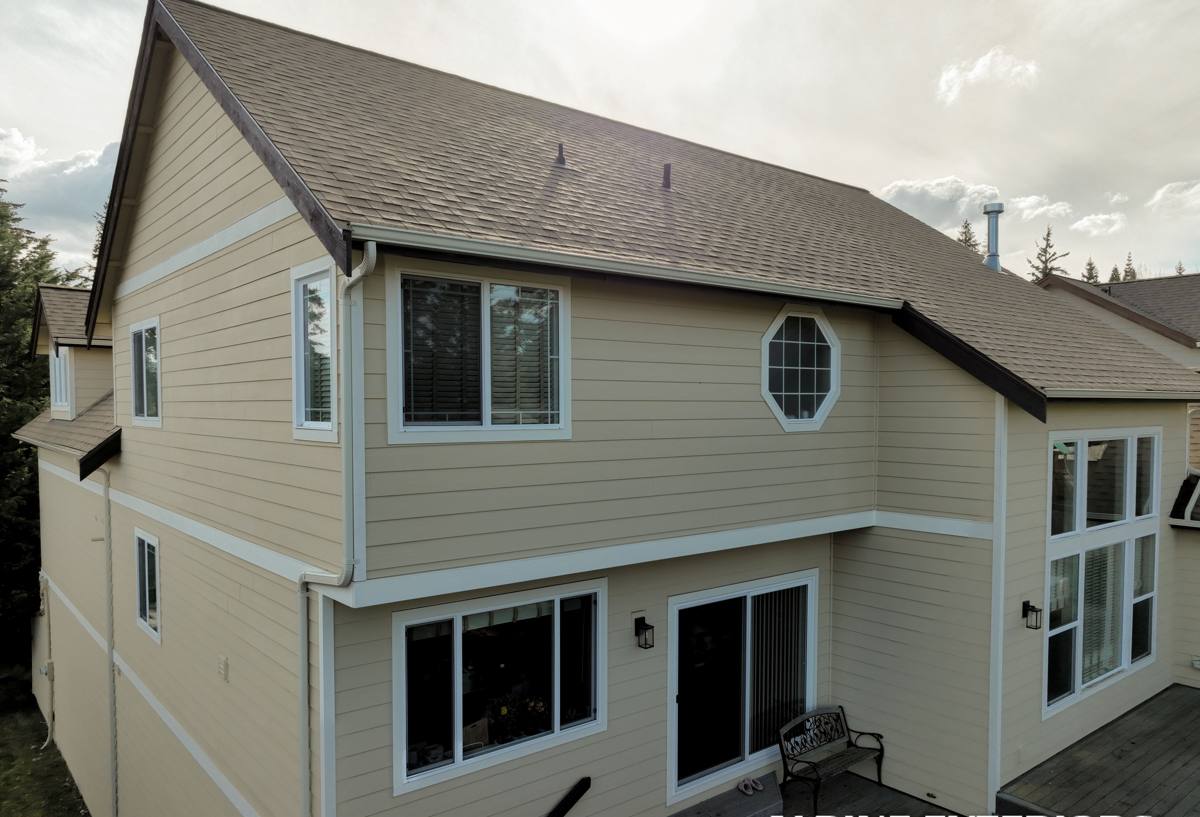
What Whatcom County Weather Actually Does to a Window Opening
It's not the glass that fails first — it's almost always the installation around it. A few specific things happen here that don't happen the same way in drier climates:
- Driving rain finds gaps. Wind-driven rain off the Salish Sea and the valley's own storm systems pushes water sideways into wall assemblies, not just straight down. A window flashed only on top, or caulked instead of properly lapped, will eventually take on water.
- Moss and algae hold moisture against wood and trim. On shaded elevations, moss can keep siding and window trim damp for days after a storm has passed, which accelerates rot in any wood that wasn't properly primed, sealed, or flashed.
- Humidity swings stress seals. Warm, damp summer air followed by cold, wet winters puts repeated stress on window seals and insulated glass units. A poorly bedded frame moves more than it should, and that movement is what eventually breaks a seal.
- Slow-drying conditions punish mistakes. In a drier climate, a small installation flaw might dry out before it causes damage. Here, framing lumber and sheathing can stay damp long enough for rot and mold to take hold before anyone notices.
Signs a Lynden Home Needs Window Installation, Not Just a Repair
Homeowners often call us about a "leaky window" and it turns out the glass and hardware are fine — the problem is the installation underneath. Here's how to tell the difference:
Signs pointing to a full window installation
- Soft or discolored trim, sill, or drywall around the window, especially on north- or west-facing walls
- Visible daylight or a draft you can feel around the frame even with the window latched
- Fogging or moisture between panes of double-pane glass (a failed seal, not fixable)
- Windows that are original to a home built before the mid-1990s, before modern flashing practices were standard
- Frames that are visibly out of square, making the window hard to open, close, or lock
Signs a repair may be enough
- A single failed piece of hardware (crank, lock, or balance) with a sound frame
- Cracked glass from an isolated impact, with no signs of water intrusion around the opening
- Worn weatherstripping on an otherwise solid, square, well-flashed frame
If you're not sure which category your home falls into, that's a normal question — it's part of what we look at during a free estimate visit, not something you need to diagnose yourself.
What Correct Window Installation Actually Involves
"Installation" is doing a lot of work in that phrase, and it's worth breaking down because it's where quality is won or lost. A proper job includes:
- Opening inspection. Before a new window goes in, we check the existing framing, sheathing, and any house wrap for rot, soft spots, or prior water damage. Problems get fixed before the window goes in, not covered up.
- Flashing, in the right order. Water-resistive barrier and flashing tape get layered shingle-style — each piece overlapping the one below it — so water is always directed outward and down, never trapped behind the window.
- Sill pan installation. A sloped, sealed sill pan under the window frame catches any water that does get past the outer seal and directs it back outside instead of into the wall.
- Shimming and squaring. The window unit is shimmed level, plumb, and square in the opening — not just screwed in wherever the old frame happened to sit — so it operates smoothly and seals evenly for years.
- Insulation of the gap. The space between the window frame and the rough opening gets filled with a low-expansion foam or backer rod, not stuffed with fiberglass that can settle and leave gaps.
- Exterior air sealing and trim. A proper bead of exterior sealant and correctly installed trim finish the job and give it a clean, weathertight look from the street.
Skip or rush any one of those steps and the window itself — no matter how good the brand — becomes the weak point in the wall.
Window Types and Materials: What Holds Up in This Climate
We install a range of window materials and glass packages, and which one makes sense depends on the home, the budget, and the specific wall it's going into. Here's how the common options compare for a Whatcom County home:
| Material | Moisture Performance | Maintenance | Typical Fit |
|---|---|---|---|
| Vinyl | Won't rot; handles humidity well | Low — occasional cleaning | Most common choice for full-home replacement |
| Fiberglass | Excellent — very stable in moisture and temperature swings | Low | Larger openings, higher-end remodels |
| Wood-clad (exterior clad, wood interior) | Good if cladding and flashing details are done correctly | Moderate — interior wood care | Homes wanting a wood interior look with weather protection outside |
| Bare wood | Requires disciplined upkeep in this climate | High — regular repainting/sealing | Historic homes where matching original material matters |
We don't push one material on every home. On a shaded, moss-prone elevation, we'll usually steer a homeowner away from bare wood unless there's a specific reason to keep it, simply because the maintenance schedule needed to keep it sound in our climate is demanding. That's a maintenance conversation, not a knock on the material itself — plenty of Lynden homes have well-kept wood windows that have lasted decades with regular attention.
Glass packages worth asking about
For this climate, we typically recommend double-pane, low-E glass with argon fill as a baseline — it cuts heat loss and reduces condensation on the interior glass during cold, damp mornings, which is a common complaint in older single-pane homes. Triple-pane is available for homes wanting the added performance, though the return on investment is more noticeable on north-facing or highly exposed walls than on sheltered ones.
Our Installation Process, Start to Finish
We keep the process straightforward and try not to leave a homeowner guessing about what's happening or when:
- Free on-site estimate. We walk the home, look at each opening, and talk through what's driving the need — drafts, fogged glass, rot, or a full exterior update.
- Written scope and pricing. You get a clear breakdown of what's included per window, so there's no ambiguity about what "installation" covers.
- Scheduling around weather. We plan installation days with an eye on the forecast — openings only stay exposed as long as necessary, and we don't leave a house vulnerable to a storm overnight.
- Removal and opening prep. Old windows come out, the opening gets inspected, and any rot or damage gets addressed before anything new goes in.
- Installation, following the sequence above. Flashing, sill pan, shimming, insulation, sealing, and trim — done in order, every time.
- Walkthrough. We check operation on every window with you before we consider the job finished.
What Window Installation Typically Costs
Pricing depends on window count, size, material, glass package, and how much of the surrounding trim or siding needs attention. Rather than quote a number that won't match your specific home, here's what actually moves the price:
| Factor | Why It Matters |
|---|---|
| Number and size of windows | Larger openings and full-home jobs bring per-unit costs down versus one-off replacements |
| Material (vinyl, fiberglass, wood-clad) | Material cost varies significantly, and so does long-term maintenance cost |
| Condition of the existing opening | Rot or water damage found during removal adds repair scope before the new window goes in |
| Access and building height | Second-story or hard-to-reach windows take more time and equipment |
| Trim and exterior finish work | Matching existing trim or upgrading it adds to the scope |
The only way to get a real number is a walkthrough — we'd rather look at your specific windows than guess over the phone.
Why a Crew That Already Works in Lynden and Ferndale Matters
We're based in Ferndale, and Lynden is inside our regular service area — not a stretch job we take once a season. That matters in a few practical ways. We know how Whatcom County's building department handles window replacement permitting, so there aren't surprises mid-project. We know which elevations in this valley tend to hold moisture longest and plan flashing and drainage accordingly. And because we're close by, warranty callbacks and follow-up questions get a fast, in-person response instead of a wait for a crew to drive in from out of the area.
Keeping New Windows Performing After Installation
A correctly installed window shouldn't need much, but a little seasonal attention keeps it performing for the long haul in this climate:
- Clear debris and moss buildup from sills and surrounding trim before it holds moisture against the frame
- Check exterior caulking annually, particularly after the first two winters, when seals settle in
- Wipe down interior tracks and weep holes so drainage paths stay clear during heavy rain
- Watch for condensation between panes — it's a sign of a failed seal, not something a repair can fix
- Test locks and operation each season, since swelling and contraction from humidity can affect fit over time
If you're weighing window installation for a Lynden home — whether it's one problem window or a full-home update — we're happy to come take a look and give you an honest read on what your house actually needs. The estimate is free, there's no pressure attached to it, and you can use the form below to get started.