 Ferndale Exterior
 Marietta's Waterfront Exposure Is Tougher on Siding Than Most Homeowners Realize
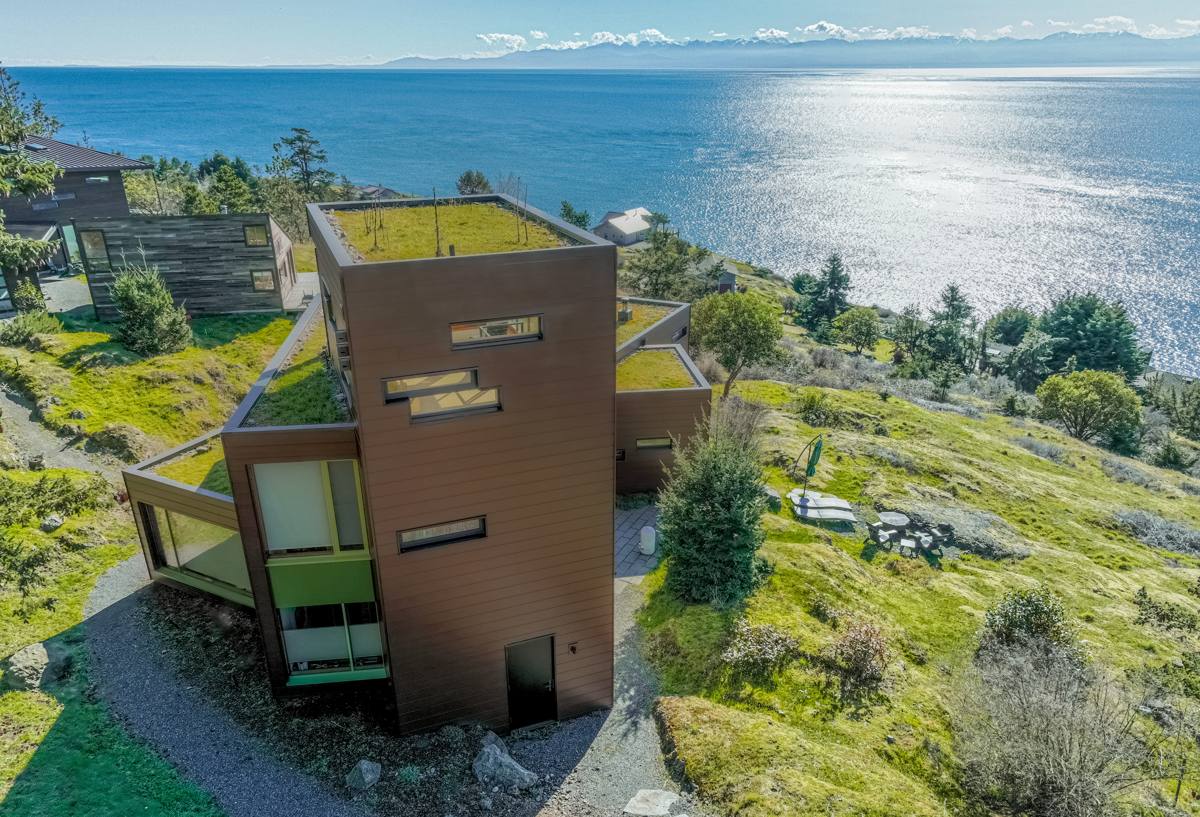
Marietta sits close to the water along Bellingham Bay, just outside Ferndale in Whatcom County, and that location comes with a specific set of siding problems that inland neighborhoods simply don't deal with. Salt-laden air moves off the bay and settles on exterior surfaces year-round, accelerating corrosion on fasteners and trim and breaking down finishes that weren't built to handle it. Add in driving rain that comes sideways off the water during winter storms, and you have a climate that tests every seam, joint, and coating on a house.
Then there's moss. Whatcom County's wet, mild winters and shaded, tree-lined lots common around Marietta create a long moss season that can run eight months or more. Moss doesn't just look bad — it holds moisture against the siding surface, and sustained moisture contact is the single biggest driver of premature siding failure, whatever material is on the wall. A siding choice that handles one of these three stressors but not the others is going to show problems within a few years on a Marietta home.
Why Fiber Cement Is the Right Material for This Exposure
Wood siding — cedar, primed spruce, and similar products — absorbs moisture at cut edges and end joints, and once water gets in behind a finish coat, rot follows. Salt air makes this worse by keeping surfaces damp longer between rain events. Vinyl siding doesn't rot, but it wasn't designed to resist wind-driven rain intrusion at seams, and it can warp or become brittle over time with repeated freeze-thaw and UV exposure, problems that show up faster in an exposed waterfront setting.
What James Hardie Fiber Cement Actually Is
James Hardie fiber cement siding is made from cement, sand, and cellulose fiber, cured into a dense, stable board. It doesn't absorb water the way wood does, it doesn't expand and contract with temperature the way vinyl does, and it's non-combustible. None of that is marketing — it's the basic material chemistry that makes it a better fit for a marine-influenced climate.
How It Performs Against Salt, Moisture, and Moss
Fiber cement's density means it doesn't wick water into the board the way wood fiber products do, so moss and algae sitting on the surface aren't feeding into the material underneath. The factory-applied finish (more on that below) resists the fading and chalking that salt air and UV exposure cause on field-painted surfaces. It's still important to keep moss cleaned off any siding material — no product is maintenance-free — but fiber cement gives you a much wider margin for error when moss inevitably shows up on a shaded Marietta lot.
The James Hardie Product Lines We Install
James Hardie makes several siding profiles, and the right one depends on the home's architecture and exposure:
- HardiePlank lap siding — the most common choice for traditional home styles, available in several exposure widths and textures.
- HardiePanel vertical siding — used for board-and-batten looks or as an accent on gables and entries.
- HardieShingle siding — a shingle profile for homes where that texture fits the design.
- HardieTrim — matching trim boards so corners, fascia, and window surrounds hold up as well as the field siding.
James Hardie also engineers its products by climate zone under its HZ5 and HZ10 designations. For the Pacific Northwest, that means a formulation and installation specification built around sustained moisture exposure rather than a generic national spec. Installing the climate-appropriate HZ product, and installing it to Hardie's written specification for this region, is part of what separates a siding job that lasts from one that doesn't.
ColorPlus Factory Finish: Why It Matters More Near the Water
James Hardie's ColorPlus technology bakes the color into the board at the factory in multiple coats, rather than relying on field-applied paint after installation. That matters anywhere, but it matters more in a salt-air environment where field-applied finishes tend to break down faster from airborne salt and constant moisture cycling. A factory finish also means consistent color and coverage on every board, including cut edges when they're treated with the matching edge sealant — something that's easy to get wrong on site and hard to fix later.
ColorPlus finishes carry their own finish warranty separate from the substrate warranty, and Hardie backs both when the product is installed correctly. That's a meaningful distinction from field-painted siding, where the paint job's lifespan depends entirely on the quality of that one application and the weather conditions it was applied in.
What a Correct Installation Involves
Fiber cement siding is only as good as the installation behind it. Most of the siding failures we get called out to inspect trace back to installation shortcuts, not the material itself — and in an exposure like Marietta's, those shortcuts fail faster.
- Correct clearance between the bottom of the siding and grade, decks, and roof lines so water can't wick up into the board
- Proper weather-resistive barrier installed and lapped correctly before any siding goes up
- Flashing at every window, door, and penetration, installed to shed water outward, not trap it behind the cladding
- Fastener placement and spacing per Hardie's published spec — over-driven or misplaced nails are a common cause of cracking
- Proper gapping and sealing at butt joints, corners, and trim, using products rated for the movement and exposure involved
- Field-cut edges primed or sealed with Hardie's touch-up product before installation to protect exposed core material
- Ventilation behind the cladding maintained where the wall assembly calls for it
Skip any one of these steps and you can end up with moisture getting behind a material that's otherwise very resistant to it — which defeats the purpose of choosing fiber cement in the first place.
Our Process for a Marietta Siding Project
We start with a walk-around assessment of the existing siding and the wall assembly underneath, since what we find during tear-off often shapes the plan more than the initial estimate. Given how much moisture pressure this area sees, we pay particular attention to areas that have had moss cover for a long time, since that's usually where we find the most underlying wear.
From there, tear-off lets us inspect sheathing and framing directly, repair anything compromised, and install the weather barrier and flashing correctly before a single piece of new siding goes up. Installation follows Hardie's climate-specific fastening and clearance spec, and we finish with a walk-through so you know exactly what was done and what basic upkeep — mainly keeping gutters clear and moss off the surface — will keep the job looking right for years.
What Affects the Cost of a Fiber Cement Siding Project
| Factor | Why It Matters in Marietta | Effect on the Job |
|---|---|---|
| Condition of existing sheathing | Long-term moss cover and moisture near the water can hide rot that isn't visible until tear-off | May add repair scope before new siding goes up |
| Home size and wall complexity | More corners, gables, and trim details mean more cutting, flashing, and labor | Increases material and labor hours |
| Siding profile and accessories | Lap, panel, shingle, and trim combinations vary in material cost | Changes overall material cost |
| Access and site conditions | Waterfront and wooded lots can limit staging and equipment access | May affect labor time and setup |
| Existing moisture damage | Salt air and driving rain accelerate hidden deterioration behind old siding | Repair or replacement of sheathing/framing adds cost |
We give a written, itemized estimate after the initial walk-around so you know what's driving the number, not just a bottom-line figure.
Why We Only Install James Hardie
We get asked why we don't offer LP SmartSide, vinyl, Cemplank, Allura, or cedar as options. It's not that these products have no merit — LP SmartSide and other engineered wood sidings can perform reasonably well when installed and maintained carefully, vinyl is inexpensive and low-maintenance in milder climates, and cedar has a look many homeowners want. But we install siding for a living in exactly this coastal, wet, moss-prone environment, and we've made James Hardie our standard because it's the product we trust to hold up here with the least maintenance burden and the strongest, most transferable warranty backing it. Standardizing on one product line also means our crews install it the same correct way every time, rather than switching techniques between materials with very different moisture and movement behavior.
Why Hiring a Crew That Already Works Marietta Matters
Siding contractors who mostly work inland don't always account for how much harder salt air, driving rain, and a long moss season push on a wall assembly. A crew that regularly works Marietta and the rest of the Ferndale and Bellingham Bay area knows to check for the moisture patterns specific to this exposure, uses flashing and clearance details suited to it, and isn't guessing at how James Hardie's climate-specific HZ spec should be applied here. That local familiarity is the difference between a siding job that just looks good at handoff and one that's still performing correctly a decade later.
If you're weighing a siding replacement or new construction project in Marietta, we're happy to walk the property, look at what's actually going on with your current siding, and put together a straightforward, no-pressure estimate using the form below.