 Ferndale Exterior
 Why Marietta Roofs Take a Beating from Coastal Weather
Marietta sits close enough to the water that salt-laden air is a daily fact of life, not an occasional nuisance. Combine that with Whatcom County's long wet season — months of driving rain broken up by heavy fog and dew — and you have a climate that's genuinely hard on roofing. Salt air accelerates corrosion on fasteners, flashing, and any exposed metal. Constant moisture keeps organic growth like moss and algae active for most of the year instead of just a few weeks. And wind off the water can drive rain sideways under poorly sealed shingles or flashing that would hold up fine in a drier inland neighborhood.
None of this means Marietta homes need exotic materials or gimmicks. It means the fundamentals — flashing detail, fastener choice, ventilation, and underlayment — have to be done right the first time, because this climate finds every shortcut eventually.
Warning Signs It's Time for a Full Replacement
Not every roofing problem calls for a full tear-off. But there's a point where patching becomes throwing money at a roof that's already lost the fight. Here's what tells us a repair won't cut it:
- Moss and algae staining that comes back within a season or two of cleaning, especially on north-facing slopes that stay shaded and damp
- Granule loss heavy enough that you can see bare asphalt mat on multiple shingles, not just a few scattered spots
- Soft or spongy decking felt underfoot in the attic, usually a sign moisture has been getting past the roofing system for a while
- Daylight visible through the roof deck from inside the attic
- Curling, cupping, or cracked shingles across large sections rather than isolated storm damage
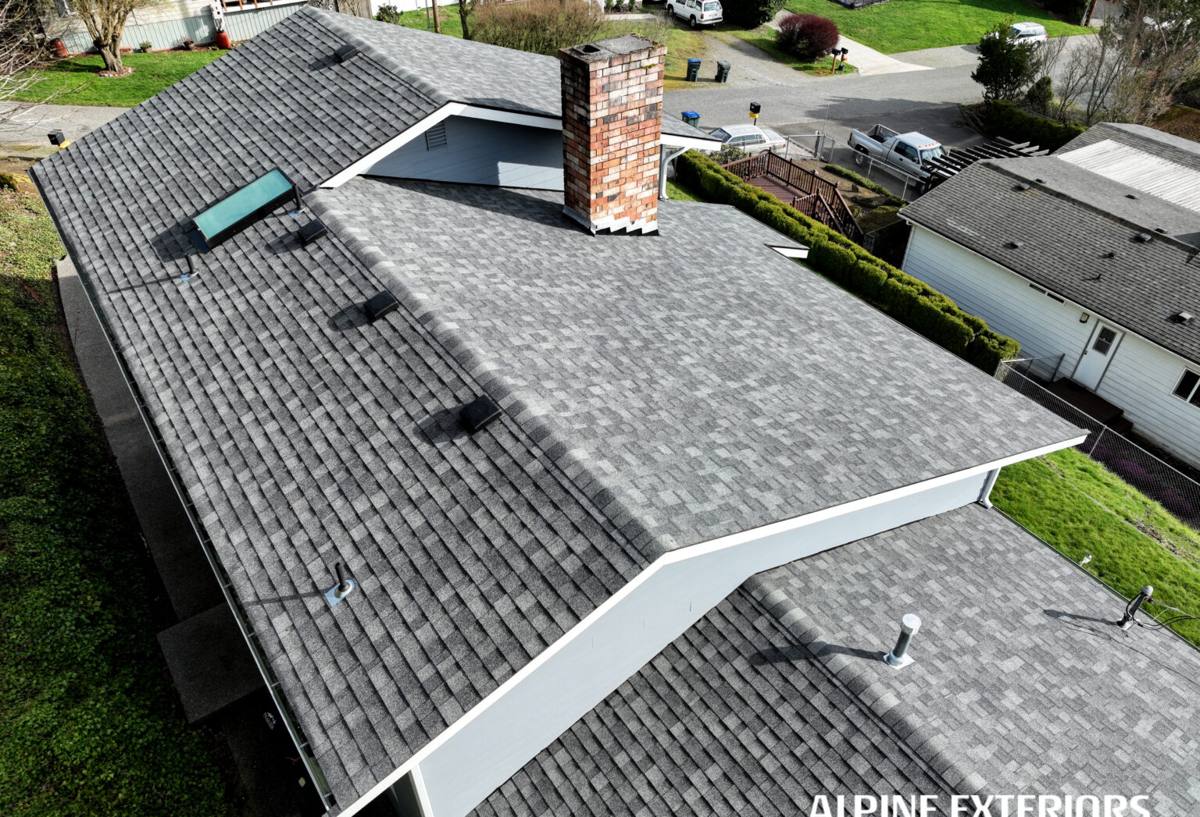
- Rusted or failing metal flashing around chimneys, skylights, and valleys — a common failure point in salt air
- A roof approaching or past 20-25 years old (for standard asphalt composition) that's never been fully replaced
If you're only seeing one or two of these, a repair may genuinely be the right call, and we'll tell you that. Replacement makes sense when the underlying materials — decking, underlayment, flashing — have been compromised broadly enough that repeated patching just delays the same conversation.
What a Correct Roof Replacement Actually Involves
A roof replacement is more than swapping old shingles for new ones. Done right, it's a full system rebuild:
Tear-Off and Deck Inspection
Every layer comes off down to the deck. This is the only point in the project where we can actually see the plywood or plank sheathing underneath — rot, delamination, or soft spots get replaced here, not covered up. Skipping this step and layering new shingles over old is a shortcut that fails early, especially in a climate this wet.
Underlayment and Ice-and-Water Protection
A synthetic underlayment goes down first as the roof's real waterproof barrier — the shingles on top are largely a wear surface and aesthetic layer. In vulnerable spots — eaves, valleys, around penetrations — we add a self-adhering ice-and-water membrane, which matters here less for ice and more for the wind-driven rain that's common near the water.
Flashing
Flashing around chimneys, skylights, vent pipes, and roof-to-wall transitions is where most leaks actually originate, not the field of the roof itself. In a salt-air environment, flashing material and fastener choice matter — we don't reuse old flashing on a replacement job, and we don't cut corners with cheap fastener metals that corrode fast this close to the coast.
Ventilation
Balanced intake (soffit) and exhaust (ridge or box vents) keep the attic dry and temperature-stable. Poor ventilation traps moisture, which shortens the life of the decking and the underside of the new roofing — and it's one of the most common things we find missing or undersized on older Marietta homes.
Field Installation
Shingles or panels go down to manufacturer nailing and exposure specs — not "close enough." Fastener pattern and placement affect wind rating, and wind off the water is a real factor here.
Choosing the Right Roofing Material for a Salt-Air Climate
There's no single "best" roofing material — the right choice depends on your home's slope, budget, and how much maintenance you want to take on. Here's how the common options stack up for a coastal Whatcom County property:
| Material | Salt Air / Moisture Behavior | Moss Resistance | Typical Lifespan | Rough Cost Range |
|---|---|---|---|---|
| Asphalt composition shingle (standard) | Good with proper flashing; granule loss over time | Moderate — benefits from copper/zinc strips | 20-25 years | $ |
| Asphalt composition shingle (architectural/upgraded) | Better mat and sealant durability | Moderate to good with treated options | 25-30 years | $$ |
| Standing seam metal | Excellent when properly coated and fastened; sheds water fast | Excellent — little for moss to grip | 40-50+ years | $$$ |
| Cedar shake | Requires diligent maintenance; absorbs moisture | Poor without regular treatment | 20-30 years with upkeep | $$-$$$ |
Cedar shake can look great, but it's an honest trade-off in this climate: the same organic material that gives it its character also gives moss something to hold onto, and it needs regular cleaning and treatment to keep up. We'll install it if that's what you want, but we'll also tell you upfront what the maintenance commitment looks like. For most Marietta homes, a quality architectural asphalt shingle or standing seam metal gives the best balance of upfront cost and long-term performance against salt air and moss.
Ventilation and Moisture Control — The Part Homeowners Skip
It's tempting to think of a roof replacement as just the shingles you see from the street. But the roof's ability to breathe is what determines whether it actually lasts its full rated lifespan in a climate like this one. Trapped attic moisture condenses on the underside of the decking, feeding rot and mold that you won't see until it's advanced. On a replacement, we evaluate soffit vents for blockage (insulation stuffed into soffits is a common culprit), confirm ridge or box vent capacity matches the attic's square footage, and make sure bathroom and kitchen exhaust fans vent outside the roof — not into the attic itself, which we still find on older homes from time to time. Getting ventilation right during the replacement is far cheaper than diagnosing a moisture problem five years later.
Our Roof Replacement Process, Start to Finish
- On-site inspection and estimate — we look at the whole system: roof, attic, ventilation, and flashing, not just the shingles
- Material selection — honest talk through options, trade-offs, and what fits your budget and roofline
- Scheduling around weather — we plan tear-off days for realistic dry windows given how much rain this area sees
- Tear-off and deck repair — full removal, deck inspected and repaired as needed before anything new goes down
- Underlayment, flashing, and ventilation installed — the parts you won't see but will depend on for years
- New roofing installed to manufacturer spec for wind and moisture performance
- Site cleanup — magnetic sweep for nails, debris hauled off, yard left the way we found it
- Final walkthrough — we go over the finished roof with you before calling the job done
Permits, Timing, and Working Around Whatcom County Weather
Roof replacements in Whatcom County generally require a building permit, and we handle that process as part of the job rather than leaving it to the homeowner. Timing matters more here than in drier climates — a tear-off leaves your home exposed until the underlayment goes down, so we watch weather windows closely and stage the work to minimize any period where the deck is uncovered. Most straightforward residential replacements take a few days once weather cooperates; steeper or more complex rooflines with multiple valleys and penetrations take longer.
Why a Crew That Already Works Marietta Matters
Roofing crews who mostly work drier, inland areas sometimes treat coastal jobs the same way they'd treat any other roof — same fastener specs, same flashing details, same ventilation assumptions. That's how you end up with a roof that looks fine for a few years and then starts failing early around the chimney flashing or in the shaded valleys where moss gets a foothold first. Working Marietta and the surrounding Ferndale area regularly means we're not guessing at how salt air and moss season actually affect a roof here — we're accounting for it in the flashing metal we choose, the ventilation we design, and the timeline we plan around this area's rain patterns.
What to Ask Before You Hire a Roofer
Whoever you choose for a roof replacement, a few questions separate a straightforward job from a headache later:
- Are you licensed and insured to do roofing work in Washington State, and can you show proof?
- Will you inspect and repair the deck if it's found to be damaged, or is that a change order surprise later?
- What underlayment and ice-and-water protection do you use, and where specifically will it go?
- How will you handle ventilation — is it being evaluated and upgraded if needed, or just left as-is?
- What's your plan for weather delays given how much rain this area gets?
- What warranty covers the materials, and separately, what warranty covers your labor and workmanship?
- Will you provide a written, itemized estimate before work starts?
A contractor who answers these plainly and specifically, without dodging, is one worth trusting with a job this important.
Get a Straight Answer About Your Roof
If your Marietta home is showing signs of roof wear — persistent moss, granule loss, soft spots in the attic, or flashing that's seen better days — we're happy to take a look and give you an honest read on whether you're looking at a repair or a full replacement. There's no pressure and no obligation. Fill out the form below and we'll get in touch to schedule a free estimate.