 Ferndale Exterior
 New-Construction Windows for Cordata-Area Builds
Cordata sits close enough to Ferndale and the Bellingham Bay shoreline that new homes here take on weather most inland builders never have to plan for. If you're framing a custom home, finishing out a spec build, or working with a general contractor on a project in this area, the windows are one of the few components that have to get everything right the first time — structural opening, moisture management, and long-term performance — because once siding and trim close in around them, mistakes are expensive to fix.
New-construction windows are a different job than replacement windows, even though the finished product can look similar from the street. In a new build, the window is installed into a bare, unfinished rough opening before siding, house wrap details, and trim are complete. That gives an installer more access to do the flashing and drainage work correctly — but it also means there's no old window, old flashing, or old trim to hide behind if the details are wrong. Get it right during framing and the wall performs for decades. Get it wrong and you won't see the consequence until there's a stain on the drywall two winters later.
Why Whatcom County's Climate Changes the Job
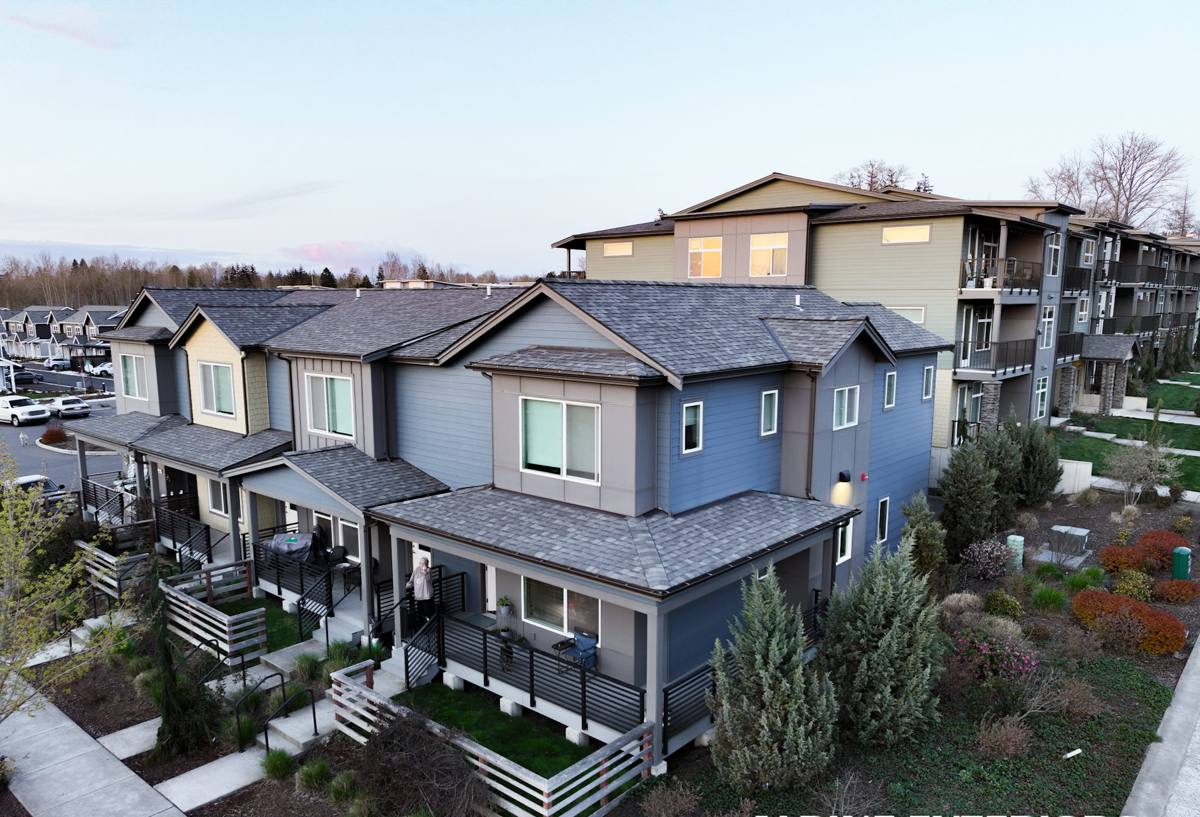
Cordata and the greater Ferndale area sit in a stretch of Whatcom County where three things work against a house at the same time: salt-laden air off the Sound, long stretches of wind-driven rain, and a moss season that can run most of the year on shaded, north-facing walls. None of these are dramatic on their own, but combined they're relentless on window openings.
- Salt air accelerates corrosion on exposed fasteners, hinges, and lower-quality hardware, and it degrades cheap sealants faster than inland manufacturers' warranties usually assume.
- Driving rain in this region rarely falls straight down — wind pushes it sideways into wall assemblies, which means a window's drainage plane and flashing matter more here than in a drier climate where a simple caulk bead might get away with mediocre work.
- Moss and algae growth on shaded siding and trim holds moisture against the wall longer than most homeowners realize, which is exactly the kind of standing dampness that finds any gap in flashing and works it wider over time.
None of this means Cordata needs exotic materials. It means the standard details — sill pans, flashing tape, head flashing, and proper sealant — have to be done correctly and in the right order, every time, with no shortcuts.
What a Correct New-Construction Window Install Actually Involves
A lot of the difference between a window that lasts and one that fails early comes down to steps that are invisible once the siding goes on. This is the sequence we follow on new-construction openings:
- Rough opening check. We verify the opening is square, plumb, and sized correctly before the window ever goes in. A slightly out-of-square opening forces shims and uneven reveals that stress the frame and the seal.
- Sill pan flashing. A sloped, sealed pan under the window sill directs any water that gets past the glazing or frame back outside the wall, rather than letting it pool and soak into the framing.
- Weather-resistive barrier integration. The house wrap has to be cut, lapped, and taped in the correct order around the opening — bottom up, sides, then top — so water sheds over each layer like shingles, not under them.
- Window fastening. Nail-fin or flange windows get fastened per the manufacturer's pattern and spacing, not just "enough nails to hold it." Under-fastening shows up later as air infiltration and glass stress; over-fastening or the wrong fastener type can void the manufacturer's warranty.
- Flashing tape at the fin. Self-adhered flashing tape seals the nailing flange to the WRB on the sides and top, and integrates with the sill pan below. This is the primary drainage barrier, and it's also the step most often rushed on production builds.
- Head flashing. A drip cap or head flashing above the window kicks water out and away from the top of the opening before it can run down the face of the wall and find the trim seam.
- Interior air sealing. Low-expansion foam or backer rod and sealant around the interior perimeter stops conditioned air from leaking out and humid air from condensing inside the wall cavity.
- Exterior trim and sealant. Trim gets installed with the correct gaps and sealant joints so the wall can still shed water even after the window is fully dressed out.
Skip or shortcut any one of these steps and the window can still look perfect for a year or two. The failures this climate produces are almost never immediate — they show up as soft trim, staining, or mold behind the wall well after the crew that installed it has moved on to the next job.
Choosing the Right Window Frame for a Cordata New Build
Frame material matters more in a coastal, high-moisture climate than it does in most parts of the country. There's no single "best" answer for every project — budget, exposure, and the look you're going for all play into it — but here's how the common options actually compare for a new build in this area.
| Frame Material | Moisture & Salt-Air Behavior | Maintenance | Typical Fit for Cordata Builds |
|---|---|---|---|
| Vinyl | Won't rot or corrode; performs well against salt air and rain when properly installed | Low — occasional cleaning | Good value option for most new builds, wide color and size range |
| Fiberglass | Very stable in temperature swings and moisture; strong resistance to warping | Low | Well suited to exposed, wind-driven-rain walls and larger openings |
| Aluminum | Corrosion resistance depends heavily on finish quality; thermally conductive | Moderate | Best reserved for specific architectural applications, not general use in this climate |
| Wood-clad | Attractive interior wood look, but any breach in the cladding exposes wood to moisture | Higher — cladding seams need periodic inspection | Works when detailing and maintenance commitment are both high |
For most Cordata-area new-construction projects, vinyl and fiberglass frames give the best balance of upfront cost, long-term durability, and low maintenance against salt air and driving rain. We'll walk through the trade-offs specific to your project — sun exposure, wall orientation, and budget — before you commit to a frame material.
Glass Package Considerations
Beyond the frame, the glass package affects both comfort and condensation resistance. Double-pane, Low-E glass with an argon or krypton gas fill is standard for this region's energy code and climate — it keeps interior glass surfaces warmer in winter, which cuts down on the condensation that would otherwise streak sills and feed mold growth in a house that already deals with high ambient humidity for much of the year.
Our Process, Start to Finish
For new-construction work in the Cordata area, we typically coordinate directly with the builder or general contractor, but we're just as comfortable working with an owner managing their own build.
- Plan review and measurement. We confirm window sizes and rough opening dimensions against the plans before framing locks them in, catching sizing conflicts early instead of at install day.
- Product selection. We help you choose frame material, glass package, and hardware based on wall exposure, budget, and the look you want for the finished home.
- Scheduling around the build sequence. Windows go in after the WRB is up and before siding starts — we coordinate with your framer or GC's schedule so we're not the bottleneck.
- Installation. Full sill pan, flashing, and fastening sequence as outlined above, on every opening, no exceptions for the ones that are hard to reach.
- Final inspection. We walk every opening before siding closes it in, checking flashing laps, fastening, and sealant while it's still possible to fix anything without tearing into finished work.
Mistakes We See on Production-Built Homes
A lot of what we get called out for in this area isn't a window failing on its own — it's a window that was installed on a tight production schedule without the drainage details it needed. The most common issues we see when we're brought in to diagnose a problem:
| Shortcut | What It Causes |
|---|---|
| Skipping or improperly sloping the sill pan | Water pools at the sill instead of draining out, eventually soaking the sub-sill framing |
| Caulk used in place of proper flashing tape | Sealant fails years before flashing tape does, especially under constant salt-air exposure |
| WRB laps installed in the wrong order | Water gets channeled behind the barrier instead of over it |
| Missing or undersized head flashing | Water sheets down the wall face and finds the top trim joint |
None of these show up on a walkthrough the week the house is finished. They show up as a soft spot in the trim, a musty smell in a closet on an exterior wall, or peeling paint below a window two or three winters later — right about the time Whatcom County's moss season has had a few full cycles to work on a shaded wall.
Maintenance Checklist for New Windows in This Climate
A correctly installed window in this climate still benefits from basic seasonal attention. This is the short list we give homeowners after a new-construction install:
- Rinse salt residue and grime off exterior frames and glass a few times a year, especially on walls facing open water or prevailing wind.
- Check exterior sealant joints annually for cracking or separation, particularly at the top corners of the frame.
- Keep gutters and downspouts clear so roof runoff isn't sheeting down over window heads.
- Remove moss or algae buildup on trim and siding near windows promptly rather than letting it hold moisture against the wall.
- Operate and lubricate hardware periodically — locks and hinges that sit unused can corrode faster in salt air.
Why a Crew That Already Works Cordata Matters
Window flashing details aren't unique to this neighborhood — the physics of water and wind are the same everywhere. What's different is knowing which walls on a given lot are going to take the worst of the driving rain, which sites hold shade long enough to grow moss on siding within a year or two, and how the salt air off Bellingham Bay changes what hardware and sealants are worth using versus what will need replacing early. A crew that installs windows regularly in Ferndale and the surrounding Whatcom County communities has already seen which shortcuts fail here and which details are worth the extra time, instead of learning it on your house.
We also understand how new-construction schedules work — coordinating with framers, siding crews, and general contractors so windows go in at the right point in the sequence, not too early and not so late that it holds up the rest of the build.
Get a Free Estimate
If you're planning a new build or working through window selection for a project in Cordata or elsewhere around Ferndale, we're happy to walk the plans with you, talk through frame and glass options for your site's exposure, and give you a straightforward, no-pressure estimate. Use the form below to get started.