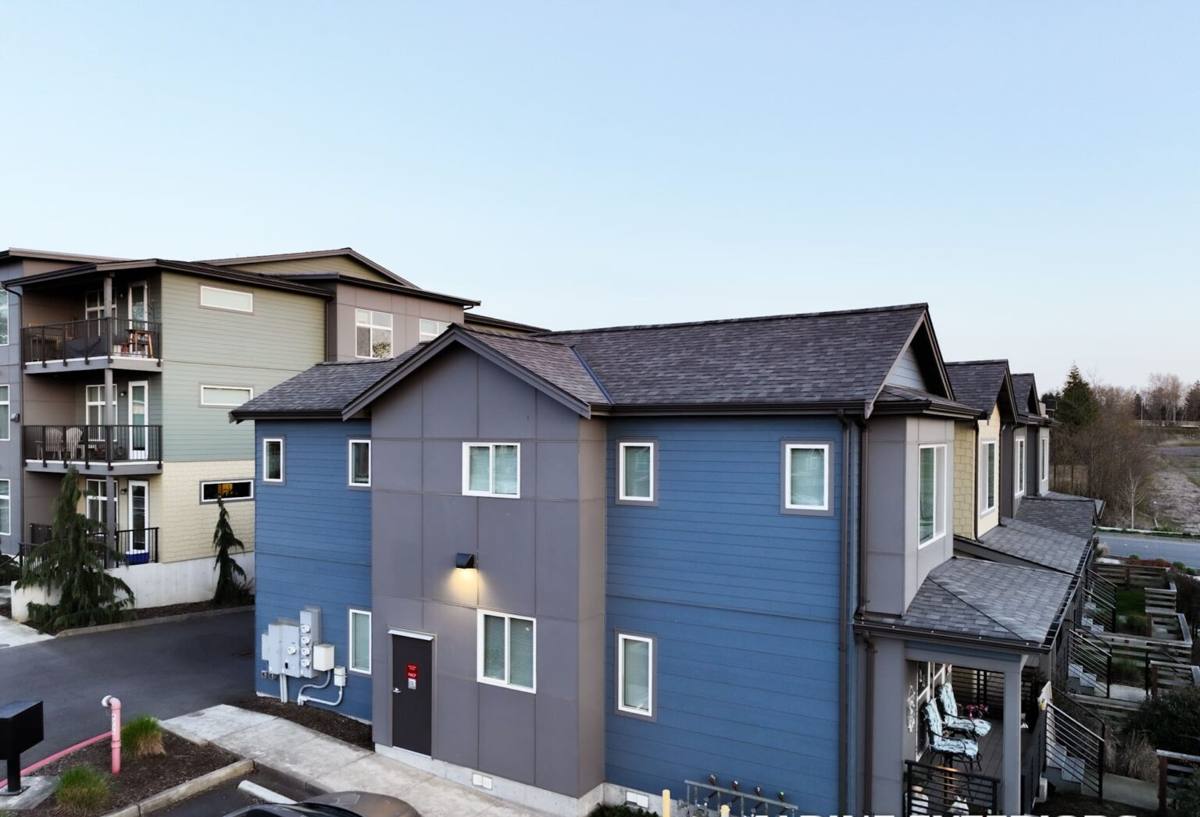
 Ferndale Exterior
 Building New in Sumas? The Windows Have to Be Right the First Time
New construction gives you one real shot at getting windows installed correctly. Once the siding, trim, and interior finish go on, the rough opening is buried — any flashing mistake or gap in the weather-resistive barrier becomes a problem you find out about years later, usually as a stain on drywall or a soft spot in sheathing. In Sumas and the rest of Whatcom County, that margin for error is smaller than in drier parts of the state. Our marine climate means driving rain, long stretches of damp weather, and a moss season that can run most of the year on north-facing walls and shaded framing. Windows installed even slightly out of plane, or without proper drainage behind the flange, tend to show it fast here.
We work directly with builders and owner-builders on new homes and additions throughout the Sumas area, coordinating window install with the framing and weatherproofing schedule rather than treating it as an afterthought. That coordination — showing up at the right point in the build, not before the opening is ready and not after the crew has moved on — is most of what separates a clean new-construction window job from one that causes callbacks.
What Sumas' Climate Actually Demands From a New Window Install
Sumas sits in the Nooksack lowlands near the Canadian border, and while it's inland from the coast, it still sits fully inside Whatcom County's wet marine weather pattern. Homes here deal with sustained rain events, humid air much of the year, and enough cloud cover that anything shaded stays damp long after a storm passes. A few things follow from that for new-construction window work:
- Wind-driven rain matters more than static rain. A window that would be fine under a light straight-down shower can still leak under sideways-blown rain if the flashing sequencing isn't right.
- Moss and algae growth on damp framing and sills is common on shaded elevations, which is why sill pan drainage and sloped sills aren't optional details — they're what keeps standing water from sitting against wood long enough to cause rot.
- Extended damp seasons mean any water that does get behind the cladding has more time to do damage before it dries out, so the drainage plane behind the window has to actually work, not just look right on install day.
- Temperature swings between summer highs and winter lows put ongoing stress on sealants and expansion joints, which is a bigger factor over a 20-30 year window life than most people expect.
None of this means Sumas needs exotic hardware. It means ordinary window flashing details — sill pans, proper flange integration, correctly lapped house wrap — have to be done in the right order, every time, with no shortcuts taken because "it's under the eaves" or "it's a small window."
What a Correct New-Construction Window Install Actually Involves
Rough Opening Prep
Before a window ever gets set, the rough opening needs to be square, plumb, and properly sized with the manufacturer's tolerance in mind — too tight and the window can't be shimmed correctly; too loose and you're relying on foam or trim to do a job it isn't meant to do. We check opening dimensions against the actual window unit before it goes in, not just against the plans, since minor framing variance is normal on any job site.
Sill Pan and Flashing Sequence
This is the detail that matters most in our climate. A sloped sill pan (site-built or manufactured) directs any water that gets past the window itself back outside instead of letting it sit on the sill or wick into the framing. Flashing tape and house wrap then get integrated in strict shingle-lap order — jamb flashing over the pan, window flange over the jamb flashing, head flashing over the top flange, and house wrap lapped over the head flashing last. Skipping or reversing any step in that order is how water finds its way behind the cladding.
Setting and Fastening the Window
The window gets shimmed level, plumb, and square at the fastening points specified by the manufacturer — not just at the corners. Under-shimming is one of the most common causes of a window that operates poorly or develops air leaks within a few years, because the frame is taking load it wasn't designed to carry.
Insulation and Air Sealing
The gap between the window frame and rough opening gets filled with a low-expansion foam or backer rod and sealant rated for window use — not standard high-expansion foam, which can bow window frames and cause operational problems. This step also matters for energy performance, since an unsealed perimeter gap undercuts a good window's U-factor with simple air infiltration.
Exterior Trim and Final Sealant
Trim goes on after flashing is complete and inspected, with sealant joints placed only where they're supposed to shed water, not where they'd trap it. A common mistake we watch for on other crews' work is sealing the bottom of a trim board solid — that traps any water that does get in rather than letting it drain and dry.
Working With Builders and Owner-Builders
Most of our new-construction window work in Sumas comes through general contractors or directly with owners managing their own build. Either way, timing is the practical challenge: windows need to go in after the structure is weathertight enough to protect the openings, but before siding or interior finish locks in any mistakes. We coordinate a specific install window with the builder's schedule, confirm the WRB (weather-resistive barrier) is installed and ready to integrate with our flashing before we show up, and document the flashing sequence with photos at each stage for the builder's and owner's records.
If you're an owner-builder handling your own general contracting, we're used to being one trade among several and communicating directly rather than through a layer of management — just let us know your framing and dry-in schedule and we'll fit into it.
Energy Code and Product Selection for New Construction
Washington's state energy code sets minimum performance requirements for new-construction windows, typically expressed as a maximum U-factor (how much heat the window loses) and sometimes a solar heat gain coefficient depending on orientation and the compliance path the builder is using. New construction is where this matters most, since the whole building envelope is being calculated together — a window that doesn't meet code can force costly changes elsewhere in the energy budget.
We help builders and owners select vinyl or fiberglass window units that meet or exceed current code minimums for our climate zone, sized and specified before framing is finalized so rough openings match the actual units ordered. We steer away from lower-grade aluminum-frame windows for new construction in this climate — aluminum conducts heat and cold efficiently, which shows up as condensation on interior frames during our damp winters, and that condensation is a long-term moisture problem for surrounding trim and drywall, not just a comfort issue.
| Factor | What It Means for a Sumas New Build |
|---|---|
| Frame material | Vinyl and fiberglass resist moisture and don't condense like aluminum; better fit for our wet climate and code targets |
| U-factor | Lower is better insulated; state energy code sets a minimum for new construction that varies by compliance path |
| Glazing | Double-pane with low-E coating is standard here; triple-pane is worth considering on north or wind-exposed elevations |
| Installation flashing | Sill pan plus correct shingle-lap sequencing matters more in wind-driven rain than the window brand itself |
| Sill design | Sloped sills shed water instead of holding it against wood — important given our long damp season |
| Warranty structure | Manufacturer warranties typically cover the unit; installation workmanship warranty is separate and worth confirming with any installer |
Common Mistakes We See on New Builds
Most window problems we get called to look at on newer Sumas-area homes trace back to a handful of repeatable mistakes, not bad products:
- House wrap lapped under the window flange instead of over it, which sends water behind the barrier instead of over it
- No sill pan, or a flat sill pan with no slope to drain water back outside
- High-expansion foam used around the frame, distorting the window and causing sash binding
- Sealant used everywhere instead of only where it should stop water, trapping moisture that gets in through other paths
- Windows fastened at corners only, leaving the frame unsupported at mid-span fastening points
- Trim installed before flashing was inspected, hiding a mistake that surfaces only after finish work is complete
Our Process for a New-Construction Window Job
- Plan review and product selection — confirm window sizes, energy code compliance, and order lead times before framing locks in opening dimensions
- Site coordination — confirm the build schedule with the builder or owner so we install at the right point in the dry-in sequence
- Opening verification — check each rough opening against the actual window units before setting anything
- Flashing and sill pan installation — sloped sill pans and correct shingle-lap sequencing at every opening
- Window setting — level, plumb, square, fastened per manufacturer spec at all required points
- Air sealing — low-expansion foam or backer rod and sealant around the interior perimeter
- Documentation — photos of flashing at each stage before it's covered by trim or siding
- Final check — operation, sealant, and trim review before the crew leaves the site
Why Local Experience in Sumas Matters
Sumas has its own building rhythm — a mix of new custom homes on larger rural lots, agricultural-adjacent properties, and infill construction closer to town, often with septic, well, and setback considerations that differ from denser parts of Whatcom County. A crew that already works this area understands how local soil and drainage conditions affect a foundation's moisture exposure, which in turn affects how much margin you want in your window and wall flashing details. We're not learning the area on your job; we've already worked through how Sumas' rain patterns, shaded lots, and seasonal dampness affect a new build's envelope, and we bring that into every install rather than applying a generic approach.
Being local also means we're realistic about scheduling around Whatcom County's wet stretches — we'd rather shift an install date than set windows during a soaking rain event that compromises the flashing work before it's had a chance to cure or seat properly.
Maintenance After the Build Is Done
New-construction windows installed correctly need very little upkeep, but a few habits extend their life in our climate:
- Clear debris and moss buildup from sills and tracks each fall before the heaviest rain sets in
- Inspect exterior sealant joints annually — sealant is a wear item and typically needs attention well before the window itself does
- Keep gutters and downspouts working properly, since overflow near window heads is a common source of avoidable water exposure
- Watch for condensation between panes, which signals a failed seal on an insulated glass unit rather than a workmanship issue
If you're planning a new build or addition in Sumas and want windows specified and installed correctly the first time, we're happy to walk your plans, talk through product options, and coordinate with your builder's schedule. Reach out for a free, no-pressure estimate using the form below.