 Ferndale Exterior
 Composite Decking in the Nooksack River Valley
Nooksack sits along the river valley east of Ferndale, in a stretch of Whatcom County where farmland, low ground, and mature tree cover combine with the same marine weather that moves through the rest of the county. Homes here deal with moisture from two directions at once: damp air pushing inland off Bellingham Bay and the Salish Sea, and moisture that just sits in the valley itself — morning fog, saturated soil, and shade from tall trees that keeps wood surfaces wet longer than they would stay in more open, drier parts of the county.
That combination is hard on any exterior wood surface, and it's especially hard on a deck. A deck sits low to the ground, takes weather directly on a horizontal surface, and often has limited airflow underneath. When we look at older wood decks in this area, the pattern is consistent — graying and splintering ahead of schedule, moss taking hold on shaded boards within a season or two, and soft spots developing where water has been sitting rather than draining or drying out. Composite decking doesn't eliminate the climate. It changes how a deck responds to it.
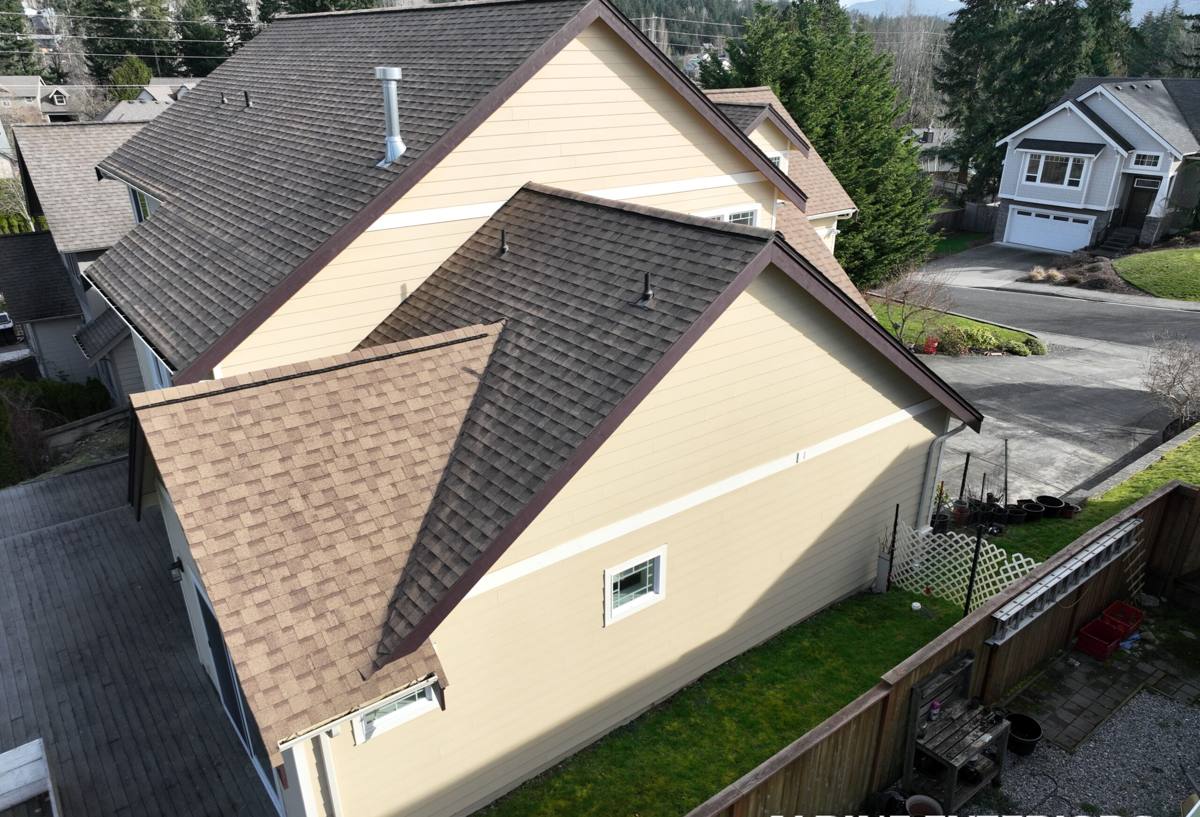
What Whatcom County's Climate Actually Does to a Deck Over Time
It's worth being specific about the mechanisms, because they shape both material choice and installation detail:
- Sustained dampness, not just rain volume. Whatcom County doesn't need a single heavy storm to cause damage — it's the number of days a surface stays wet that matters, and shaded or low-lying yards like those common around Nooksack extend that window.
- Moss and algae on shaded, north-facing surfaces. Trees and fences that block direct sun create the exact conditions moss and green algae need — a wet surface that never fully dries between rain events.
- Marine air and fastener corrosion. Salt-bearing air moving in off the bay reaches well inland, and it accelerates rust on exposed steel brackets, screws, and joist hangers faster than a dry-climate installation would ever see.
- Ground moisture rising from below. In a river valley, moisture doesn't just fall from above — it comes up through the soil and into ledger boards, posts, and joists that sit close to grade.
- Mild but real freeze-thaw cycling. Whatcom winters aren't severe, but repeated freezing and thawing still stresses sealants, caulked joints, and any finish applied to wood.
Why Composite Outperforms Wood in This Environment
We install both materials and we're honest with homeowners about the trade-offs. For a deck that sits in a damp, shaded Nooksack-area yard, composite generally holds up better with less ongoing work. The comparison below reflects normal performance differences, not a claim that wood is a bad product — it's a maintenance-and-moisture conversation.
| Factor | Wood Decking | Composite Decking |
|---|---|---|
| Moisture absorption | Absorbs and releases water, which drives swelling, cupping, and splitting | Absorbs little to no water, especially with a capped board |
| Moss and algae resistance | Porous surface gives moss and algae something to grip | Smoother or capped surface sheds moisture faster, slowing growth |
| Refinishing needs | Sanding, staining, or sealing every 1-3 years in this climate | No staining or sealing required |
| Fastener corrosion exposure | Depends on fastener choice, often overlooked | Manufacturer-specified hardware reduces galvanic and rust issues |
| Upfront material cost | Lower | Higher |
| Expected service life (this climate) | Shorter without diligent upkeep | Longer with minimal upkeep |
What a Correct Composite Deck Installation Actually Involves
Composite decking fails early almost exclusively because of installation shortcuts, not because the material itself is weak. In a wet climate, the details underneath the boards matter as much as the boards themselves.
Substructure and moisture protection
Joist spacing has to match the manufacturer's specification for the board being used — tighter spacing is often required for diagonal or picture-frame patterns than for standard straight runs. Every joist top gets covered with a moisture-barrier joist tape before boards go down, which keeps water from soaking into the wood framing underneath the composite deck surface. Where the deck ties into the house, proper ledger flashing keeps water from working its way behind siding or into the rim joist — a detail that matters even more in a valley setting where moisture lingers.
Fasteners and expansion
Composite boards expand and contract with temperature differently than wood does, so gapping between boards has to follow the manufacturer's spec, not a wood-framing habit. Hidden fastener systems or manufacturer-approved screws prevent the kind of surface damage and premature wear that generic hardware causes, and matching fastener metal to the board's mounting clips avoids the corrosion issues that marine air makes worse over time.
Airflow and drainage underneath
A deck built low to wet ground with no ventilation underneath will trap moisture regardless of what's on top. Correct height off grade, skirting with real airflow (not solid, sealed skirting), and grading that moves water away from the structure rather than pooling under it are what actually protect the substructure long-term.
Choosing the Right Composite Board for This Climate
Not every composite board is a good fit for every yard, and this is where local experience matters more than a spec sheet.
Capped vs. uncapped composite
Capped composite boards have an outer polymer shell that resists moisture penetration, staining, and surface mold far better than uncapped composite, which absorbs more moisture at the core and is more prone to mold and mildew in shaded, damp settings. For a shaded Nooksack-area yard with tree cover, we typically steer homeowners toward a fully capped board — it costs more up front but does more of the work the climate demands.
Texture and color
Boards with heavy wood-grain embossing can trap surface moisture and organic debris in the grain lines, which gives moss and algae a slight foothold even on a capped board. Smoother-finish boards shed that debris more easily. Color matters too: lighter, mottled tones tend to show pollen, leaf tannin staining, and early algae less than solid dark colors, particularly on a shaded run of decking. Dark boards handle structurally fine in the heat we get here — this is purely an appearance-and-staining consideration, not a durability one.
Grooved vs. solid-edge boards
Grooved boards paired with hidden fastener clips give a clean, fastener-free surface and slightly better drainage between boards, which is a real advantage in a climate where every bit of surface drainage helps. Solid-edge boards, face-screwed, are more common on stairs and picture-frame borders where hidden clips aren't practical.
Our Process, From Estimate to Finished Deck
- On-site assessment — we look at sun and shade exposure, existing drainage, tree cover, and the condition of any existing deck or substructure.
- Board and layout consultation — we walk through capped vs. uncapped options, color and texture trade-offs, and layout given the specific shade and moisture pattern of the yard.
- Permit check — decking work often requires a permit depending on height, attachment to the structure, and local jurisdiction; we handle that check before work starts.
- Demolition — if replacing an existing deck, we remove old decking and inspect the substructure underneath, which is often where hidden rot or moisture damage shows up.
- Substructure repair or build — framing repaired or built to spec, with correct joist spacing for the chosen board and pattern.
- Moisture protection — joist tape, ledger flashing, and any needed grading or drainage correction underneath the deck.
- Composite installation — boards installed with manufacturer-specified fasteners, gapping, and pattern.
- Railings, fascia, and stairs — finished out to match the board system and code requirements.
- Final walkthrough — we go over the finished deck with the homeowner, including what maintenance (if any) the specific board line needs.
Maintenance Realities: What Composite Still Needs
Composite is low-maintenance, not no-maintenance. Being upfront about this now saves homeowners from surprises later:
- Sweep or rinse off leaves, needles, and pollen regularly, especially in fall — trapped organic debris holds moisture against the board surface.
- Scrub shaded or slow-drying sections with a soft brush and soap-and-water periodically to stay ahead of moss and algae before it takes hold.
- Clear debris that collects in the gaps between boards, where moisture and organic matter tend to accumulate.
- Inspect railings, stair connections, and visible fasteners once a year for looseness or corrosion.
- Keep gutters and downspouts clear so roof water doesn't sheet directly onto the deck surface.
- Avoid leaving planters, mats, or furniture with rubber feet in one spot for long stretches — they trap moisture underneath.
- Skip high-PSI pressure washing directly on the board's cap layer; a garden hose and brush do the job without risking surface damage.
Cost Factors for a Nooksack-Area Composite Deck
Every deck is different, and we won't quote a number without seeing the site, but these are the variables that actually move the price:
| Factor | Why It Affects Cost |
|---|---|
| Deck size and footprint | More square footage means more material and labor, obviously, but complex shapes also add cutting and layout time |
| Board tier chosen | Capped premium boards cost more than value-line composite, but hold up better in shaded, damp conditions |
| Substructure condition | A sound existing frame keeps cost down; rotted framing found during demo needs to be replaced before decking goes on |
| Height and railing requirements | Taller decks and code-required railings add both material and labor |
| Stairs and multiple levels | Stairs are labor-intensive relative to their size, and multi-level decks multiply that |
| Site access | Difficult access for material delivery or old-deck removal adds labor time |
Why Hire a Crew That Already Works in Nooksack
A lot of what protects a deck in this climate isn't visible once the project is finished — it's in the joist tape, the fastener choice, the grading underneath, and the board selection matched to how shaded and damp a specific yard actually is. A crew that already works around Ferndale and the Nooksack River valley has seen how these yards behave season to season: which sites stay wet longest, which board finishes actually resist moss in heavy shade, and what the local permitting process requires before work starts. That local pattern-recognition is the difference between a deck that looks good on installation day and one that still looks good five winters later.
If you're weighing a new composite deck or a wood-to-composite replacement for a home in the Nooksack area, we're happy to come take a look and walk through honest options for your specific yard. Reach out for a free, no-pressure estimate using the form below.