 Ferndale Exterior
 Building Decks That Actually Hold Up in Nooksack
Nooksack sits in a part of Whatcom County where a deck's worst enemy isn't sun damage — it's moisture that never fully leaves. Between the marine air coming off the Salish Sea, long stretches of driving rain, and a moss season that can run eight months out of the year, an outdoor structure here is under nearly constant low-grade attack. Most deck failures we see aren't dramatic. They're slow: a ledger board that's been wicking water for years, fasteners that rusted from the inside out, or a bottom step that stayed damp long enough to rot from underneath. A deck built for a drier climate, or built without this area in mind, tends to show its age fast around here.
This page is specifically about deck building for Nooksack and the surrounding Ferndale area — what the ground and climate demand, what a correctly built deck actually involves, and how we approach the work when we're on-site.
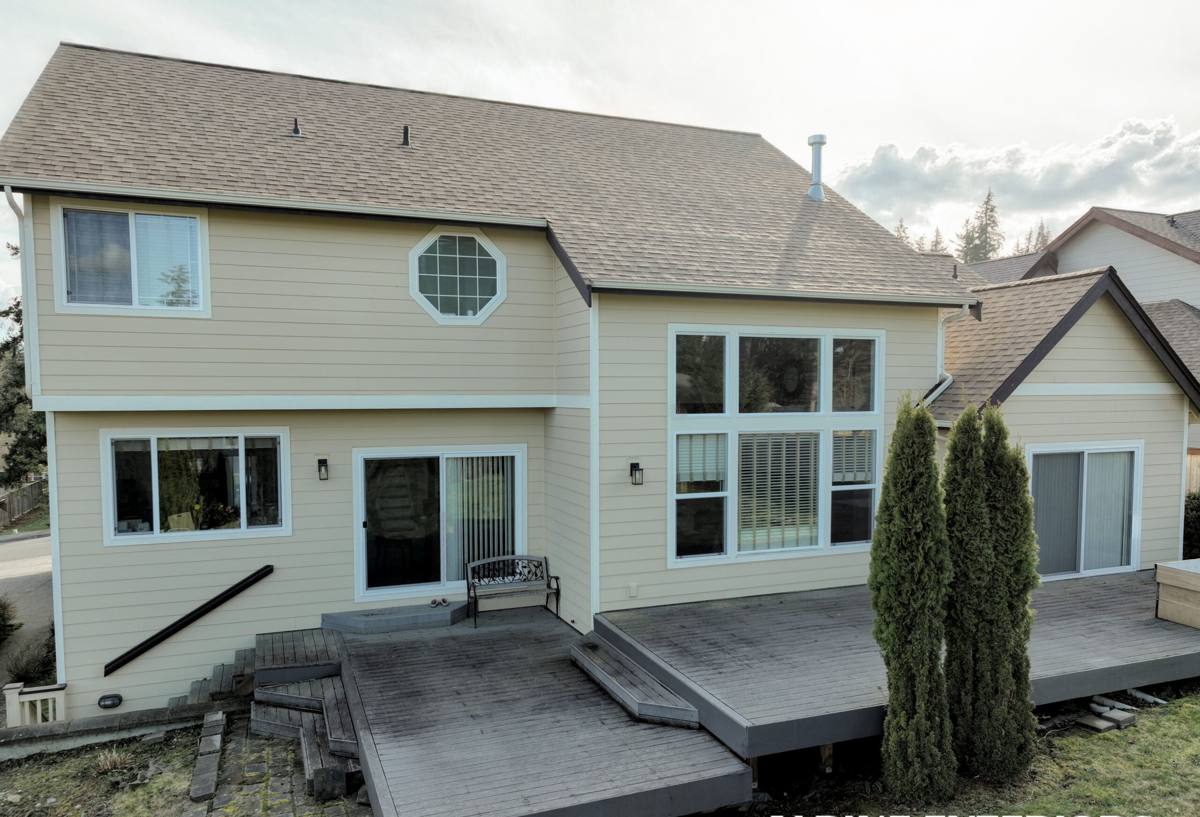
What Local Conditions Demand From a Deck
Salt Air and Metal Fatigue
Homes closer to the water deal with airborne salt that accelerates corrosion on anything metal — fasteners, brackets, railing hardware, even the heads of exposed screws. Standard hardware store fasteners can start showing rust streaks within a season or two in this environment. It's a slow problem, but it's the kind that quietly weakens a structure long before it looks like a problem.
Rain Volume and Drainage
Whatcom County doesn't just get rain — it gets sustained rain, week after week through fall and winter. A deck's ability to shed water quickly, without pooling against ledger boards, posts, or joist hangers, matters more here than in almost any other part of the country. Flat or poorly sloped decking, missing flashing, or joists set too close to grade all turn into slow-moving problems once the rainy season settles in.
Moss and Organic Growth
Moss doesn't just grow on roofs. Given a shaded, damp deck surface — which describes a lot of yards around Nooksack for a good part of the year — moss and algae will establish themselves on wood and even some composite surfaces. Beyond looking bad, moss holds moisture against the decking material and turns a walking surface slick and dangerous.
Choosing Decking Material for This Climate
There's no single "best" decking material — there's a best material for your budget, your maintenance tolerance, and how much shade and moisture the deck will sit in. Here's how the common options actually perform in a Whatcom County backyard:
| Material | Upfront Cost | Maintenance | How It Handles Our Climate |
|---|---|---|---|
| Pressure-treated wood | Lowest | Annual cleaning, periodic staining/sealing | Needs consistent upkeep or it grays, checks, and grows moss fast in shaded areas |
| Cedar | Moderate | Regular sealing to hold color and resist moisture | Naturally more rot-resistant than treated pine, but still needs maintenance in constant damp |
| Composite decking | Higher | Occasional washing, no staining/sealing | Handles moisture well; some lower-grade composites can still support algae growth in full shade |
| PVC decking | Highest | Lowest — mostly just washing | Fully synthetic, doesn't absorb water, most resistant to moss and rot over time |
Our general standard: if a deck is going to sit in significant shade or close to grade, we steer clients toward composite or PVC unless there's a strong reason to go with wood. Not because wood is a bad material — it isn't — but because the maintenance schedule wood needs to stay ahead of moisture in this climate is more than most homeowners realistically keep up with.
What's Underneath Matters More Than What's On Top
A good-looking deck surface over a poorly built frame is a deck that fails early. The parts nobody sees are the parts that determine how long the whole structure lasts.
Footings and Post Bases
Footings need to be set below frost depth and sized appropriately for the soil they're going into. Whatcom County soils vary — some lots drain well, others hold water longer than you'd expect. We adjust footing depth and post base hardware accordingly rather than treating every lot the same.
Ledger Board Attachment and Flashing
The ledger board — where the deck attaches to the house — is the single most common source of hidden water damage on any deck. Proper flashing that directs water away from the house, combined with correct fastener spacing and bolt-through connections, is non-negotiable. This is also the detail most likely to get shortcut on a rushed or budget build, and it's the one that causes the most expensive repairs down the road when it fails.
Joist Hangers and Fasteners
Given the salt air and rain exposure here, we use fasteners and structural hardware rated for exterior, corrosive environments — stainless steel or heavy hot-dip galvanized, not standard coated hardware. It costs more upfront. It's also the difference between hardware that's still sound in fifteen years and hardware that's rusting through in five.
Railings, Stairs, and the Details That Get Overlooked
Railings and stair components take a beating from moisture because they're vertical, exposed on all sides, and often shaded by the house itself. We pay particular attention to:
- Baluster spacing and railing height that meet current code, not just what looks right
- Stair stringers set on solid footings, not resting directly on soil
- Post-to-beam connections using structural screws or through-bolts rather than nails alone
- Gaps and spacing that allow airflow underneath and around framing members, so wood can dry between rain events
- Fastener heads countersunk or capped where they're exposed to foot traffic and weather
Our Deck Building Process
When we take on a deck build in Nooksack, the process generally runs like this:
- On-site consultation. We look at the actual lot — slope, drainage, sun/shade exposure, proximity to the house — before recommending a material or layout.
- Design and material selection. We walk through the tradeoffs in plain terms: what a wood deck will cost you in upkeep versus what composite or PVC costs upfront.
- Permitting. Most new deck construction and many significant rebuilds require a permit through the county or city, depending on where the property sits. We handle that process as part of the job rather than leaving it to the homeowner.
- Footings and framing. This is where we spend the time that doesn't show later — proper depth, proper hardware, proper flashing at the ledger.
- Decking, railings, and finish work. Surface material goes down last, once the structure underneath is sound and inspected.
- Final walkthrough. We go over maintenance expectations specific to the material you chose, so there are no surprises the first wet winter.
Living With a Deck Through a Whatcom County Winter
Even a well-built deck needs some seasonal attention here. The goal is catching small issues before the rainy season turns them into structural ones.
| Task | Frequency | Why It Matters Here |
|---|---|---|
| Clear debris from between boards | Every fall | Trapped leaves hold moisture against decking and framing all winter |
| Check for moss/algae buildup | Spring and fall | Moss holds water against the surface and creates a slip hazard |
| Inspect ledger flashing and caulking | Annually | This is the most common point of hidden water intrusion |
| Check hardware for rust or loosening | Annually | Salt air accelerates corrosion on lower-grade fasteners |
| Re-stain or reseal wood decking | Every 1-3 years | Wood loses its protective barrier faster in constant damp conditions |
Permits and Code in the Ferndale Area
Deck projects above certain heights, or attached to the primary structure, typically require a building permit in Whatcom County and within Ferndale city limits. Requirements can vary based on deck height, footprint, and whether it's a new build or a replacement of an existing structure. Rather than asking homeowners to sort through that themselves, we handle the permitting conversation as part of scoping the job, so the project is built to code from the footings up — not something that gets flagged during a future home sale inspection.
Why a Crew That Already Works in Nooksack Makes a Difference
Deck building isn't exotic work, but building one correctly for this specific climate takes more than a generic playbook. A crew that already works around Ferndale and Nooksack has already seen what happens to a ledger board with poor flashing after five wet winters, and what a composite deck looks like after two years in full shade versus full sun. That's not something you get from a spec sheet — it's from doing the work in this exact climate, repeatedly, and adjusting for what actually happens here versus what happens in a drier region.
It also means fewer surprises during the build itself. Local crews already have a working relationship with the permitting process, already know which fastener grades hold up and which don't, and aren't learning the local soil and drainage quirks on your project.
Get an Honest Look at Your Deck Project
Whether you're planning a new deck, replacing an aging one, or just want a straight answer on whether your current deck is holding up the way it should, we're happy to take a look. Reach out for a free, no-pressure estimate — we'll walk the site, talk through material options honestly, and give you a clear picture of what the job actually involves before any work begins.