 Ferndale Exterior
 Metal Roofing in the Nooksack Area of Whatcom County
Homes in and around Nooksack deal with a specific combination of weather that most roofing material simply wasn't designed for: salt-laden air moving in off the water, long stretches of driving rain, and a moss season that can run most of the year in shaded, north-facing sections of a roof. Metal roofing, installed correctly, handles that combination better than almost anything else on the market. Installed incorrectly, it can fail in ways that are more expensive to fix than the asphalt shingles it replaced.
This page covers what a metal roof needs to do its job in this part of Whatcom County, what a correct installation actually involves, and how we approach these projects for homeowners in the Nooksack area specifically.
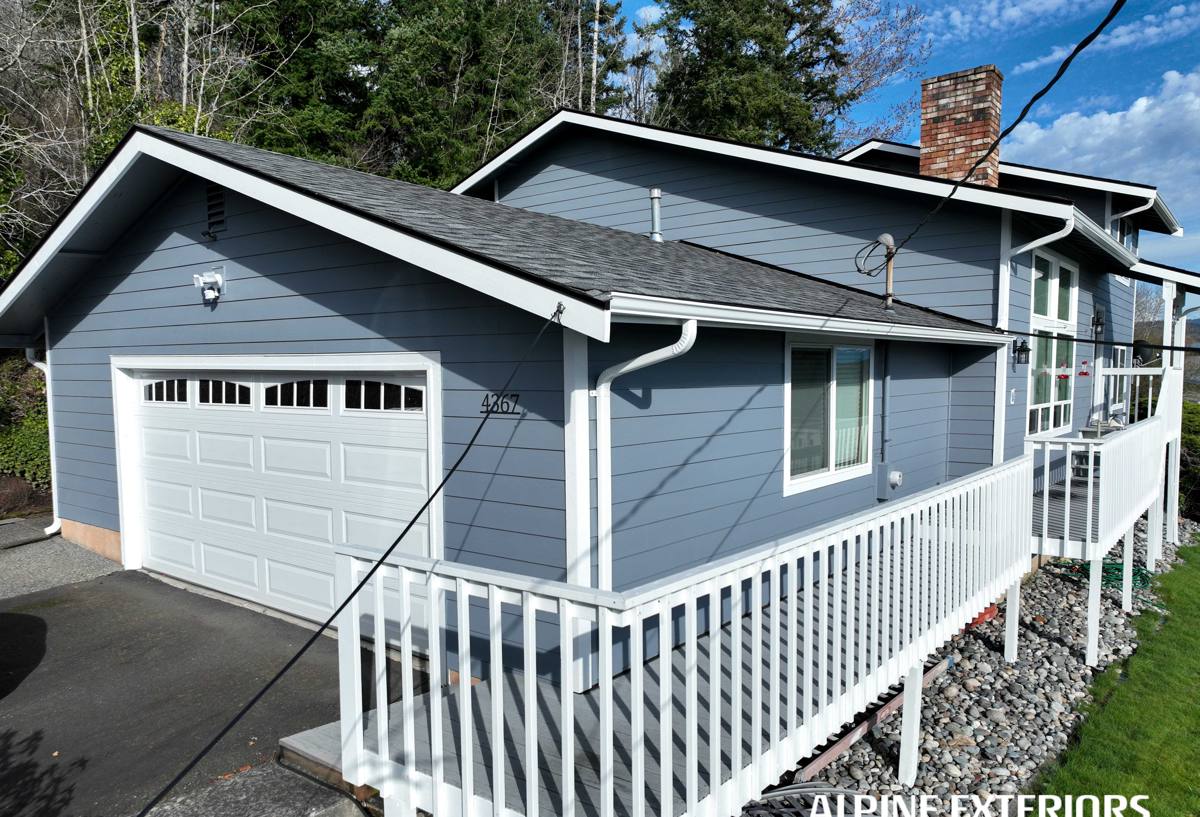
Why This Climate Is Hard on Roofs
Whatcom County's marine climate means roofs here are wet more often than they're dry. That has a few practical effects on any roofing material, metal included:
- Salt air accelerates corrosion on unprotected or poorly coated metal, especially at cut edges, fasteners, and flashing seams
- Constant moisture keeps moss, lichen, and algae active for most of the year, particularly on shaded or north-facing slopes
- Driving, wind-blown rain finds weak points that a calmer climate would never expose — lap joints, flashing laps, and fastener penetrations
- Freeze-thaw cycles, while milder than inland areas, still stress seams and sealants over time
None of this means metal roofing is a bad fit here — the opposite is true. But it does mean the details of the install matter more in this region than they would somewhere dry and inland.
What a Correct Metal Roof Installation Involves
Underlayment and Moisture Barrier
A metal roof is only as good as what's underneath it. In an area with this much rainfall, we use a synthetic underlayment rated for high-moisture climates, with self-adhered membrane at vulnerable points — eaves, valleys, and any roof-to-wall transitions. Skipping or downgrading this layer is one of the most common shortcuts in cheap metal roofing jobs, and it's invisible until the first leak shows up.
Fastener Strategy
Exposed-fastener panels rely on screws with rubber washers that compress against the panel. Those washers are a wear item — they harden and crack over years of sun and salt exposure, and every one is a potential leak point. Concealed-fastener systems, like standing seam, avoid this entirely by hiding the fastening under the seam itself, out of direct weather exposure.
Flashing and Penetrations
Chimneys, vents, skylights, and wall transitions are where most roof leaks actually start, on any roofing material. Metal roofing requires flashing details cut and formed to match the panel profile, not generic trim bent to fit. This is where installer experience shows up most — a rushed flashing detail can undo an otherwise solid roof.
Ventilation
Metal roofs perform best with proper attic or roof-deck ventilation. Trapped moisture underneath a metal roof, with nowhere to escape, leads to condensation problems that have nothing to do with the roof surface itself and everything to do with airflow.
Panel and Coating Choices for a Coastal-Influenced Climate
Not all metal roofing is equal once salt air enters the picture. The table below covers the common options homeowners in this area ask us about.
| Option | Corrosion Resistance | Fastener Exposure | Best Fit |
|---|---|---|---|
| Standing seam steel (Galvalume or painted) | Very good with proper coating | Concealed | Long-term, low-maintenance roofs; most common recommendation here |
| Exposed-fastener steel panels | Good, but washers are a wear item | Exposed | Outbuildings, budget-conscious projects, shorter expected service life |
| Aluminum panels | Excellent — naturally resists salt corrosion | Varies by profile | Homes closer to open water or with heavier salt exposure |
| Uncoated or bare galvanized | Poor in salt air over time | Varies | We generally don't recommend this in coastal-influenced areas |
Our default recommendation for most homes in the Nooksack area is a painted steel or aluminum standing seam system with a coating rated for coastal exposure. It costs more up front than exposed-fastener panels, but the maintenance burden and fastener-washer replacement cycle you avoid over the life of the roof usually make up the difference.
Moss, Algae, and What Metal Roofing Solves
Metal roofing doesn't eliminate moss and algae growth — spores land on any surface that stays damp and shaded — but it changes the equation significantly. Metal's smooth, non-porous surface gives moss far less to grip onto compared to the granular texture of asphalt shingles, and standing seam profiles shed water fast enough that shaded sections dry out sooner after rain. That said, roofs under heavy tree cover will still need occasional cleaning, and gutters and valleys still need to be kept clear so water isn't sitting against the panel edges.
Where metal roofing genuinely outperforms shingles in this climate is longevity under moisture load. Shingles absorb water and degrade granule by granule over the wet season; a properly coated metal panel doesn't absorb anything, so the material itself isn't breaking down even during the long stretches of rain typical of a Whatcom County winter.
Our Process for Nooksack Metal Roofing Projects
- On-site assessment — we look at slope, existing decking condition, ventilation, and any moss or moisture staining that points to underlying problems, not just the surface
- Panel and coating recommendation — based on sun/shade exposure, tree cover, and proximity to open water, not a one-size-fits-all pitch
- Tear-off and deck inspection — soft or water-damaged decking gets repaired before anything new goes on; covering up a bad deck is how future leaks get built in
- Underlayment and flashing installation — done to the standard described above, not the minimum code requirement
- Panel installation — measured and cut for the specific roof, with attention to consistent seam alignment and proper fastening
- Final walkthrough — we go over what was done, what to expect from the material over time, and what maintenance (if any) it needs
What Metal Roofing Costs Depend On
We don't publish flat prices because roof cost depends on real variables, not a fixed rate per square foot. Here's what actually moves the number:
| Factor | Why It Matters |
|---|---|
| Panel type | Standing seam costs more than exposed-fastener panel systems, largely due to labor and material |
| Roof complexity | Valleys, dormers, and multiple roof planes require more flashing work and cutting |
| Deck condition | Rot or water damage found during tear-off adds repair costs that can't be known until the old roofing is off |
| Coating and finish | Coastal-rated coatings cost more than standard finishes but reduce long-term maintenance |
| Access and pitch | Steep or hard-to-access roofs take longer and require more safety setup |
Broadly, metal roofing runs higher upfront than asphalt shingles, but it's also a much longer-lived system when installed correctly — the honest way to think about it is cost per year of service, not just the initial number.
Maintenance Checklist for Metal Roof Owners
Metal roofs need less upkeep than shingles, but "less" isn't "none." A short annual routine goes a long way in this climate:
- Clear gutters and valleys before the fall rains start, so water isn't backing up against panel edges
- Check for debris or organic buildup in shaded areas where moss is more likely to take hold
- Look at flashing around chimneys, vents, and skylights for any lifting, gaps, or sealant wear
- Trim back overhanging branches that keep sections of the roof damp and shaded longer than the rest
- After major windstorms, do a visual check for loose panels or fasteners rather than waiting for a leak to show up inside
Why a Crew That Already Works Nooksack Matters
Metal roofing forgiveness for a bad detail is low — a poorly formed flashing lap or a skipped underlayment step doesn't show up as a problem in month one, it shows up two or three winters later as a stain on a ceiling. A crew that already works regularly in this part of Whatcom County has seen how salt air, moss, and driving rain actually play out on real roofs here over time, not just in a manufacturer's spec sheet. That's the difference between a roof that's technically installed to code and one that's actually built for what this area's weather does to it.
If you're weighing metal roofing for a home in the Nooksack area, we're glad to come take a look and give you a straightforward, no-pressure estimate — what your roof actually needs, what it would cost, and why. There's a form below to get that started whenever you're ready.