 Ferndale Exterior
 Board & Batten Siding for Point Roberts, Built for the Point
Point Roberts sits on its own little piece of geography — a peninsula tip of Whatcom County cut off from the rest of the U.S. mainland by water and by the Canadian border. That isolation shapes everything about how a home should be sided there, and it shapes how a siding project actually gets done. We're a Ferndale-based crew that already works this stretch of the county, and board and batten is one of the styles we get asked about most for Point Roberts homes — the vertical lines read clean against the water views, and the batten pattern holds up differently than lap siding when the weather is this exposed.
This page is about that one combination: board and batten siding, done correctly, on a Point Roberts home. Not a general siding overview — the specific job, the specific climate, and the specific reasons hiring a crew that already knows this area matters.
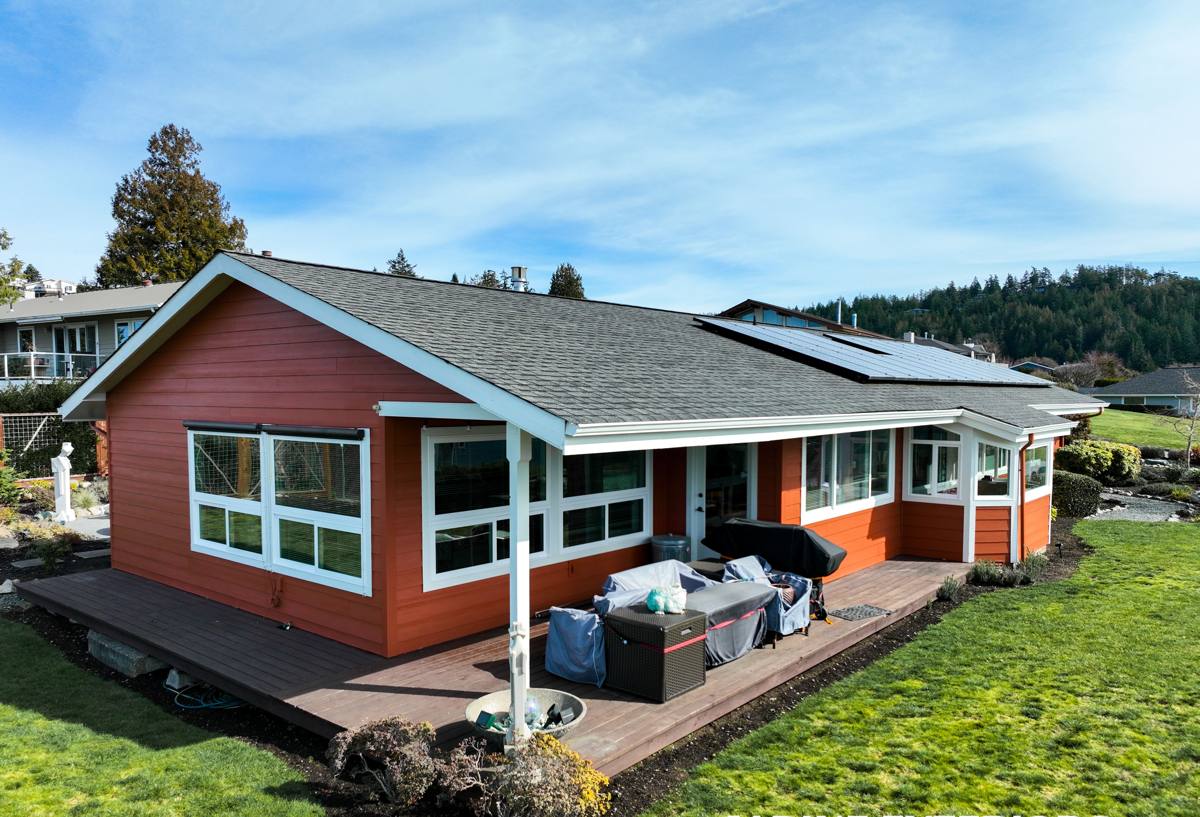
What Point Roberts' Climate Actually Does to Siding
Whatcom County's marine climate is tough on exteriors generally, but Point Roberts gets an extra dose of it. Being surrounded by water on three sides means salt-laden air is a constant, not an occasional coastal breeze — that salt settles into every seam, fastener, and painted surface on a house, and it accelerates corrosion and finish breakdown faster than homes even a few miles inland. Add driving rain that comes in sideways off open water, and any siding system with weak seams or poor drainage is going to find the water eventually.
Then there's moss. Long, wet shoulder seasons plus tree cover and shaded north walls give moss and algae months to establish themselves on any siding surface that stays damp. On board and batten specifically, the vertical battens create narrow channels where moisture, debris, and moss spores can collect if the installation doesn't account for drainage. This isn't a defect of the style — it's a detail that has to be handled correctly, every time, on every batten.
None of this is unique to Point Roberts in kind, but it's more concentrated there than almost anywhere else in the county — which is exactly why generic siding advice, and generic siding crews, tend to underperform on these homes.
The Three Things Salt Air, Rain, and Moss Demand
- A finish that resists salt exposure without chalking, fading, or peeling within a few seasons.
- A drainage path behind the siding so wind-driven rain that gets past the surface has somewhere to go besides the wall sheathing.
- Fewer places for moisture and debris to sit, especially in board and batten's vertical channels and at every horizontal joint.
What Correct Board & Batten Installation Actually Involves
Board and batten looks simple from the curb — flat panels with vertical strips covering the seams — but the parts you can't see are what determine whether it lasts fifteen years or fifty in this climate. A correct installation on a Point Roberts home includes:
Rain Screen or Drainage Gap
A ventilated gap between the back of the siding and the water-resistive barrier lets any moisture that gets past the surface drain and dry out instead of sitting against the sheathing. In a driving-rain, salt-air environment, this isn't optional — it's the difference between siding that sheds the occasional wetting and siding that slowly rots the wall behind it.
Flashing at Every Horizontal Break
Anywhere a panel run stops — window heads, doors, roof lines, deck ledgers — needs proper flashing integrated with the water-resistive barrier, not caulk alone. Caulk is a maintenance item; flashing is the actual water management. On a home taking on-shore rain regularly, skipped or shortcut flashing is one of the most common causes of hidden rot behind board and batten.
Batten Spacing and Fastening
Battens need consistent spacing over the panel seams and correct fastener placement so they're structurally tied into the framing, not just the panel. Fasteners driven only into the field of a panel, or battens spaced by eye instead of measured, are a callback waiting to happen — and on a peninsula where a callback means scheduling around the border crossing, getting it right the first time matters more than it does almost anywhere else.
Bottom Clearance and Ground Contact
Board and batten siding needs proper clearance off grade, decks, and roof lines. Homes near the water table or with landscaping graded close to the foundation are especially prone to wicking moisture into the bottom of panels if that clearance isn't respected during installation.
Why We Only Install James Hardie Board & Batten
We install James Hardie fiber cement exclusively — not vinyl, not LP SmartSide, not primed wood or cedar board and batten. For a marine, salt-air environment like Point Roberts, that's not a brand preference, it's a practical call.
Wood-based board and batten (cedar or primed spruce) can look excellent on day one, but it's an organic material in an environment built to feed rot and moss — it demands a maintenance schedule of refinishing and moss treatment that most homeowners underestimate going in. Vinyl board and batten resists moisture well but expands and contracts more with temperature swings, which shows at the seams over time, and its factory colors are limited and prone to fading under sustained sun and salt exposure. LP SmartSide is an engineered wood product — better moisture resistance than raw wood, but it's still wood-based at its core, meaning the cut edges and any breach in the factory coating are vulnerable points in an environment this wet.
James Hardie fiber cement is non-combustible, doesn't feed moss or rot the way wood-based products can, and its ColorPlus factory finish is baked on and warrantied against fading and chalking — a real advantage on a peninsula getting near-constant salt exposure. Hardie's HZ product lines are also climate-engineered for exactly this kind of wet, marine Pacific Northwest exposure, not a one-size-fits-all national product. For board and batten specifically, we typically use Hardie's vertical panel and batten systems, installed to Hardie's own fastening and clearance specifications — which is what keeps the transferable warranty intact if you ever sell the home.
How Board & Batten Materials Compare in This Climate
| Material | Salt Air / Finish Durability | Moisture & Moss Behavior | Maintenance Burden |
|---|---|---|---|
| Cedar / primed wood | Needs refinishing on a regular cycle; salt air shortens that cycle | Organic material — feeds moss and rot if not kept dry and maintained | High — repainting, caulk checks, moss treatment |
| Vinyl | Factory color fades over time; more visible near open water and sun | Won't rot, but seams can trap debris and moss in shaded areas | Low, but limited repair options if damaged |
| LP SmartSide | Factory coating helps, but cut edges and breaches are vulnerable | Wood-based core — moisture intrusion is a real risk over time | Moderate — edge sealing and coating checks matter |
| James Hardie fiber cement | ColorPlus finish factory-warrantied against fading and chalking | Non-combustible, doesn't feed rot or moss growth | Low — periodic washing and caulk inspection |
What Affects the Cost of a Point Roberts Board & Batten Project
We don't post fixed prices because every home is different, but these are the real factors that move a board and batten estimate up or down — and a couple of them are specific to Point Roberts.
| Factor | Why It Matters |
|---|---|
| Home size and wall complexity | More corners, dormers, and trim breaks mean more cutting, flashing, and batten layout work |
| Existing siding removal | Tear-off and disposal of old material adds labor and hauling time |
| Substrate condition | Rot or moisture damage found behind old siding needs repair before new siding goes on — common on homes that have taken years of driving rain |
| Rain screen / drainage detailing | Doing this correctly takes more labor than a direct-to-sheathing install, but it's what makes the siding last in this climate |
| Material and crew logistics to Point Roberts | Getting materials and crew onto the peninsula requires planning around the border crossing — this affects scheduling more than it affects price, but it's part of the estimate |
The Point Roberts Logistics Problem — and Why It Matters Who You Hire
Point Roberts isn't hard to reach because it's remote in the usual sense — it's hard to reach because it's geographically separated from the rest of Whatcom County by open water and the Canadian border. A crew and a truckload of materials headed to a Point Roberts job has to plan around a border crossing, not just a drive time. That changes how a project gets scheduled, how materials get staged, and how quickly a crew can respond if something needs a second visit.
A contractor who's never worked in Point Roberts before will often underestimate this — quoting it like any other job, then discovering mid-project that the timeline doesn't account for crossing delays or that a change order means another border trip before work can continue. We've already worked this area, so those logistics are built into how we schedule and stage a job from the start, not something we figure out once we're already on-site.
Our Process for a Point Roberts Board & Batten Job
- On-site assessment. We look at existing siding condition, wall exposure to prevailing wind and rain, moss and moisture patterns, and any trim or flashing already showing wear.
- Plan and material staging. We order and stage materials with the border crossing and ferry-limited access built into the schedule, so the crew isn't waiting on a delivery mid-job.
- Substrate repair. Any rot, moisture damage, or compromised sheathing found during tear-off gets repaired before new siding goes up — never covered over.
- Water-resistive barrier and rain screen installation. This is the layer that actually protects the wall long-term, and it's installed before a single panel goes up.
- Panel and batten installation to Hardie spec. Correct fastening, spacing, and flashing at every break, keeping the transferable warranty intact.
- Final walkthrough. We check clearances, caulk lines, and finish quality before calling the job done.
Living With Board & Batten Siding in a Marine Climate
Even correctly installed Hardie board and batten benefits from a bit of homeowner attention in an environment this wet and salty. None of it is heavy maintenance — it's mostly about catching small things before they become expensive ones.
- Rinse salt residue and grime off the siding once or twice a year, especially on walls facing open water.
- Keep an eye on caulk lines at trim, windows, and doors — recaulk if you see cracking or gaps.
- Trim back vegetation and tree cover that keeps north-facing or shaded walls damp longer than the rest of the house.
- Check for moss or algae buildup at the base of battens and in shaded corners each fall, before the wet season sets in.
- Keep gutters and downspouts clear so runoff isn't sheeting down a wall section repeatedly.
Get a Straight Estimate for Your Point Roberts Home
If you're weighing board and batten siding for a home on Point Roberts, we're happy to come take a look, talk through what your specific walls are dealing with, and give you a straightforward, no-pressure estimate — with the logistics already factored in, not discovered halfway through the job. Fill out the form below to get started.