 Ferndale Exterior
 Why Point Roberts Puts Extra Stress on a Deck
Point Roberts sits out on its own peninsula, surrounded by water on nearly every side, which means homes there catch a steadier dose of salt-laden wind than most properties farther inland in Whatcom County. Add driving rain that comes in sideways off the water and a moss season that can run from early fall through late spring, and a deck out here is working harder than a deck built the same way in a more sheltered yard. None of that means a good deck can't hold up. It means the design and material choices have to account for the exposure from day one instead of treating it as an afterthought.
We work throughout Ferndale and the surrounding county, and we've seen the difference exposure makes firsthand. A deck built for a typical inland lot, then dropped onto a waterfront or near-waterfront site in Point Roberts, tends to show corrosion, soft spots, and slick moss growth years before it should. The fix isn't exotic materials or a completely different approach — it's getting the basics right for the actual conditions the deck will sit in.
What Salt Air Actually Does
Airborne salt settles on every surface and holds moisture against wood and metal longer than plain rainwater would. That accelerates corrosion in fasteners, hinges, and any exposed metal hardware, and it breaks down clear finishes and stains faster than the can's label estimates assume. Over time, corroding fasteners are one of the most common reasons an otherwise sound deck starts to feel loose or squeaky.
Driving Rain and Wind-Driven Moisture
Storms here rarely fall straight down. Wind-driven rain finds its way into seams, ledger connections, and the underside of rail caps — surfaces that a purely vertical rainstorm would never reach. That's why we pay as much attention to end grain, board undersides, and hidden joints as we do to the parts of the deck people actually walk on.
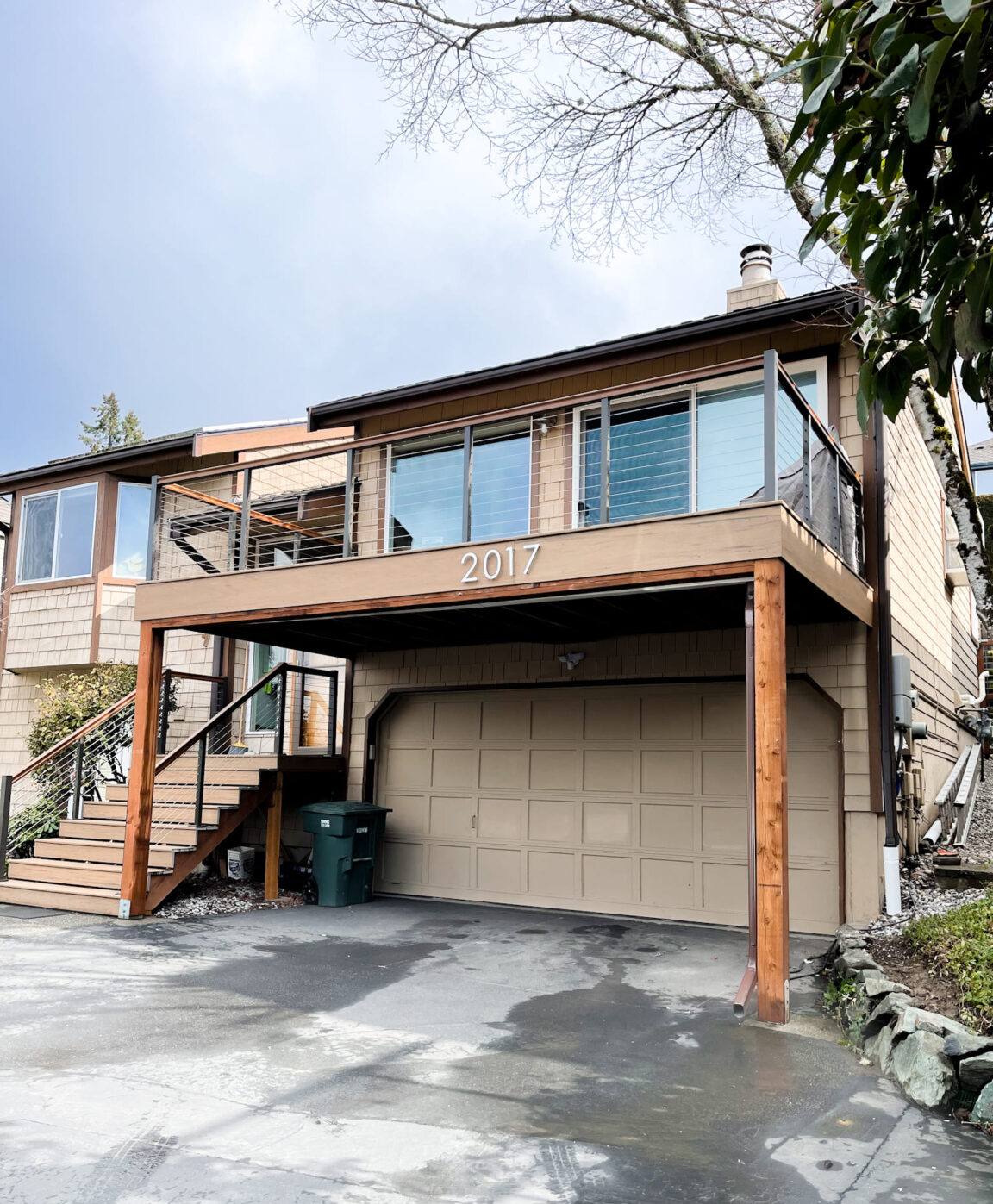
How We Design Around a Long Moss Season
Moss needs shade, moisture, and something to hold onto. A deck tucked under tree cover on a Point Roberts lot can check all three boxes for most of the year. Good design won't eliminate moss entirely in a climate like this, but it can keep it from turning into a slip hazard or a surface that traps rot underneath it.
Board Spacing and Airflow
Proper gapping between deck boards lets water drain through instead of pooling on the surface, and it lets air move underneath the decking so wood and composite boards actually get a chance to dry out between rain events. Tight, "no-gap" installs look clean on day one but hold moisture against the boards long after a storm has passed — exactly the environment moss and mildew prefer.
Cleaning Access Built In
We also think about how a homeowner will actually maintain the deck once we're gone. That means keeping under-deck areas accessible for periodic cleaning and making sure skirting or lattice, if you want it, doesn't seal off airflow completely. A deck that's impossible to get under is a deck that never gets cleaned underneath.
Choosing the Right Decking Material for This Exposure
There's no single "best" decking material for every budget and every home — there are trade-offs, and being upfront about them is part of doing this job honestly. Here's how the common options generally hold up in a salt-air, high-moisture, moss-prone setting:
| Material | Salt/Moisture Resistance | Moss & Mildew Behavior | Maintenance Needed | General Cost Position |
|---|---|---|---|---|
| Pressure-treated wood | Good if fasteners and finish are maintained | Prone to surface moss without regular cleaning/sealing | Annual cleaning, periodic re-staining or sealing | Lowest upfront cost |
| Cedar | Naturally decay-resistant, but still needs sealing near salt air | Can develop surface graying and moss if left untreated | Regular sealing to preserve appearance and resistance | Mid-range |
| Composite decking | Very good — won't rot, minimal fastener exposure with hidden clip systems | Resists moss better than wood but surface film can still form and needs washing | Occasional washing, no staining or sealing | Mid-to-higher upfront cost |
| Capped/PVC decking | Excellent — fully sealed shell resists moisture intrusion | Smooth cap sheds moss and mildew better than any wood option | Lowest ongoing maintenance | Highest upfront cost |
We don't push one product line over another as a rule. Our standard is matching the material to the site: how much shade the deck sits in, how close it is to open water, and how much upkeep the homeowner actually wants to commit to. A wood deck done right, with the correct fasteners and a realistic maintenance plan, is a perfectly good choice for plenty of Point Roberts homes. It's just not the low-maintenance option, and we say so plainly before you commit to it.
Framing and Fasteners: Where Coastal Decks Actually Fail First
Most deck problems we get called out to fix start below the surface, not on it. The decking boards are usually the last thing to fail — the framing, connectors, and fasteners underneath tend to go first, especially in a salt-air environment.
Ledger Board and Flashing
The ledger connection — where the deck attaches to the house — is the single most important structural and moisture-control point on the whole project. Correct flashing here keeps water from tracking behind the siding and into the house framing, which is a much bigger and more expensive problem than anything happening out on the deck itself.
Hardware Grade Matters More Here Than Inland
Standard galvanized fasteners can corrode noticeably faster in a marine-exposure setting than the same hardware would inland. We spec corrosion-resistant, exterior-rated fasteners and structural connectors for coastal and near-coastal builds as a matter of standard practice, not an upsell — it's cheaper to use the right hardware once than to chase rust stains and loose connections a few years in.
Railings, Stairs, and Code Basics
Guardrails, baluster spacing, and stair rise-and-run all need to meet current residential building code, and that doesn't change because a deck is exposed to salt air — if anything, it matters more, since corroding hardware on a railing is a safety issue, not just a cosmetic one. Point Roberts falls under Whatcom County's permitting jurisdiction, and permit requirements and inspection steps apply to most new deck construction and many significant deck rebuilds. We handle that process as part of the job rather than leaving it for the homeowner to sort out.
Where we do pay extra attention here: railing hardware and any metal-to-wood connection points on stairs and guards, since those see the same accelerated corrosion as the rest of the structure but carry higher consequences if they fail.
Our Process for a Point Roberts Deck Build
Site Visit and Logistics
Point Roberts is a peninsula reached by land only through Canada, which means any project out there needs scheduling that accounts for that travel and border crossing — for our crew and for material and equipment deliveries. We plan our site visits and build days around that reality up front so it doesn't turn into delays partway through the job.
Build Sequence
We start with the structural work that's hardest to inspect later — footings, framing, ledger flashing — then move to decking, railings, and stairs. Materials and hardware are ordered to spec for coastal exposure before the build starts, not substituted partway through if something inland-grade shows up on a truck by mistake.
Maintenance Checklist for a Coastal Point Roberts Deck
A well-built deck out here still needs some seasonal attention to stay ahead of salt, moisture, and moss. A basic yearly routine goes a long way:
- Sweep debris and standing leaves off the surface and out of gaps between boards regularly, especially going into fall
- Wash down the deck surface at least once a year to remove salt residue and organic buildup before moss gets a foothold
- Check railing posts, stair stringers, and any visible fasteners for early rust staining or looseness
- Re-seal or re-stain wood decking on the schedule the finish product recommends — don't wait until it looks obviously worn
- Keep gutters and downspouts near the deck clear so runoff isn't dumping extra water directly onto or under the structure
- Trim back overhanging branches that keep sections of the deck shaded and damp longer than the rest
Why a Ferndale Crew That Already Works Point Roberts Matters
A contractor who mainly builds decks in drier, more sheltered parts of the county isn't necessarily going to spec the right fasteners, flashing details, or gapping for a Point Roberts lot on the first try — not out of carelessness, but because they haven't had to solve for this exposure repeatedly. Our crew is based in Ferndale and already accounts for the travel and scheduling that comes with working the peninsula, so it doesn't turn into a source of delays or surprise costs mid-project.
More importantly, we've seen what a full cycle of salt air, driving rain, and moss season actually does to a deck over several years, not just what a spec sheet predicts. That experience shapes which materials we recommend, how we detail the framing, and what maintenance advice we actually give homeowners — advice based on decks we've built and followed up on in this exact climate, not generic guidance that happens to be printed on a product box.
If you're planning a new deck or replacing one that's showing its age out in Point Roberts, we're happy to come take a look and talk through what makes sense for your specific site. The estimate is free, there's no pressure attached to it, and you can use the form below to get started.