 Ferndale Exterior
 Roof Repair Built for Point Roberts Conditions
Point Roberts sits on its own peninsula, surrounded on nearly every side by water, which means homes there take on a version of Whatcom County weather that's more concentrated than what you'll find a few miles inland. Salt-laden marine air moves across every roof here, wind-driven rain gets pushed sideways and up under shingle edges instead of falling straight down, and shaded, north-facing slopes hold moss for a long stretch of the year. A roof repair that doesn't account for those three things tends to fail again within a season or two — not because the patch was lazy, but because it wasn't built for the actual conditions the roof lives in.
This page covers what roof repair actually involves for a Point Roberts home: what the climate does to roofing materials out there, what a correct repair looks like versus a quick patch, and how our process works when we come out to look at yours.
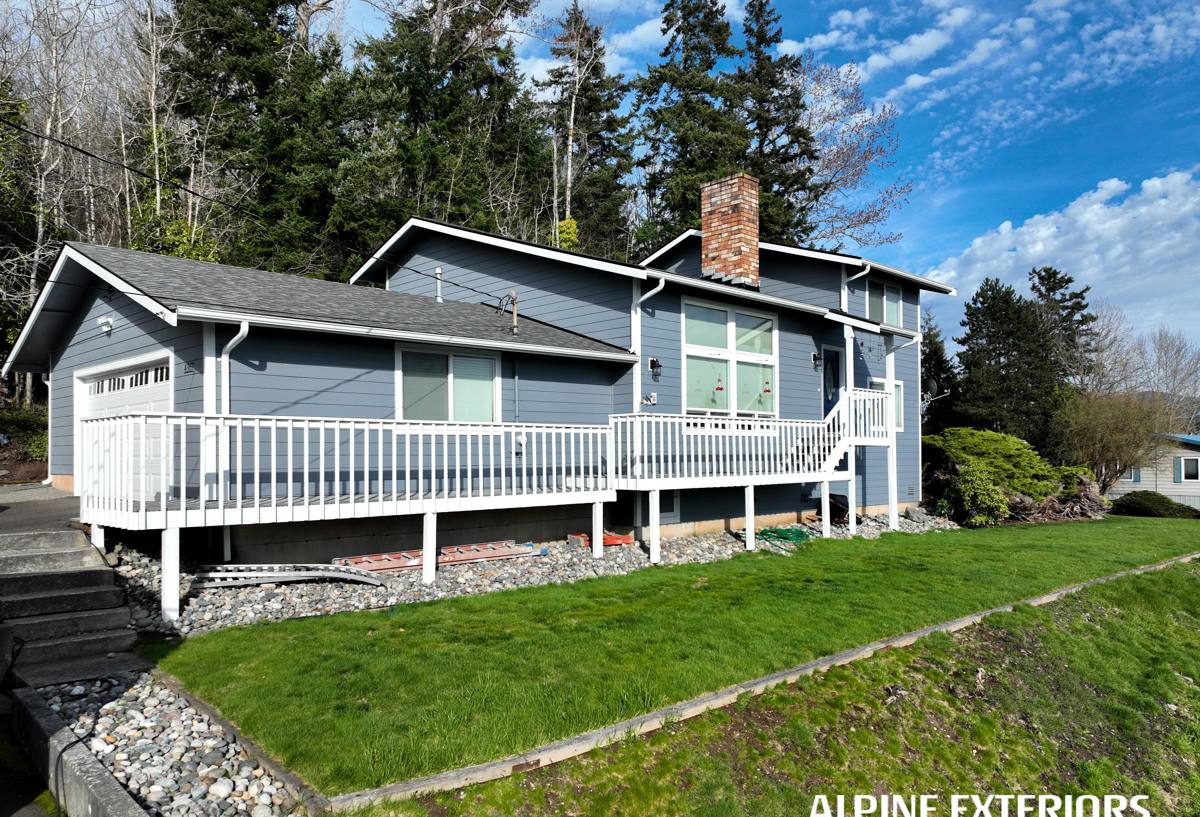
What Point Roberts' Climate Does to a Roof
Being surrounded by water isn't just scenery — it changes the maintenance a roof needs.
Salt Air and Corrosion
Metal flashing, fasteners, and drip edge exposed to salt-tinged air corrode faster than the same materials would inland. Once corrosion starts at a nail head or a flashing seam, it creates a path for water to get underneath the roofing material, and that's usually where a small leak starts. Repairs done with standard-grade fasteners or thin flashing metal tend to show corrosion again within a few years in this environment.
Wind-Driven Rain
Because Point Roberts is exposed on multiple sides, wind during a storm doesn't just drive rain downward — it pushes it sideways and, at roof edges and valleys, upward under laps that would otherwise shed water fine in calmer weather. This is why leaks here often show up at valleys, roof-to-wall intersections, and eave edges rather than in the open field of the roof.
A Long Moss and Moisture Season
Shaded slopes, especially north-facing ones under tree cover, stay damp long enough for moss to establish and spread. Moss holds moisture against the roof surface, lifts shingle edges as it grows, and channels water sideways under the roofing rather than letting it run off. A roof with unmanaged moss is carrying moisture longer than it was designed to.
Common Repair Needs We See on Point Roberts Roofs
Not every roof problem needs a full replacement. Most of what we're called out for falls into a handful of categories:
- Flashing failure at valleys, chimneys, and skylights — corroded, improperly lapped, or sealant-dependent flashing that's failed as the sealant aged
- Wind and storm damage — lifted, cracked, or missing shingles after a wind event, and the exposed underlayment or decking that results
- Moss-related lifting — shingle edges raised by moss growth, allowing wind-driven rain to get underneath
- Fastener and metal corrosion — failed nails, corroded drip edge, or rusted-through flashing letting water track along the roof deck
- Isolated leaks with no obvious source — water showing up inside the home that requires tracing back to the actual entry point, which is often several feet from where the stain appears
- Deck or sheathing damage from long-term moisture — soft or delaminated decking found once a section of roofing is opened up
What a Correct Repair Actually Involves
A roof repair is only as good as what's underneath the visible patch. Doing it right means:
Finding the Real Source, Not Just the Symptom
Water tracks along the underside of decking and rafters before it shows up as a stain inside a home, so the visible damage and the actual leak point are often not in the same spot. A repair that just patches where the stain appears, without tracing the water back to its true entry point, is likely to leave the underlying problem in place.
Matching Materials to the Environment
Replacement flashing, fasteners, and underlayment need to hold up to the same salt air and moisture exposure that caused the original failure. Using corrosion-resistant fasteners and properly lapped, sealed flashing matters more here than it would in a drier, inland location.
Correcting the Underlying Cause, Not Just the Damage
If moss caused the lifting, the repair should address drainage and airflow on that slope, not just replace the lifted shingles and leave the same conditions in place. If ventilation is contributing to moisture buildup from underneath, that's worth addressing at the same time rather than repairing the same spot again in a year or two.
Checking the Surrounding Area, Not Just the Failure Point
A single failed flashing or a patch of lifted shingles is often a sign that nearby fasteners, underlayment, or flashing are at a similar age and stage of wear. A thorough repair includes a look at what's around the immediate problem, so a homeowner isn't calling us back out for the same issue six feet away next season.
Repair vs. Replacement: How We Help You Decide
Not every roof that needs attention needs to come off. The honest answer depends on the roof's age, how widespread the damage is, and what condition the decking is in underneath.
| Factor | Leans Toward Repair | Leans Toward Replacement |
|---|---|---|
| Extent of damage | Isolated to one area — a valley, a section of flashing, a storm-damaged patch | Widespread across multiple slopes or recurring in several spots |
| Roof age | Well within its expected service life | Near or past the end of its expected lifespan for the material |
| Decking condition | Solid, dry decking found once opened up | Soft, delaminated, or moisture-damaged decking underneath |
| Moss and staining | Surface-level, hasn't caused lifting | Widespread moss with shingle lifting and granule loss |
| Repair history | First repair, or an isolated issue | Same area has needed repeated repairs |
We'll tell you honestly which side of that table your roof falls on. If a repair is the right call, that's what we'll recommend — there's no reason to sell a Point Roberts homeowner a full roof when a properly done repair will hold up for years.
Why Local Experience Matters for This Repair
Point Roberts' geography makes it a bit of an outlier even within Whatcom County — it's more exposed to wind and salt air than most inland Ferndale neighborhoods, and getting a crew and materials out there takes a bit more planning than a job a few minutes down the road. A crew that already works this area on a regular basis knows:
- Which roof orientations and slopes tend to hold moss longest and need the most attention
- How wind exposure on this peninsula affects where flashing and fastener failures typically start
- What logistics are involved in getting materials and equipment to a Point Roberts job efficiently
- How local weather patterns affect scheduling, so a repair isn't left half-tarped through an incoming storm
A contractor who rarely works this area may still do competent work, but they're more likely to miss the details that come from having actually repaired roofs here before, and logistics alone can add cost and delay that a locally experienced crew avoids.
Our Repair Process
When you call us out for a roof repair in Point Roberts, here's what to expect:
- Inspection and diagnosis. We get on or above the roof (not just look from the ground) to trace the actual source of the problem, not just the visible symptom.
- Honest scope and written estimate. We explain what we found, what caused it, and what it will take to fix it correctly — including whether a repair or a larger fix makes more sense.
- Repair using materials suited to this environment. Corrosion-resistant fasteners, properly lapped and sealed flashing, and underlayment appropriate for wind-driven rain exposure.
- Check of the surrounding area. We look at nearby flashing, fasteners, and roofing condition so you know what else may need attention soon, even if it's not urgent yet.
- Cleanup and walkthrough. We clear debris and walk you through what was done and what to keep an eye on going forward.
A Quick Checklist for Homeowners Between Visits
- Check for granules collecting in gutters or downspouts — a sign of shingle wear
- Look for moss or dark streaking on shaded, north-facing slopes
- Watch for water stains on interior ceilings, especially after wind-driven storms
- Note any daylight visible through the attic if you can safely check it
- Have flashing around chimneys, skylights, and vents looked at if the roof is more than a few years old
Getting a Repair Estimate
Salt air, driving rain, and a long moss season all take their toll on a Point Roberts roof, and the right repair accounts for all three rather than just patching what's visible. If you're dealing with a leak, storm damage, or a roof that's showing its age, we're happy to come take a look and give you a straightforward, no-pressure estimate for what it would take to fix it right.