 Ferndale Exterior
 Why Roofs Near Lummi Nation Take a Different Kind of Beating
Homes in and around Lummi Nation sit close enough to the water that the air itself works against a roof, day after day, year-round. Add Whatcom County's long stretch of wet weather and the shade that comes with mature trees common to this part of Ferndale, and you get a combination that ages roofing materials faster than it would twenty or thirty miles inland. A roof repair out here isn't just patching a leak — it's addressing the specific ways salt-laden air, driving rain, and a long moss season attack a roof system differently than they would in a drier, more inland neighborhood.
That's why we treat repair work near Lummi Nation as its own category, not a smaller version of a generic repair. The materials, the fastener choices, and the sequence of the work all shift a little when the roof in question is a short distance from saltwater and exposed to near-constant moisture for months at a stretch.
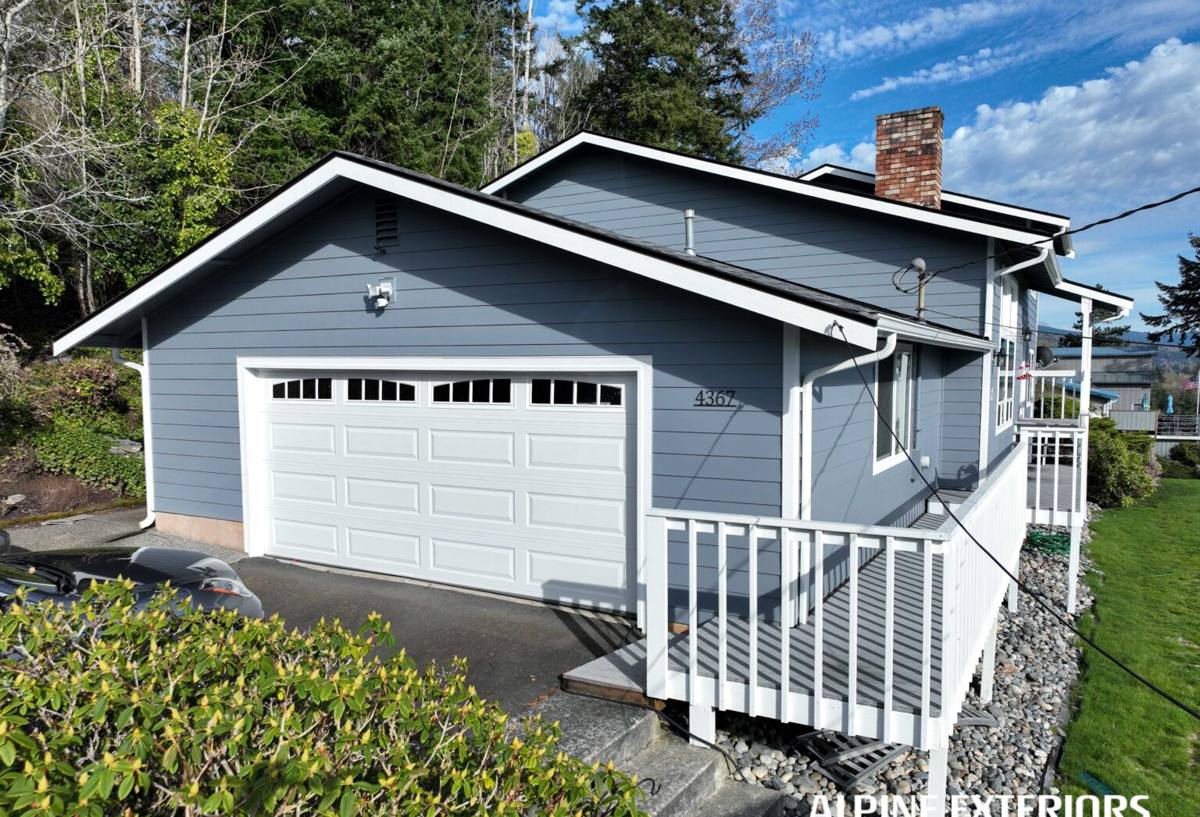
What Salt Air and Marine Moisture Do to a Roof
Corrosion works faster than most homeowners expect
Salt in the air accelerates corrosion on anything metal — nails, flashing, drip edge, valley metal, and the fasteners holding shingles or panels in place. On a standard asphalt shingle roof, exposed or under-driven nails near the coast can start rusting years before they would on an identical roof further inland. Once a fastener corrodes, it loses its grip, and that's how small leaks start at ridge caps, step flashing, and penetrations around vents and chimneys.
Granule loss and premature aging
Wind-driven rain off the water doesn't just add moisture — it adds force. Repeated wind-driven rain strips protective granules off asphalt shingles faster than ordinary rainfall, which exposes the asphalt mat underneath to UV and moisture. Once that happens, the shingle ages faster in that one spot, even if the rest of the roof still looks fine. A good repair has to identify these localized trouble spots rather than assuming the whole roof is failing uniformly.
Moss, Shade, and Whatcom County's Long Wet Season
Whatcom County's wet season runs long, and roofs that stay damp for extended stretches — especially north-facing slopes or sections shaded by tall evergreens — grow moss more readily than roofs in sunnier, drier climates. Moss isn't just cosmetic. As it spreads, it lifts shingle edges, holds moisture directly against the roofing material, and works its root-like structures into the surface over time. That trapped moisture is what eventually leads to soft spots, granule loss, and rot in the decking underneath if it's left unaddressed through several wet seasons.
A repair that only removes visible moss without correcting the underlying moisture retention — poor airflow, clogged gutters, overhanging branches — tends to see the same moss return within a season or two. Long-term repair work in this area has to deal with both the moss and the reason it's growing there in the first place.
Signs Your Roof Needs Repair — Not Just a Cleaning
Homeowners often wait until there's an active leak inside the house before calling, but most roofs give warning signs well before that point. Worth checking for, especially after a hard winter:
- Shingles that look darker, streaked, or thinner than the rest of the roof — often a sign of granule loss
- Moss or algae buildup concentrated on shaded or north-facing slopes
- Rust staining running down from flashing, nail heads, or metal valleys
- Curling, cupping, or lifted shingle edges, particularly at ridges and rakes
- Soft or spongy spots when walking the roof (a sign of decking that has absorbed moisture)
- Granules collecting in gutters or at the base of downspouts
- Daylight visible through the roof deck from inside an attic
- Water stains on interior ceilings, especially near chimneys, skylights, or plumbing vents
Any one of these on its own might just need monitoring. Two or three together, especially combined with the roof's age, usually mean it's time for an actual repair rather than a wait-and-see approach.
What a Correct Roof Repair Actually Involves
A repair done right starts with finding the actual source of a problem, not just the spot where water is showing up inside the house. Water can travel along rafters or decking for several feet before it drips through a ceiling, so a repair that only patches the visible drip point often misses the real entry site. Our approach is to inspect the full roof plane — flashing, penetrations, valleys, and the surrounding shingle field — before deciding what needs to be replaced versus what can be left alone.
Depending on what we find, a repair might involve replacing a section of damaged shingles and the underlayment beneath them, re-flashing a chimney or vent pipe, rebuilding a valley, or addressing rotted decking discovered once the old material is pulled back. The scope should match what's actually failing — not more, and not less.
| Repair Factor | Why It Matters Near Lummi Nation | Typical Impact on Scope |
|---|---|---|
| Fastener and flashing material | Salt air corrodes standard steel faster than inland exposure | May call for corrosion-resistant fasteners and flashing in the repaired area |
| Moss and moisture history | Long wet season keeps shaded slopes damp for months | Repair often includes moss removal plus a plan to reduce regrowth |
| Decking condition | Trapped moisture under moss or lifted shingles can rot plywood or boards | Hidden decking repair sometimes found only once shingles are pulled |
| Roof age and remaining material life | Older roofs may have widespread granule loss, not just one bad spot | Can shift the conversation from a patch to a larger repair or full replacement |
Repair or Replace? Making the Call Honestly
Not every roof that's showing wear needs a full replacement, and not every leak can be solved with a small patch. Part of doing this work honestly is telling a homeowner when a repair is genuinely the right call versus when it's just delaying a bigger expense.
| What We See | Repair Is Usually Enough | Replacement Should Be Considered |
|---|---|---|
| Localized shingle damage | One or two slopes affected, rest of roof sound | Damage spread across most of the roof |
| Flashing or valley leak | Surrounding shingles still in good shape | Flashing failure has already caused deck rot in multiple areas |
| Moss coverage | Recent growth, shingles still intact underneath | Years of moss growth with visible shingle lifting and granule loss |
| Roof age | Roof is within its expected service life | Roof is at or past the age where materials fail broadly, not just in spots |
A straightforward flashing or shingle-section repair is usually a modest expense measured in a few hundred dollars. A larger repair involving decking replacement or multiple slopes climbs from there, and a full tear-off and re-roof is a substantially larger investment — but one that stops the cycle of repeated repairs on a roof that's simply reached the end of its useful life. We'll always tell you honestly which category your roof falls into.
Our Process for Lummi Nation Area Roof Repairs
- Full roof inspection — we walk the roof (weather permitting) and check flashing, valleys, penetrations, and the general shingle field, not just the area where the leak is showing up inside.
- Moisture and decking check — where there's been long-term moss or lifted shingles, we check the decking underneath before quoting the repair, so there are no surprises mid-job.
- Written scope and honest options — you get a clear explanation of what's failing, what a repair will fix, and whether a larger repair or replacement makes more sense long-term.
- Material selection suited to the exposure — for homes with direct salt-air exposure, we account for that in fastener and flashing choices used in the repair.
- The repair itself — removal of damaged material, correction of the underlying cause (not just the symptom), and proper re-installation with attention to how water will move around the repaired section afterward.
- Final walk-through — we show you what was done and what to keep an eye on, including any moss-prevention steps worth taking given the roof's shade exposure.
Why Local Experience in This Area Matters
A roofing crew that mostly works drier, inland neighborhoods can still do a technically fine repair — but they may not immediately recognize how far salt air travels inland from the water, or how long a north-facing slope near Lummi Nation stays wet compared to a similar slope a few miles away. That local pattern recognition is what separates a repair that lasts from one that needs revisiting in a year or two.
We work in this part of Whatcom County regularly, which means we're used to seeing the specific combination of marine exposure, shade, and rainfall duration that shapes how roofs age out here. That's not a claim about being better in some abstract sense — it's just that repeated exposure to the same conditions makes it easier to spot what's actually going wrong on a given roof, and to build a repair that accounts for it instead of treating every roof the same way regardless of where it sits.
Getting Started
If you're seeing moss buildup, rust staining, curling shingles, or an active leak on a home near Lummi Nation, it's worth having someone take a real look before the next stretch of wet weather. We offer free, no-pressure estimates — we'll walk the roof, tell you honestly what we find, and lay out your repair options in plain terms. Use the form below to get one scheduled.