 Ferndale Exterior
 Roofs Near Sumas Take a Different Kind of Beating
Sumas sits out toward the eastern edge of Whatcom County, close to the Canadian border and the farmland of the Nooksack Valley. It's a different setting than the coastline right around Bellingham Bay, but the roof problems aren't all that different. Wind off the water still pushes moisture inland, and this valley traps its own share of fog, standing humidity, and shade. Add a wet season that can stretch from October well into spring, and a roof out here is under near-constant pressure to shed water, resist moss, and survive the freeze-thaw cycles that come with cold nights and damp mornings.
None of that is dramatic on its own. It's the accumulation that gets homeowners — a few years of moss creeping up from the north-facing slope, granules washing into the gutters, flashing that was never quite sealed right to begin with. By the time a roof is visibly failing, it's usually been losing ground for years.
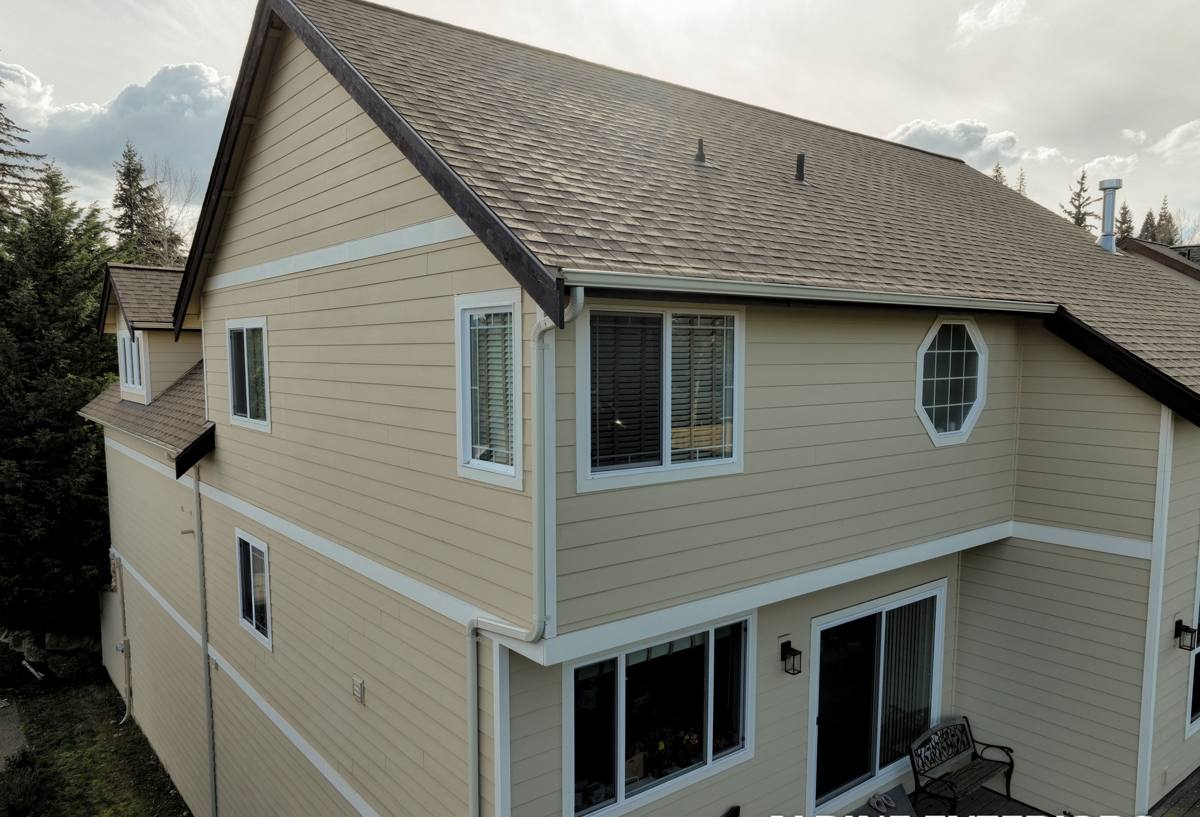
Signs a Sumas Roof Has Reached the End of Its Useful Life
Not every roof problem means full replacement. Plenty of issues — a cracked pipe boot, a lifted shingle after a windstorm, a clogged valley — are legitimate repairs. The honest question is whether you're patching a roof that still has years left, or patching around a roof that's structurally tired.
When Repair Still Makes Sense
- Damage is limited to one section, like a single slope or a valley
- The shingles elsewhere are still flat, granulated, and flexible
- The roof deck underneath shows no soft spots or staining
- The roof is under roughly 15 years old and was installed correctly
When Replacement Is the Honest Answer
- Shingles are curling, cracking, or losing granules across multiple slopes
- Moss has been established long enough to lift shingle edges, not just discolor the surface
- There's daylight or staining visible in the attic, especially around valleys and chimneys
- You've had two or more leak repairs in the same general area within a few years
- The roof is original to a home built more than 20-25 years ago
We'll tell you straight if a repair will hold. We don't have any reason to push a full tear-off on a roof that doesn't need one.
What a Correct Roof Replacement Actually Involves
A roof replacement is more than stripping old shingles and nailing down new ones. In a climate that stays wet this long, the parts you never see matter as much as the parts you do.
Tear-Off and Deck Inspection
Every old layer comes off down to the deck. That's the only way to actually see what's underneath — soft plywood, old water staining, or rot around penetrations doesn't show up until the shingles are gone. Any damaged decking gets replaced before anything new goes down; covering a compromised deck with new shingles just hides the problem for the next owner to find.
Underlayment and Ice-and-Water Protection
In a region that gets sustained rain rather than short bursts, underlayment quality matters more than most homeowners realize. We use synthetic underlayment across the field and self-adhering ice-and-water membrane at the eaves, valleys, and around every roof penetration — the spots where wind-driven rain is most likely to find a way in.
Flashing
Flashing around chimneys, skylights, and roof-to-wall transitions is where most leaks actually start, not in the open field of shingles. We replace flashing rather than reuse it, since old flashing is often sealed with caulk that's already failing.
Ventilation
A roof that can't breathe traps moisture in the attic, which shortens shingle life from underneath and feeds condensation problems. Balanced intake and exhaust ventilation is part of a correct replacement, not an upsell.
Choosing Materials That Hold Up in This Climate
There's no single "best" roofing material — there's the right material for the home, the budget, and the exposure. For most homes in the Sumas area, that comes down to a short list of realistic options.
| Material | Typical Lifespan | Moss/Moisture Resistance | Notes for This Climate |
|---|---|---|---|
| 3-tab asphalt shingle | 15-20 years | Fair | Lowest upfront cost; more prone to lifting in wind and wearing faster under constant moisture |
| Architectural (dimensional) asphalt shingle | 25-30 years | Good | The most common choice out here; better wind rating and moss resistance than 3-tab |
| Algae-resistant architectural shingle | 25-30 years | Very good | Copper-infused granules slow moss and algae growth on shaded, north-facing slopes |
| Standing seam metal | 40-50+ years | Excellent | Sheds moisture fastest and won't host moss growth, but higher upfront cost and needs an installer familiar with the details |
For a lot of Sumas homes — especially older farmhouses with shaded, tree-lined lots — we lean toward algae-resistant architectural shingles as the practical middle ground. Metal earns its keep on steeper pitches or homes where the owner wants to stop thinking about the roof for decades. We'll talk through what fits your home rather than pushing one option across every job.
Moss, Shade, and Standing Moisture
Moss is less about the shingle brand and more about how long a roof surface stays damp. North-facing slopes, sections shaded by trees, and roofs with poor airflow all stay wet longer after a rain, which is exactly what moss needs to get established. A correct replacement addresses this at the source — proper slope-to-slope ventilation, tight flashing that doesn't trap water, and where it makes sense, zinc or copper strips near the ridge that release trace metals with every rain to discourage regrowth.
None of that makes a roof moss-proof forever. It buys years, not immunity, and it has to be paired with basic upkeep.
How the Job Runs, Start to Finish
We keep the process straightforward because a roof replacement is disruptive enough without added confusion about what happens next.
- On-site inspection. We walk the roof and the attic, not just look at it from the ground, and give you an honest assessment of what's actually needed.
- Written estimate. Scope, materials, and price in plain terms — no vague allowances that turn into surprise charges later.
- Scheduling around the weather. We plan tear-off days around forecasts rather than the calendar, since an open deck in a surprise downpour is a real risk we're not willing to take.
- Tear-off and deck repair. Old roofing comes off, the deck gets inspected and repaired as needed, and debris is contained and hauled off daily.
- Installation. Underlayment, ice-and-water membrane, flashing, shingles or metal panels, and ventilation components go in per manufacturer specification.
- Final walkthrough. We go over the finished roof with you, including gutters and cleanup, before calling the job done.
Why It Matters That We Already Work in Sumas
A roofing crew that mostly works closer to the coast can still do a fine job in Sumas, but there are small things that come from familiarity. We know this part of Whatcom County holds fog and dampness longer into the morning than areas right on the water, which affects how we schedule tear-offs. We're used to the mix of older farmhouses and newer homes out here, each with their own quirks in deck condition and roof pitch. And because we're not driving in from out of the area, scheduling flexibility and warranty follow-up are simpler — we're not disappearing after the final payment clears.
We also handle the parts of the job that aren't glamorous but matter for peace of mind: proper permitting where required by Whatcom County, coordination with your homeowner's insurance if the job is storm-related, and disposal of old roofing material done the right way.
Keeping a New Roof Performing for Its Full Lifespan
A correctly installed roof still needs a little attention to reach its full lifespan in this climate. None of this is complicated, but it's easy to let slide.
- Clear gutters and downspouts at least twice a year, more often if you're under fir or cedar trees
- Keep overhanging branches trimmed back so shaded slopes get some sun and airflow
- Have moss growth treated before it lifts shingle edges, not after
- Check attic ventilation isn't blocked by insulation or storage
- Have the roof looked at after any major windstorm, even if nothing looks obviously wrong from the ground
A roof that gets this level of basic care will consistently outlast one that's ignored until there's a leak — regardless of how good the original installation was.
Getting an Honest Look at Your Roof
If your roof is showing its age, or you just want a straight answer on whether repair or replacement is the right call, we're glad to come take a look. There's no pressure and no sales script — just an honest assessment from a crew that already knows what roofs in the Sumas area are up against. Fill out the form below to schedule a free estimate.