 Ferndale Exterior
 Board & Batten Siding, Built for a Salt-Air Coastline
Sandy Point sits right where the Strait of Georgia meets Whatcom County's shoreline, and that location shapes everything about how a home's exterior should be built. Board & batten siding — the vertical-plank-and-strip look that reads as clean, modern, and a little coastal — is one of the most requested styles out here, and for good reason. The strong vertical lines suit waterfront and near-waterfront lots, and the profile sheds wind-driven rain differently than horizontal lap siding does. But "looks right for the coast" and "performs right on the coast" are two different things. This page is about the second one: what board & batten needs to actually hold up in Sandy Point's climate, what correct installation looks like, and why we build it exclusively in James Hardie fiber cement rather than the wood or vinyl versions of this style that are common elsewhere.
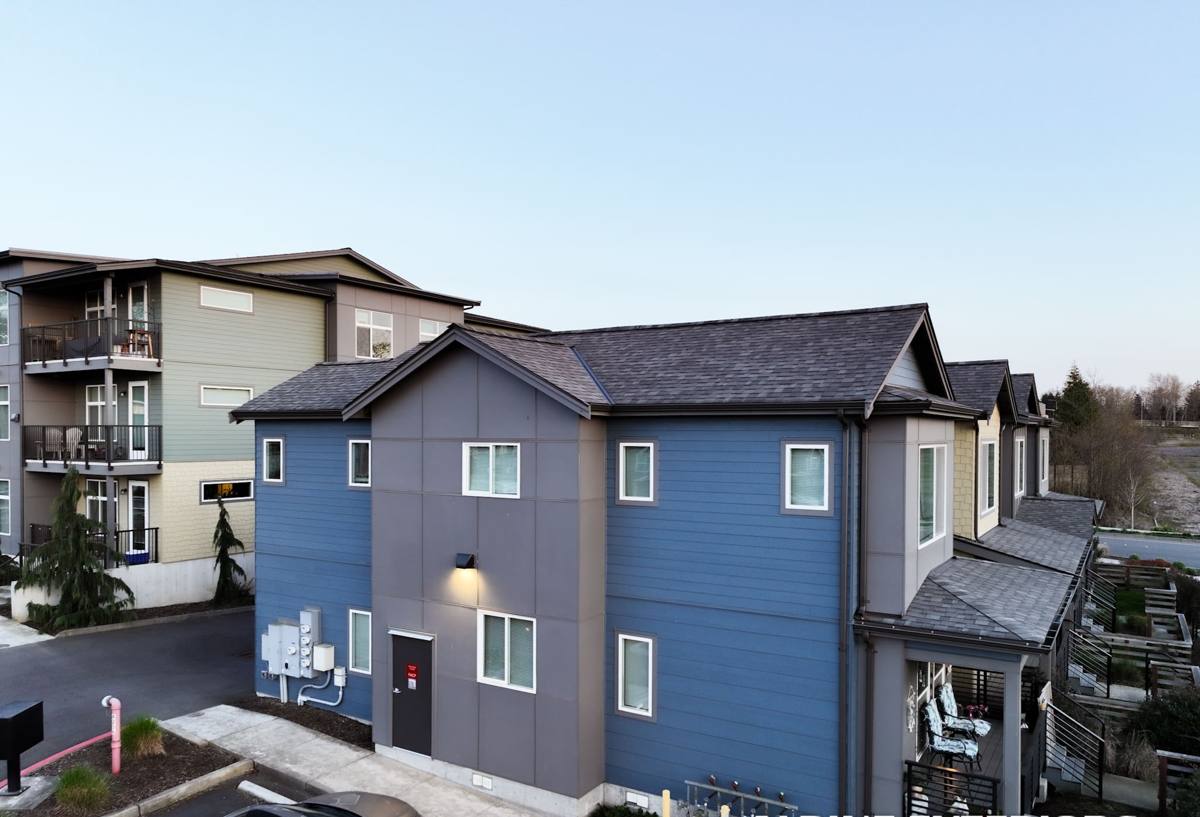
What Sandy Point's Climate Actually Does to Siding
Homeowners who've lived out here a while already know this instinctively, but it's worth spelling out because it drives every decision in the sections below.
Salt Air
Airborne salt from the Strait doesn't just sit on the surface — it works into fasteners, caulk joints, and any exposed wood grain, accelerating corrosion and breakdown in materials that aren't built to resist it. Metal trim, nail heads, and hardware all take more of a beating within a mile or two of open water than they would a few miles inland in Ferndale proper.
Driving Rain
Storms coming off the Strait don't fall straight down — they come in sideways, and a west- or northwest-facing wall can take a real soaking during a winter blow. Any siding system with gaps, poor flashing, or unsealed joints becomes a water intrusion point under that kind of pressure. Vertical board & batten, in particular, lives or dies by how well the seams between boards and battens are detailed.
Long Moss Season
Whatcom County's wet season stretches long, and shaded or north-facing walls stay damp for weeks at a time. Moss and algae take hold on any surface that can't dry out or that has a porous, absorbent face — which is exactly what happens to untreated wood board & batten over a few seasons.
None of this means board & batten is a bad choice for Sandy Point. It means the material and the installation both have to be built for this exposure, not just installed the way a catalog picture shows it.
What Board & Batten Siding Actually Is
Board & batten is a vertical siding profile: wide flat panels (or boards) installed vertically, with narrower strips — the battens — covering the seams between them. Traditionally this was solid wood, and some contractors still install it in cedar, primed spruce, or engineered wood products. We don't. We build board & batten exclusively with James Hardie fiber cement, most commonly using HardiePanel vertical siding with HardieTrim battens, or the Artisan® vertical siding line for a more refined reveal on higher-end elevations.
The reason is straightforward: board & batten's whole visual identity depends on crisp, flat, stable panels and tight, consistent seams. Wood moves with moisture — it swells, shrinks, cups, and eventually cracks at the seams, which is exactly where this profile is most vulnerable to water. Fiber cement doesn't absorb and release moisture the way wood does, so the panels stay flat and the seams stay tight for decades instead of a handful of years. James Hardie also engineers its products by climate zone (their HZ5® line is built for the Pacific Northwest's wet, marine-influenced weather), and every panel comes with a factory-applied ColorPlus® finish baked on under controlled conditions — not a field-applied coat that has to fight rain and salt air just to cure properly.
What a Correct Board & Batten Installation Involves
Board & batten looks simple from the outside — flat boards, vertical strips — but it's actually less forgiving of shortcuts than lap siding, because every seam and every batten fastener is a potential leak point. Here's what separates a job that holds up in Sandy Point's weather from one that doesn't.
| Installation Detail | Why It Matters Here | What Correct Looks Like |
|---|---|---|
| Rainscreen / drainage gap | Driving rain forces moisture behind vertical siding more than it does behind lap siding | A furring or drainage mat system behind the panels so any moisture that gets past the face can drain and dry |
| Weather-resistive barrier | Salt-laden wind-driven rain finds any gap in the water barrier | Properly lapped, taped house wrap installed before panels go up, with flashing integrated at every penetration |
| Batten fastening | Battens cover the seam but also carry their own fasteners, right where two panel edges meet | Fasteners placed and spaced per Hardie's engineering specs, not "close enough" |
| Panel and trim gaps | Fiber cement needs room to move seasonally; tight-butted joints crack finishes and trap water | Manufacturer-specified gaps at trim, corners, and window/door casings, sealed with the correct flexible sealant |
| Flashing at horizontal breaks | Any horizontal transition (like a water table or belly band) is a natural water trap on a vertical profile | Metal flashing, not just caulk, at every horizontal interruption in the vertical run |
| Fastener corrosion resistance | Salt air corrodes standard fasteners faster near open water | Corrosion-resistant fasteners rated for coastal or marine exposure |
Skip any one of these and the siding can still look right for the first year or two — the problems that show up from bad flashing or wrong fastener spacing are slow ones, which is exactly why they're so often missed by crews that don't specialize in this climate.
Our Process on a Sandy Point Project
Every job starts with an honest look at the specific exposure of that particular home, not a generic checklist.
1. Site and Exposure Assessment
We walk the property and note which walls take direct weather off the water, which are sheltered, and whether there's existing moisture damage, moss buildup, or rot at the sheathing that needs to be addressed before new siding goes up. Covering a moisture problem with new siding never fixes it.
2. Substrate and Moisture Barrier Work
Any compromised sheathing gets repaired or replaced. We install a continuous, properly lapped weather-resistive barrier and a drainage plane behind the panels — this step matters more in Sandy Point than it does a few miles inland, given how much wind-driven rain these walls see.
3. Panel and Batten Installation
HardiePanel or Artisan vertical panels go up to spec, with battens installed at the seams using the correct fastener pattern and spacing. Corners, window and door trim, and any horizontal breaks are flashed individually, not just caulked over.
4. Detail and Sealant Work
All joints that need sealant get the correct flexible, paintable sealant rated for exterior use — not a general-purpose caulk that hardens and cracks within a couple of seasons in this weather.
5. Final Inspection
We walk the finished job checking fastener seating, gap consistency, flashing coverage, and overall panel alignment before calling it done.
Maintenance and Longevity in This Environment
Board & batten in James Hardie fiber cement is genuinely low-maintenance compared to a wood version, but "low-maintenance" doesn't mean "zero attention," especially this close to the water. A short annual routine keeps it performing the way it's supposed to:
- Rinse salt residue off exterior walls once or twice a year, particularly on sides facing open water
- Check caulking at trim, corners, and window/door joints annually for cracking or separation
- Keep gutters and downspouts clear so runoff isn't sheeting down wall faces
- Trim back vegetation that shades walls and keeps them damp longer, encouraging moss
- Look at north- and west-facing walls each fall for early moss or algae growth and address it before it spreads
- Watch for any hairline cracking at seams or fastener heads and have it checked before winter storms arrive
Because the ColorPlus finish is factory-cured, it holds color and resists the fading and chalking that field-applied paint on wood siding suffers in this much UV and salt exposure — which means repainting isn't part of the maintenance routine the way it would be with cedar or primed spruce board & batten.
Why a Crew That Already Works Sandy Point Matters
Sandy Point isn't a generic Whatcom County neighborhood — it's a specific microclimate shaped by direct exposure to the Strait, and that changes real decisions: which walls need extra flashing attention, how much drainage capacity a wall assembly needs, and how fastener corrosion resistance gets specified. A crew that mostly works inland jobs and treats a Sandy Point home the same way they'd treat one in downtown Ferndale is missing exposure differences that matter over a 20- or 30-year siding lifespan.
There's also a practical, non-glamorous reason local experience matters: knowing how this specific stretch of coastline behaves through a full winter storm season, not just how it looks on a calm summer day when the estimate gets written. Wind direction, typical storm exposure, and how quickly a particular elevation dries out after a soaking are things you learn by doing the work here repeatedly, not by reading a spec sheet.
Getting Started
Board & batten is a striking look for a Sandy Point home, and it can genuinely hold up to what this coastline throws at it — as long as the material and the installation are both built for the exposure, not just the appearance. If you're considering board & batten siding for a home in Sandy Point, we're happy to walk the property, look at the specific exposure your walls face, and put together a straightforward, no-pressure estimate. There's a form below to get that conversation started.