 Ferndale Exterior
 James Hardie Siding for Sandy Point Homes
Sandy Point sits out on its own stretch of shoreline northwest of Ferndale, and it's a different kind of property than most of what we work on elsewhere in Whatcom County. Homes here are low-lying, close to open water, and often close to each other, with a good number of them backing directly onto canals or shoreline rather than sitting behind a buffer of trees or higher ground. That kind of exposure is harder on an exterior than almost anything an inland Ferndale property deals with, and it's a big part of why we install James Hardie fiber cement siding exclusively rather than offering a menu of cheaper options.
We work in Sandy Point regularly, which matters more here than it does in most neighborhoods. A siding job that holds up fine on a sheltered inland lot can fail years early on a sandy, open-water property if the installer didn't plan for the exposure from the start. This page covers what that exposure actually does to a home's exterior, what correct James Hardie installation looks like for a property like this, and how our process works from first walk-through to finished job.
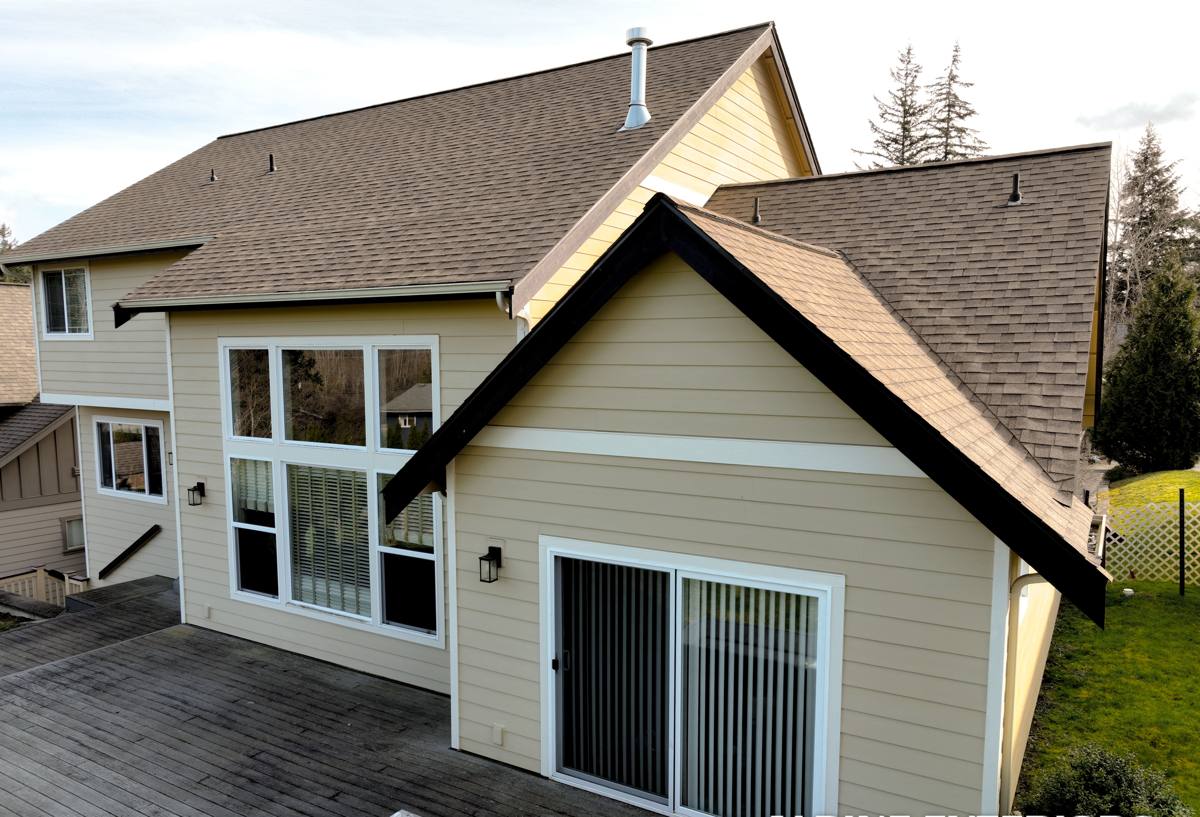
What Sandy Point's Exposure Does to a Home's Exterior
Salt Air, Day In and Day Out
Sandy Point's homes sit closer to open water than almost anything else in the Ferndale area, which means the salt-laden air coming off the water is a constant rather than an occasional visitor. Salt accelerates corrosion in fasteners, hinges, and flashing, and it breaks down lower-grade paints and coatings faster than a drier, more sheltered site would. Over time, that shows up as chalky or faded finishes, rust streaks below hardware, and trim that needs repainting or replacing well ahead of schedule.
Wind-Driven Rain
An open shoreline lot has little to break the wind, and wind is what turns ordinary rain into a sideways problem. Driving rain gets pushed into lap joints, trim seams, and window and door edges instead of running straight down and off, which is a tougher test of a siding system's water management than a simple rainfall total suggests. A product or installation that would perform fine on a calmer, tree-sheltered lot can still let water in here because it's arriving from an angle the design didn't fully account for.
A Long Moss and Mildew Season
Whatcom County's damp, mild winters already support a long moss and mildew season, and Sandy Point's proximity to water and lack of drying sun on some elevations can stretch that season out even further on certain homes. Moss shows up first on north-facing walls and shaded siding and holds moisture against the surface long after a drier wall would have shed it. Left alone, that sustained dampness is exactly the condition that lets rot get started behind the siding rather than staying a cosmetic problem.
Low-Lying, Exposed Lots
Because so much of Sandy Point sits low and close to the shoreline, homes here also deal with more direct wind loading during winter storm systems than a typical inland Ferndale lot. That affects fastening requirements for siding and trim, and it affects roofing too, where an aging or under-fastened roof is more likely to lose shingles or take on wind-driven water during a strong system moving through.
Why We Install Only James Hardie on Sandy Point Homes
We used to install a wider range of siding products before narrowing to one system, and Sandy Point is one of the clearest examples of why we made that call. On a property with this much sustained salt and moisture exposure, the differences between fiber cement and the alternatives stop being theoretical and start showing up in a handful of years instead of a couple of decades.
- Non-combustible core: Fiber cement doesn't feed a fire the way wood-based siding products can, which matters for household safety and often for insurance considerations as well.
- Factory-applied ColorPlus finish: The color is baked on in a controlled factory process rather than brushed on in the field, so it resists salt exposure and UV fading far longer than site-applied paint holds up.
- Climate-engineered HZ product lines: Hardie builds specific formulations for regions with heavy, sustained moisture exposure, which is a better match for a shoreline property like this than a generic, one-size-fits-all product.
- Dimensional stability: Fiber cement doesn't swell, cup, or warp the way engineered wood siding can after repeated wet-season moisture cycling, which matters more on a lot that stays damp longer than most.
- Strong transferable warranty: Hardie backs its products with a real warranty structure when the installation follows spec, giving homeowners actual protection rather than a marketing line.
We don't install LP SmartSide, vinyl siding, Cemplank, Allura, primed spruce, or cedar. Every one of those products has its place in the broader market, and plenty of homeowners elsewhere are satisfied with them. But on a low-lying, open-water lot like a Sandy Point property, we made a professional decision that one system we trust completely beats offering a cheaper option that quietly shifts maintenance risk back onto the homeowner a few years down the road.
What a Correct Installation Involves at Sandy Point
Fastening, Flashing, and Clearance
Good material choice only gets a Sandy Point home halfway there. The rest comes down to installation detail: fastening patterns sized for higher wind exposure, correct clearance from grade and roofline so moisture doesn't wick up into the bottom courses, joints that are properly lapped and sealed instead of just butted together, and a house wrap and flashing system that does the actual water-shedding work rather than relying on a bead of caulk to cover a gap. On a lot that takes more wind and more direct rain than most, skipping any of these steps tends to show up within a season or two rather than staying hidden for years.
Repair vs. Full Re-Side
Not every siding issue at Sandy Point calls for tearing the whole house down to the studs. A storm-damaged section, a failed piece of trim around a window, or an isolated impact spot can often be repaired and matched into existing Hardie siding without a full replacement. But if water has been getting behind the wall for a while, or the home still has an older, non-Hardie product nearing the end of its service life, patching it usually just delays a bigger job while hidden rot keeps spreading underneath. We'll walk the property and tell you honestly which situation you're actually in.
Our Process for a Sandy Point Siding Project
- Walk-through and assessment: We look at the current siding, trim, flashing, and any visible moisture damage, paying particular attention to shaded elevations and any wall sections facing open water or a canal.
- Honest scope and estimate: You get a clear answer on whether the job is a repair, a partial re-side, or a full tear-off, along with a written estimate before any work starts.
- Tear-off and substrate check: Removing the old siding lets us see the sheathing and framing underneath, which is often where the real story of a shoreline home's moisture history shows up.
- Installation to spec: Correct fastening, flashing, clearances, and joint treatment for a high-exposure lot, not a generic inland installation applied without adjustment.
- Final walkthrough: We go over the finished work with you before calling the job complete.
Cost Factors for Sandy Point Siding Projects
| Factor | What It Affects | Why It Matters at Sandy Point |
|---|---|---|
| Proximity to open water or canals | Salt and wind exposure level | Homes closest to the shoreline take a heavier, more constant version of the area's marine exposure |
| Tear-off vs. overlay | Labor scope and access to the substrate | Tear-off reveals hidden moisture damage that's common on older shoreline-lot siding |
| Substrate condition | Repair costs before new siding goes on | Long-term trapped moisture can rot sheathing and framing that isn't visible from outside |
| Fastening and flashing spec | Material and labor requirements | Exposed, low-lying lots often need tighter fastening patterns than a sheltered inland site |
| Site access | Labor time and equipment staging | Some Sandy Point lots have tight lot lines and limited staging space compared to larger inland properties |
Exact costs depend on the specific home and its exposure, which is why we walk the property in person before giving a real number rather than quoting off a generic price sheet.
Signs Your Sandy Point Home's Siding Needs Attention
- Moss or dark staining that returns quickly after cleaning, especially on shaded or north-facing walls
- Soft or spongy siding low on the wall or around window and door trim
- Rusting fasteners, corroding flashing, or chalky, faded paint finishes
- Cracked, chipped, lifted, or missing siding sections after a winter storm
- Visible gaps at seams, corners, or trim joints
- Staining or discoloration on interior walls near an exterior corner, which can point to water getting in from outside
- Rising energy bills that may signal a wall assembly no longer sealing the way it should
Why a Ferndale Crew That Already Works Sandy Point Matters
A crew that only occasionally works a shoreline property tends to install the same way they would anywhere else, because that's what they know. A crew that already works Sandy Point regularly has a feel for which walls stay wet the longest, where extra flashing attention is worth the added time, and how much heavier the salt and wind exposure really is compared to a standard Ferndale lot a few miles inland. That difference plays out in decisions made on install day, not just in the products written on the estimate, and it's the difference between a siding job that looks right at handoff and one that still looks right after a few winters of Whatcom County weather.
What to Expect When You Call Us
- A walk-through of the home's exterior, including any wall sections facing open water or a canal
- An honest read on whether you're looking at a repair, a partial re-side, or a full replacement
- A clear explanation of why we recommend James Hardie for a property with this level of exposure
- A written estimate with no pressure to sign on the spot
If your Sandy Point home needs new siding, a repair, or just an honest second opinion on what's happening behind an aging wall, we're glad to take a look. Reach out using the form below to schedule a free, no-pressure estimate.