 Ferndale Exterior
 Why Sandy Point Roofs Take a Different Kind of Beating
Sandy Point sits close enough to the water that its roofs deal with a combination most inland Whatcom County homes never see: salt-laden air, wind that comes off the water with real force, and rain that doesn't just fall straight down but drives sideways under shingle edges and around flashing. Add in the shade and dampness that keep moss growing here for most of the year, and you've got a roof environment that ages faster and fails differently than a typical suburban roof. A storm doesn't have to be dramatic to cause real damage — a few hours of sustained wind and horizontal rain can lift shingles, force water past flashing, and soak sheathing that then sits wet for days under a marine layer that's slow to burn off.
We work on roofs throughout Ferndale and greater Whatcom County, but Sandy Point gets treated as its own case. The repair approach that's correct for a dry, sheltered lot inland isn't necessarily correct fifty yards from saltwater exposure.
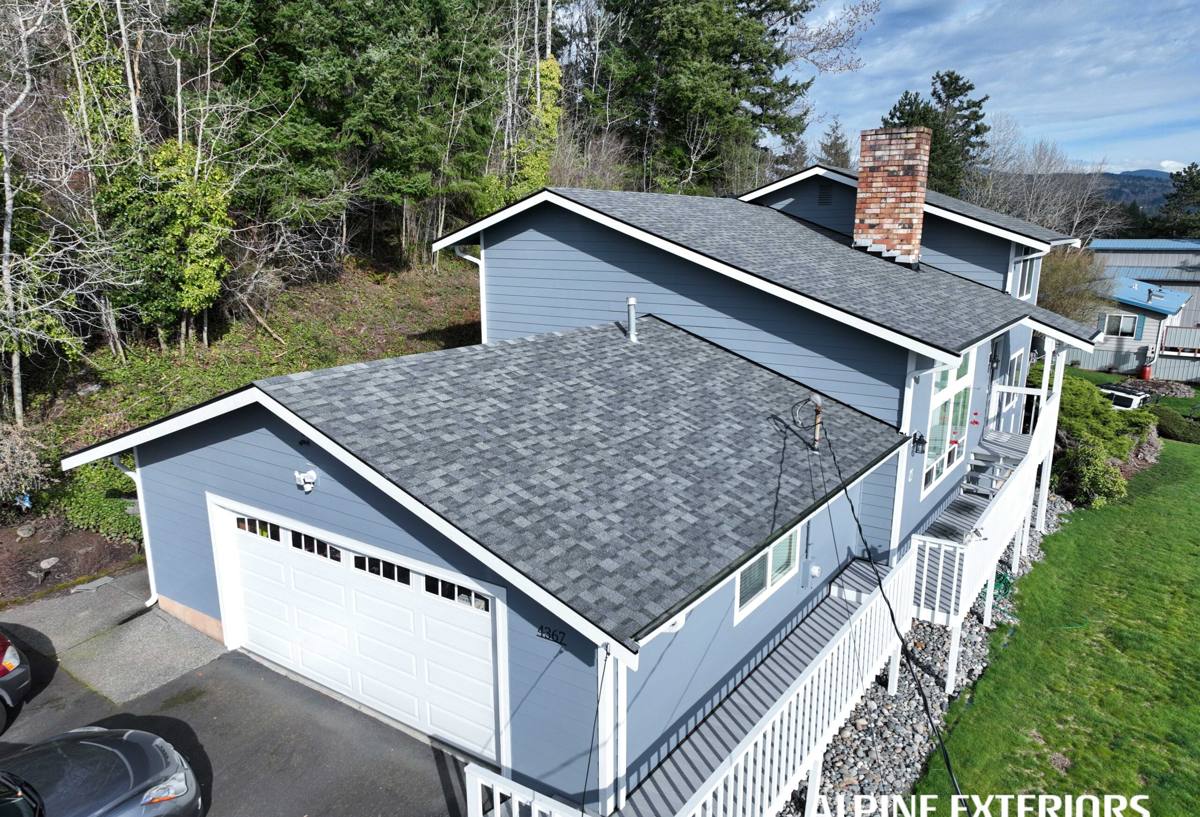
What Actually Counts as Storm Damage
Homeowners often assume storm damage means missing shingles or a visible hole. In practice, most of what we find after a windstorm or heavy rain event is less obvious:
- Shingles that lifted, cracked at the seal line, or creased but stayed in place — easy to miss from the ground
- Flashing around chimneys, skylights, and roof-to-wall joints that got bent, pulled loose, or had its sealant fail
- Fastener backout, where nails or screws work loose under repeated wind uplift and no longer hold tight
- Granule loss on asphalt shingles from wind-driven debris, which shows up as premature wear later, not damage now
- Water intrusion at valleys and low-slope transitions where wind pushes rain uphill against the natural water path
- Gutter and downspout damage that lets water pool against the fascia and roof edge instead of draining away
The distinction matters because storm damage is often progressive — a lifted shingle or a compromised flashing seal doesn't leak on day one, but it fails the next time wind and rain line up the same way. Catching it early is the difference between a patch repair and a full section tear-off.
Salt Air, Wind-Driven Rain, and the Long Moss Season
Salt Air
Airborne salt accelerates corrosion on exposed metal — roofing nails, flashing edges, gutter hangers, and screw heads on any metal roofing components. Once corrosion starts on a fastener, it loses holding strength well before it looks obviously rusted. On a storm-damaged roof, we always check fastener condition in the surrounding area, not just at the point of failure, because salt exposure tends to weaken things broadly rather than in one isolated spot.
Wind-Driven Rain
Water on a Sandy Point roof doesn't always behave the way a standard shingle layout assumes. Wind can push rain up under shingle tabs, sideways along a ridge, or against vertical walls where the roof meets siding. Standard shingle overlap and standard flashing details are designed to shed water running downhill — they're not always enough when wind is forcing water in other directions during a storm. Storm repairs here often need extra attention to underlayment coverage and flashing laps, not just shingle replacement.
Long Moss Season
Whatcom County's damp, mild climate keeps moss growing on north-facing and shaded roof sections for much of the year. Moss holds moisture directly against the shingle surface, which speeds up granule loss, keeps the roof deck damp longer after a storm, and can lift shingle edges as it grows underneath them. A roof with an active moss problem is more vulnerable to storm damage than a clean one, because the moss has already been quietly weakening the shingle mat and holding water against fasteners before the storm even hits.
What a Correct Storm Repair Actually Involves
A storm repair done right is not just "replace what's missing." It's a sequence:
- Stop active water intrusion first. If the roof is actively leaking, that gets addressed immediately — tarping exposed areas, temporary flashing, or sealing an active leak point — before anything else.
- Inspect beyond the visible damage. Wind damage rarely stops exactly where it's visible from the ground. We check the full slope, adjacent flashing, and the roof deck underneath damaged shingles.
- Check the decking, not just the shingles. If water got under the roofing material, the plywood or OSB sheathing underneath may be wet or soft. Replacing shingles over damaged decking just hides the problem.
- Match materials correctly. Shingle color, profile, and manufacturer can matter for both appearance and warranty — patching with mismatched material can void coverage on the surrounding roof.
- Rebuild flashing details properly. Any flashing that was compromised gets re-flashed correctly, not just re-sealed with caulk, which is a short-term fix at best.
- Confirm drainage is restored. Gutters, downspouts, and valleys get checked so the next storm doesn't cause a repeat problem in the same spot.
Our Process, Start to Finish
When you call us after storm damage, here's what to expect:
1. Same-window response
We assess urgency on the call. Active leaks or exposed decking get prioritized ahead of cosmetic damage.
2. On-site inspection
We walk the roof (or use a drone/ladder inspection where slope or safety requires it) and document the actual extent of damage — not just what's visible from the driveway.
3. Honest scope and estimate
We tell you plainly whether you're looking at a spot repair, a section replacement, or a larger job, along with a written estimate before any work starts.
4. Repair
Work is done to match your existing roofing system, with attention to the flashing and fastening details that matter most in a Sandy Point exposure.
5. Follow-up
We check the repair holds up through at least one significant weather event where practical, and stand behind the work.
Repair vs. Replace: How We Make the Call
Not every storm-damaged roof needs a full replacement, and not every damaged section can be safely spot-repaired. Here's the general framework we use:
| Factor | Favors Repair | Favors Replacement |
|---|---|---|
| Extent of damage | Isolated to one section or slope | Spread across multiple slopes or the whole roof |
| Roof age | Roof is well within its expected service life | Roof is near or past typical lifespan for its material |
| Decking condition | Deck is dry and sound under the damage | Deck shows rot, soft spots, or repeated past water intrusion |
| Moss/algae history | Minimal moss, roof has been maintained | Heavy moss growth suggests broader shingle degradation |
| Material availability | Matching shingles/material still available | Material discontinued, mismatch would be visible |
| Insurance scope | Adjuster approves a repair scope | Adjuster approves full slope or full roof replacement |
We'll walk you through where your roof falls on this before recommending either direction — the goal is a roof that holds up through the next storm, not the largest possible invoice.
Working With Your Insurance Claim
Most storm damage repairs in this area involve an insurance claim, and the process goes more smoothly when the documentation is thorough from the start. We can provide photos, a written damage assessment, and a scope of repair that an adjuster can review alongside their own inspection. We're not a public adjuster and we don't negotiate your policy for you, but we can make sure the physical evidence of the damage — including the parts that aren't obvious from the ground — is properly documented so your claim reflects the actual scope of the problem.
After the Storm: A Homeowner Checklist
If Sandy Point just had a wind or rain event and you're not sure whether you have damage, here's what's worth checking (from the ground — we don't recommend homeowners get on the roof after a storm):
- Shingle fragments, granules, or debris in the yard or gutters
- Visible gaps, lifted edges, or discoloration on roof slopes
- New or worsening ceiling stains, especially near chimneys, skylights, or exterior walls
- Gutters pulling away from the fascia or sagging under debris
- Water pooling near the foundation where a downspout used to drain properly
- Any moss patches that look disturbed or lifted, which can indicate wind got underneath
- Sounds of dripping or new dampness in the attic after rain
If you see any of these, it's worth having it looked at even if there's no active leak yet — small storm damage left alone tends to get worse with the next weather system, not better.
Why a Crew That Already Works Sandy Point Matters
Roofing crews without regular Sandy Point experience often approach repairs the way they would anywhere else in Whatcom County — standard shingle overlap, standard flashing, standard fastener spec. That's not wrong in general, but it can fall short here. A crew that regularly works this specific stretch of coastline knows which slopes take the worst of the wind, where salt corrosion tends to show up first, and which flashing details need extra reinforcement because of how rain actually moves across these roofs in a storm. That familiarity shows up in repairs that hold — fewer callbacks, fewer surprise leaks a few storms later, and a roof that's genuinely more resilient the next time weather rolls in off the water.
If you've got storm damage on a Sandy Point roof, or you just want an honest look at whether recent weather caused any, we're happy to come take a look. The estimate is free, there's no pressure, and you'll get a straight answer about what's actually going on up there — use the form below to get started.