 Ferndale Exterior
 Why Semiahmoo Roofs Take a Different Kind of Beating
Homes in and around Semiahmoo sit close to open water, which means the roof over your head deals with more than the average Whatcom County house. Salt-laden air moves in off the water and settles on every exposed metal surface. Winter storms carry wind-driven rain that doesn't just fall straight down — it gets pushed sideways, up under laps, and into gaps that a calm-weather rain would never reach. And because this stretch of the Pacific Northwest stays damp and shaded for much of the year, moss gets a long runway to take hold. None of these three things — salt exposure, storm wind, and moss — causes damage on its own that always looks dramatic right away. They work slowly, and a roof that looks fine from the ground can already be compromised underneath.
That's the backdrop for what "storm damage roof repair" actually means for a Semiahmoo home. It's not just about the one bad night of wind. It's about fixing what that storm exposed, in a roof that was already being worked on year-round by salt air and moisture.
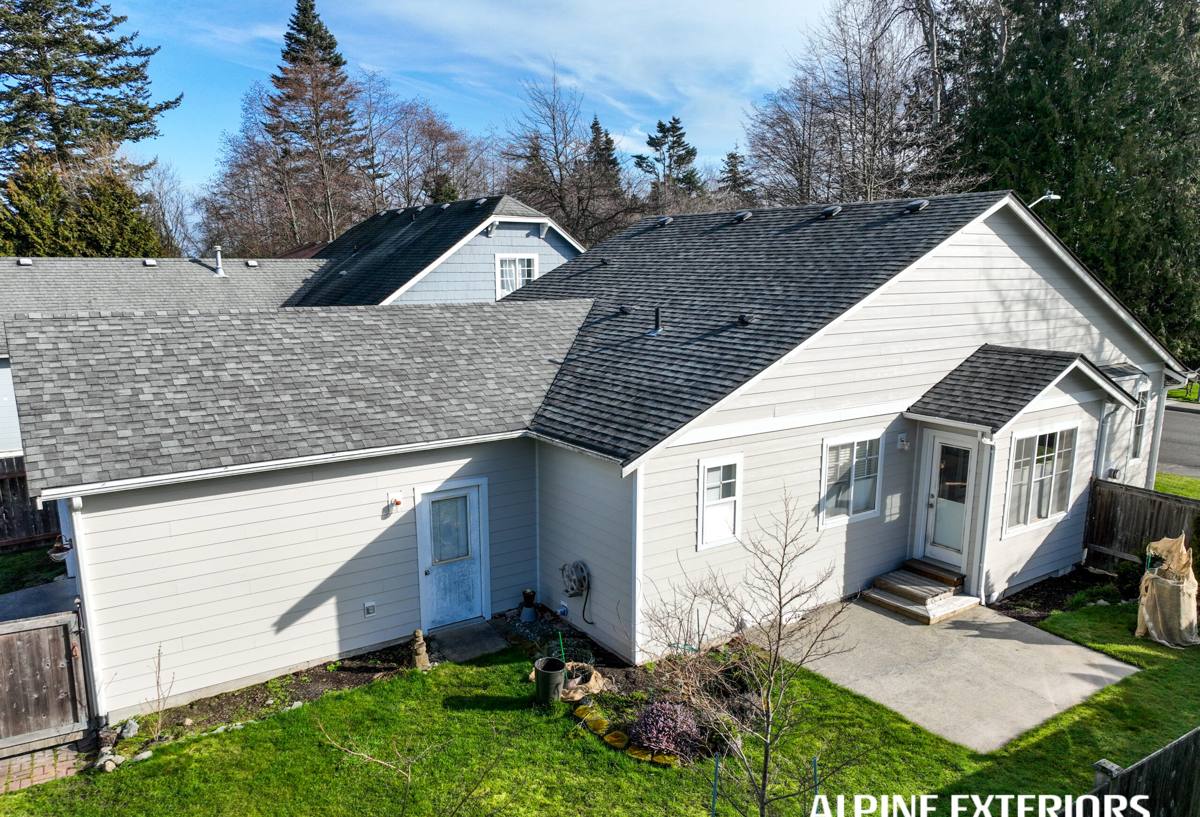
What a Winter Storm Actually Does to a Roof Near the Water
Wind uplift and edge failure
Roof edges, ridges, and rake lines take the brunt of wind pressure during a storm. Shingles and other roofing materials are designed to shed water when they lie flat and sealed — wind that gets underneath an edge can break that seal, lift a course of shingles, or tear pieces off outright. Once the seal is broken, it usually doesn't reseal on its own. The next rain finds the opening.
Water intrusion at flashing and penetrations
Most storm-related leaks don't start in the open field of the roof — they start at the transitions: chimney flashing, vent boots, skylight curbs, valleys, and where the roof meets a wall. Wind-driven rain can push water sideways past flashing that would hold up fine in a normal downpour. A storm damage repair that only replaces a few shingles and ignores the flashing underneath is a repair that will fail again in the next storm.
Salt Air's Slow, Quiet Damage
Salt air corrodes exposed metal faster than it would inland — nail heads, flashing, gutter hangers, and screws are all affected over time. Corroded fasteners lose their grip, which is part of why some storm damage looks worse on a coastal roof than it would on the same roof twenty miles inland with the same wind speed: the fasteners were already weakened before the storm hit. It also matters which metals get used in a repair. Mixing incompatible metals (say, an aluminum flashing against galvanized steel) can accelerate corrosion at the point where they touch. On a repair near the water, we choose fastener and flashing materials with that exposure in mind rather than just grabbing whatever matches the color.
Moss, Shade, and Whatcom County's Long Wet Season
Ferndale and the surrounding parts of Whatcom County stay wet and mild for a large part of the year, and shaded or north-facing roof sections rarely get enough sun to dry out fully between rains. That's exactly the environment moss needs. Moss holds moisture directly against the roofing material, works its way under shingle edges as it grows, and can lift tabs enough to let wind get a grip during the next storm. It also hides damage — a thick moss mat can cover a cracked or missing shingle for months before a leak shows up inside the house. When we're repairing storm damage, checking for and addressing moss growth in the surrounding area is part of the job, not an upsell tacked on afterward.
Signs Your Roof Needs a Real Storm Damage Repair, Not Just a Patch
Some storm damage is obvious — a tree limb through the roof, shingles scattered across the yard. Most of it isn't. After a windstorm or heavy rain event, it's worth checking for:
- Shingle granules collecting in gutters or downspout runoff after a storm
- Lifted, curled, or missing shingles along ridges, edges, or valleys
- Soft or spongy spots when the roof deck is walked
- New water stains or discoloration on ceilings or in the attic after a windy rain
- Bent, loose, or visibly rusted flashing around chimneys, vents, or skylights
- Moss thick enough that you can't see the shingle surface underneath
- Daylight visible through the roof deck when viewed from inside the attic
- Gutters pulling away from the fascia or sagging after heavy wind
Any one of these on its own might be minor. Two or three together, especially right after a storm, are worth having looked at before the next system rolls through.
What a Correct Storm Damage Repair Involves
Inspection first, temporary protection only if needed
If there's an active leak, the first priority is stopping water from getting further into the house — that might mean a tarp or temporary sealing at the damaged area. But a tarp is a stopgap, not a fix. The actual repair starts with a proper inspection of the damaged section and everything around it, including the decking underneath, so we're not covering up a problem that's still spreading.
Matching materials and getting the details right
A storm damage repair should use underlayment and flashing suited to the exposure the roof actually faces, not just whatever's fastest. In vulnerable spots — valleys, eaves, around penetrations — a self-adhered water-resistant membrane under the new material adds a layer of protection that matters more here than it would on a roof set back from the water. We match shingle type and, as closely as possible, color and profile to the existing roof, understanding that some visible difference is normal with partial repairs since existing shingles have already weathered.
Checking ventilation, not just the surface
Storm damage repairs are also a chance to check attic ventilation. Poor airflow traps moisture, which feeds moss growth and can accelerate rot in the decking — both problems that make the roof more vulnerable to the next storm. Fixing the visible damage without checking this is treating the symptom, not the cause.
Documentation, in case you're filing a claim
If the damage is from a specific storm event, we document the affected area with photos and measurements and provide a clear written scope of the repair. That paperwork is useful if you're filing an insurance claim, though the claim process itself is between you and your insurer — we're not adjusters and won't promise an outcome we don't control.
Repair or Replace: What Drives the Decision
Not every storm-damaged roof needs full replacement, and not every roof is a good candidate for another round of patching. The honest answer usually comes down to a handful of factors:
| Factor | Repair Usually Makes Sense | Replacement Usually Makes Sense |
|---|---|---|
| Roof age | Well within its expected service life | Already near or past the end of its expected life |
| Extent of damage | Localized to one section or slope | Spread across multiple sections or the whole roof |
| Decking condition | Solid, no rot found during inspection | Soft, rotted, or repeatedly wet decking found |
| Moss and algae history | Manageable, addressed as part of the repair | Long-term, widespread growth with underlying wear |
| Prior repair history | First or infrequent repair needed | Repeated leaks or repairs in the same general area |
We'll give you a straight answer on which side of that table your roof falls on, along with the reasoning, so it's your decision to make with real information in front of you.
Our Process for Semiahmoo Storm Calls
- You call or send photos of the visible damage and we get a sense of urgency — active leak versus something that can wait for a scheduled inspection.
- We inspect the roof in person, including the areas around the visible damage, not just the spot you noticed.
- If there's an active leak, we address temporary protection first.
- You get a written estimate that lays out repair scope, materials, and — if relevant — a repair-versus-replace recommendation with the reasoning behind it.
- We schedule and complete the repair, and clean up debris and old material from the property when we're done.
Why a Crew That Already Works Semiahmoo Matters
After a storm moves through Whatcom County, it's common to see unfamiliar trucks and door-hangers from crews who followed the storm in from somewhere else. Some of that work is fine. Some of it isn't built for what a Semiahmoo roof actually deals with year-round — the salt exposure, the moss season, the wind patterns off the water. A crew that already works in this area knows to ask about those things before quoting a repair, not after a callback six months later.
Being local also means we're still around when you need a follow-up question answered or a warranty item checked, not just for the length of the storm season. That matters more with roofing than with almost any other exterior work, because a roof problem that gets missed doesn't announce itself again until the next storm — and by then it's usually bigger.
If your roof took damage in a recent storm, or you want an honest look before the next one, we're glad to come out and give you a free, no-pressure estimate. You'll get a clear explanation of what we find and what it would take to fix it — no scare tactics, no pressure to decide on the spot. Just use the form below to get started.