 Ferndale Exterior
 Siding Installation in Semiahmoo: Built for Life on the Water
Semiahmoo sits about as close to the water as a home in Whatcom County gets, and that changes what "good siding" actually means. A siding job that holds up fine a few miles inland can fail years early out here, because the inputs are different: salt-laden air moving off the bay, wind-driven rain that hits walls sideways instead of running straight down the face, and a moss season that runs most of the year under marine fog and tree cover. Ferndale Exterior Company installs siding throughout the county, and a Semiahmoo job gets treated differently from the first walk-around — different material, different detailing at the seams and penetrations, and more attention to the parts of the wall assembly nobody sees once the siding goes back up.
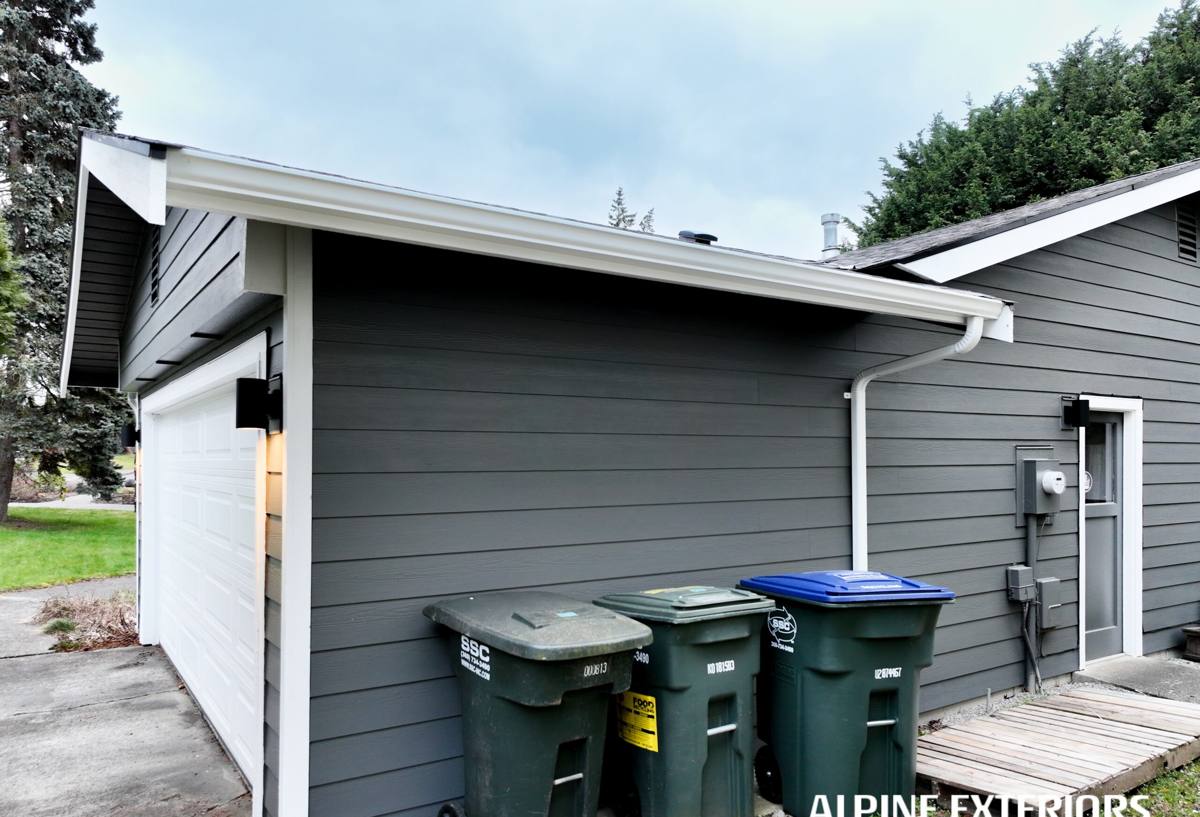
What Salt Air, Wind-Driven Rain, and Moss Actually Do to Siding
Salt air
Airborne salt is corrosive to anything metal and abrasive to anything painted. Over years, it accelerates rust on unprotected fasteners and cheap trim coil, pits exposed metal flashing, and speeds up chalking and fading on lower-grade paint finishes. It also settles into hairline cracks and joints, where it holds moisture against the substrate instead of letting it dry out.
Wind-driven rain
Wind off open water doesn't just fall on a house, it drives into it. That means water gets forced sideways and upward into laps, corner joints, and trim intersections that would stay dry in a calmer inland setting. A siding system that only sheds water moving straight down isn't enough here — every horizontal joint and penetration has to be detailed assuming water will hit it from an angle.
Moss and algae
Shade, standing humidity, and mild winters are a moss and algae recipe, and Semiahmoo has all three. Moss holds moisture against the siding surface long after a rain has stopped, which is hard on paint finishes and, on wood-based products, on the substrate underneath. It also collects in gaps and behind loose trim, which is exactly where you don't want standing moisture sitting for months at a time.
Why We Install Only James Hardie Fiber Cement Here
Ferndale Exterior Company installs James Hardie fiber cement siding exclusively — not vinyl, not LP SmartSide, not Cemplank or Allura, not primed cedar or spruce. That's a deliberate standard, not a brand preference, and it matters more in a place like Semiahmoo than almost anywhere else we work.
Fiber cement is non-combustible, which is a real consideration this close to dry summer brush and treed lots. Hardie's HZ product lines are engineered specifically for wet, moisture-heavy climates like ours, with formulations designed to resist moisture-related damage better than generic fiber cement. The ColorPlus factory finish is baked on under controlled conditions rather than field-applied, which gives it more consistent adhesion and better fade and chalk resistance against salt air and UV than most site-painted finishes achieve. None of that means Hardie is maintenance-free — it means it starts from a stronger baseline against the specific conditions Semiahmoo throws at a wall.
What Correct Installation Involves in This Kind of Exposure
Weather-resistive barrier and drainage gap
Behind the siding, a continuous, properly lapped weather-resistive barrier is the real first line of defense — the siding itself is the second. In coastal, wind-driven-rain conditions, we pay particular attention to a drainage gap behind the cladding so any moisture that does get past the siding has somewhere to go rather than sitting against the sheathing.
Flashing and fasteners
Every window head, door top, deck ledger, and roof-to-wall transition is a place water wants to get in. Flashing at those points has to be lapped correctly, sealed at the right locations (and left open where it needs to breathe), and tied into the drainage plane, not just caulked over. Fastener selection matters too — corrosion-resistant fasteners installed per manufacturer spec, not whatever is fastest to shoot.
Clearances
Hardie's own installation instructions call for minimum clearances from grade, roofing, and decks. Skipping those clearances to save a few inches of exposed foundation is one of the most common ways a siding job invites moisture problems within the first few years — and it's easy to miss if the crew isn't used to being held to spec.
Comparing Siding Options for a Semiahmoo Home
| Factor | James Hardie fiber cement | Vinyl | Wood / engineered wood (e.g. LP SmartSide) |
|---|---|---|---|
| Salt air tolerance | Strong — non-combustible substrate, factory finish holds up well to airborne salt | Can become brittle and discolor faster under salt exposure and UV | Wood-based substrate is more vulnerable to salt-accelerated moisture damage over time |
| Wind-driven rain behavior | Stable, low water absorption when installed to spec | Sheds water but relies heavily on trim and J-channel detailing to stay sealed | Absorbs moisture at cut edges and joints if not fully sealed and maintained |
| Moss/algae resistance | Factory finish resists staining better than field-applied paint | Doesn't feed moss, but surface can still stain and discolor | More susceptible to moisture retention where moss holds against the surface |
| Maintenance | Periodic cleaning; repaint interval much longer than field-painted products | Low maintenance but can crack, warp, or fade with no easy spot-repair | Regular repainting and edge-sealing required to keep moisture out |
| Fire resistance | Non-combustible | Combustible, can melt/deform near heat sources | Combustible |
| Warranty structure | Long-term manufacturer warranty, transferable to a new owner | Varies widely by product tier | Varies; often shorter on the substrate than on the paint |
Our Siding Installation Process
- On-site assessment — we look at the home's exposure to wind and water, existing moisture damage, current wall assembly, and any problem spots at windows, decks, or roof transitions.
- Removal and prep — old siding comes off, sheathing is inspected and repaired as needed, and any rot or hidden moisture damage gets addressed before anything new goes up.
- Weather-resistive barrier and drainage plane — installed continuous and properly lapped, with a drainage gap where the assembly calls for one.
- Flashing at every penetration — windows, doors, vents, and roof-to-wall intersections detailed to shed wind-driven rain, not just vertical rainfall.
- Hardie installation to manufacturer spec — correct fasteners, correct clearances from grade and roofing, correct joint treatment.
- Trim, caulking, and touch-up — finish details sealed and any factory-finish touch-up done with the matching ColorPlus product.
- Final walkthrough — we go over the finished work with the homeowner before calling the job done.
Maintenance Semiahmoo Homeowners Should Expect
Even a strong siding system needs some upkeep in a marine environment. A short, realistic list:
- Rinse the siding down periodically to remove salt residue and surface grime, especially on walls facing the water
- Keep gutters and downspouts clear so water isn't overflowing onto siding and trim
- Trim back vegetation and tree cover that keeps a wall shaded and damp longer than necessary
- Check and re-caulk trim joints and penetrations every few years, since sealant has a shorter service life than the siding itself
- Address any moss buildup at the base of walls or in corners before it holds moisture against the surface for months
- Have a professional look at flashing and caulking after any major windstorm
Why Hiring a Crew That Already Works Semiahmoo Matters
A siding crew that mostly works inland doesn't automatically know how differently a wall performs a few hundred yards from open water. Wind exposure, salt content in the air, and how long a shaded wall stays wet all change the detailing decisions that matter most — where to add extra flashing, how much drainage capacity to build in, which corners genuinely can't be cut. Some waterfront neighborhoods also carry design or exterior-appearance guidelines homeowners need to work within, and a crew that's done this work in the area already knows to ask about that up front rather than after materials are ordered. Local Whatcom County permitting and inspection norms are also easier to navigate when a contractor already has a working relationship with them.
What Siding Installation Typically Costs in Semiahmoo
Cost depends on the size and complexity of the home, how much of the existing wall assembly needs repair before new siding goes on, and how much trim and flashing detail the project requires. Coastal jobs sometimes run a bit higher than a comparable inland project simply because correct moisture detailing takes more time and material than a minimum-spec install. We don't quote firm numbers without seeing the house — every wall assembly and every exposure is a little different, and a walkable, honest estimate is worth more than a number pulled from an average.
If you're planning a siding project on a Semiahmoo home, we're glad to come take a look and walk you through what your specific house needs. The estimate is free, there's no pressure, and you'll leave the conversation understanding exactly what a correct job for your home involves.