 Ferndale Exterior
 Why Nooksack-Area Siding Wears Differently
Homes in and around Nooksack sit inland from Bellingham Bay but still catch the same weather pattern that defines Whatcom County: long wet winters, short dry summers, and a lot of shoulder-season damp in between. Add in the salt-tinged marine air that pushes inland off the Salish Sea and you get a combination that's tough on exterior materials in ways that don't show up in drier parts of the state. Siding here isn't just fighting rain — it's fighting rain that doesn't dry out for days at a time, fasteners that corrode faster near moisture and salt exposure, and tree cover that keeps north- and shade-facing walls damp long after the sun comes back out.
That's the backdrop for every siding repair call we take in this area. A crack or a soft spot that would be cosmetic in a drier climate is an open door for moisture here, and moisture problems in Western Washington compound fast if they're not caught early.
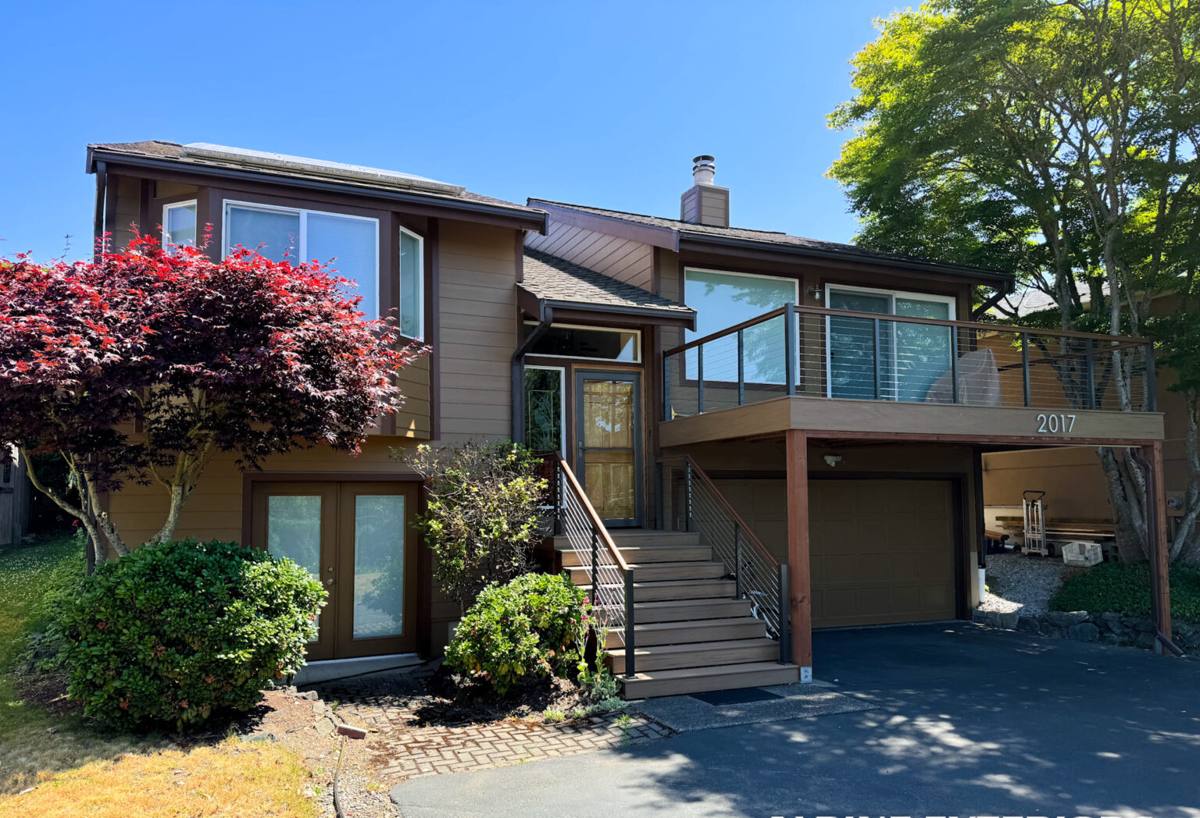
Signs Your Nooksack Home Needs Siding Repair
Most siding repair calls in this area start with one of these warning signs. If you're seeing any of them, it's worth having someone look before the next wet season sets in.
- Soft or spongy spots when you press on a siding panel or board, especially near the bottom courses or window sills
- Visible cracking, splitting, or buckling along seams or panel edges
- Persistent moss or dark green-black streaking that keeps returning within weeks of cleaning
- Paint that's peeling, bubbling, or failing in one specific area rather than uniformly across the wall
- Gaps opening up at corner boards, trim, or butt joints where caulking has shrunk or pulled away
- Rust streaks below fastener heads or corner flashing
- A musty smell or visible staining on interior walls that back up to an exterior wall with siding issues
What a Correct Siding Repair Actually Involves
Diagnosing the Cause, Not Just the Symptom
A patch that doesn't address why the siding failed in the first place is a temporary fix at best. Before we touch anything, we're looking at what's behind the siding — is the house wrap intact, is there a flashing gap directing water behind the wall, is a gutter or downspout dumping water onto one section repeatedly, is the damage isolated or a sign that the whole wall section has been wet for a long time. Skipping this step is the most common reason siding repairs fail within a year or two.
Matching Material, Profile, and Finish
Repairs stand out — or disappear — based on how well the replacement piece matches what's already on the wall. That means matching the reveal (how much of each course shows), the texture, and the color. On James Hardie siding with a factory ColorPlus finish, this is usually straightforward because the color is baked into the product at the factory and holds consistently even years later. On other siding materials, matching an older, sun-faded panel or board can be difficult, and sometimes the honest answer is that a small patch will always be visible no matter how carefully it's done.
Getting the Water Management Right
Siding is one layer of a larger water-management system that includes house wrap, flashing, and properly lapped joints. A repair that looks right from the driveway but doesn't restore correct water-shedding behavior — laps going the wrong direction, flashing that doesn't extend far enough, caulk used where flashing should be doing the work — will fail again, usually in the same spot.
Common Problems We See on Nooksack-Area Homes
| Problem | Typical Cause | What a Proper Repair Does |
|---|---|---|
| Moss and algae staining on shaded walls | Persistent damp shade, tree cover, low sun exposure in winter | Clean, correct any trapped-moisture source, repaint or reseal as needed |
| Soft or delaminating panels near grade | Splashback, poor grading, mulch piled against siding | Replace affected sections, restore proper clearance from soil and hardscape |
| Cracked corner boards and trim | Wood movement, freeze-thaw cycling, age | Replace with correctly primed and sealed material, re-flash if needed |
| Rust streaking at fasteners | Non-corrosion-resistant fasteners exposed to marine air | Re-fasten with corrosion-resistant hardware rated for coastal exposure |
| Paint failure in isolated patches | Moisture intrusion behind the siding at that location | Diagnose and fix the moisture source before repainting |
Repair or Replace? How We Decide
Not every siding problem needs a full re-side, and we're not going to tell you it does. But there's a point where patch-and-repair stops making sense — usually when the damage is spread across multiple walls, when the underlying water barrier has been compromised in more than one spot, or when the siding material itself is at the end of its service life and further repairs are just delaying the inevitable.
| Factor | Repair Usually Makes Sense | Replacement Is Likely the Better Call |
|---|---|---|
| Extent of damage | Isolated to one or two areas | Spread across multiple walls or elevations |
| Age and condition of remaining siding | Mid-life, otherwise sound | Near or past expected service life, brittle, or chalking heavily |
| Water barrier condition | Intact except at the damaged area | Compromised in multiple locations |
| Color and profile match | Available and close | Discontinued, faded beyond matching, or a different product line |
| Root cause | Fixable and localized (a gutter, a flashing detail) | Systemic (original installation defects, chronic moisture) |
We'll always give you a straight answer on which category your home falls into, along with why — not just an upsell toward the bigger job.
Our Repair Process
1. On-Site Inspection
We walk the affected areas, check moisture readings where relevant, and look at what's happening behind the siding, not just on the surface.
2. A Clear Explanation of What We Found
You'll get a plain-English explanation of the cause, what repair options exist, and an honest read on whether a patch will hold or whether you're better off addressing a larger section.
3. Careful Removal
Damaged sections are removed without disturbing sound siding around them any more than necessary. This is where experience with fiber cement in particular pays off — it cuts and handles differently than wood or vinyl, and rushing this step is how adjacent panels get cracked.
4. Correcting the Underlying Issue
Flashing, house wrap, or fastening problems get fixed before anything new goes back on the wall. A repair that skips this step is just delaying the same failure.
5. Installing and Finishing the Repair
New material is fastened, sealed, and finished to match the surrounding wall as closely as the existing material allows.
6. Final Walkthrough
We go over the completed work with you so you know exactly what was done and why.
Why a Locally Familiar Crew Matters for Repairs
Siding repair work rewards local knowledge more than most exterior trades. A crew that regularly works Ferndale and the surrounding Whatcom County communities, including Nooksack, has already seen how this specific climate — the moss cycle, the salt-air corrosion pattern, the driving rain that comes in sideways off winter storms — actually plays out on real walls over real years. That's different from general contracting experience picked up somewhere drier. It shapes decisions like which fasteners to use, where extra flashing attention is worth it, and which areas of a house are most likely to need a second look down the road.
We install exclusively James Hardie fiber cement siding on full installations, and that focus carries into repair work too — we know the product's HZ5 climate engineering, its factory finish system, and how it behaves over time in this exact environment, because it's what we work with every day. When a repair involves matching into existing Hardie siding, that familiarity is the difference between a patch that blends in and one that stands out for the next twenty years.
Keeping a Repair From Becoming a Repeat Call
A good repair should outlast the reason it was needed. A few habits help:
- Keep gutters clean and downspouts directing water away from the foundation and lower siding courses
- Trim back vegetation that keeps a wall shaded and damp, especially on north-facing sides
- Rinse moss and algae buildup before it gets a chance to hold moisture against the surface
- Recaulk joints and trim as manufacturer guidance recommends, rather than waiting until gaps are visible
- Walk the exterior once a year, ideally before the wet season, and note anything that's changed
Get an Honest Look at Your Siding
If you're seeing soft spots, cracking, persistent moss, or paint failure on a Nooksack-area home, it's worth having someone look before another wet Whatcom County winter makes the problem bigger. We'll give you a straight assessment of what's going on, what it'll take to fix it right, and whether repair or replacement is the smarter long-term call — no pressure either way. Fill out the form below for a free estimate.