 Ferndale Exterior
 Fairhaven's Coastal Exposure Asks More of Your Siding
Homes in the Fairhaven area sit close enough to the water that the air itself is part of the maintenance equation. Salt-laden marine air, wind-driven rain off the Salish Sea, and the deep shade that so many mature Whatcom County lots carry all work on exterior siding at the same time, year after year. A siding replacement here isn't just a cosmetic upgrade — it's a chance to correct whatever the original installation didn't account for, and to put a material and a detailing approach on the wall that's actually built for this specific exposure.
We work Fairhaven and the surrounding Ferndale area regularly, and the pattern repeats on house after house: siding that looked fine from the street was already failing at the seams, the corners, or behind the trim. This page walks through what that damage looks like, what a correct replacement involves, and why the material we install matters as much as the crew installing it.
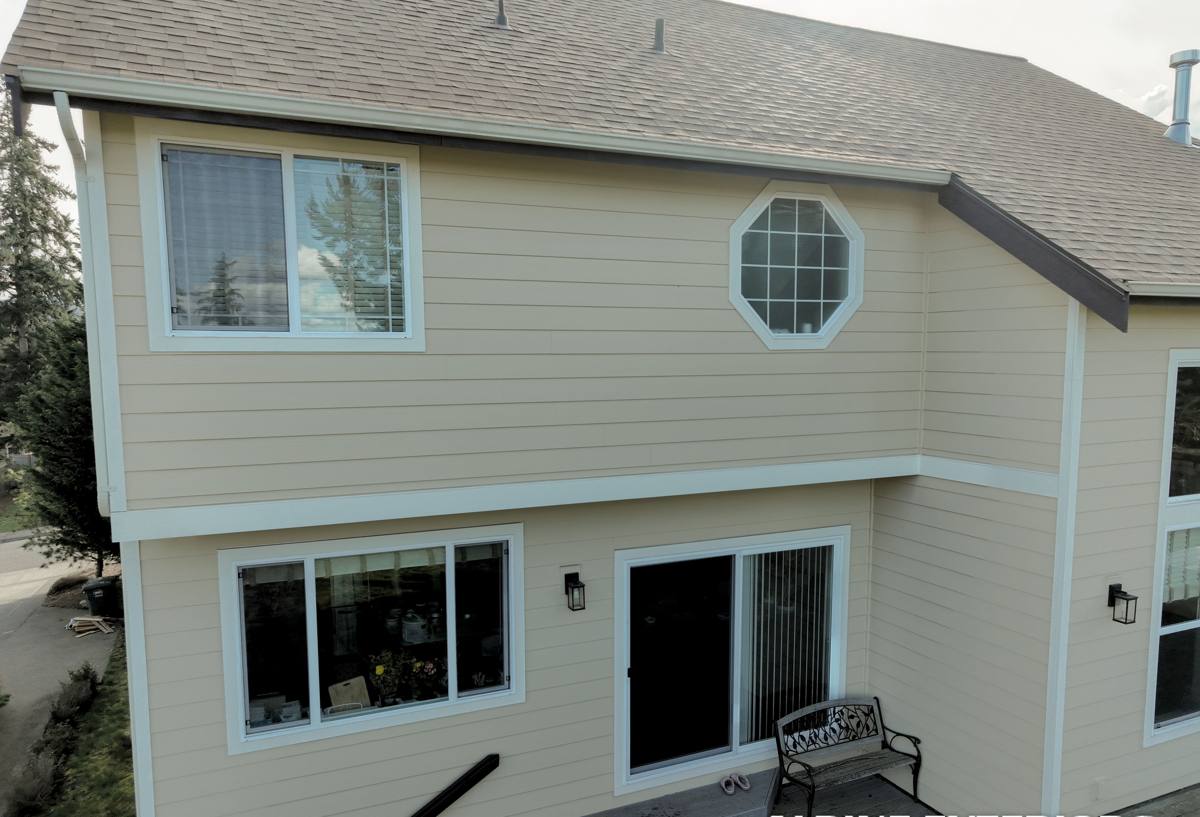
What Salt Air, Driving Rain, and Moss Actually Do to Siding
Each of these three conditions attacks siding differently, and Fairhaven homes usually deal with all three at once.
Salt Air
Airborne salt is corrosive to exposed metal fasteners, flashing, and trim, and it accelerates the breakdown of finishes that aren't formulated to resist it. Paint chalks and fades faster near the water. Caulk joints get brittle sooner. On wood-based products, salt exposure combined with moisture speeds up rot at the exact spots — butt joints, corners, and fastener heads — where water already wants to collect.
Driving Rain
Storms coming off the water don't just fall straight down — they hit siding at an angle, which means water gets forced up under laps, around window trim, and into any gap in the house wrap or flashing that a straight-down rain would never find. Walls facing the prevailing weather take the brunt of it, and those are usually the first walls to show staining, cupping, or soft spots.
Moss and Prolonged Dampness
Whatcom County's long wet season means siding often doesn't get a real chance to dry out for months at a time, especially on north-facing walls and anywhere shaded by trees or neighboring structures. Moss and algae take hold in that persistent damp, holding moisture against the surface even longer and creating a cycle that's hard to break with cleaning alone if the underlying material and drainage details aren't right.
Why We Install Only James Hardie Fiber Cement
We standardized on James Hardie fiber cement siding for every home we side, including Fairhaven's, and we don't install vinyl, LP SmartSide, cedar, primed spruce, Cemplank, or Allura. That's a deliberate call, not a sales pitch.
Fiber cement is non-combustible and dimensionally stable, meaning it doesn't expand, contract, warp, or absorb water the way wood-based or engineered wood products can. James Hardie's ColorPlus factory-applied finish is baked on under controlled conditions and backed by a real finish warranty, which matters in a climate where field-applied paint has to fight salt air and constant moisture from day one. Hardie also builds specific HZ5 product lines engineered for cold, wet, and marine-adjacent climates like ours — this isn't a one-size-fits-all product line.
None of that means other products are junk. Vinyl is inexpensive and low-maintenance in the right setting. Cedar has a look plenty of homeowners love. Engineered wood products have their place. But for the specific combination of salt air, driving rain, and long wet seasons that Fairhaven homes face, we've found the trade-offs on those products — moisture sensitivity, finish durability, warranty structure, or long-term upkeep — aren't ones we're willing to put our name behind. Hardie fiber cement is what we put on homes instead, and we install it to the manufacturer's spec every time.
What a Correct Siding Replacement Actually Involves
The material is only half the job. A siding replacement is really a whole-wall system, and skipping steps here is exactly how a brand-new install ends up with the same problems as the one it replaced.
- Full tear-off and substrate inspection — old siding comes off so we can actually see the sheathing underneath, not just the surface.
- Repair of hidden rot or water damage — any soft or damaged sheathing gets replaced before anything new goes back on the wall.
- New weather-resistive barrier — a properly lapped and sealed house wrap or building paper, installed so water sheds down and out, not into the wall cavity.
- Correct flashing at every penetration — windows, doors, hose bibs, light fixtures, and vents all need flashing detailed for wind-driven rain, not just a bead of caulk.
- Rainscreen or proper drainage gap where called for — giving the wall a way to dry out between storms instead of trapping moisture behind the cladding.
- Manufacturer-spec fastening and clearances — correct nailing pattern, gapping, and ground clearance so the siding itself isn't sitting in standing water or holding moisture at the joints.
- Factory-finished material with sealed cut ends — every field cut gets sealed so the factory finish isn't compromised at the one spot most likely to take on water.
Any one of these steps done wrong can undo the benefit of upgrading to a better material in the first place.
Our Process, Start to Finish
We keep the process straightforward because most homeowners are doing this once and want to understand what's happening at each stage.
- On-site assessment. We walk the exterior, check the worst-exposed walls first, and look for signs of hidden moisture damage before we ever talk product or price.
- Written estimate. You get a clear scope of work — what's being torn off, what's being repaired, what's being installed, and why.
- Tear-off and repair. Old siding comes off, damaged sheathing gets addressed, and we confirm the wall is sound before closing it back up.
- Weather barrier and flashing. This is the part nobody sees once the job's done, and it's the part that determines whether the job holds up.
- Hardie installation. Siding, trim, and accessories go on to manufacturer spec, with attention to the details that matter most in coastal exposure — laps, corners, and fastening.
- Final walkthrough. We go over the finished work with you before we consider the job done.
What Affects the Cost of a Siding Replacement
Every home is different, and we won't quote a number without seeing the house, but these are the main factors that move a project's price up or down.
| Factor | Why It Matters | Fairhaven-Specific Note |
|---|---|---|
| Extent of hidden damage | Rotted sheathing or framing has to be repaired before new siding goes on | More common on walls facing prevailing wind and rain |
| Home size and wall complexity | More corners, dormers, and trim details mean more labor and material | Applies to any home regardless of location |
| Siding profile chosen | Lap width, panel type, and trim style affect material cost | HZ5 lines are built for this climate but priced similarly to standard lines |
| Drainage and flashing upgrades | Adding a rainscreen or upgrading flashing improves long-term performance | Worth prioritizing on shaded or heavily rain-exposed walls |
| Access and site conditions | Tight lots, tall walls, or landscaping can add labor time | Common on older, mature Whatcom County properties |
Signs Your Fairhaven Home May Need Siding Replacement Now
- Visible cracking, warping, or bulging in the siding surface
- Persistent moss or algae growth that returns quickly after cleaning
- Soft or spongy spots when you press on the siding, especially near the bottom courses
- Peeling or bubbling paint that keeps coming back despite repainting
- Staining or dark streaks below window sills or trim, suggesting water is getting behind the cladding
- Visible gaps at seams, corners, or trim where caulk has failed
- Rising energy bills that suggest the wall assembly is no longer doing its job
Any one of these on its own might just need attention. Several at once, especially on the wall that takes the worst of the weather, usually means the wall system underneath has already been compromised for a while.
Why Hiring a Crew That Already Works Fairhaven Matters
Siding installation isn't identical everywhere. A crew that mostly works inland, drier parts of the state can do competent work and still underestimate how much drainage detailing and flashing attention a marine-exposed wall in Fairhaven actually needs. We work this stretch of Whatcom County regularly, which means we already know which wall orientations take the worst of the driving rain, where moss tends to establish itself first, and how much the salt air factors into fastener and finish choices.
That familiarity shows up in small decisions during the job — how a rainscreen gap gets detailed, where extra flashing attention goes, which corners get double-checked before the siding closes them up. It's the difference between a crew installing a product and a crew installing a system that's actually suited to this coastline.
Get a Straight Answer About Your Home
If your Fairhaven home's siding is showing its age, or you just want an honest read on what shape it's really in, we're glad to take a look. The estimate is free, there's no pressure attached to it, and you'll walk away with a clear picture of what's going on and what your options actually are. Use the form below to get started.