 Ferndale Exterior
 Storm Damage Roofing for Kendall Homes
Kendall sits out along the Mt. Baker Highway corridor, east of Ferndale and closer to the foothills than the coast. That changes what a roof deals with compared to homes nearer Bellingham Bay. There's less direct salt exposure out here, but you make up for it with heavier tree cover, more shade, longer-lingering moisture after a storm, and wind that funnels differently as weather moves up the valley toward the mountains. Add in the driving rain that comes through Whatcom County every fall and winter, plus a moss season that never really stops in the shaded, wooded lots common around Kendall, and you've got a roof that ages differently than one out on open, wind-scoured ground.
This page is about one thing specifically: storm damage roof repair for homes in and around Kendall. Not a general roofing overview, not a sales pitch for a full tear-off you don't need — just what actually happens to roofs out here after a storm, what a correct repair looks like, and how we handle it when you call.
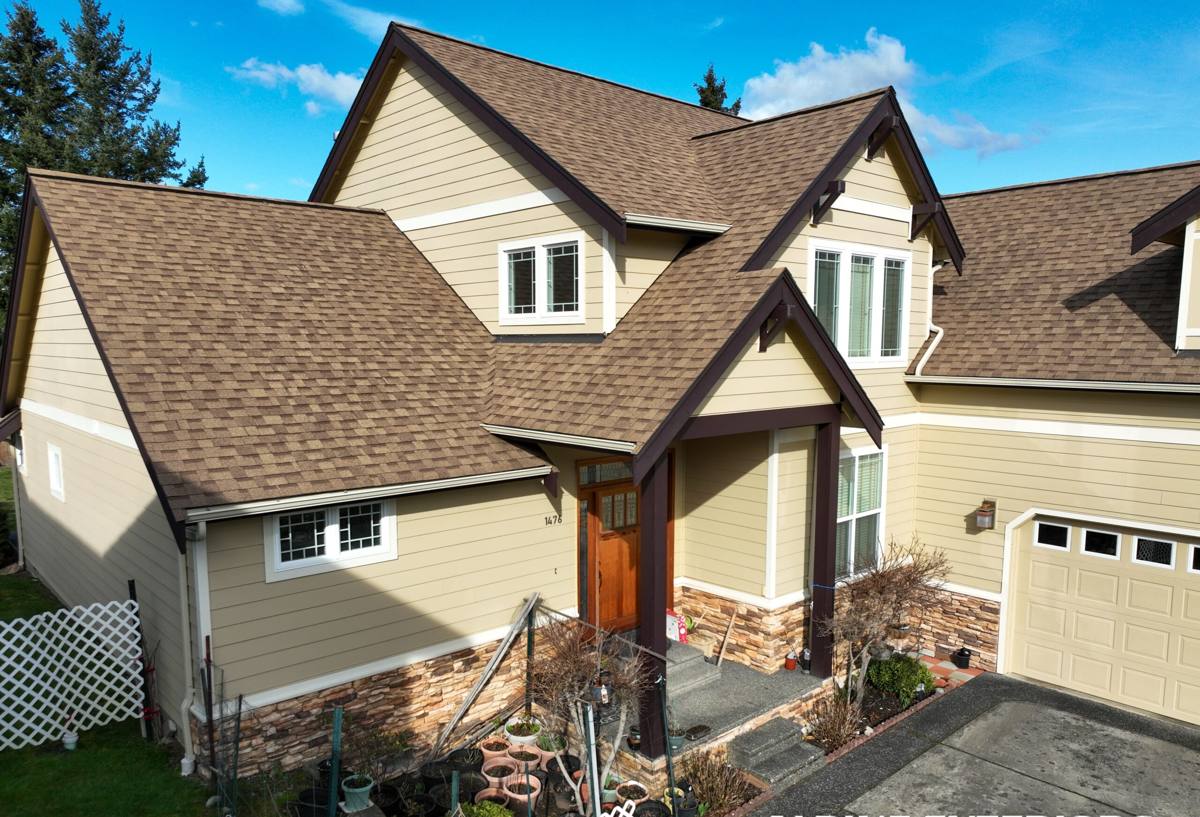
What Storms Actually Do to a Kendall Roof
Most storm damage in this area isn't dramatic. It's rarely a roof torn off in one piece. It's usually smaller and easier to miss, which is exactly why it causes problems — homeowners don't know it's there until water shows up inside.
Wind and Uplift
Wind moving through wooded terrain doesn't hit a roof evenly. It gusts, eddies around tree lines, and catches roof edges and ridges at odd angles. That's usually where you'll find lifted or missing shingles first — edges, ridge caps, and any spot where a roof plane changes direction. Once a shingle's seal breaks, it doesn't always blow off right away. It can flap loose for weeks, working the nails and underlayment beneath it, until it finally fails or a smaller gust finishes the job.
Falling Limbs and Debris
Heavier tree cover means more debris on the roof after any real wind event — not just whole limbs, but smaller branches, needles, and cones that pile up in valleys and behind chimneys. A direct hit from a limb can crack shingles, dent metal flashing, or puncture the roof deck outright. Smaller debris is a slower problem: it dams water in the valleys and lets moisture sit against the roofing material far longer than it should.
Driving Rain and Wind-Driven Water
Straight-down rain rarely causes leaks on a roof in decent shape. Rain that's being pushed sideways by wind is a different story — it gets up under shingle tabs, around flashing edges, and into any gap that wouldn't normally see water. That's the mechanism behind a lot of "mystery leaks" that show up during a storm and seem to disappear once it passes. The damage doesn't disappear. It's just not actively dripping anymore.
Moss and Prolonged Moisture
Shaded lots and slower-drying roof planes are common around Kendall, and that's exactly the environment moss favors. Moss holds moisture against the roofing material, lifts shingle edges as it grows, and works its way into any spot a storm already weakened. A roof with moss buildup going into a storm season is more vulnerable to wind and water damage than a clean one — it's usually the underlying condition that turns ordinary weather into an actual repair.
Signs You Have Storm Damage
- Missing, cracked, curled, or lifted shingles — especially along ridges, edges, and valleys
- Granules collecting in gutters or at downspout outlets after a storm
- Dented, bent, or separated flashing around chimneys, vents, and skylights
- Water stains on interior ceilings or upper walls, even if they've dried
- Daylight visible through the roof deck from inside the attic
- Debris — limbs, branches, needle mats — sitting in roof valleys or against the chimney base
- Moss buildup that's thicker or more established than it was last season
- Sagging or soft-feeling spots on the roof surface
Not every item on that list means you need a full repair. But any one of them is worth a proper inspection before the next storm arrives, not after.
What a Correct Storm Damage Repair Involves
A lot of "storm repairs" are really just patches — a bead of sealant over a visible crack, a few nails driven back in, done from the ground with a pair of binoculars. That kind of work can hide a problem for a season and let it get worse underneath. A repair that actually holds involves a few non-negotiable steps.
1. A Roof-Level Inspection, Not a Ground-Level Guess
Storm damage has to be assessed from on the roof. Ground-level or drone-only inspections miss lifted shingle edges, cracked flashing seams, and soft decking that only show up on close inspection. We walk the roof, check every plane, and look at flashing, penetrations, and the deck itself — not just the shingles.
2. Matching the Repair to the Existing Roof
Patch materials need to match the existing shingle type, profile, and as close to the color as the manufacturer allows. A mismatched patch isn't just a cosmetic issue — a different shingle profile can create a new place for water to collect.
3. Checking What's Underneath
Any spot where water got past the shingles needs the underlayment and decking checked, not just covered back over. Wet decking that gets sealed under new shingles without being dried or replaced is how a small storm repair turns into a rot problem two years later.
4. Flashing Gets the Same Attention as Shingles
Chimney flashing, vent boots, and valley flashing fail differently than shingles do, and they're a common source of leaks that get blamed on "the roof" when the shingles themselves are fine. A storm repair that only replaces shingles and ignores bent or separated flashing hasn't actually fixed the leak.
5. Clearing Debris and Moss as Part of the Job
Given how much moss and organic debris factor into damage around Kendall's wooded lots, a repair that doesn't include clearing the roof and addressing moss growth is leaving the underlying cause in place. We treat that as part of the repair, not a separate upsell.
Our Process, Start to Finish
- Contact and initial questions. We ask what you're seeing — active leak, visible damage, missing pieces after a storm — so we know what to prioritize.
- On-roof inspection. We get up on the roof and document the actual damage, not just what's visible from the driveway.
- Straight explanation of what we found. You get a plain description of what's damaged, what's causing it, and what it'll take to fix — including if it turns out to be a smaller job than expected.
- Written estimate. Scope and cost in writing before any work starts. No verbal-only agreements.
- Repair work. Matching materials, proper flashing work, and deck repair where needed — not just a surface patch.
- Final walkthrough. We show you what was done and what to watch for going forward, particularly around moss and drainage given the local conditions.
Repair or Replace? What Actually Decides It
Storm damage doesn't automatically mean a new roof, and it doesn't automatically mean a small patch either. The honest answer depends on a few factors we weigh together during inspection.
| Factor | Points Toward Repair | Points Toward Replacement |
|---|---|---|
| Roof age | Under roughly 12-15 years, otherwise in good condition | Nearing or past its expected lifespan |
| Extent of damage | Localized to one section or a few spots | Widespread across multiple roof planes |
| Decking condition | Dry, solid decking under the damaged area | Soft, rotted, or repeatedly wet decking |
| Moss and moisture history | First real issue, roof otherwise well-maintained | Long-term moss damage compounding storm damage |
| Prior repairs | Clean roofing history | Multiple past patches stacking up in the same areas |
We'll tell you honestly which side of that table your roof falls on. A repair that's likely to fail again within a year or two isn't a good use of your money, and we won't recommend one just to get a smaller job in the door.
Insurance Considerations
Many storm damage repairs in Whatcom County are eligible for homeowners insurance coverage, particularly when there's a documented wind event or fallen tree limb involved. We can provide a written assessment and photo documentation you can submit with a claim. We don't handle the claim itself or promise a specific coverage outcome — that's between you and your insurer — but we make sure the damage is documented clearly and accurately so your claim has what it needs.
Why Local Storm Repair Experience Matters in Kendall
A crew that mostly works subdivisions on open, cleared lots isn't necessarily prepared for what a wooded, shaded property near Kendall throws at a roof. Knowing to check for moss-driven damage even when a homeowner called about wind, knowing which flashing details tend to fail first under driving rain, and knowing how debris behaves on a shaded roof versus an open one — that's the difference between a repair that holds and one that's back on the schedule next storm season. We work roofs across Ferndale and the surrounding Whatcom County communities, including Kendall, and we bring that same on-the-ground familiarity to every inspection.
Get a Free, No-Pressure Estimate
If a recent storm left you with missing shingles, a new leak, or you just want a roof checked before the next system rolls through, we're glad to come take a look. The estimate is free, there's no pressure to book anything on the spot, and you'll get a straight answer about what your roof actually needs. Use the form below to get started.