 Ferndale Exterior
 Storm Damage Repair Built for Whatcom County Weather
Lynden sits far enough inland from Bellingham Bay to feel like it should be sheltered, but the storms that roll off the Pacific and up through the lowlands don't care much about that distance. Wind-driven rain, sideways gusts off open farmland, and a moss season that never really ends put real stress on roofs out here. When we get called out to a storm-damaged roof in this area, we're not guessing at what caused it — this combination of salt-laden coastal air, heavy fall and winter rain, and slow-drying shade is a specific set of conditions, and it shows up in specific, predictable ways on a roof.
This page is about one job: repairing storm-damaged roofs on homes in and around Lynden. Not a general roofing pitch, not a replacement sales page — just what storm damage actually looks like here, what a correct repair involves, and why local experience changes the outcome.
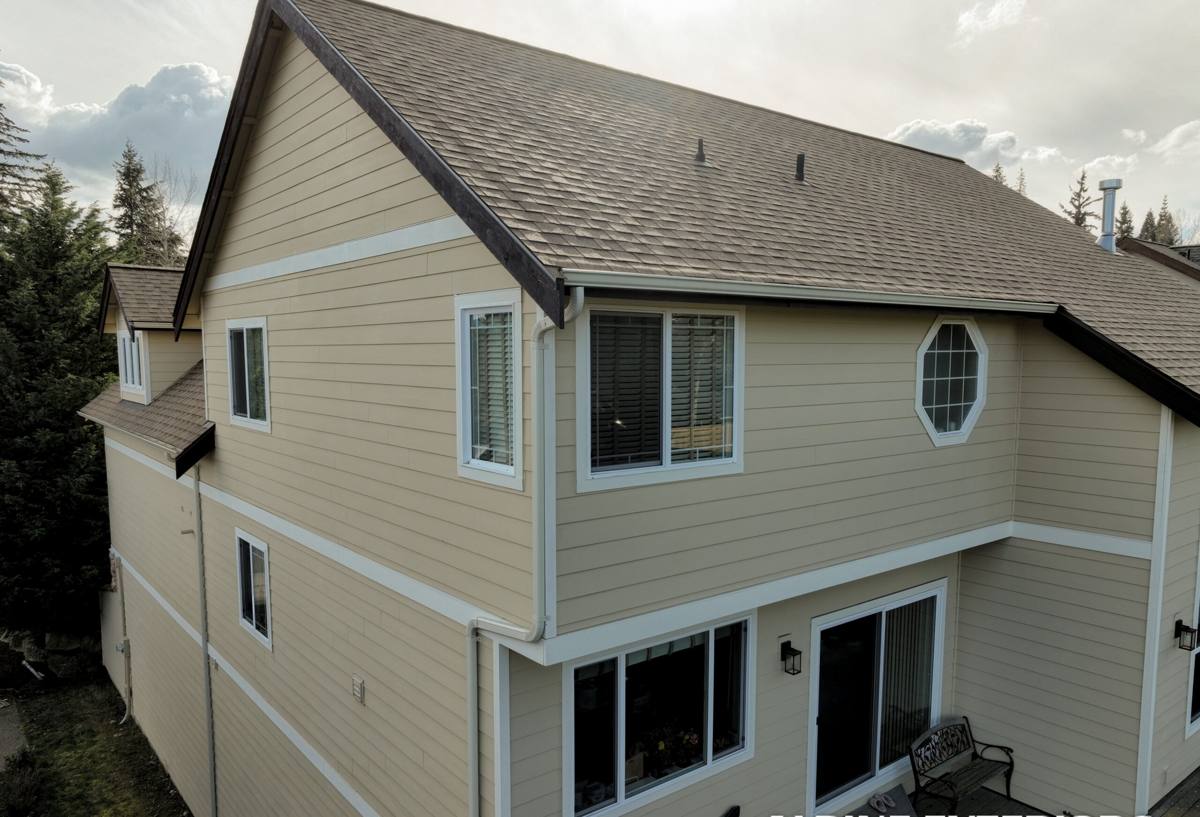
Why Lynden Roofs Take a Different Kind of Beating
Three things define roofing conditions in this part of Whatcom County, and they compound each other.
Driving Rain, Not Just Rain
Pacific storm systems that push through in fall and winter often arrive with real wind behind them. Rain that's driven sideways finds every weak point in a roof system that would never be tested by a straight-down drizzle — lifted shingle tabs, under-driven nails, gaps at flashing edges. A roof that's been fine for years can start leaking the first time a storm hits it at the right angle.
Salt Air and Corrosion
Proximity to Bellingham Bay and the Strait means metal roof components — flashing, fasteners, gutter hardware, vent caps — are exposed to salt-bearing air more than homeowners expect this far from open ocean. Corrosion on flashing and fasteners is a quieter form of storm damage: it doesn't blow a hole in your roof, but it weakens the seals that keep water out during the next storm.
A Long Moss Season
Cool, damp, and often shaded conditions for much of the year mean moss growth is a near-constant maintenance issue rather than a seasonal one. Moss holds moisture against shingles, lifts tabs as it grows under the edges, and adds weight that stresses aging roof decking. It also disguises storm damage — a lifted or cracked shingle can hide under a moss mat until a repair crew pulls it back.
What Storm Damage Actually Looks Like on a Roof Out Here
Not every problem after a storm is obvious from the ground. Here's what we typically find when we inspect a Lynden-area roof after a wind and rain event:
- Shingle tabs lifted or torn loose along ridges, hips, and roof edges where wind uplift is strongest
- Cracked or displaced shingles where wind-blown debris or hail impact struck the surface
- Flashing pulled away from chimneys, skylights, and roof-wall junctions, letting wind-driven rain track underneath
- Gutter and downspout separation from wind load or ice buildup, causing water to dump against fascia and siding instead of draining away
- Soft or discolored decking visible from the attic side, where a slow leak has been running longer than the storm itself
- Moss mats concealing lifted shingles, cracked seals, or granule loss underneath
The tricky part is that storm damage and long-term wear often show up in the same spot at the same time. A shingle that finally tore loose in a windstorm may have already been thinned by years of moss and granule loss. Part of an honest inspection is telling you which is which, instead of blaming everything on "the storm" when some of it is just age.
What a Correct Storm Repair Actually Involves
A storm repair done right is more than nailing down a loose shingle and calling it finished. We treat every storm call as a chance to find out whether the roof underneath is actually sound.
Full-Slope Inspection, Not Spot-Checking
Wind damage rarely stays in one tidy area. We walk the full roof plane — not just the spot you can see from the driveway — because lifted or cracked shingles on the back slope or a shaded valley are just as likely as anything visible from the street.
Decking Check Before Anything Gets Covered Up
If water has been getting under the roofing material for any length of time, the plywood or OSB decking underneath can be soft or delaminated. Re-covering damaged decking with new shingles just hides a problem that will come back. Any section we open up gets checked before we close it back in.
Matching Materials, Not Just Available Ones
Repairing a section of an existing roof means matching the existing shingle profile, color, and exposure as closely as possible. Where an exact match isn't available — common on older roofs — we'll tell you honestly what your options are rather than installing a mismatched patch and hoping it blends in.
Flashing and Fastener Detail
Given the corrosion risk from salt air, we pay particular attention to flashing and fastener condition during storm repairs, not just the shingles themselves. A new shingle over corroded flashing is a short-term fix.
Our Process, Start to Finish
- Call or request a free estimate. Tell us what you noticed — a leak, missing shingles, storm debris on the roof — and where you're located.
- On-site inspection. We walk the roof (weather permitting) and check the attic side for water tracking, staining, or soft decking.
- Written scope and estimate. You get a clear explanation of what's damaged, what's original wear, and what repair options make sense — no pressure toward a full replacement if a repair is the honest answer.
- Repair work. Damaged shingles, flashing, and decking are addressed to current manufacturer installation standards, not just patched over.
- Cleanup and final walk-through. Debris removed, gutters cleared of storm debris if needed, and we show you what was done before we consider the job finished.
Repair or Replace? What Actually Decides It
Storm damage doesn't automatically mean a new roof, and it doesn't automatically mean a small patch either. These are the factors that actually drive the decision:
| Factor | Points Toward Repair | Points Toward Replacement |
|---|---|---|
| Roof age | Under 12-15 years, in otherwise good shape | Near or past expected shingle lifespan |
| Extent of damage | Isolated to one slope or area | Spread across multiple slopes or the whole roof |
| Decking condition | Solid, dry decking under damaged shingles | Soft, delaminated, or repeatedly wet decking |
| Repair history | First significant repair on this roof | Third or fourth patch in recent years |
| Material match | Close match available for existing shingles | Product discontinued or heavily faded/mismatched |
Most storm calls we run in this area are genuine repairs — a roof that's fundamentally sound but took a hit in one specific spot. We'll say so plainly when that's the case, and we'll also say so plainly when the damage is a symptom of a roof that's simply at the end of its service life.
Insurance and Storm Claims
Many storm repairs are covered in whole or part by homeowners insurance, depending on your policy and the cause of damage. We're not your insurance adjuster and won't promise a specific claim outcome, but we can provide a clear written scope of the damage and repair work, along with photos from the inspection, which is generally what an adjuster needs to evaluate a claim. If you're filing a claim, it's worth documenting damage as soon as it's safe to do so and before any temporary repairs are made, since that documentation is what supports your claim.
What to Do in the First 48 Hours After a Storm
- Stay off the roof — wet, wind-damaged roofing is unstable and not worth the risk of a fall
- Photograph visible damage from the ground: missing shingles, debris on the roof, damaged gutters
- Check the attic or top-floor ceilings for water staining, drips, or a musty smell
- Place buckets or containers under any active interior leaks to limit water damage to floors and belongings
- Avoid DIY tarping on a steep or wet roof — a poorly secured tarp can blow off and cause more damage
- Call for an inspection promptly — a small, exposed area can turn into rotted decking within days of repeated rain
Why a Crew That Already Works Lynden Matters
Storm repair isn't just a technical skill, it's a familiarity skill. A crew that regularly works roofs across Whatcom County knows which shingle profiles and colors were common on homes built in different eras out here, which makes material matching faster and more accurate. We also know how fast a small storm opening can turn into a real problem given how much moisture this climate holds onto — a gap that might dry out in a week somewhere drier can stay wet for a month here, especially on shaded north-facing slopes common on Lynden lots. That local pattern recognition is part of what separates a repair that holds up from one that reopens with the next storm.
After the Repair: Reducing Your Next Storm's Impact
A storm repair is a good moment to address the conditions that make storm damage worse in the first place. That usually means keeping moss growth under control so it isn't lifting shingle edges before the next windstorm even arrives, keeping gutters clear so wind-driven rain has somewhere to go, and checking flashing condition on a normal schedule rather than waiting for the next leak to find it for you. None of that has to happen the same day as your repair, but it's worth discussing while a crew is already on your roof.
If you've got storm damage on a Lynden-area roof — or you're just not sure whether what you're seeing is storm-related or ordinary wear — we're happy to take a look. Estimates are free, there's no pressure to sign anything on the spot, and you'll get a straight answer about what your roof actually needs. Use the form below to get in touch.