 Ferndale Exterior
 Decking Built for Sudden Valley's Weather, Not Just Its View
Sudden Valley sits close enough to the water and the tree line that homes here take a different kind of weather beating than decks built further inland. Between the salt-laden air coming off the bay, driving rain that blows sideways more often than it falls straight down, and a moss season that can stretch from October well into April, a deck in this neighborhood is working harder than the same deck would be twenty minutes away. Composite decking handles that combination better than most materials, but only if it's specified and installed with that climate in mind — not just dropped in using the same details a crew would use in a drier part of Whatcom County.
We work in Sudden Valley regularly, which means we're not guessing at how the moisture, shade patterns, and salt exposure here affect a deck over time. That local pattern recognition changes decisions that aren't obvious from a spec sheet — board spacing, fastener choice, where ventilation gaps need to be wider, and which corners of a property need extra attention because they never quite dry out between storms.
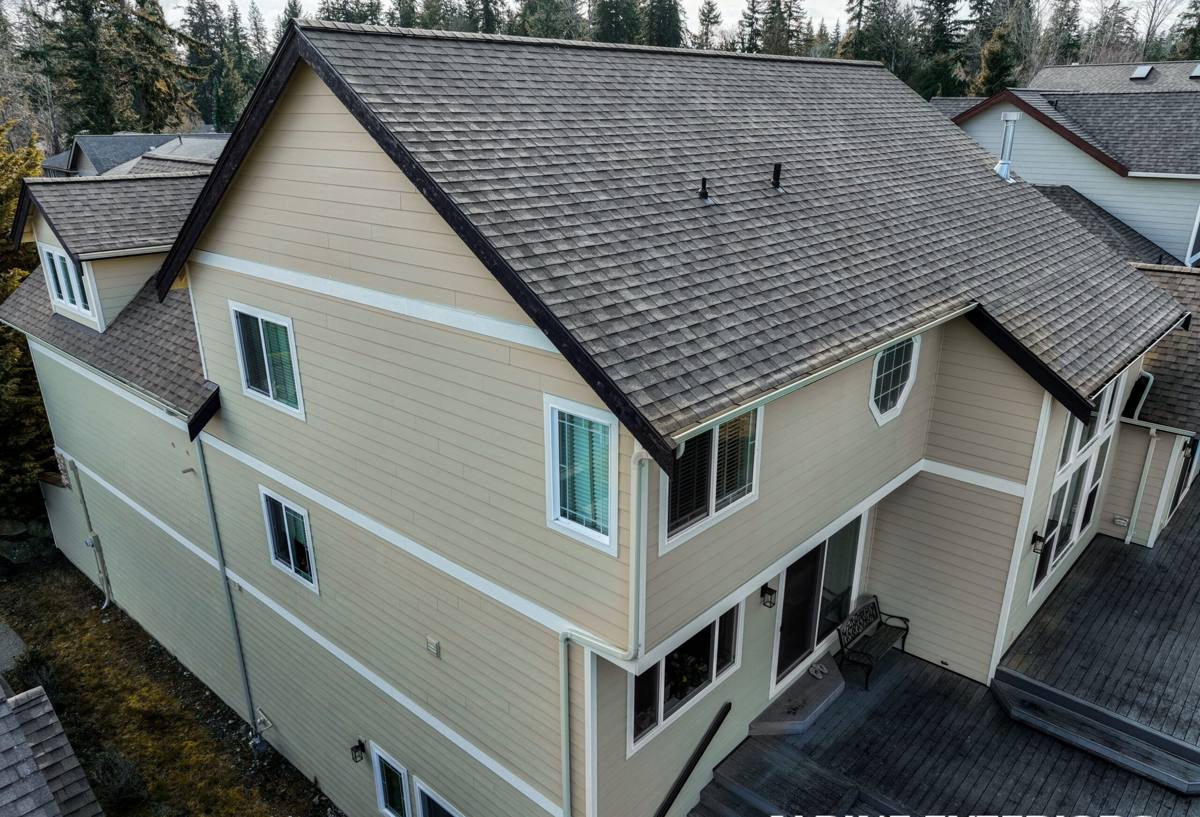
What Sudden Valley Homes Actually Need From a Deck
Salt Air and Hardware Corrosion
Salt air doesn't just affect wood — it accelerates corrosion on fasteners, brackets, and railing hardware, even when the decking material itself is composite and immune to rot. A deck that looks fine on the surface can have hidden fastener failure underneath if the hardware wasn't rated for a coastal-influenced environment. We spec stainless or coated fasteners and hardware sized for this exposure, not the minimum-grade hardware that's fine sixty miles inland but starts showing rust streaks here within a couple of seasons.
Driving Rain and Water Management
Rain that comes in at an angle finds its way into gaps and connections that vertical rain never would. That means ledger board flashing, picture-frame board seams, and any point where the deck meets the house need to be detailed for wind-driven moisture, not just standing water. Composite boards themselves don't absorb water the way wood does, but the framing underneath, the fasteners, and the transitions at the house still need to shed water correctly or you end up with hidden problems below a deck surface that looks perfect.
Moss, Algae, and Shaded Ground
A long moss season means any deck with partial shade — which describes a lot of lots in this area given the tree cover — is going to see organic growth on the surface and underneath it if airflow is restricted. This affects material choice (some composite surface textures shed moss and algae more easily than others), board spacing, and how much clearance we build between the deck and grade.
What a Correct Composite Deck Installation Involves
Substructure First
The composite boards get most of the attention, but the framing underneath is what determines whether the deck performs for the next 20-plus years. That means pressure-treated or naturally durable framing lumber, joist tape or a comparable flashing membrane on top of every joist to keep moisture from wicking into the wood through fastener penetrations, and joist spacing that matches the composite manufacturer's requirements — composite boards often need tighter joist spacing than wood decking, especially on angled or picture-frame layouts.
Drainage and Airflow Underneath
Composite decks that sit low to the ground or against a foundation without enough airflow underneath are the ones that develop moss and mildew problems fastest in a climate like this. We build in clearance and, where the site allows it, drainage paths so water isn't sitting and evaporating slowly under the deck all winter.
Fastening and Expansion
Composite material expands and contracts with temperature more than wood does. Board spacing has to account for that movement, and fasteners — whether hidden-fastener clip systems or face-screwed — need to be installed to the manufacturer's spec so boards don't buckle, gap unevenly, or pull loose over time. This is one of the most common places we see prior installations go wrong: correct materials installed with the wrong gap tolerances.
Composite vs. Wood vs. PVC: What Actually Matters Here
Every decking material has real trade-offs. We install composite most often in this area because it holds up well against the specific combination of salt air, rain, and shade Sudden Valley deals with, but it's worth understanding why, rather than taking that on faith.
| Factor | Wood | Composite | PVC |
|---|---|---|---|
| Moisture/rot resistance | Requires ongoing sealing to resist this climate's rain | Does not rot; moisture resistance built into the material | Fully moisture-proof, does not rot |
| Moss/algae surface care | Absorbs into grain, harder to fully clean | Sheds surface growth more easily, periodic cleaning still needed | Sheds surface growth well, smooth non-porous surface |
| Fastener/hardware exposure | Standard hardware often sufficient inland, upgraded here | Upgraded hardware recommended for salt air exposure | Upgraded hardware recommended for salt air exposure |
| Upfront cost | Lowest | Mid-range | Highest |
| Long-term maintenance | Annual sealing/staining in this climate | Periodic washing, no sealing or staining | Minimal, periodic washing |
| Appearance over time | Weathers and grays without upkeep | Holds color well, wide range of wood-look finishes | Very consistent, less wood-grain realism on some lines |
Wood is a legitimate choice for homeowners who want the lowest upfront cost and don't mind the annual upkeep it takes to keep it protected from this area's rain and salt air. We just won't sell it to someone as low-maintenance in this climate, because it isn't. PVC is fully moisture-immune and worth discussing for ground-level or heavily shaded decks with real moss pressure, but it costs more and some product lines look less like natural wood up close. For most Sudden Valley homes, composite lands in the middle: real rot and moisture resistance without PVC pricing, and a surface that handles a long wet season better than untreated or under-maintained wood.
Our Process for a Sudden Valley Deck Project
- Site visit and assessment — we look at sun exposure, shade patterns, grade, drainage, and how exposed the deck location is to wind-driven rain and salt air before recommending materials.
- Material and layout discussion — honest walkthrough of composite options, board profiles, and color, along with what each choice means for maintenance and cost over time.
- Permitting — deck permits and any setback or height requirements are handled before framing starts, not assumed away.
- Framing and substructure — joist layout, flashing, and hardware specified for this climate, not a generic inland spec.
- Composite installation — boards installed to manufacturer gap and fastening tolerances, with attention to drainage and airflow underneath.
- Railings and finish details — hardware and fasteners matched to the same corrosion-resistance standard as the deck itself.
- Final walkthrough — we go over basic care with you before we consider the job done.
Managing Moss and Mildew Once the Deck Is In
No decking material is completely maintenance-free in a climate with this much shade and moisture. Composite reduces the work dramatically compared to wood, but a deck under tree cover in Sudden Valley will still need periodic attention. The good news is that it's simple, infrequent work rather than the annual sealing and staining wood decking demands here.
- Sweep off leaves, needles, and organic debris regularly — they hold moisture against the board surface and feed moss growth.
- Rinse or lightly scrub the deck surface a couple of times a year, more often in heavily shaded areas, using a soft brush and mild soap rather than a high-pressure washer that can damage the board's cap layer.
- Check that gaps between boards stay clear of debris so water and airflow can pass through as designed.
- Inspect railing hardware and fasteners annually for early signs of corrosion, especially on decks closest to open water exposure.
- Trim back overhanging branches where practical to reduce shade and debris load on the deck surface.
- Confirm underneath the deck stays ventilated — cleared vegetation and open skirting airflow reduce moss and mildew buildup on the framing.
Railings, Fascia, and Finishing Choices
The finishing details on a deck are often where corrosion and moisture problems show up first, since railing posts, baluster hardware, and fascia trim see more direct weather exposure than the deck surface itself. We match railing systems and fascia to the same durability standard as the decking — composite or aluminum railing components hold up to this area's salt air and rain far better than untreated wood trim, and we'll walk through those options based on your budget and the look you're after rather than defaulting to whatever's cheapest.
Why a Crew That Already Works Sudden Valley Matters
Composite decking is a forgiving material in a lot of ways, but the details that make it last in this specific environment — hardware grade, joist spacing, ventilation, flashing at the house connection — aren't things you can shortcut without consequences showing up a few years down the road. A crew that's already built decks in this neighborhood has seen how those details play out on real Sudden Valley lots: which sides of a house catch the worst wind-driven rain, where moss pressure is worst, and which shortcuts other installers have taken that we specifically don't repeat. That's the difference between a deck that needs attention in year three and one that's still solid well past year fifteen.
We're a Ferndale-based crew working throughout Whatcom County, and Sudden Valley is part of our regular service area — not a stretch job we're pricing to travel for. If you're planning a new deck or replacing one that hasn't held up to the local weather, we're happy to walk your property, look at your specific sun and moisture exposure, and put together a straightforward estimate with no pressure attached.