 Ferndale Exterior
 Building New in Sudden Valley: Why Window Installation Deserves Extra Attention
Sudden Valley sits close enough to the water and the surrounding hills that new homes here take a different kind of weather beating than houses further inland in Whatcom County. Salt-laden air off the lake and nearby marine influence, long stretches of driving rain through fall and winter, and a moss season that can run eight months or more all put pressure on the building envelope from day one. When you're building new, the window installation is one of the few chances you get to build in real protection against all three before siding, trim, and paint cover up the evidence.
New-construction window work is fundamentally different from a retrofit or replacement job. There's no existing frame to work around, no old flashing to patch into, and no finished wall to protect. That's an advantage if it's done right — you get a clean shot at proper flashing, sequencing, and drainage planes — and a liability if it's rushed, because mistakes get sealed inside the wall assembly for the life of the house.
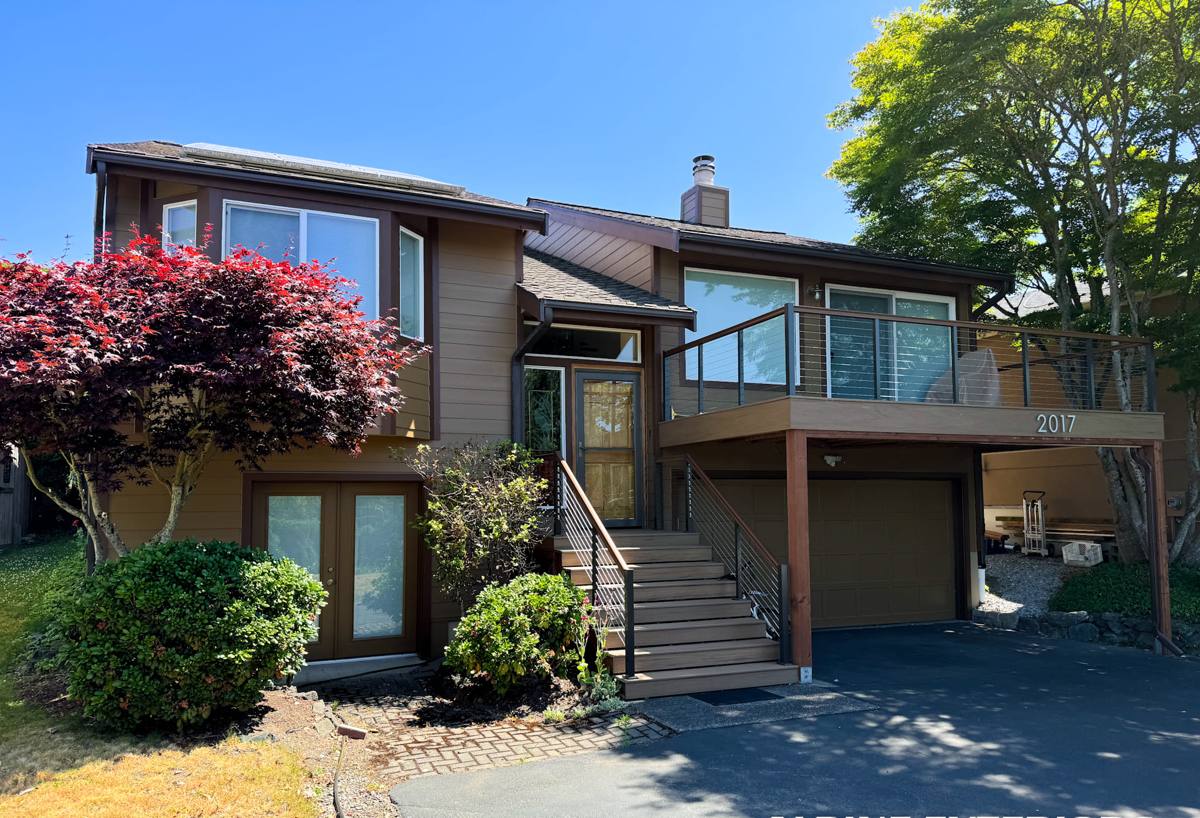
What Ferndale and Sudden Valley Homes Are Up Against
Whatcom County's climate isn't extreme in temperature, but it's relentless in moisture exposure. That combination — mild temperatures with near-constant humidity and rain — is exactly what accelerates rot, mildew, and moss growth around window openings that aren't detailed correctly.
- Salt air: Proximity to marine air accelerates corrosion on unprotected fasteners, hinges, and metal flashing components. Material selection matters more here than in drier inland areas.
- Driving rain: Wind-driven rain doesn't just fall on a window, it pushes against and around it. Flashing and sealant details have to manage water that's actively being forced sideways and upward, not just water running downhill.
- Moss and organic growth: Constant dampness feeds moss and algae on sills, trim, and anywhere water sits instead of draining. Left unaddressed, that growth holds moisture against wood and finishes and shortens their life.
- Long wet season: There are fewer dry-weather windows to work in, which means installation sequencing and temporary weather protection matter more than they would in a drier climate.
What a Correct New-Construction Window Installation Actually Involves
Rough Opening Preparation
Before a window ever goes into the opening, the rough framing needs to be checked for square, level, and correct dimensions. An opening that's out of square forces shims and compensations later that can compromise the seal. We also confirm the opening is sized to the manufacturer's specification with the correct margin for flashing and air gap — not cut tight "to make it fit."
Weather-Resistive Barrier and Flashing Sequence
This is the part of the job that matters most and shows least once the house is finished. The weather-resistive barrier (house wrap) has to be lapped correctly, and the flashing at the window has to be integrated with it in the right order — sill pan first, then side flashing, then head flashing — so that water is always directed out and down, never into a seam that traps it. In a climate with as much driving rain as this one, a flashing sequence installed out of order is often the single biggest cause of hidden water damage years down the line.
Sill Pan Flashing
A sill pan creates a dedicated drainage path at the bottom of the rough opening, so that any water that does get past the window — through a failed seal, wind-driven rain, or condensation — has somewhere to go besides into the framing. This is inexpensive insurance during new construction and effectively impossible to add later without removing the window.
Fastening and Nail-Fin Installation
New-construction windows typically use a nail fin (also called a flange) that gets fastened directly to the sheathing. Fastener spacing, type, and corrosion resistance all matter — in a coastal-influenced climate like this one, standard fasteners can corrode faster than the window itself ages, so we use fasteners rated for the exposure.
Sealant and Backer Rod
Sealant is the last line of defense, not the first. It should be used to manage the small gaps the flashing and drainage plane don't cover — not as a substitute for correct flashing. We use backer rod where gaps are too wide for sealant alone, and we choose sealants rated for the temperature and moisture range they'll actually face here, not a generic all-purpose product.
Insulation and Air Sealing at the Perimeter
Once the window is set and flashed, the gap between the frame and the rough opening gets air-sealed and insulated — usually with a low-expansion foam or backer rod and sealant, never a foam that expands hard enough to bow the frame out of square. A bowed frame won't operate correctly and can compromise the seal for the life of the window.
Our Process for New-Construction Window Work
- Plan review: We review window schedules and rough opening dimensions against the actual framing before installation day, so any discrepancies get caught while they're still cheap to fix.
- Opening inspection: Every rough opening is checked for square, plumb, and correct size before a window goes in.
- Sill pan and flashing installation: Sill pans go in first, followed by the correct WRB and flashing lap sequence around each opening.
- Window setting: Windows are set, shimmed as needed for square and level, and fastened per manufacturer spec with corrosion-appropriate fasteners.
- Head flashing and integration: Head flashing is installed and integrated with the house wrap so water sheds outward, not into the wall.
- Sealing and insulating the perimeter: Interior and exterior gaps are sealed and insulated without over-expanding foam or bridging the drainage plane.
- Final check: Every window is operated, checked for square reveal lines, and inspected for a clean, weathertight installation before we move to trim and siding.
We sequence window installation around the weather when we can. In a county where extended dry stretches aren't guaranteed, especially outside summer months, we plan openings so they aren't left exposed longer than necessary and use temporary protection when a weather window closes faster than expected.
Choosing Windows and Materials for This Climate
Sudden Valley's exposure to salt-influenced air and sustained damp conditions makes frame material and hardware selection a real decision, not a cosmetic one. The table below outlines honest trade-offs for common new-construction frame materials in this specific climate — not a ranking of "best," since the right choice depends on budget, architectural style, and maintenance appetite.
| Frame Material | Moisture & Salt Air Behavior | Maintenance | Typical Trade-Off |
|---|---|---|---|
| Vinyl | Doesn't corrode or rot; performs well in damp, salt-influenced air | Low — occasional cleaning | Frame color and sightlines are less flexible than wood or fiberglass |
| Fiberglass | Very stable in moisture and temperature swings; strong resistance to warping | Low | Higher upfront cost than vinyl |
| Wood (clad exterior) | Exterior cladding protects the wood if flashing and finishes are maintained; interior wood still needs care | Moderate — finish and seals need periodic attention | Best appearance for some styles, but least forgiving of installation or maintenance lapses in this climate |
| Aluminum | Prone to corrosion in salt-influenced air unless properly finished/anodized | Moderate to high | Slim sightlines, but our standard is to avoid it in directly exposed, salt-influenced locations unless properly specified |
Whatever frame material a homeowner or builder chooses, we install it with the same flashing and drainage discipline. The frame material affects long-term maintenance; the installation quality determines whether water gets into the wall at all.
Why Hiring a Crew That Already Works Sudden Valley Matters
New-construction window installation looks similar on paper everywhere, but the details that actually matter shift with the climate. A crew that mostly works drier inland regions may not default to sill pan flashing on every opening, may not think twice about standard-grade fasteners, and may not build in the drainage margin that this area's rain load calls for. None of that shows up as a problem on installation day — it shows up two, five, or ten years later as staining, soft trim, or a moss line creeping up from the sill.
Working regularly in Ferndale and the surrounding Whatcom County communities means we're not guessing at how this climate treats a window opening over time — we've seen which details hold up and which ones don't. That shapes how we sequence flashing, which fasteners and sealants we default to, and how we plan around the wet season instead of working around it.
A Practical Checklist for Homeowners and Builders
- Confirm sill pan flashing is standard on every opening, not just the exposed ones.
- Ask what fastener and flashing materials are specified for salt-influenced, coastal-adjacent conditions.
- Confirm the flashing lap sequence (sill, then jambs, then head) integrates properly with the house wrap.
- Ask how the crew protects open rough openings during extended wet weather.
- Confirm foam and sealant products are chosen for the actual temperature and moisture range, not a generic default.
- Ask to see the reveal lines checked for square once windows are set — a small detail that reflects overall installation care.
Timing New-Construction Window Work Around This Climate
Whatcom County's wet season runs long, and Sudden Valley's setting doesn't give much of a break from it. That doesn't mean window installation stops for months at a time — it means the sequencing has to account for it. We coordinate window delivery and installation with framing progress so openings aren't sitting exposed longer than necessary, and we use temporary weather protection on openings when a forecast window closes sooner than planned. On a new build, the goal is to get from framed opening to flashed, sealed window in as tight a window as the schedule allows, so the framing underneath never takes on moisture it shouldn't.
What Happens If This Is Done Wrong
Because new-construction window flashing gets covered by siding and trim almost immediately, mistakes made during installation typically don't announce themselves right away. The common failure pattern in this climate is water finding its way past a sealant-only seal or a skipped sill pan, tracking into the framing, and not showing up as visible staining or soft wood until well after the one-year mark — by which point it's a repair, not a callback. That's the core reason new-construction window installation is worth getting right the first time rather than treating it as a step to move past quickly on the way to siding and finish work.
Get a Free, No-Pressure Estimate
If you're building new in Sudden Valley or elsewhere around Ferndale and want window installation done with this area's climate actually factored in, we're happy to walk through your plans and give you a straightforward estimate — no pressure, no upsell. Use the form below to get started.