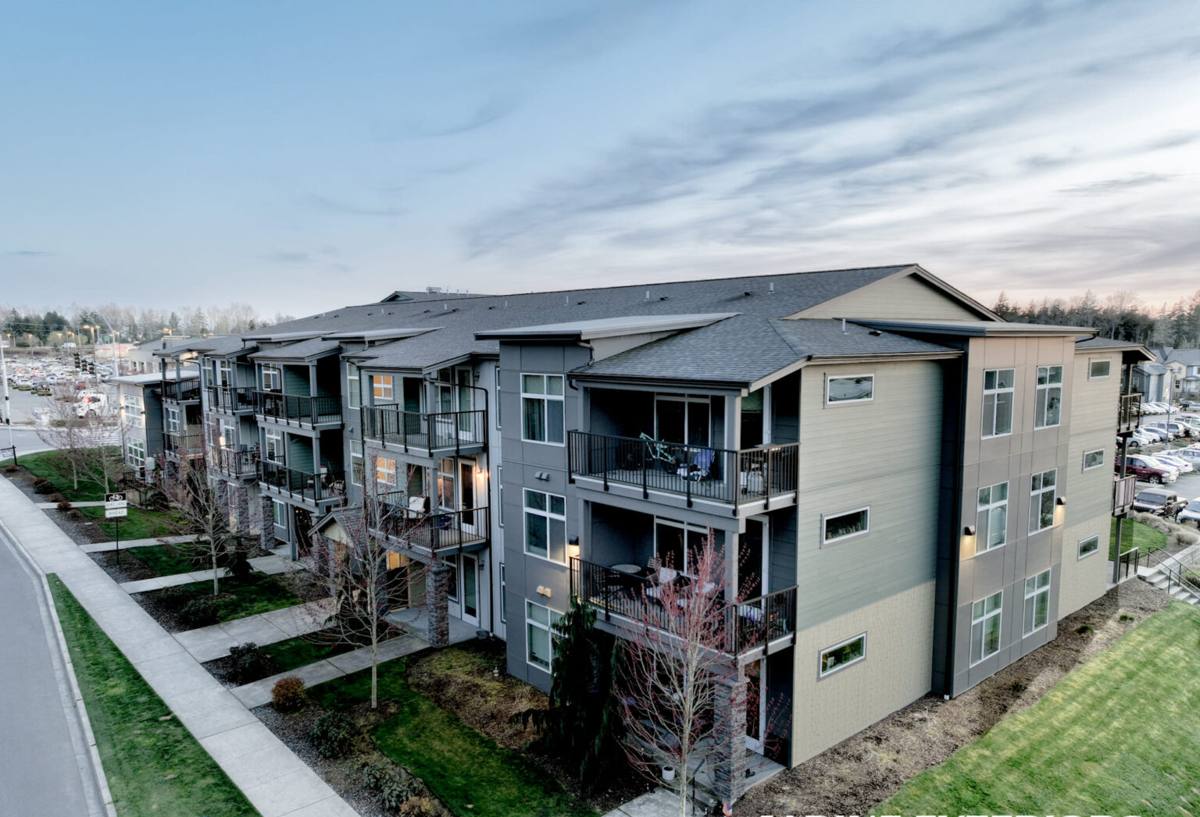
 Ferndale Exterior
 Why Window Installation Is Different in Bellingham
Bellingham sits close enough to the water that salt-laden air, near-constant winter rain, and a long moss season all put extra stress on a home's exterior envelope — and windows are one of the first places that stress shows up. A window that's a perfectly good product on paper can still fail early if it's installed without accounting for how water moves around a house in this part of Whatcom County. We've built our installation process around that reality rather than a generic national standard.
The issue isn't usually the glass itself. It's what happens at the edges — the flashing, the sill pan, the sealant joints, and the fasteners — where wind-driven rain is pushed sideways into gaps that would stay dry in a calmer climate. Get that detail work wrong, and a homeowner ends up with hidden rot inside the wall cavity years before the window itself would ever wear out.
What Local Homes Actually Need From Their Windows
Bellingham's housing stock spans a wide range of eras — older wood-frame homes with original single-pane sashes, mid-century construction, and newer builds with code-compliant vinyl or fiberglass units already in place. Each category has a different failure pattern, and a correct installation looks a little different for each:
- Older wood-sash homes: often have rot hidden behind trim, undersized or missing flashing, and openings that have shifted slightly out of square over the decades.
- Mid-century homes: frequently have aluminum-frame windows that condense heavily and conduct cold straight through the frame.
- Newer homes: usually just need proper reinstallation practices carried forward — but builder-grade units are sometimes installed with minimal sealant and no back-dam, which is fine until a hard winter storm proves otherwise.
In every case, the goal is the same: keep bulk water out, manage the small amount that inevitably gets past the outer defenses, and keep conditioned air from leaking around the frame.
Signs Your Current Windows Are Struggling
Because Bellingham's weather applies steady pressure rather than sudden extremes, window failure here tends to be gradual. Homeowners often notice one or two of these signs long before a window visibly fails:
- Fogging or moisture trapped between panes of a double-pane unit (a sign the seal has failed)
- Soft or discolored trim, sill, or drywall directly below or around a window
- A musty smell near a window that shows up mainly during the wettest months
- Visible moss or dark streaking on wood trim near the frame
- Drafts you can feel with a hand held near the frame on a windy day
- Windows that are difficult to open, close, or latch — often a sign the frame has racked slightly
- Condensation forming on the inside of the glass every morning in winter
Any one of these on its own isn't an emergency. Several of them together, especially on a west- or south-facing wall that takes the brunt of driving rain, usually means it's time for a real assessment rather than another caulk-and-hope patch.
What a Correct Installation Actually Involves
Flashing and Water Management
This is the part that matters most in our climate and the part most likely to get shortcut on a rushed job. A correct installation includes a sloped sill pan so any water that gets past the window has somewhere to go besides the wall cavity, properly lapped flashing tape integrated with the house wrap (not just caulk bridging the gap), and a head flashing detail that sheds water forward and away from the opening rather than letting it wick backward under wind pressure.
Fasteners and Structural Fit
Windows need to be shimmed plumb, level, and square before they're ever screwed in — not just pushed into the rough opening and fastened wherever it happens to land. Poor fit puts uneven stress on the frame, which is what causes hardware to bind or fail early, and it can also open small gaps that don't show up until the next windstorm pushes rain sideways into them.
Insulation and Air Sealing
The gap between the window frame and the rough opening needs to be insulated without overpacking it, which can bow the frame inward. Low-expansion foam or backer rod and sealant, used correctly, keeps conditioned air in without distorting the unit.
Finish and Trim Work
Exterior trim, caulking, and paint or sealant are the last line of defense and also the part most exposed to moss growth and salt air corrosion over time. We use exterior-rated sealants and finish details built to be inspected and refreshed periodically, not treated as a one-time seal-it-and-forget-it step.
Choosing the Right Window for a Marine Climate
There's no single "best" frame material — the right choice depends on the home, the budget, and how much maintenance a homeowner is realistically willing to do. Here's how the common options generally compare for a Whatcom County home:
| Frame Material | Moisture Behavior | Maintenance | Typical Trade-off |
|---|---|---|---|
| Vinyl | Won't rot or corrode; unaffected by salt air | Low — occasional cleaning | Frame color/finish options are more limited than wood or fiberglass |
| Fiberglass | Very stable in wet and dry cycles; holds paint well | Low to moderate | Higher upfront cost than vinyl |
| Wood (clad exterior) | Interior wood needs protection from condensation; exterior cladding shields it from rain | Higher — finish and seals need periodic attention | Best look for period-correct older homes, but the most maintenance-sensitive choice here |
| Aluminum | Conducts cold and condenses heavily in our winters | Low | We generally don't recommend it for new installs in this climate due to condensation and heat loss |
We also pay attention to glass package — a low-E coating with argon gas fill makes a real difference here, not for extreme heat like other regions worry about, but for cutting condensation and steady heat loss during our long, damp, mild winters.
Our Installation Process
1. On-Site Assessment
We look at the existing opening, check for hidden moisture or rot around the frame, and measure for a precise fit rather than assuming a standard size will do.
2. Removal and Opening Prep
Old units come out carefully so we can inspect the rough opening, sheathing, and existing flashing. Any rot or damage gets addressed before a new window ever goes in — installing a new window over a compromised opening just hides the problem for a while.
3. Flashing, Setting, and Sealing
Sill pan, flashing integration, shimming, fastening, insulation, and sealant are done in sequence, with each layer built to shed water to the layer below it.
4. Interior and Exterior Finish
Trim, caulking, and touch-up finish work are completed to match the home, with attention to the joints most exposed to wind-driven rain.
5. Final Check
We test operation, check the seal, and walk the job with the homeowner before calling it done.
What Affects the Cost
Every home is different, so exact pricing depends on a site visit — but these are the main factors that move the number up or down:
| Factor | Why It Matters |
|---|---|
| Number of windows | Per-unit cost typically drops on larger jobs due to shared setup and crew time |
| Frame material | Vinyl is generally the most affordable; fiberglass and wood-clad cost more upfront |
| Existing damage | Rot or structural repair at the opening adds time and material beyond the window itself |
| Story height and access | Second-story or hard-to-reach windows require more setup time and equipment |
| Trim and finish scope | Matching existing trim profiles or repainting adds labor beyond a basic swap |
We'll always walk through these factors on-site so there are no surprises once work starts.
Why Hiring a Crew That Already Works in Bellingham Matters
A lot of window problems we get called to fix aren't from bad products — they're from installation crews unfamiliar with how this specific climate behaves, using techniques that would be fine in a drier region but leave gaps for driving rain to exploit here. A crew that regularly works Bellingham and the rest of Whatcom County already knows which wall orientations take the worst weather, how moss and moisture typically find their way into older trim details, and what local permitting and inspection expectations look like — so the job gets done right the first time instead of needing a callback after the first real winter storm.
If you're noticing drafts, moisture, or aging windows on your Bellingham home, we're happy to take a look and give you a straightforward, no-pressure estimate — just fill out the form below.