 Ferndale Exterior
 Why Blaine Homes Are Hard on Windows
Blaine sits right on the water at the northern edge of Whatcom County, and that location comes with a specific set of building challenges. Homes here take on salt-laden air off the bay, frequent wind-driven rain, and long stretches of damp, overcast weather that keep moisture sitting against building materials far longer than it would inland. Add in the moss and algae growth that thrives in our mild, wet winters, and you have conditions that will find every weak point in a window's seal, frame, and flashing over time.
Older windows in this area often show their age faster than the same product would in a drier climate. Aluminum frames pit and corrode near the coast. Wood sashes that aren't properly maintained take on moisture and start to soften. Seals that were adequate when installed can fail years ahead of schedule once salt air gets into the mix. None of this means windows can't last decades here — it means the installation has to be done with this climate in mind from the start, not treated the same as a job in a drier part of the state.
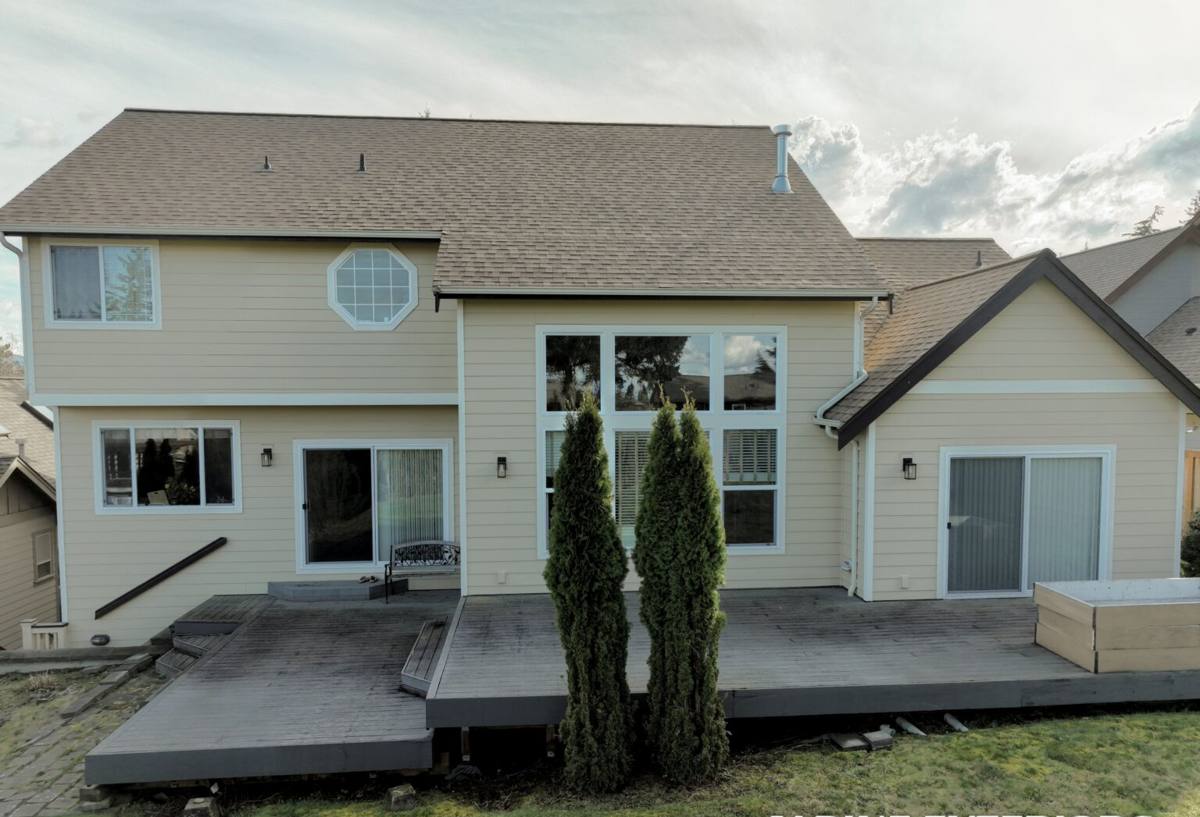
Signs a Blaine Home Needs New Windows
Homeowners usually notice the same handful of warning signs before calling us. Knowing what to look for can save you from a small fix turning into a bigger repair.
- Fogging or a cloudy haze between panes on double- or triple-glazed units — a sign the seal has failed and the insulating gas has escaped
- Drafts you can feel near the frame, especially during Blaine's windier winter storms
- Wood trim or sills that feel soft, spongy, or show dark staining
- Difficulty opening, closing, or locking a window that used to operate smoothly
- Visible corrosion or pitting on aluminum frames
- Condensation forming on the inside of the glass regularly, even when the home isn't especially humid
- Noticeable increases in heating costs without a clear explanation
Any one of these on its own might not mean full replacement, but a combination of two or three is usually a sign the windows are past the point where repair makes sense.
What a Correct Window Installation Actually Involves
Window installation looks straightforward from the outside — pull the old unit, set the new one, trim it out. In practice, the parts that determine whether a window lasts 20 years or fails in 5 are mostly hidden once the job is done. This is where corners get cut on rushed jobs, and it's exactly where a coastal climate like Blaine's punishes shortcuts.
Flashing and Water Management
Every window opening needs a flashing system that directs water down and out, never allowing it to sit against the framing or wick into the wall cavity. In a location that gets driving, wind-pushed rain, this matters more than it does in calmer climates — water doesn't just fall straight down here, it gets pushed sideways into the wall.
Air and Moisture Sealing
The gap between the window unit and the rough opening needs to be sealed with the right materials — typically a combination of sill pan flashing, self-adhered flashing tape, and low-expansion foam or backer rod and sealant — not just caulk smeared around the trim. Done wrong, this is the single most common cause of early window failure we see when we're called out to look at a problem installation.
Proper Fit and Fastening
Windows need to be shimmed level, plumb, and square before they're fastened, and fastened according to the manufacturer's schedule to keep the warranty valid. A window that's slightly out of square will bind, leak, or fail its seals years before it should.
Interior and Exterior Finish Work
Once the window is set and sealed, trim and finish work need to be completed in a way that doesn't trap moisture behind the wall — matching existing siding and trim details so the finished product looks like it belongs on the house, not like an afterthought.
Choosing the Right Window Material for the Coast
Frame material matters more here than in a lot of the state, because you're weighing salt exposure, moisture, and our long moss season against cost and appearance. There's no single right answer for every home — it depends on your budget, your home's style, and how much upkeep you want to take on.
| Frame Material | How It Handles Blaine's Climate | Maintenance |
|---|---|---|
| Vinyl | Resists corrosion and moisture well; a common, cost-effective choice for coastal homes | Low — occasional cleaning |
| Fiberglass | Very stable in temperature swings and moisture; holds up well long-term near salt air | Low |
| Wood | Classic look but needs consistent upkeep to resist moisture intrusion and rot in a wet climate | High — regular painting/sealing |
| Aluminum | Prone to pitting and corrosion in salt air unless it's a marine-grade or well-coated product | Moderate to high |
| Wood-clad (wood interior, metal or vinyl exterior) | Combines interior wood look with a more weather-resistant exterior shell | Low to moderate |
For most Blaine homes we work on, vinyl or fiberglass frames give the best long-term balance of durability and cost. We'll still install quality wood windows when that's what a homeowner wants for the look, but we're upfront that they demand more maintenance in this environment — that's a trade-off worth understanding before you commit, not a surprise after the fact.
Glass and Performance Options Worth Considering
Beyond the frame, the glass package affects comfort and energy costs. Double-pane windows with a low-E coating and argon fill are the standard baseline for our climate. Triple-pane adds further insulation value and can help with sound dampening, which matters if a home is closer to road noise or open water where wind carries sound further. We'll walk through what makes sense for your specific home rather than pushing the most expensive option by default — for a lot of houses, a well-installed double-pane low-E window is the right call.
Our Installation Process
- On-site assessment: We look at your existing windows, framing condition, and any signs of water intrusion before recommending anything.
- Product selection: We walk through frame material, glass package, and style options based on your home, budget, and priorities.
- Measurement and ordering: Precise measurements matter — an ill-fitting window creates gaps that no amount of caulk can fully fix.
- Removal and inspection: When we pull the old window, we check the framing underneath for hidden rot or moisture damage before it gets covered back up.
- Flashing and sealing: We install sill pan flashing and weather-resistant barriers built for wind-driven rain, not a bare minimum caulk job.
- Setting and fastening: The window is shimmed, leveled, and fastened to manufacturer spec to keep both performance and warranty coverage intact.
- Finish work: Interior and exterior trim is completed to match your home, and everything is cleaned up before we leave.
- Final walkthrough: We test operation, check the seals, and go over care and maintenance with you directly.
What Affects the Cost of Window Installation
Every home is different, but a few factors consistently move the price up or down. We give straight estimates based on your actual home rather than a one-size number pulled from a brochure.
| Factor | How It Affects Cost |
|---|---|
| Frame material | Vinyl is typically the most budget-friendly; fiberglass and wood cost more upfront |
| Number of windows | Whole-house replacements often bring a better per-window cost than a single unit |
| Existing damage | Rotted framing or water damage found during removal adds repair work before the new window goes in |
| Window size and style | Large picture windows, bays, or custom shapes cost more than standard double-hung sizes |
| Glass package | Upgrading to triple-pane or specialty coatings adds cost but can improve comfort and efficiency |
| Access and site conditions | Second-story or hard-to-access windows can add labor time |
Why Local, Blaine-Familiar Experience Matters
Window installation isn't identical everywhere in Washington. A crew that mostly works drier inland climates may not think twice about details that matter a lot right on the water — like how aggressively wind pushes rain into a wall assembly, or how quickly moss and algae take hold on north-facing trim once winter sets in. We work throughout Whatcom County, including Ferndale, Blaine, and the surrounding coastal communities, so we're used to building in these conditions rather than adjusting for them after the fact.
That familiarity shows up in small decisions — the flashing detail we use on a west-facing wall that catches the worst of the weather, how we sequence a job around a wet forecast, or which frame materials we steer homeowners toward based on how we've seen them perform in this specific climate over time. It's the difference between a window that's installed correctly on paper and one that's actually built for where it sits.
Maintaining Your New Windows in a Coastal Climate
A properly installed window still benefits from some basic upkeep, especially given our moss and salt air exposure.
- Rinse frames and glass periodically to clear salt residue, especially on sides facing the water
- Keep weep holes clear so water can drain out of the frame as designed
- Check exterior caulking annually and touch up any cracked or separated sealant
- Remove moss or algae buildup on surrounding trim before it holds moisture against the wall
- Operate locks and hardware periodically to keep mechanisms from seizing
- Watch for soft spots in surrounding wood trim as an early warning sign of a developing leak
If your windows in Blaine are drafty, fogged, hard to operate, or just due for an upgrade, we're happy to take a look and give you a straightforward, no-pressure estimate. Use the form below to get started.