 Ferndale Exterior
 Building a Deck That Can Handle Bellingham's Weather
Bellingham sits close enough to the water that salt air is a real factor in how a deck ages, and far enough into the Pacific Northwest's wet season that standing water, moss, and slow-drying wood are constant threats to anything built outdoors. A deck built here doesn't fail the same way one fails in a dry climate. It fails from the ground up and from the fasteners out — hidden rot in framing, corroding hardware, and a slick green film that builds up faster than most homeowners expect. Building a deck correctly in this area means designing for water from day one, not treating moisture as an afterthought.
This page covers what we actually do differently when we build a deck for a Bellingham home: the materials that hold up, the structural details that keep water moving instead of pooling, and the maintenance rhythm that keeps a deck looking and performing well for years instead of needing early repairs.
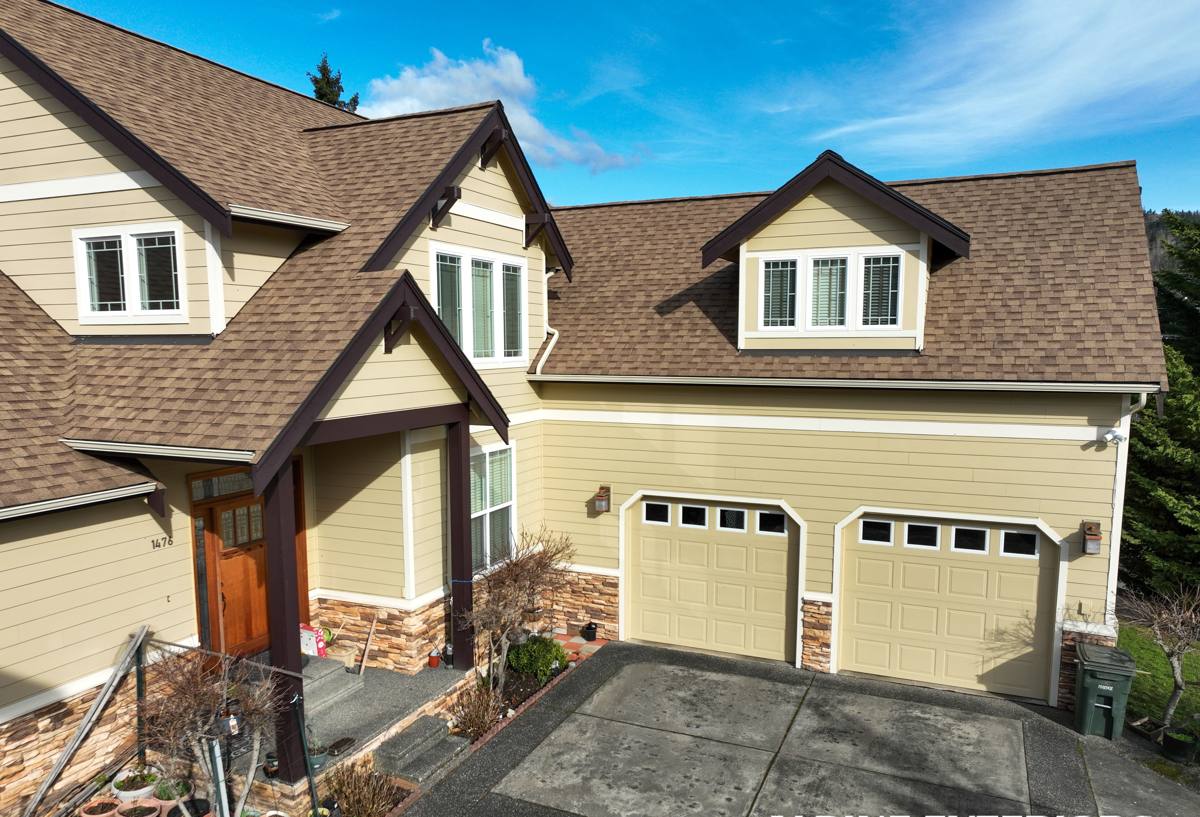
What Whatcom County's Climate Does to an Outdoor Deck
Moisture That Doesn't Let Up
Long stretches of overcast, drizzly weather mean deck surfaces and the framing underneath often don't get a real chance to dry out between rain events, especially from late fall through spring. Wood that stays damp for extended periods is far more prone to rot, warping, and fastener failure than wood that gets regular sun and airflow. This is less about any single storm and more about cumulative exposure over months.
Salt Air and Metal Fatigue
Proximity to Bellingham Bay and the Salish Sea puts a fine layer of salt-laden moisture into the air on a regular basis. Over time, that air accelerates corrosion on anything metal — screws, joist hangers, railing brackets, and post bases. A deck built with standard hardware in this environment can develop rust streaks and weakened connections years before an identical deck built inland would show the same wear.
A Long Moss and Algae Season
Shade, moisture, and mild temperatures are exactly what moss and algae need to establish themselves, and Whatcom County offers all three for much of the year. Left unaddressed, moss doesn't just look bad — it holds moisture against the decking surface and becomes genuinely slick and dangerous underfoot, particularly on stairs and shaded sections of a deck.
Choosing Decking Material for This Climate
There's no single "best" decking material for every home — the right choice depends on budget, how much upkeep the homeowner wants to do, and how exposed the deck is to shade and moisture. Here's how the common options actually compare under Bellingham conditions:
| Material | How It Handles Local Moisture | Maintenance Needed | Typical Lifespan Here |
|---|---|---|---|
| Pressure-treated wood | Resists rot well when properly sealed; needs consistent upkeep | Annual cleaning, resealing every 1-2 years | 15-20 years with upkeep |
| Cedar | Naturally moisture- and insect-resistant, but softer surface | Regular cleaning, periodic oiling/sealing | 15-20 years with upkeep |
| Composite decking | Doesn't absorb water or rot; can stay damp longer on the surface | Periodic washing to prevent surface algae/mildew | 25-30+ years |
| Untreated softwood | Poor moisture resistance in this climate | High — not recommended for exposed decking here | Significantly shorter |
We don't push one material on every job. What we won't do is install untreated or under-spec'd lumber in a ground-contact or shaded application just to hit a lower price point — that's a decision that shows up as a callback within a few wet seasons, and we'd rather be upfront about the trade-off before the build starts than explain a failure after.
Fasteners and Hardware Matter As Much As the Boards
Given the salt air in this area, we favor stainless steel or high-grade coated fasteners and connectors over standard galvanized hardware wherever the budget allows, especially for structural connections like ledger boards, joist hangers, and post bases. It's a modest cost difference during construction and a meaningful difference in how the deck's structural integrity holds up ten and fifteen years out.
What a Correctly Built Deck Involves Here
A deck that's going to hold up in Whatcom County needs a handful of details done right that aren't always obvious from the finished surface:
- Footings set below frost depth and sized appropriately for the soil conditions on the site
- Proper ledger board flashing where the deck attaches to the house, so water is directed away from the structure rather than into the rim joist
- Joist spacing and blocking sized for the decking material chosen, not a generic one-size-fits-all layout
- Board gapping that allows water to drain through rather than pool on the surface
- Under-deck airflow so the framing can dry out between rain events instead of staying damp
- Corrosion-resistant hardware at every structural connection point
- Guardrails and stair details that meet code height and spacing requirements
Skipping any one of these doesn't usually show up as an obvious problem on day one. It shows up two, five, or ten years later as soft framing, a loose ledger connection, or rusted-through hardware — the kind of issue that's expensive to fix because it means partially disassembling a deck that otherwise looks fine.
Our Deck Building Process for Bellingham Homes
- Site assessment — we look at drainage, sun/shade exposure, soil conditions, and how the deck will connect to the house before recommending a design or material.
- Design and material selection — we walk through the honest trade-offs between wood and composite options based on the homeowner's budget and how much maintenance they want to take on.
- Permitting — we handle the permit application and coordinate required inspections so the project stays compliant from the start.
- Foundation and framing — footings, posts, beams, and joists are built to the structural loads and drainage details this climate requires.
- Decking, railing, and stairs — installed with proper spacing, fastening, and code-compliant guardrail heights.
- Final walkthrough — we go over the finished deck with the homeowner, including basic maintenance guidance specific to the material installed.
Permits and Local Code Considerations
Deck construction in and around Bellingham is generally subject to building permit requirements once a deck exceeds a certain height or size, and projects can fall under either City of Bellingham or Whatcom County jurisdiction depending on where the property sits. Requirements can include setback distances from property lines, guardrail height and baluster spacing on elevated decks, and inspection sign-offs at the framing and final stages. Because these details vary by property and jurisdiction, we handle the permit process as part of the build rather than leaving homeowners to sort it out on their own.
Maintenance to Expect After Your Deck Is Built
No decking material in this region is truly "maintenance-free," even the ones marketed that way. What changes by material is how much work is involved and how often. A realistic maintenance rhythm for a Bellingham deck looks like this:
| Task | Recommended Frequency | Why It Matters Here |
|---|---|---|
| Surface cleaning / moss removal | 1-2 times per year, more in shaded areas | Prevents slick surfaces and moisture retention |
| Sealing or staining (wood decks) | Every 1-2 years | Maintains the moisture barrier that protects against rot |
| Hardware inspection | Annually | Catches corrosion or loosening before it becomes structural |
| Drainage/gap clearing | Seasonally, especially fall | Keeps leaves and debris from trapping moisture between boards |
Composite decking cuts down on the sealing and staining step, but it still needs periodic washing — algae and mildew can develop on any surface that stays damp and shaded long enough, regardless of material.
Why It Matters to Hire a Crew That Already Works in This Area
A deck builder who works primarily in drier inland climates may not default to the flashing details, fastener grade, or drainage spacing that a coastal Whatcom County property actually needs — not out of carelessness, but because it simply isn't the standard practice where they normally work. A crew that builds decks in and around Bellingham and Ferndale regularly sees how local conditions age a deck over time, which shapes the decisions made on day one of a new build: material selection, hardware grade, footing depth, and airflow design.
There's also a practical side to local experience — familiarity with the permitting process for the jurisdictions in this area, realistic timelines around the region's wetter months, and an understanding of how soil and drainage conditions common to Whatcom County properties affect footing placement.
Signs an Existing Deck Needs Attention
If you're weighing a repair against a full rebuild, a few warning signs are worth checking for before deciding:
- Soft, spongy, or discolored spots in the decking boards
- Rust staining around screws, brackets, or joist hangers
- Persistent moss or algae that returns quickly after cleaning
- Visible gaps or movement where the deck meets the house
- Wobbly railings or stair treads
- Standing water that doesn't drain within a reasonable time after rain
Some of these are simple fixes. Others — especially ledger board separation or rot in structural framing — are signs the deck's core structure has been compromised and a rebuild is the more honest recommendation than a patch job.
Get an Honest Look at Your Deck Project
Whether you're planning a new deck from scratch or trying to figure out whether an existing one is worth repairing, we're happy to take a look and give you a straightforward assessment. Use the form below to request a free, no-pressure estimate for your Bellingham property.