 Ferndale Exterior
 Windows Built for the Blaine Coastline, Not a Generic Climate Zone
Blaine sits close enough to the water that window assemblies here take a different kind of beating than they would twenty miles inland. Salt-laden air accelerates corrosion on hardware and fasteners, wind-driven rain finds its way into gaps that would stay dry in a calmer climate, and the long stretch of grey, damp months each year gives moss, algae, and mildew plenty of time to work into any spot where a window wasn't properly sealed. None of this is exotic information to anyone who has lived here a while — it's just the reality of building on this part of the Whatcom County coast. It does mean that a window job done to a generic national standard often underperforms here within a few years, even if the product itself was decent.
When we talk about "energy-efficient windows" for a Blaine home, we're not just talking about the glass package. We're talking about a window unit, frame, and installation method that's matched to salt exposure, sustained rain, and a moss season that can run most of the year in shaded, north-facing spots. Get any one of those pieces wrong and you end up with a window that looks fine at installation and starts failing — fogging, drafting, staining, or rotting the surrounding trim — well before it should.
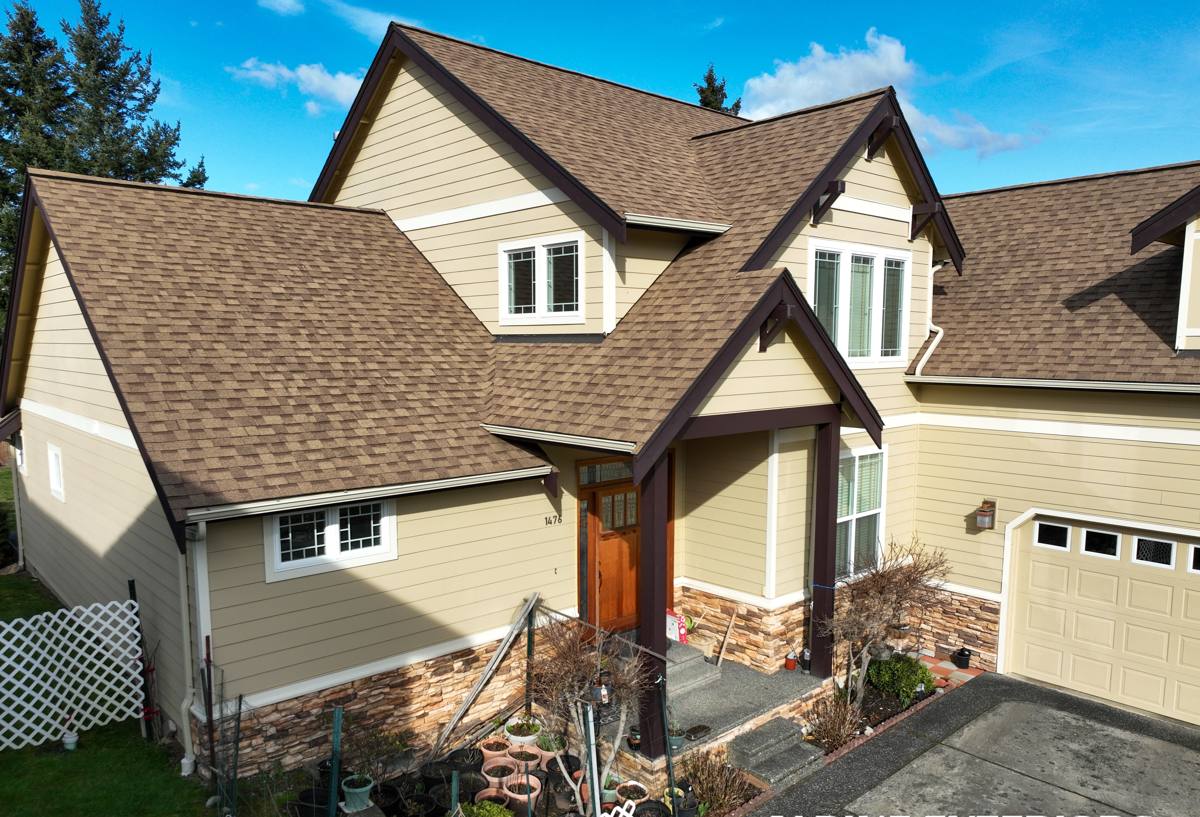
What "Energy-Efficient" Actually Means Here
Energy efficiency in a window comes down to a handful of measurable properties, and they matter differently depending on your exposure and orientation.
U-Factor
This measures how much heat the window lets escape. Lower is better. In a marine climate like ours, where the goal is mostly keeping steady, damp cold out rather than fighting extreme heat, U-factor is usually the number worth paying the most attention to.
Solar Heat Gain Coefficient (SHGC)
This measures how much solar heat comes through the glass. It matters more on south- and west-facing walls that get direct sun, and less on shaded or north-facing elevations, which is common on tree-covered Blaine lots.
Frame Material and Construction
The glass package gets most of the attention, but the frame and the seal between frame and glass are what determine how the window performs after five or ten winters of driving rain and salt air, not just on day one.
A window that's efficient on paper but poorly sealed at the frame, or installed with the wrong flashing sequence, will underperform a modestly-rated window that's installed correctly. We'd rather talk you through a realistic, well-installed option than sell you on a spec sheet number that won't hold up to local conditions.
Signs Your Current Windows Are Losing the Battle
Most homeowners don't think about window performance until something becomes obvious. Here's what we typically hear about, and what it usually points to:
- Condensation forming between the panes (not on the inside surface) — usually means the seal has failed and the insulating gas or air gap is compromised
- Noticeable draft near the frame on windy days, especially during storms coming off the water
- Soft or discolored trim and sills, particularly on the sides of the house that catch the most weather
- Visible moss, algae, or black staining collecting in the corners or along the bottom of the frame
- Windows that are difficult to open, close, or latch — often a sign the frame has swollen or shifted from moisture
- A noticeable difference in room temperature near the window compared to the rest of the room
- Rising heating costs without any other clear explanation
Any one of these on its own isn't necessarily an emergency, but a few of them together usually means the windows (or the way they were installed) are past their useful life for this climate.
What a Correct Installation Actually Involves
Energy-efficient windows only perform as well as the installation around them. Most window failures we see in this area trace back to installation shortcuts, not the product itself.
Removal and Opening Inspection
Once the old window is out, the rough opening gets inspected for hidden rot, water staining, or damaged sheathing before anything new goes in. In a wet climate, this step catches problems that would otherwise get sealed up and hidden behind the new unit.
Flashing and Water Management
This is the step that matters most for a house exposed to driving rain. Flashing has to be layered correctly — sill pan first, then side flashing, then head flashing — so that any water that does get behind the siding is directed back out, not trapped against the framing. Skipping or shortcutting this sequence is the single most common cause of rot around windows in this part of the state.
Air Sealing and Insulation
The gap between the window frame and the rough opening needs to be properly insulated and air-sealed, not just filled with whatever's on hand. Done wrong, this creates a cold spot and a condensation point even with a high-performing window installed.
Final Fit, Finish, and Hardware
Hardware gets checked for smooth, square operation, and exterior trim and caulking get finished in a way that sheds water rather than collecting it — an easy detail to get wrong on a house with any settling or slightly out-of-square openings, which is common in older Blaine-area homes.
Window Materials: How They Hold Up on the Blaine Coast
| Material | Salt Air / Moisture Resistance | Maintenance | Typical Lifespan Considerations |
|---|---|---|---|
| Vinyl | Good — won't corrode or rot, though color can fade over many years of sun and salt exposure | Low — occasional cleaning | Reliable, cost-effective option for most homes |
| Fiberglass | Very good — dimensionally stable in wet-dry cycles, resists warping | Low | Higher upfront cost, holds performance well over time |
| Aluminum | Prone to corrosion near salt air unless well-coated; conducts cold, which hurts efficiency | Moderate | Not our first recommendation for direct coastal exposure |
| Wood-Clad | Attractive, but the exposed wood interior and joints need consistent upkeep in a wet climate | Higher — regular inspection and finish maintenance | Best for homeowners committed to ongoing maintenance |
We're not going to tell you one material is right for every house — a lot depends on your home's exposure, your maintenance appetite, and your budget. We'll walk through the honest trade-offs for your specific situation rather than push whatever's easiest for us to install.
Our Process, Start to Finish
- On-site assessment — we look at your current windows, exposure direction, framing condition, and any existing moisture or draft issues
- Honest recommendation — we walk you through material and glazing options that make sense for your home and budget, without upselling features you don't need
- Written estimate — clear scope, materials, and cost factors, no surprise add-ons later
- Careful removal and opening inspection — checking for hidden damage before new windows go in
- Proper flashing, air sealing, and installation — done to hold up against driving rain and salt air, not just to pass a quick visual check
- Final walkthrough — we test operation, check the finish work, and answer any questions before we consider the job done
Cost Factors for a Blaine-Area Window Project
| Factor | Why It Affects Cost |
|---|---|
| Number and size of windows | More straightforward — larger and more openings mean more material and labor |
| Frame material | Vinyl, fiberglass, and wood-clad options carry different material costs |
| Condition of the rough opening | Hidden rot or framing damage found during removal adds repair work before the new window can go in |
| Access and exposure | Upper-story or hard-to-access windows on exposed elevations take more time and care |
| Trim and exterior finish work | Matching existing trim or upgrading finish details adds to the scope |
We'll never give you a real number without seeing the home. Broad ranges you might hear elsewhere rarely account for the condition of the opening underneath your existing windows, which is often the biggest variable.
Why a Crew That Already Works in Blaine Matters
A crew that installs windows across a range of climates might default to standard flashing and sealing practices that work fine in a drier region but fall short here. Working regularly in and around Ferndale and the Blaine area means we're used to the specific combination of salt exposure, sustained rain, and moss growth that this stretch of Whatcom County deals with year after year — and we build the installation around that reality instead of a one-size-fits-all approach. It also means we're not guessing at how local homes were originally built or what to expect when we open up an older window bay; we've seen the patterns before.
Keeping Efficient Windows Performing Through Whatcom County Winters
Even a well-installed window benefits from basic upkeep in this climate:
- Clear moss and debris from window sills and tracks before it holds moisture against the frame
- Check exterior caulking annually, especially after a hard winter, and touch up any cracked or shrunk sections
- Make sure weep holes (drainage points at the base of the frame) stay clear so water doesn't pool
- Operate windows through their full range a few times a year so hardware doesn't seize from disuse
- Watch for early signs of trim discoloration, which usually means water is getting somewhere it shouldn't
A few minutes of seasonal attention goes a long way toward getting the full lifespan out of an energy-efficient window investment in this climate.
If your windows are drafting, fogging, or just past their prime, we're happy to take a look and give you a straightforward, no-pressure estimate — use the form below to get started.