 Ferndale Exterior
 Deck Repair Built for Birch Bay's Coastline
Birch Bay sits right where Whatcom County meets Puget Sound wind and weather head-on. Decks out here take a different kind of beating than decks a few miles inland in Ferndale or Lynden. Salt-laden air off the water accelerates corrosion on anything metal. Driving rain off the bay finds its way into every seam, screw hole, and butt joint. And the long, damp moss season that runs from fall through spring keeps deck surfaces wet for weeks at a stretch, even when it isn't actively raining. A deck built or repaired without those specifics in mind tends to fail early — loose fasteners, soft boards, rusted hardware — well before it should.
We repair decks throughout Ferndale and Whatcom County, and Birch Bay decks get a specific level of attention because of how exposed they are. This page covers what actually goes wrong with decks in this area, what a correct repair looks like, and how we handle the job.
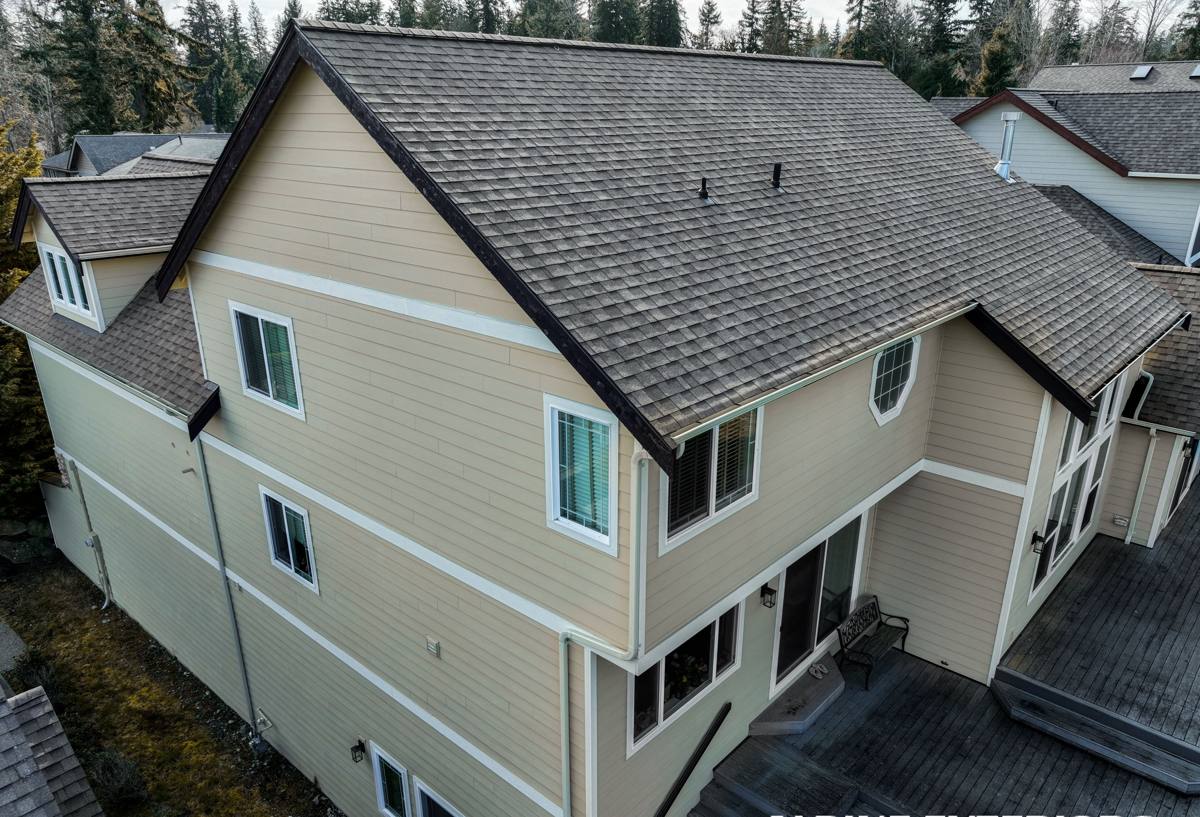
How Salt Air, Rain, and Moss Damage Birch Bay Decks
Salt Air and Corrosion
Salt in the air isn't just a beach-house problem for homes right on the water — it travels on wind and settles on surfaces well inland from the shoreline too. On a deck, the first casualties are almost always the metal parts: nails, screws, joist hangers, and railing hardware. Standard galvanized fasteners can start corroding faster near the coast than they would elsewhere in the county. Once a fastener rusts, it loses holding strength, and you start seeing boards that rock, squeak, or lift slightly at the ends.
Driving Rain and Water Intrusion
Wind-driven rain doesn't fall straight down — it gets pushed sideways into ledger boards, under railing posts, and into any gap where flashing is missing or has failed. Water that gets behind a ledger board (the board that attaches the deck to the house) is one of the more serious issues we find, because it can lead to rot in the framing and, in worse cases, in the house's rim joist. This kind of damage is often invisible from the top of the deck until it's fairly advanced.
Moss and Prolonged Moisture
Whatcom County's moss season is long, and Birch Bay's coastal humidity extends it further. Moss holds moisture against the wood surface, which keeps boards wetter for longer than rain alone would. Over time this softens the top layer of wood, makes surfaces slick and unsafe, and creates the damp conditions where rot gets started, especially on boards that don't get much direct sun.
Signs a Birch Bay Deck Needs Repair
Most deck problems out here show up gradually. Catching them early is the difference between a repair and a rebuild. Walk your deck and check for the following:
- Boards that flex, bounce, or feel soft underfoot, especially near the house or in shaded corners
- Visible rust staining around fastener heads or streaking down between boards
- Gaps opening up between the deck and the house siding or ledger board
- Railings or posts that wiggle when pushed, even slightly
- Green or black staining that keeps coming back within weeks of cleaning
- Nails backing out or screw heads sitting proud of the board surface
- Stairs that feel less solid than they used to, or noticeably squeak
- Discoloration or swelling around the ledger board where the deck meets the house
Any one of these on its own might be minor. Several at once, or anything involving the ledger board or main support posts, is worth a proper look before it's ignored through another wet season.
Common Deck Repairs We Handle in Birch Bay
Ledger Board and Structural Repairs
Because the ledger board is the connection point between the deck and the house, it's also the point most exposed to wind-driven rain running down the siding. When we find rot or water damage here, we address the framing and flashing, not just the surface — a repair that only patches what's visible tends to fail again within a season or two.
Fastener and Hardware Replacement
Corroded nails, screws, and joist hangers get replaced with fasteners rated for coastal and treated-lumber exposure. This is one of the most common repairs we do near the water, and it's often what's actually causing a deck to feel loose even when the boards themselves are fine.
Board Replacement
Individual boards that have gone soft, cupped, or split get pulled and replaced rather than left in place. Mixing rotten boards in with sound ones doesn't fix the underlying moisture issue and just means the same repair gets redone sooner.
Railing and Post Repair
Loose railings are a safety issue, not a cosmetic one. We check post connections down to the framing, not just the visible railing joint, since a wobbly rail is often a sign the post base has been sitting in moisture longer than it should have.
Surface and Fastener-Pattern Fixes
Popped nails, uneven boards, and slick, moss-prone spots often need more than a pressure wash. We address drainage and airflow under the deck where we can, since standing moisture underneath is a big driver of repeat moss and rot problems on shaded decks.
Repair or Replace? What We Look At
Not every deck problem calls for a full rebuild, and not every deck is worth patching indefinitely. Here's how we weigh it:
| Factor | Leans Toward Repair | Leans Toward Replacement |
|---|---|---|
| Ledger board / framing | Isolated, caught early | Widespread rot or repeated failures |
| Deck age | Under 10–15 years, well-built originally | Original construction is old or undersized for code |
| Extent of damage | A handful of boards or fasteners | Damage spread across most of the surface |
| Fastener corrosion | Localized to a few spots | Widespread rust throughout hardware |
| Post/support condition | Solid, just needs hardware | Soft or undersized posts and footings |
We'll tell you honestly which side of that line your deck is on, including if a repair now is reasonable but a rebuild is coming in a few years — that's useful information for planning, not a reason to upsell you today.
Our Deck Repair Process
1. On-Site Inspection
We check the deck surface, framing underneath where accessible, the ledger connection, posts, and railings. We're not just looking at what's obviously broken — we're checking the spots that tend to hide moisture damage in this climate, like under railing posts and behind the ledger.
2. Straightforward Assessment
You get a plain explanation of what's actually wrong, what caused it, and what the repair involves — including if we think replacement makes more sense than repair for part or all of the deck.
3. The Repair Itself
We remove and replace only what needs it — rotten framing, corroded hardware, damaged boards — and correct the underlying cause where we can, whether that's a flashing gap, poor drainage, or undersized fasteners, rather than just swapping materials and leaving the same conditions in place.
4. Final Check
Before we call it done, we walk the deck with you, check that railings and boards are solid, and go over any basic maintenance that will help the repair last through the next wet season.
Materials That Hold Up on the Coast
For fasteners, we use hardware rated for treated lumber and coastal exposure rather than standard-grade galvanized fasteners, since the standard-grade option is exactly what tends to fail early in salt air. For board replacement, the right choice depends on your existing deck — matching wood species and treatment where the deck is wood, or using compatible composite boards where that's what's already installed. We'll walk you through the trade-offs for your specific deck rather than defaulting to one material for every job; wood, treated lumber, and composite each have different maintenance needs and different moisture behavior, and the right call depends on your deck's exposure, age, and how you want to maintain it going forward.
Why a Crew That Already Works Birch Bay Matters
A lot of deck problems here aren't unusual in isolation — loose railings, a few soft boards, some rust on the hardware. What matters is recognizing the pattern quickly: that a wobbly railing near the water is worth checking the post base for rot, that a ledger board on a bay-facing wall needs a closer look at flashing, that moss coming back fast in one corner usually means a drainage or airflow issue underneath, not just a cleaning problem. That's the kind of judgment that comes from working decks in this specific stretch of Whatcom County repeatedly, not from a generic repair checklist. We're based in Ferndale and work Birch Bay regularly, so we're not guessing at what the salt air and driving rain do to a deck out here — we've seen it firsthand, repair after repair.
Get an Honest Look at Your Deck
If your Birch Bay deck has soft spots, loose railings, rusting hardware, or moss that won't stay gone, it's worth having someone look before another wet season adds to the damage. We offer a free, no-pressure estimate — we'll tell you straight what's going on and what it would take to fix it. Use the form below to get started.