 Ferndale Exterior
 Roof Repair in Birch Bay: A Different Job Than a Full Replacement
Roof repair is its own trade skill, not a smaller version of a full roof replacement. A good repair depends on correctly tracing where water is actually getting in, matching the fix to the existing roof system, and knowing when a section can be properly repaired versus when patching would just be delaying an inevitable full replacement. Get that judgment wrong and a homeowner either pays for a repair that fails again in a year, or pays for a full tear-off on a roof that only needed targeted work.
Birch Bay adds a layer most repair calls elsewhere don't have to account for. Sitting directly on the water in northern Whatcom County, homes here take a steady dose of salt-laden marine air, wind-driven rain that gets pushed sideways into roof details rather than falling straight down, and a moss season that can run most of the year on shaded or north-facing slopes. A repair that would hold up fine on a sheltered inland roof can fail early here if it doesn't account for that specific combination of stresses. This page focuses on what a correct roof repair looks like for a Birch Bay home — how we diagnose the actual problem, what separates a repair that lasts from one that doesn't, and how our process runs from the first call to the final walkthrough.
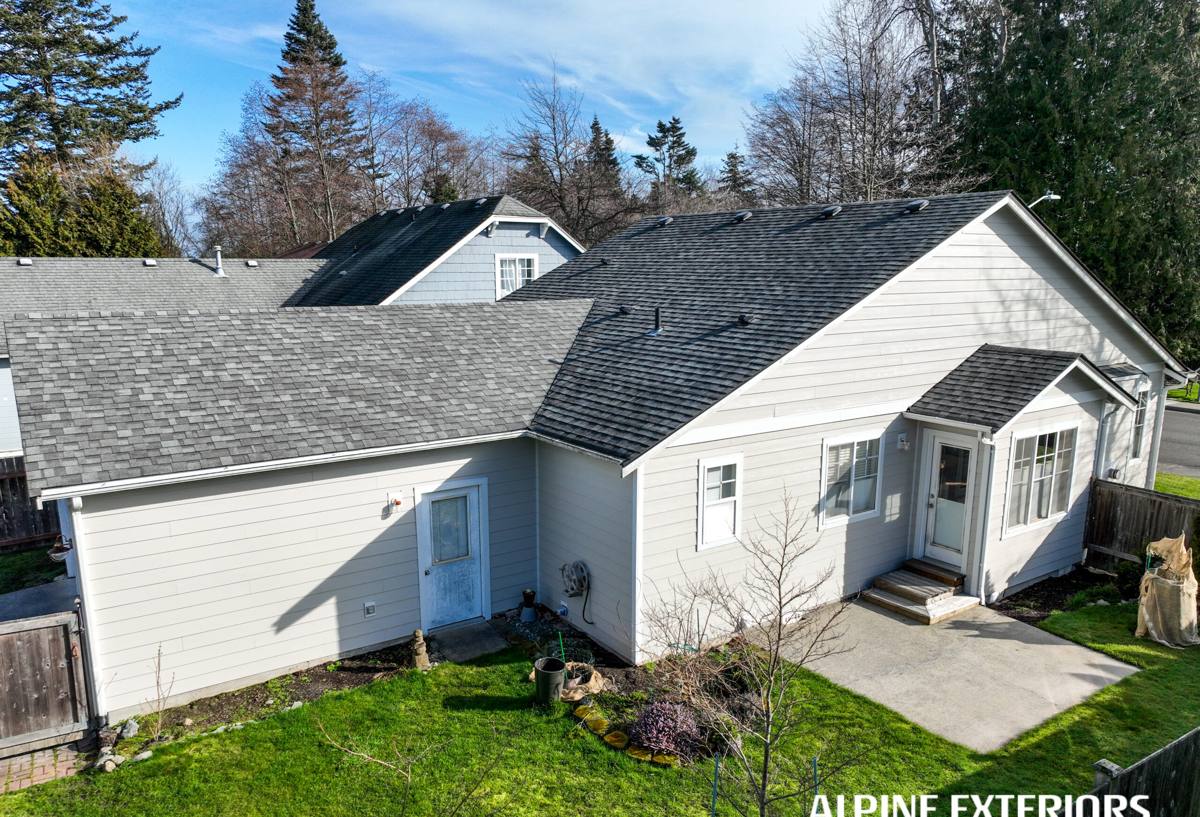
What Birch Bay's Waterfront Climate Does to a Roof Over Time
Salt Air and Corrosion
Direct exposure to the bay means more salt in the air here than in inland pockets of Ferndale and the rest of Whatcom County. Salt speeds up corrosion on exposed fasteners and flashing metal, and a corroded flashing detail at a valley, chimney, or wall transition is one of the most common sources of a leak that shows up years after the roof was otherwise sound. Repairs that reuse lower-grade or already-corroding metal without replacing it are a common reason the same leak comes back.
Wind-Driven Rain
Waterfront exposure also means more sustained wind, and wind-driven rain doesn't behave like a normal rainstorm. It gets forced sideways and even upward under shingle tabs, at ridge and hip lines, and around penetrations, finding gaps that would never see water on a calmer, more sheltered roof. A repair that only addresses the spot where water is dripping inside the house, without tracing the path back to where wind is actually driving it in, tends to leak again in the next storm.
A Long Moss Season
Mild temperatures, shade, and near-constant moisture add up to a moss season that runs long on shaded and north-facing roof planes across Birch Bay. Moss doesn't just look bad — it holds moisture against the roof surface and works under shingle edges and around flashing, which accelerates the exact kind of damage that turns into a repair call. Roofs that stay shaded for much of the day tend to need repair attention sooner than sun-exposed slopes on the same street.
Common Roof Repair Calls We See in Birch Bay
Most repair calls in this area fall into a handful of recurring categories. Recognizing which one applies helps set expectations before a crew even shows up.
- Flashing failures at valleys, chimneys, and skylights: Corroded or improperly lapped flashing is the single most common leak source we find, often well away from where the water actually shows up inside the house.
- Wind and storm damage: Lifted, cracked, or missing shingles after a windstorm, usually concentrated on exposed slopes facing the open water.
- Moss-related damage: Lifted shingle edges and granule loss on shaded slopes where moss has been established for a season or more.
- Valley leaks: Water intrusion where two roof planes meet, often from underlayment or flashing that wasn't built to handle wind-driven rain forced sideways into the valley.
- Deck-level rot: Soft or spongy decking discovered once shingles are pulled back, usually the result of a slow leak that went unnoticed for a long stretch of time.
- Ventilation-related issues: Premature shingle aging or moisture buildup in the attic from intake or exhaust ventilation that isn't balanced correctly.
How We Diagnose a Roof Repair Before We Touch Anything
A repair is only as good as the diagnosis behind it, and diagnosis is the step that gets rushed most often in this trade. We start every repair call by figuring out where water is actually entering, not just where it's showing up inside the house — those two points are often several feet apart, especially with wind-driven rain traveling sideways under roofing material before it finds a gap.
Inside and Outside Inspection
We check the attic and interior ceiling for staining, moisture, and the path water has traveled, then walk the roof itself to look for the source — damaged flashing, lifted shingles, moss buildup, or deteriorated underlayment. Matching what we see from both sides is what actually pins down the real point of entry.
Tracing the Full Extent of the Damage
Once we find the source, we check how far the damage has spread underneath — whether the decking underneath is still solid, whether surrounding shingles and underlayment have also been compromised, and whether the repair needs to extend beyond the immediate leak point to actually solve the problem. A repair that stops exactly at the visible symptom and ignores adjacent damage tends to need a second visit within a year or two.
Repair vs. Replacement: How We Help You Make That Call
Not every roof problem in Birch Bay needs a full replacement, and not every leak can be permanently solved with a patch. The honest answer depends on the roof's age, how widespread the damage is, and how much of the roof system is still sound underneath.
| Factor | Leans Toward Repair | Leans Toward Replacement |
|---|---|---|
| Roof age | Under roughly 15 years, with most of its expected lifespan remaining | Approaching or past the shingle manufacturer's rated lifespan |
| Extent of damage | Isolated to a specific area — one valley, one flashing point, one storm-damaged section | Spread across multiple roof planes or recurring in different spots |
| Deck condition | Solid decking found once the damaged area is opened up | Widespread soft spots or rot found across more than one section |
| Shingle condition elsewhere | Rest of the roof still has good granule coverage and flexibility | Granule loss, curling, or brittleness showing up across the whole roof |
| Repair history | First real repair call on this roof | Same area has already been patched more than once |
We'll tell you honestly which side of that table your roof falls on, including when a repair is genuinely the right call even though a replacement would be more profitable for us. A roof with real life left in it doesn't need to come off just because a repair is possible on it.
What a Correct Roof Repair Involves
Matching Materials to the Existing Roof
Shingle color, profile, and granule type vary between manufacturers and even between production runs of the same product line, so a repair patch can stand out visually even when the workmanship underneath is solid. We source materials as close a match as reasonably possible and set expectations up front about visible blending, since sun-faded existing shingles will never match a brand-new bundle perfectly.
Flashing Rebuilt, Not Just Resealed
Caulking over failing flashing is a short-term cover-up, not a repair. Where flashing is the actual problem, we rebuild the detail — new metal properly lapped and integrated with the underlayment and shingle courses — rather than sealing over corroded metal and calling it done.
Deck Repair When It's Needed
If we find soft or rotted decking once the damaged area is opened up, that gets replaced before anything new goes back on. Shingling over compromised decking just hides the problem under a fresh surface and guarantees a return visit later.
Addressing Moss, Not Just the Symptom
On shaded slopes where moss contributed to the damage, we address the moss itself as part of the repair, not just the shingles it affected, since leaving the underlying moisture and shade conditions unaddressed means the same damage pattern is likely to return.
Our Process for a Birch Bay Roof Repair Call
- In-person inspection: We walk the roof and check the attic ourselves, and don't quote repair work sight-unseen from a description over the phone.
- Written estimate: You get a clear explanation of what we found, what caused it, and what the repair involves — including an honest recommendation if replacement is actually the better long-term call.
- Scheduling around weather: Repair work depends on dry conditions to do it right, and we build reasonable flexibility into scheduling rather than rushing a repair between rain systems.
- The repair itself: Damaged material comes off, any deck issues get addressed, and flashing, underlayment, and shingles go back to manufacturer specification, not a shortcut version.
- Final walkthrough: We review the completed repair with you in person, including what we found and fixed, before we consider the job done.
Why Hiring a Crew That Already Works Birch Bay Matters
A crew that regularly handles roof repairs in Birch Bay has already seen how salt air corrodes underspecified flashing metal, how wind-driven rain off the water finds its way through gaps a calmer climate would never expose, and which roof orientations hold moss longest through the wet season. That's practical experience that shows up in how a leak gets traced and fixed, not just in the finished appearance of the repair.
It also matters after the repair is finished. A repair warranty is only as good as the company standing behind it, and a contractor with an ongoing, established presence in this part of Whatcom County is one you can actually reach if a question comes up later, rather than a name that showed up after a storm and moved on.
A Practical Checklist Before You Hire for a Roof Repair
- Do they inspect the roof and attic in person before quoting, rather than estimating from a phone description?
- Does the estimate explain what caused the damage, not just what work will be done?
- Are they upfront about whether repair is really the right call, or whether replacement would serve you better long-term?
- Do they carry current WA contractor licensing, liability insurance, and workers' compensation?
- Can they point to recent repair work in or near Birch Bay specifically?
- Is the warranty on the repair itself spelled out in writing, separate from any manufacturer material warranty?
Signs Your Birch Bay Roof Needs a Repair Call Now
Roof problems in this climate rarely announce themselves clearly. Catching these signs early is often the difference between a straightforward repair and a much larger job later.
- Water staining on an interior ceiling, especially after a storm with strong wind off the water
- Visible moss buildup or lifted shingle edges on shaded or north-facing roof sections
- Missing, cracked, or curling shingles following a windstorm
- Granules collecting heavily in gutters, suggesting shingles are wearing thin in that area
- A musty smell or visible moisture in the attic without an obvious source
If any of this sounds familiar, it's worth having someone look at it before the next stretch of wet weather turns a repair into a bigger problem.
If you're dealing with a leak or storm damage on a Birch Bay roof, we're glad to come take an honest look and give you a straight answer on what it actually needs. Use the form below to request a free, no-pressure estimate.