 Ferndale Exterior
 Board & Batten Siding for Blaine Homes
Blaine sits right on the water at the northern edge of Whatcom County, and that location shapes everything about how siding performs there. Vertical board and batten has a clean, distinctive look that a lot of homeowners in this area want — strong shadow lines, a farmhouse or Pacific Northwest coastal feel, and a profile that reads differently than the lap siding on most of the surrounding homes. But board and batten is also less forgiving of a sloppy install than horizontal lap siding, and Blaine's climate is exactly the kind of environment that finds those mistakes fast. This page covers what board and batten actually needs to hold up in Blaine, what a correct installation looks like, and why we install it the way we do.
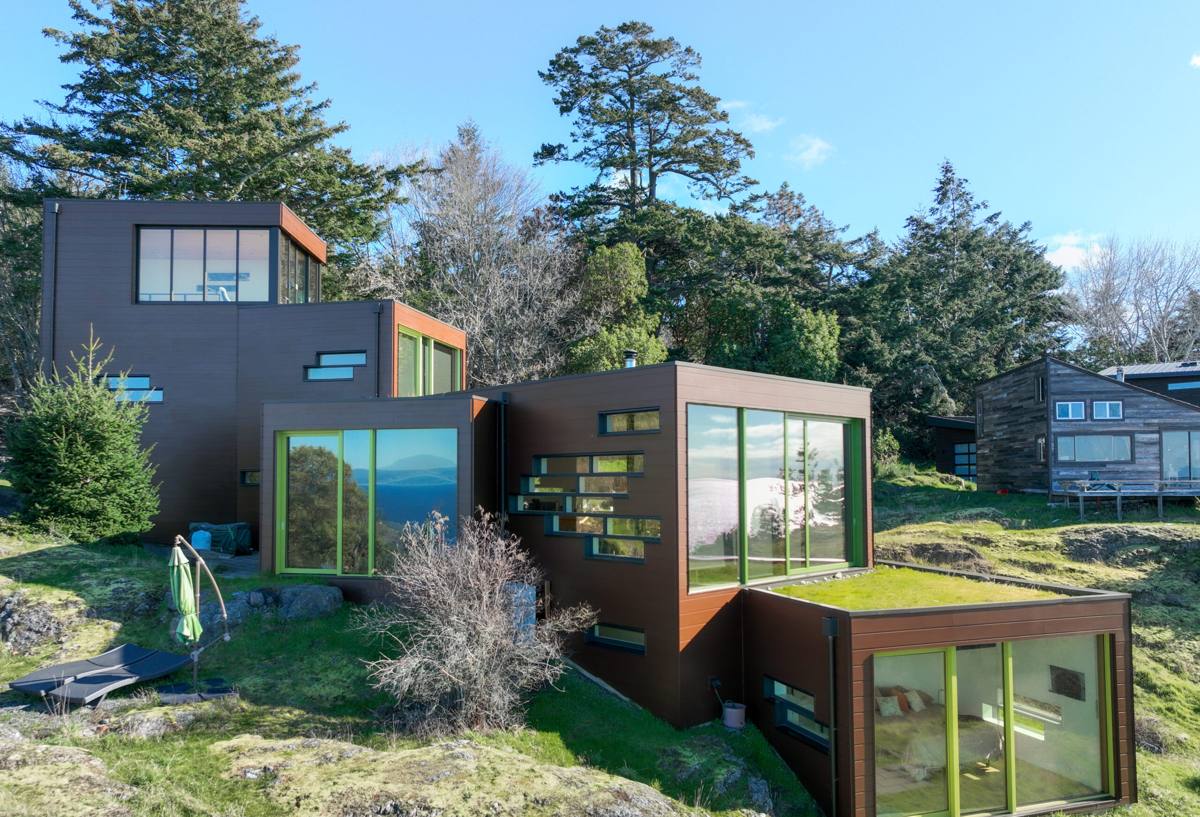
Why Blaine's Climate Is Hard on Vertical Siding
Ferndale Exterior Company works up and down this stretch of Whatcom County, and Blaine's exposure is some of the most demanding in our service area. A few things stack up against exterior cladding here specifically:
Salt Air
Homes close to the water take on airborne salt that settles on every exterior surface. Salt is corrosive to exposed metal fasteners, flashing, and trim, and it accelerates the breakdown of coatings and finishes that aren't built to handle it. On a vertical siding system with dozens of feet of exposed batten seams and nail lines, the fastener quality and finish durability matter more than they would on an inland home.
Driving Rain
Wind off the water pushes rain sideways, not just down. Vertical board and batten has more vertical seams per square foot of wall than horizontal lap siding, and every one of those seams is a place water can be forced into if the batten spacing, fastening, and underlying drainage plane aren't done correctly. This is a profile where wind-driven rain resistance is won or lost in the details, not in the siding material itself.
A Long Moss Season
Whatcom County's wet season runs long, and shaded, north-facing, or tree-sheltered walls stay damp for extended stretches. Moss and algae need that sustained moisture to establish, and once it takes hold on a batten or panel face it holds even more water against the surface. Siding that can't shed water quickly, or that has grain and texture that traps grime, becomes a long-term moss magnet in exactly the kind of shaded, damp wall sections common in Blaine.
None of these are exotic problems — they're the normal cost of living near the Salish Sea. But they mean board and batten siding in Blaine has to be installed with more attention to drainage, fastening, and finish durability than the same product would need a hundred miles inland.
What a Correct Board & Batten Installation Actually Involves
Board and batten looks simple from the curb — wide panels or boards with narrow strips covering the seams — but the assembly behind that look is doing real work. A correct installation includes:
- A continuous water-resistive barrier behind the siding, lapped correctly at every seam, window, and penetration
- A rainscreen gap (furring strips or a drainage mat) that lets any moisture that gets behind the siding drain and dry instead of sitting against the sheathing
- Correct batten spacing and fastening pattern so panels can move slightly with temperature and moisture changes without cracking or popping fasteners
- Stainless steel or hot-dip galvanized fasteners rated for coastal exposure, not standard-grade nails that will streak and corrode
- Proper flashing at every window, door, deck ledger, and roof intersection — the places where vertical siding is most likely to leak if flashing is skipped or reused from the old siding
- Correct clearance at the base of the wall so the siding never sits in contact with soil, concrete, or standing water
Skip any one of these and the siding can still look right for a while. The failures that show up on poorly installed vertical siding — staining, soft spots at the base, moss establishing along battens, fastener bleed — usually take a year or two of Blaine winters to appear, by which point the damage is behind the wall, not just on it.
The James Hardie Board & Batten System
Ferndale Exterior Company installs James Hardie exclusively, and board and batten is one of the profiles where that decision matters most. We use James Hardie's vertical panel siding paired with Hardie trim battens, engineered specifically as fiber cement rather than adapted from a horizontal lap product.
Why Fiber Cement for This Profile
Vertical siding with exposed batten seams needs a material that stays dimensionally stable across a wide humidity range, because every batten seam is a place where expansion and contraction shows up as a gap, a crack, or a stress point. James Hardie's fiber cement is engineered to resist the swelling, warping, and cupping that wood-based and engineered-wood alternatives are prone to in a consistently wet climate. It's also non-combustible, which matters given the wildfire smoke and dry-season risk that reaches even the wet side of the Cascades in late summer.
HZ5 Engineering
James Hardie makes climate-specific product lines, and the HZ5 formulation is built for the Pacific Northwest's wet, moderate climate rather than a generic national spec. That matters for a coastal town like Blaine, where the siding is exposed to sustained moisture and salt air for most of the year.
ColorPlus Finish
The factory-applied ColorPlus finish is baked on under controlled conditions and backed by its own finish warranty, which is a meaningful advantage on vertical siding specifically — batten seams and panel edges are where field-applied paint tends to fail first, since they take the most direct weather exposure. A factory finish holds color and resists fading and moisture intrusion at those seams far better than a coat of paint applied on site.
Board & Batten Compared to Other Siding Options
| Factor | Board & Batten (Hardie) | Horizontal Lap Siding | Vinyl Board & Batten |
|---|---|---|---|
| Look | Strong vertical shadow lines, farmhouse/coastal feel | Traditional, most common on existing homes | Similar look at a distance, less depth up close |
| Seams exposed to wind-driven rain | More seams, engineered rainscreen assembly required | Fewer vertical seams, laps shed water by design | More seams; sections can bow and gap over time |
| Salt air / fastener corrosion resistance | Strong, with correct fastener spec | Strong, with correct fastener spec | Fasteners less exposed but panels can become brittle |
| Moss/algae resistance | Sheds water well when installed with rainscreen | Sheds water well | Sheds water but traps grime in texture over time |
| Finish longevity | Factory ColorPlus finish, warrantied | Factory ColorPlus finish, warrantied | Color molded through, can fade and chalk |
Board and batten isn't the right fit for every wall or every budget, and we'll say so directly during an estimate. But when a homeowner wants that look, the material and the installation method matter more here than they would with lap siding on a sheltered inland lot.
Our Process for a Blaine Board & Batten Project
- On-site assessment — we look at wall exposure, sun/shade patterns, existing moisture damage, and how close the home sits to the water, since that changes the fastener and flashing spec we recommend.
- Tear-off and sheathing inspection — removing the old siding lets us check for rot, soft sheathing, or prior water intrusion before anything new goes on. Problems found here get fixed, not covered up.
- Water-resistive barrier and rainscreen installation — this is the layer that does the real waterproofing work; the siding is the second line of defense, not the first.
- Panel and batten installation — James Hardie panels and battens installed to manufacturer spec, with coastal-grade fasteners and correct spacing throughout.
- Flashing and trim detail work — windows, doors, and roof intersections get new flashing, not reused flashing from the old siding.
- Final walkthrough — we go over the finished work with the homeowner before calling the job done.
Maintaining Board & Batten Siding in a Coastal Climate
Fiber cement board and batten is low-maintenance compared to wood, but "low-maintenance" isn't "no-maintenance" a few hundred yards from the water. A short annual routine goes a long way:
- Rinse salt residue and grime off the siding once or twice a year, more often on walls that face the water directly
- Check shaded and tree-covered walls for early moss growth and clean it off before it spreads
- Inspect caulking around windows, doors, and trim annually and re-caulk where it's cracked or pulled away
- Keep gutters clear so water isn't overflowing directly onto siding below
- Keep plantings and mulch beds pulled back from the base of the wall so soil and moisture aren't sitting against the bottom course
Why a Crew That Already Works Blaine Matters
Board and batten installed to spec in a mild inland climate can tolerate more shortcuts than the same siding installed a stone's throw from the Salish Sea. A crew that hasn't worked this specific coastline may not default to stainless fasteners, may not think through rainscreen detailing as carefully, and may not know which wall orientations in Blaine tend to hold moisture longest. We work this area regularly, which means we're not guessing at what the salt air and driving rain will do to a wall over the next twenty years — we've already seen it on other homes nearby, and we build accordingly from day one.
If you're weighing board and batten siding for a home in Blaine, we're happy to walk the property, talk through what your specific wall exposures need, and give you a straightforward, no-pressure estimate.