 Ferndale Exterior
 Why Point Roberts Decks Wear Out Faster Than Most
Point Roberts sits on a peninsula, surrounded on three sides by water, which means homes there catch a steady dose of marine air that most inland Whatcom County properties never see. Add in wind-driven rain off the water and a moss season that stretches through much of our wet, mild Pacific Northwest winter, and you have conditions that break decks down faster than the average homeowner expects. A deck that might last two or three decades in a drier, more sheltered spot can start showing serious problems in half that time out here if it wasn't built with this exposure in mind.
We've replaced enough decks in this area to know it's rarely one dramatic failure that brings a deck down. It's a slow accumulation of small things — a fastener that rusts, a board that stays damp two extra days a week, a patch of moss that never quite dries out — that eventually adds up to a structure that isn't safe to stand on.
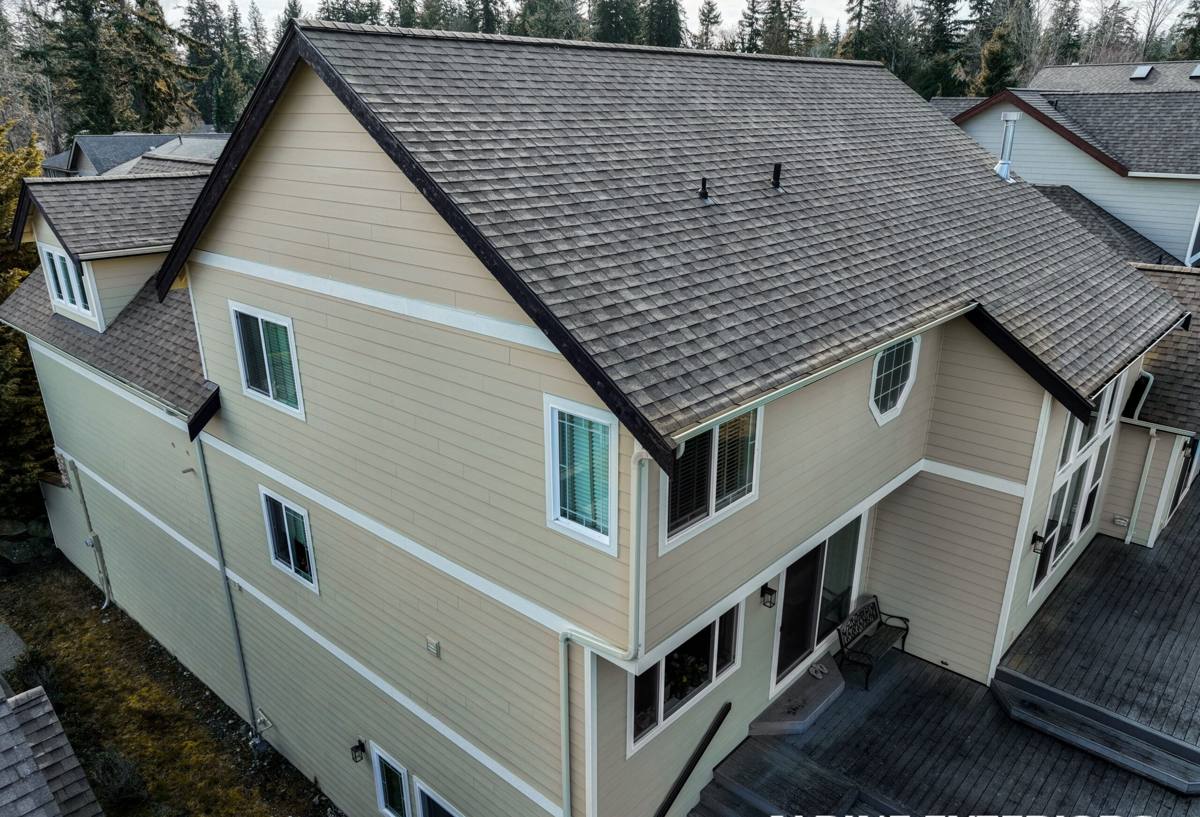
What Salt Air, Rain, and Moss Actually Do to a Deck
Each of these factors attacks a deck in a different way, and understanding the damage helps explain why the fix isn't always as simple as swapping a few boards.
Salt Air and Metal Corrosion
Airborne salt accelerates corrosion on anything metal — nails, screws, joist hangers, structural connectors. Standard galvanized hardware that would hold up fine twenty miles inland can start rusting within a few years this close to the water. Once a fastener or hanger corrodes, it loses holding strength, and that's a structural issue, not a cosmetic one.
Driving Rain and Moisture Intrusion
Wind-driven rain doesn't just fall on a deck — it gets pushed sideways, into gaps, under flashing, and against the house where the deck ledger board attaches. That's the single most common place we find hidden rot, because water gets behind the boards and into the framing where nobody sees it until the deck starts to feel soft or spongy.
Moss and Prolonged Dampness
Moss doesn't just look bad — it holds moisture directly against the wood or decking surface for days at a time, which speeds up decay in wood and can stain or degrade the surface of composite products too. It also turns a deck slick and genuinely dangerous underfoot, especially on stairs.
Signs It's Time to Replace, Not Just Repair
Not every deck problem calls for a full replacement. But there's a point where patching individual boards is throwing money at a structure that's already compromised underneath. Here's what tells us a deck is past the point of reasonable repair:
- Boards that feel soft, spongy, or flex noticeably when you walk on them
- Visible rust staining running down from fasteners or metal connectors
- Any separation or gap where the deck ledger board meets the house
- Support posts or footings that have shifted, settled, or show rot at the base
- Railings that wobble or don't meet a firm resistance when pushed
- Persistent moss or dark staining that keeps coming back within weeks of cleaning
- A deck that's needed board-by-board repairs more than once in the last few years
If you're seeing two or more of these at once, it's usually a sign the framing underneath has been compromised, not just the visible surface.
Decking Materials That Actually Hold Up in This Climate
Material choice matters more here than in a lot of places, simply because the conditions are harder on everything. There's no single "best" material for every homeowner — it comes down to how much upkeep you want to do and what you're willing to spend up front versus over time.
| Material | How It Handles Salt Air & Moisture | Maintenance | Typical Lifespan Here |
|---|---|---|---|
| Pressure-treated wood | Resists rot when properly maintained, but end grain and fastener points stay vulnerable | Annual cleaning and resealing recommended | 10–15 years with upkeep |
| Cedar | Naturally moisture-resistant, but softer and more prone to surface wear near salt air | Regular sealing to preserve color and resist graying | 12–18 years with upkeep |
| Capped composite / PVC | Best resistance to moisture absorption, salt exposure, and moss staining | Occasional washing; no sealing or staining needed | 25+ years |
| Uncapped composite | Better than wood, but the exposed core can still absorb moisture over time in wet climates | Periodic cleaning to prevent mold and staining | 15–20 years |
We'll walk you through the honest trade-offs for your situation rather than pushing one product. A wood deck can absolutely be the right call for a homeowner who likes the look and doesn't mind the upkeep — the key is building it correctly and being realistic about the maintenance schedule this climate demands.
What a Correct Deck Replacement Actually Involves
A deck replacement is more than pulling up old boards and screwing down new ones. In a marine climate, the parts you can't see matter as much as the surface.
Ledger Board Flashing
The ledger board — where the deck attaches to the house — is the number one spot for hidden water damage. Proper flashing here isn't optional; it's what keeps driving rain from working its way behind the siding and into the wall framing.
Fasteners and Hardware
Given the corrosion rate we see this close to the water, we use fasteners and structural connectors rated for coastal or corrosive exposure rather than standard hardware. It costs a bit more up front and saves you from hidden rust damage a few years down the line.
Footings and Framing
Footings need to be sized and set to current code for your soil and frost conditions, and framing needs enough spacing underneath for air to move — poor ventilation under a deck is one of the fastest ways to trap the exact moisture that causes rot.
Permits and Code Compliance
Railing height, baluster spacing, stair geometry, and structural attachment all fall under building code, and depending on the scope of the project, a permit may be required. We handle that process rather than leaving it on the homeowner to figure out.
How We Handle Point Roberts Projects
Point Roberts is geographically cut off from the rest of Whatcom County — the only road route in and out passes through Canada. That's not a minor detail when you're planning a construction project. Materials, equipment, and crew all have to cross an international border to get to the job site, and a contractor who hasn't planned for that can end up with delays that land on the homeowner's schedule.
We plan Point Roberts jobs around that reality from the start: staging materials and scheduling crossings in advance, and building in the extra logistics time so it doesn't turn into surprise delays mid-project. A lot of homes out here are also seasonal or vacation properties, so we keep owners who aren't on-site updated with clear communication throughout the job rather than leaving them guessing.
Keeping a New Deck Performing Long-Term
A well-built deck still needs some ongoing attention in this climate — the difference is that with the right materials and construction, that upkeep is manageable instead of constant.
- Rinse or wash the deck surface a couple of times a year to clear salt residue and organic buildup before it takes hold
- Treat moss and algae early in the season rather than waiting for it to spread and stain
- Keep gutters and downspouts directing water away from the deck and house foundation
- Trim back overhanging vegetation so the deck surface gets airflow and sun exposure to dry out between rains
- Reseal wood decking on the schedule recommended for the product — don't wait until it's visibly graying
- Have fasteners and railing connections checked periodically, since corrosion issues are easier to catch early than after they've spread
What Affects the Cost of a Deck Replacement
Every project is different, but these are the main factors that move the price up or down. We'll give you a clear, itemized number after seeing the site — we don't believe in vague estimates.
| Cost Factor | Why It Matters |
|---|---|
| Deck size and layout | More square footage, multiple levels, or complex shapes mean more material and labor |
| Material choice | Composite and PVC cost more upfront than wood but typically save on maintenance over time |
| Condition of existing structure | Rotted footings or framing found during demo add scope that isn't always visible beforehand |
| Railing and stair design | Custom railing styles, glass panels, or multiple stair sections add cost beyond a basic deck |
| Permit requirements | Larger or elevated decks typically require permitting and inspection |
| Site access and logistics | Point Roberts' location adds planning time for material and crew transport that a typical mainland job doesn't require |
Why Local Experience on Point Roberts Matters
A deck replacement done by a crew unfamiliar with this exposure often looks fine the day it's finished and starts showing problems within a few years — the wrong fastener, missed flashing detail, or a material choice that wasn't built for salt air and constant moisture. We've built and replaced decks throughout Ferndale and the surrounding Whatcom County coastline, and we bring that same standard — corrosion-resistant hardware, proper flashing, materials matched to the exposure — to every Point Roberts project, along with the logistics planning that job site requires.
If your deck is showing signs of wear, or you're just not sure whether it needs repair or full replacement, we're happy to take a look and give you an honest assessment. Reach out for a free, no-pressure estimate using the form below.