 Ferndale Exterior
 Why Metal Roofing Makes Sense for Blaine Homes
Blaine sits right where the Salish Sea meets the Canadian border, and that location comes with a specific set of roofing problems. Homes here take on salt-laden air off the water, wind-driven rain that finds its way under poorly lapped materials, and long stretches of gray, damp weather that give moss and algae months to get established. Asphalt shingles can be made to work, but they're fighting an uphill battle in this environment. Metal roofing, installed correctly, is built for exactly these conditions.
That's not a sales pitch — it's a material-science reality. Metal sheds water fast, doesn't absorb moisture into a mat the way shingles do, and gives moss and lichen a much harder surface to colonize. For a coastal Whatcom County home, that combination adds up to fewer callbacks, less maintenance, and a roof that's still doing its job decades after an asphalt roof would have been replaced twice.
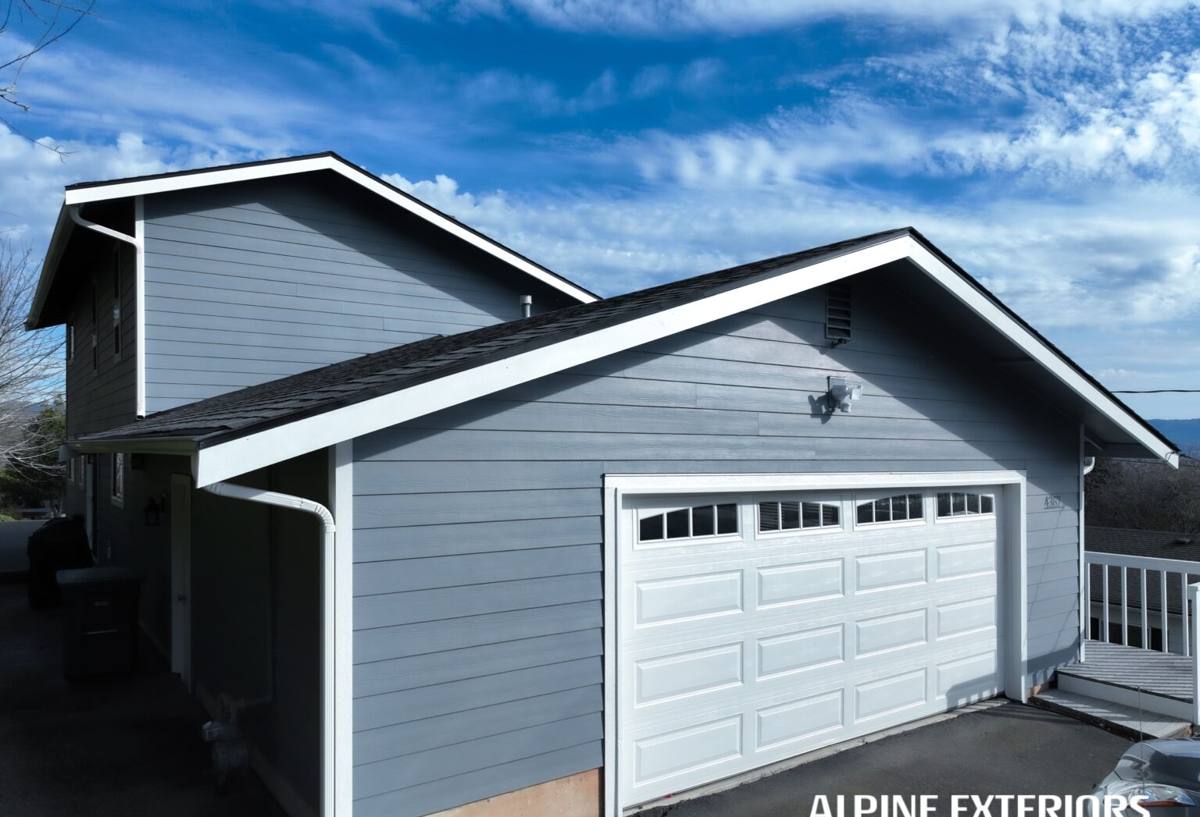
What Blaine's Climate Actually Does to a Roof
It helps to understand the specific mechanisms at work, because they determine what "correct installation" means here.
Salt Air and Corrosion
Airborne salt is conductive and mildly corrosive. On a roof, it accelerates the breakdown of unprotected metal fasteners, exposed steel edges, and lower-grade flashing. This doesn't mean metal roofing is a bad fit near the water — it means the metal, coating, and fastener choices have to be made with salt exposure in mind from the start, not treated as an afterthought.
Driving, Wind-Blown Rain
Blaine gets weather off the water, and that rain rarely falls straight down. Wind pushes it sideways and up under laps, around penetrations, and into any gap that a calmer climate might tolerate. A roof system here needs underlayment and flashing details sized for that reality, not just a code-minimum installation.
Extended Moss and Algae Season
Cool, damp, low-sun conditions for much of the year give moss and moisture-loving growth a long runway. On shingles, moss roots into the granule surface and lifts tabs as it grows. On a properly installed metal roof, there's far less for it to grip onto, and the smoother, harder surface sheds water before growth can establish.
Choosing the Right Metal Roofing System
"Metal roofing" isn't one product — it's a category, and the right choice depends on the home, the budget, and how much visible seam or fastener exposure the homeowner is comfortable with. For a salt-air, high-rain area like Blaine, we generally steer homeowners toward standing seam or a high-quality steel panel system with a durable factory coating.
| System | How It's Fastened | Best Fit For | Coastal Considerations |
|---|---|---|---|
| Standing seam | Concealed clips, no exposed fasteners | Homeowners wanting the longest maintenance-free lifespan | Best option near salt air — no exposed screw heads to corrode over time |
| Exposed-fastener steel panel | Screws driven through the panel face | Budget-conscious projects, outbuildings, some primary homes | Works, but fastener gaskets and heads need periodic inspection near the water |
| Metal shingle/shake panels | Interlocking panels, concealed fasteners | Homeowners wanting a traditional look with metal performance | Good coastal performer; more seams than standing seam, so detailing matters |
| Corrugated/ribbed steel | Exposed fasteners | Shops, barns, secondary structures | Least ideal for full weather exposure on a primary residence near salt air |
None of these are "wrong" choices in general terms — the point is matching the system to how exposed the roof is to wind, rain, and salt, and being honest with the homeowner about the tradeoffs before the project starts.
Coatings and Fasteners: The Details That Actually Matter
Most of what separates a metal roof that looks great for thirty years from one that shows rust streaks in five comes down to details most homeowners never see once the roof is on.
Coating Quality
Bare steel doesn't belong on a coastal roof. Panels should carry a factory-applied protective coating designed to resist corrosion and UV breakdown — this is standard practice for any metal roofing installed within reach of salt air, and it's not an upgrade we treat as optional in Blaine.
Fastener Selection
Fasteners are usually the first thing to fail on a poorly specified metal roof near the water. Mismatched metals between the fastener and the panel can set up galvanic corrosion — essentially a slow electrical reaction that eats away at the weaker metal. We match fastener material to panel material and use gasketed, corrosion-resistant screws throughout, and we don't substitute cheaper hardware to save a few dollars on a coastal job.
Flashing and Edge Detail
Valleys, chimney penetrations, and roof-to-wall transitions are where wind-driven rain gets in. These get properly formed metal flashing, not caulk-and-hope shortcuts, and every lap is sized for sideways rain, not just gravity.
What a Correct Metal Roof Installation Involves
A metal roof is only as good as what's underneath it. Here's what we consider non-negotiable on every install:
- Full tear-off and deck inspection — any soft, rotted, or moisture-damaged sheathing gets replaced before anything new goes down
- A synthetic or high-temp underlayment rated for the exposure, installed with laps oriented against prevailing wind and rain direction
- Proper ice-and-water membrane at eaves, valleys, and penetrations, even in a climate that sees more rain than ice
- Panel or seam layout planned before installation starts, not improvised panel by panel
- Fasteners and clips matched to the panel material to prevent galvanic corrosion
- Custom-formed flashing at every valley, wall transition, and penetration — no generic, one-size-fits-all pieces
- Ridge and soffit ventilation checked and corrected if the existing setup is inadequate
- A final walk-through inspection of every seam, fastener, and flashing point before we call the job done
Our Process, Start to Finish
We keep the process straightforward because a good roofing job shouldn't feel mysterious to the homeowner.
1. On-Site Assessment
We inspect the existing roof, deck condition, ventilation, and how exposed the home is to prevailing wind and rain — a home facing open water gets treated differently than one tucked behind trees or neighboring structures.
2. System Recommendation
Based on that assessment, we walk through which metal system fits the home, the budget, and the level of exposure, with the tradeoffs explained plainly — no upselling to the most expensive option if it isn't warranted.
3. Tear-Off and Deck Repair
Old roofing comes off, the deck gets inspected, and any damaged sheathing is replaced before new materials go down.
4. Underlayment, Flashing, and Panel Installation
Each layer goes down in the order and orientation that actually resists Blaine's weather, with flashing custom-formed on site where needed.
5. Final Inspection and Walkthrough
We check every seam and fastener, then walk the finished roof with the homeowner so they know what was done and what, if anything, to keep an eye on going forward.
Moss, Debris, and Long-Term Maintenance
Metal roofing dramatically cuts maintenance compared to shingles, but "low maintenance" isn't "no maintenance," especially with Whatcom County's long wet season.
| Task | Why It Matters Here | How Often |
|---|---|---|
| Clear debris from valleys and gutters | Trapped needles and leaves hold moisture against panels and fasteners | Twice a year, or after major storms |
| Check fastener heads and gaskets (exposed-fastener systems) | Gaskets can compress or degrade over time, especially with salt exposure | Annually |
| Inspect flashing and sealant at penetrations | Wind-driven rain finds any gap that's opened up | Annually |
| Rinse accumulated salt film near open water | Reduces long-term buildup on coatings and fasteners | As needed for homes with direct water exposure |
Because metal doesn't give moss the same foothold shingles do, most Blaine homeowners find their maintenance list shrinks considerably compared to what they were doing on an asphalt roof.
Cost Factors Homeowners Should Expect
We won't quote a number without seeing the roof, but these are the variables that actually move the price on a Blaine metal roofing project:
| Factor | Why It Affects Cost |
|---|---|
| System type | Standing seam runs higher than exposed-fastener panel due to labor and material |
| Roof complexity | Valleys, dormers, and multiple planes require more custom flashing and labor |
| Deck condition | Rotted or damaged sheathing found during tear-off adds repair cost |
| Coating and gauge | Heavier-gauge steel and higher-grade coatings cost more upfront but hold up longer against salt air |
| Access and roof pitch | Steep or hard-to-access roofs take longer and require more safety setup |
Generally, expect metal roofing to carry a higher upfront cost than asphalt shingles, offset over time by a much longer service life and lower maintenance in a climate like Blaine's.
Why a Crew That Already Works Blaine Matters
Roofing crews who mostly work drier, inland climates tend to under-spec underlayment, skip extra flashing detail, or use fasteners that are fine in a mild climate but undersized for salt air and driving rain. We work throughout Whatcom County, including Ferndale, Blaine, and the surrounding coastal areas, so the details above aren't theoretical for us — they're how we build every roof in this region.
That local familiarity also matters for practical things: knowing how exposed a particular stretch of coastline tends to be, understanding typical wind patterns off the water, and building in the extra flashing and fastener margin that homes closer to open water usually need. It's the difference between a roof that's technically up to code and one that's actually built for where it sits.
If you're weighing metal roofing for a home in Blaine, we're happy to take a look and walk you through what your specific roof needs — no pressure, no obligation. Fill out the form below and we'll set up a time to come take a look.